
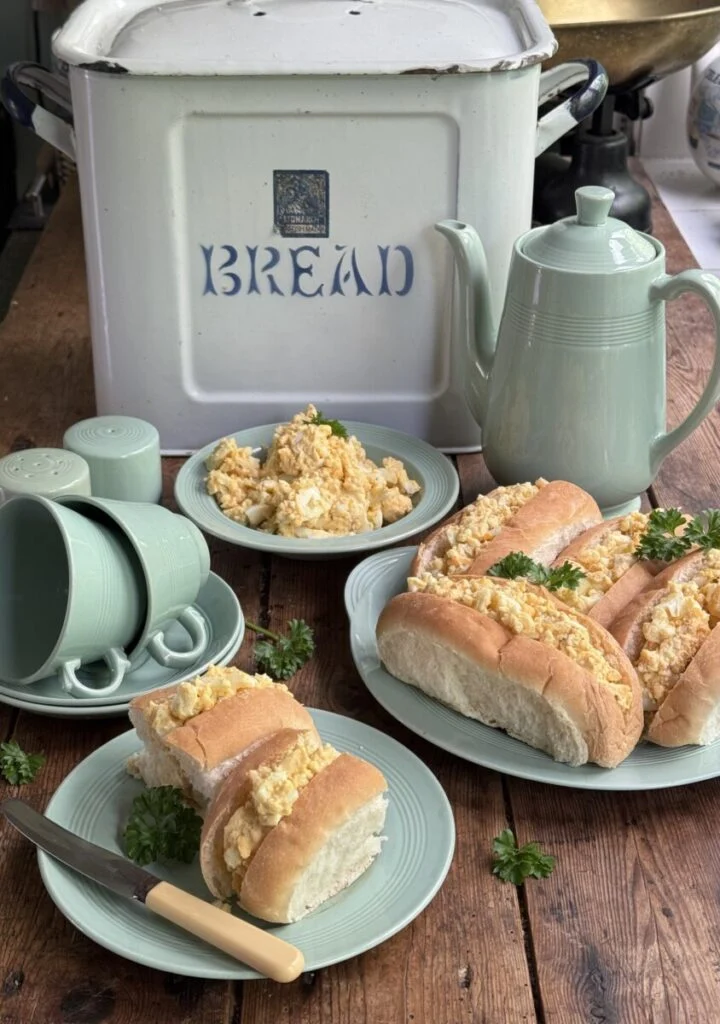
The culinary landscape of 1940s Britain, shaped by the exigencies of World War II and the stringent rationing it necessitated, offers a fascinating glimpse into a nation’s ingenuity in the face of scarcity. A recent article by Karen Burns-Booth, published on June 15, 2026, meticulously recreates the "Wartime 1940’s Egg Salad," also known as egg mayonnaise, a dish that epitomizes the resourcefulness of the era. This historical recipe, featuring homemade wartime salad cream and, historically, dried eggs, served in humble bridge rolls on iconic Woodsware Beryl Utility Crockery alongside a pot of Camp Coffee, provides a tangible connection to the daily lives of Britons during a period of immense challenge. The re-examination of such a dish today is not merely an exercise in historical gastronomy but a profound reflection on the adaptive spirit that defined the Home Front.

The Crucible of Rationing: Britain’s Wartime Food Landscape

The outbreak of World War II in September 1939 immediately presented Britain with an existential threat to its food supply. As an island nation heavily reliant on imports, particularly from North America, the German U-boat campaign posed a severe risk to shipping lanes. To ensure equitable distribution and prevent hoarding, the Ministry of Food was established, and national rationing was progressively introduced, starting in January 1940 with bacon, butter, and sugar. Eggs, a vital source of protein and a staple in many traditional British dishes, became a highly controlled commodity. Fresh eggs, referred to as "shell eggs" during the war, were a rare treat, often limited to one or two per person per week, if available at all. This scarcity led to the widespread adoption of dried eggs, primarily imported from the United States and Canada under the Lend-Lease Act, becoming a cornerstone of wartime baking and cooking.

By 1942, rationing was comprehensive, covering meat, cheese, tea, jams, and even sweets. Fats and oils, crucial for traditional mayonnaise and salad dressings, were also severely restricted. This environment forced homemakers and the Ministry of Food alike to devise innovative substitutes and extend precious ingredients. The "Wartime 1940’s Egg Salad," as presented, perfectly illustrates this adaptive culinary ethos, marrying the necessity of utilizing available resources with the desire to maintain a semblance of normalcy and taste.

The Ingenuity of Wartime Ingredients: Dried Eggs and Homemade Salad Cream

The use of dried eggs stands as a prime example of wartime innovation. These powdered eggs, reconstituted with water, were a practical solution to the fresh egg shortage. While not identical in texture or flavour to fresh eggs, they were remarkably versatile and became integral to countless recipes, from omelettes to baked goods. Ministry of Food posters, such as those depicting various uses for dried eggs, actively promoted their adoption, providing recipes and encouraging housewives to experiment. The article references original Ministry of Food posters, which served as crucial public information tools, guiding families on how to make the most of their limited rations. The author’s disclaimer that she used "shell eggs" for her demonstration, rather than dried eggs, highlights the distinct difference in the experience, acknowledging that while fresh eggs are preferable today, the authentic wartime dish would have relied on the powdered variety.

Similarly, the scarcity of oils and fresh eggs meant that commercially produced salad cream or mayonnaise, once a common condiment, became a luxury. The Ministry of Food stepped in with recipes for homemade alternatives, designed to mimic the texture and tang of conventional dressings without requiring rationed ingredients. The article specifically mentions "Royal Dressing" and "eggless mayonnaise." Royal Dressing, a concoction of National Flour, milk or vegetable water, vinegar, salt, pepper, and sugar, served as a thick, binding agent for salads. National Flour, a coarser, darker flour mandated during the war, was milled to retain more nutrients and extend the wheat supply. Vegetable water, the nutrient-rich liquid remaining after cooking vegetables, was a clever way to add flavour and nutrition while minimizing waste.

The "eggless mayonnaise" detailed in the culinary notes offers another example of extreme resourcefulness. This dressing was typically made by mashing a small, boiled, and peeled root vegetable, such as a potato, until silky smooth. Vinegar, mustard, salt, and a minimal amount of vegetable oil would then be slowly whisked in to achieve a creamy consistency. This method ingeniously replaced the emulsifying properties of egg yolk and the richness of oil with readily available, unrationed vegetables. The fact that these recipes were widely distributed underscores the government’s proactive role in supporting public health and morale through practical culinary guidance.

Serving Traditions: Bridge Rolls and Utility Crockery

The presentation of the Wartime Egg Salad is as historically evocative as its ingredients. Served in "bridge rolls" on "Woodsware Beryl Utility Crockery" with "Camp Coffee" and a parsley garnish, the setting paints a vivid picture of 1940s British hospitality. Bridge rolls, small, elongated bread rolls, gained their name from their popularity at bridge parties – social gatherings centered around playing card games. These parties, offering a momentary escape from the grim realities of war, were often accompanied by simple, yet elegant, refreshments. The fillings were typically modest: cheese, jam, or the aforementioned egg salad. The bridge roll served as an ideal vessel for such fillings, providing a light, easily consumed snack.

Woodsware Beryl Utility Crockery, with its distinctive pale green hue, represents another facet of wartime life. "Utility ware" was a government initiative introduced in 1941 to standardize the production of essential goods, ensuring that resources were directed towards the war effort and that basic items remained available to the public. These ceramics were durable, functional, and devoid of excessive decoration, reflecting the austerity of the times. Serving food on such crockery was a common practice, a symbol of practical elegance rather than luxury. The inclusion of Camp Coffee, a chicory and coffee essence, further grounds the experience in the period. While actual coffee was rationed and often expensive, Camp Coffee offered a convenient and more accessible alternative, a comforting beverage for many households. The parsley garnish, though seemingly minor, was a common practice to add a touch of freshness and colour to otherwise simple wartime meals.

Nutritional Implications and Dietary Shifts

The provided nutritional information for the Wartime 1940’s Egg Salad (Yield 4, Serving Size 1): 119 Calories, 9g Total Fat (2g Saturated, 7g Unsaturated), 189mg Cholesterol, 167mg Sodium, 1g Carbohydrates, 1g Sugar, 6g Protein, offers insight into the dietary realities of the period. Compared to a modern, richly endowed egg salad, this wartime version is likely leaner and perhaps less calorically dense, reflecting the scarcity of fats and oils. The 6g of protein per serving, primarily from eggs, would have been a valuable contribution to daily intake, especially when meat was heavily rationed. The higher cholesterol content (189mg) is inherent to egg yolks, even if the overall portion was smaller or combined with extenders.

The Ministry of Food’s emphasis on recipes like Royal Dressing and eggless mayonnaise also had nutritional implications. While they provided a palatable substitute for fat-rich dressings, they relied on starches (flour, potato) to create texture, potentially adding carbohydrates where fats would have once predominated. However, the use of vegetable water in Royal Dressing ensured that some vitamins and minerals were retained and consumed. Overall, the British diet during WWII was characterized by a reduction in fat and sugar intake, an increase in whole grains (due to National Flour), and a greater reliance on vegetables and potatoes. While often perceived as austere, the wartime diet was, in many ways, surprisingly healthy for many, leading to reductions in certain diet-related diseases, albeit born of necessity rather than choice.

Legacy and Modern Relevance

The enduring legacy of wartime recipes extends far beyond their historical context. They serve as powerful reminders of resilience, adaptability, and the fundamental human connection to food. For contemporary culinary enthusiasts and historians, recreating these dishes offers a tangible link to the past, allowing for a deeper understanding of the social, economic, and cultural forces that shaped a generation. Culinary experts and food anthropologists often highlight how periods of scarcity foster innovation, with some wartime culinary practices influencing post-war cooking and even modern approaches to sustainable eating.

The Ministry of Food’s campaigns, promoting "Dig for Victory" and providing recipes, were highly effective in mobilizing the nation to contribute to food production and consumption. This collective effort not only sustained the population but also instilled a sense of shared purpose. Today, as discussions around food security, sustainable sourcing, and mindful consumption gain prominence, these historical lessons resonate anew. The simplicity, resourcefulness, and inherent practicality of dishes like the Wartime Egg Salad remind us that delicious and nourishing food can emerge even from the most challenging circumstances.

In conclusion, Karen Burns-Booth’s exploration of the "Wartime 1940’s Egg Salad" is more than just a recipe; it is a meticulously crafted historical narrative told through the lens of food. It transports us to a time when every ingredient was precious, every meal a testament to resilience, and every small comfort, like a simple egg salad in a bridge roll, was cherished. The details – from the dried eggs and homemade salad cream to the utility crockery and Camp Coffee – collectively paint a vivid picture of a nation that learned to "make do and mend," not just survive, but thrive, through the ingenuity of its kitchens.
