
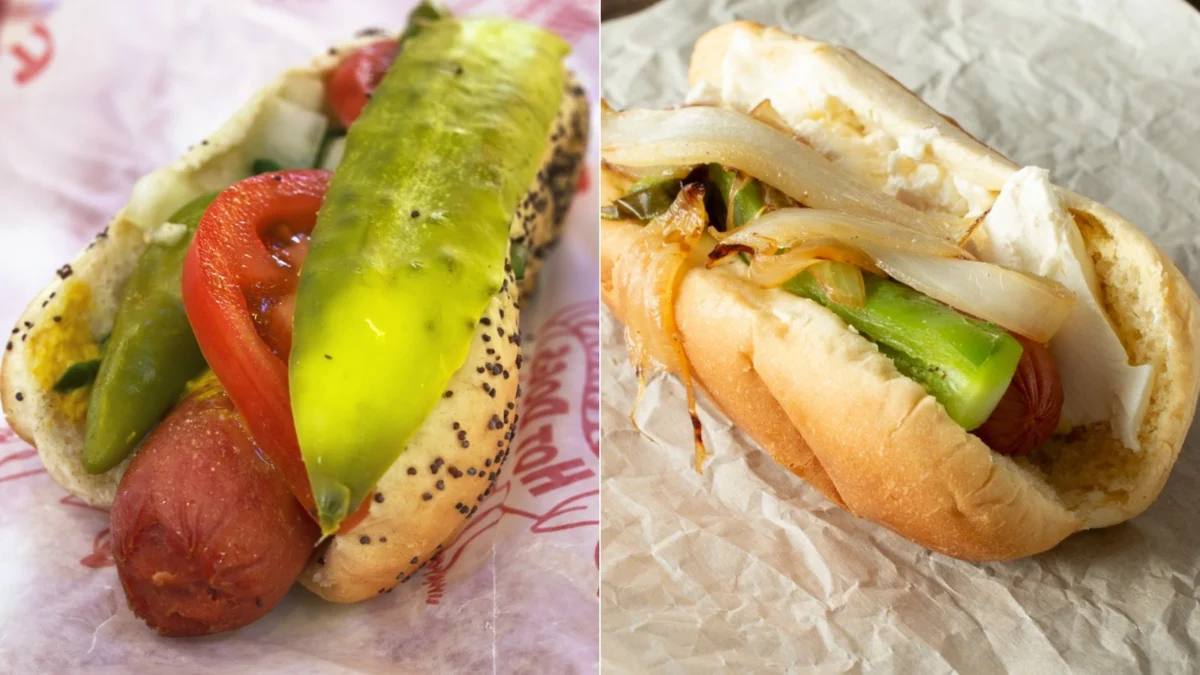
The humble hot dog, a quintessential American culinary icon, has a history as rich and varied as its toppings. While its origins are debated, tracing back to German immigrants and 19th-century New York street vendors, the evolution of the hot dog into regional specialties reflects the diverse gastronomic landscape of the United States. Among the most celebrated and debated are the distinct styles of Chicago and Seattle, each boasting a passionate following and a unique approach to this beloved street food. This exploration delves into the intricacies of these two iconic hot dog traditions, examining their ingredients, preparation, and overall appeal through a comparative lens, and ultimately seeks to determine which of these distinct culinary expressions reigns supreme in the hearts and appetites of enthusiasts.
The Genesis of American Sausage Culture
The journey of the hot dog from a simple sausage to a cultural emblem is a testament to American innovation and the melting pot of influences that have shaped its cuisine. The National Hot Dog and Sausage Council (NHDSC) notes that while sausages themselves are ancient, the practice of serving them in a bun gained traction in the late 19th century, largely popularized by German immigrants in American cities. This practice laid the groundwork for regional variations that would come to define distinct culinary identities. From the chili-laden dogs of the Southwest to the sauerkraut-topped versions in the Northeast, each city and region has imprinted its own character onto this versatile food. However, the elaborate, meticulously assembled Chicago dog and the deceptively simple, cream-cheese-adorned Seattle dog stand out as particularly iconic and polarizing.
Chicago: A Symphony of Toppings
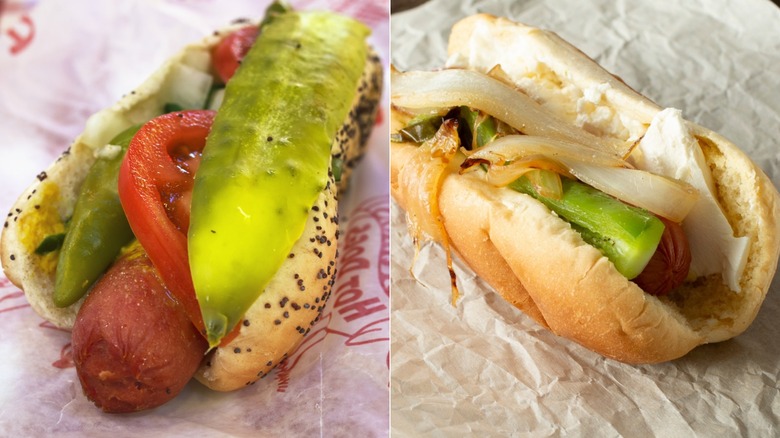
The Chicago-style hot dog is not merely a meal; it is an edible manifesto, a meticulously constructed edifice of flavors and textures that demands a specific order of appreciation. According to the NHDSC, a true Chicago dog adheres to a strict set of rules: a Vienna Beef frankfurter, steamed or boiled, is nestled in a poppy seed bun and adorned with yellow mustard, bright green sweet pickle relish, finely chopped raw white onions, a vivid red tomato wedge or slices, a pickle spear, sport peppers, and a dash of celery salt. The absence of ketchup is a non-negotiable tenet, often considered a culinary heresy by purists.
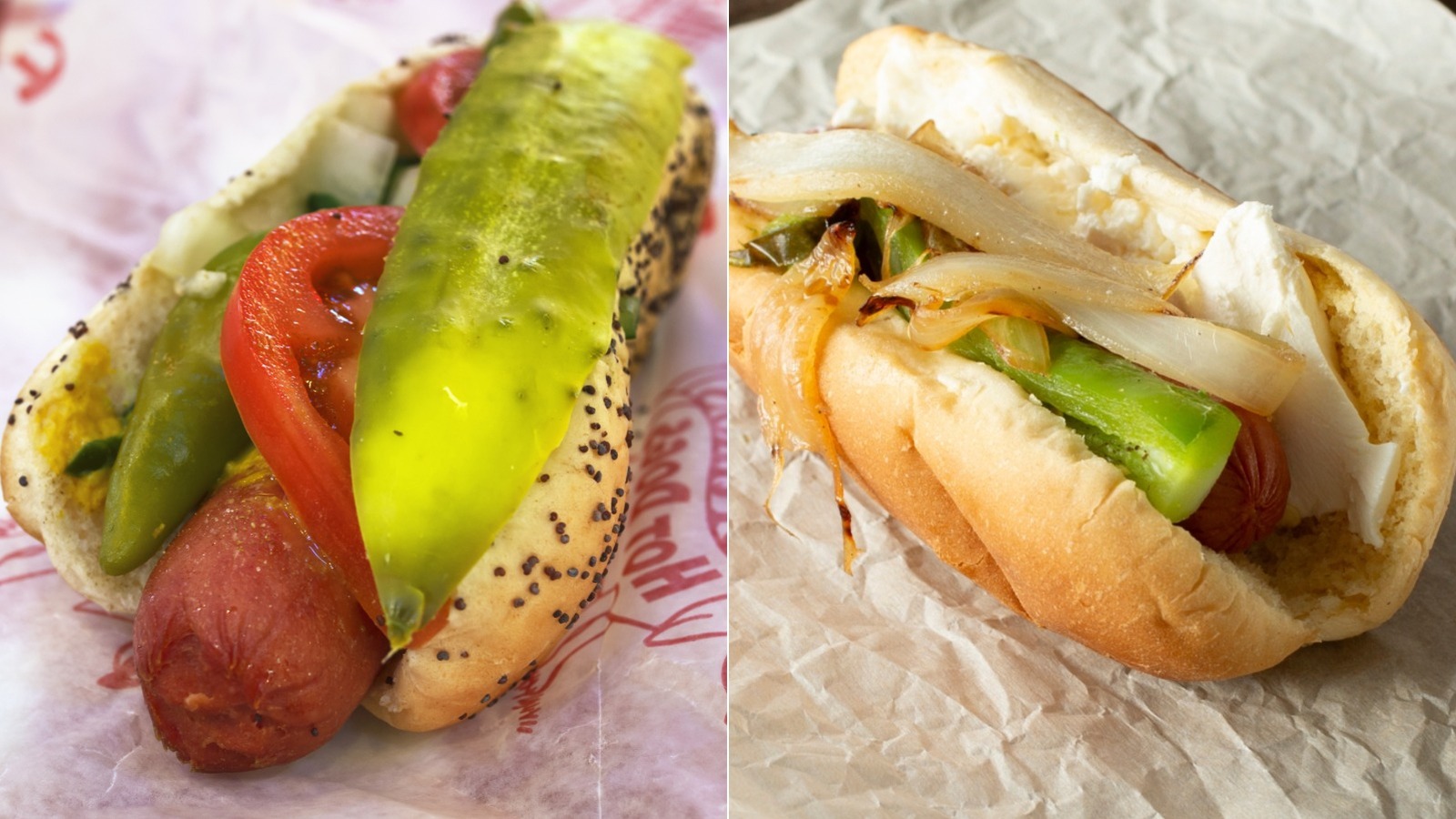
The experience of consuming a Chicago dog is often described as an adventure in sensory overload. The interplay of sweet, sour, spicy, and savory elements creates a complex flavor profile that is both exhilarating and, for some, overwhelming. The acidity from the relish, tomatoes, and sport peppers is crucial, designed to cut through the richness of the sausage and the occasional oiliness. The textural contrasts are equally important: the snap of the casing, the crispness of the onions, the soft yield of the tomato, and the firm bite of the pickle spear all contribute to a dynamic mouthfeel.
Seattle: Simplicity Meets Surprising Sophistication
In stark contrast to Chicago’s elaborate presentation, the Seattle-style hot dog champions a more minimalist, yet equally distinctive, approach. The foundation of this iteration is typically a beef frankfurter, often grilled or pan-fried, served on a toasted bun. The defining characteristic, and often the most controversial element, is the generous smear of cream cheese. This is typically accompanied by a mound of deeply caramelized grilled onions. While optional additions like sriracha or jalapeños can add a spicy kick, the core combination of cream cheese and grilled onions offers a unique flavor and textural experience.
The cream cheese, far from being a mere novelty, plays a crucial role in the Seattle dog. Its cool, creamy texture provides a delightful contrast to the warm sausage and onions. It acts as a binder, adhering the sweet, smoky grilled onions to the hot dog and bun, creating a cohesive and satisfying bite. This combination offers a rich, savory, and subtly sweet profile that is both comforting and surprisingly nuanced. The toasted bun provides a firm, pleasant base that, unlike its Chicago counterpart, is less prone to succumbing to the moisture of the toppings, ensuring structural integrity throughout the meal.
A Comparative Culinary Expedition
To objectively assess these two iconic styles, a rigorous comparative analysis was undertaken, focusing on taste, texture, and construction. For the Chicago-style hot dog, Devil Dawgs, a reputable establishment with a significant online presence and positive reviews, was selected. In Seattle, Matt’s Famous Chili Dogs, a similarly well-regarded vendor with a loyal following, was chosen. Both establishments consistently maintain high ratings on platforms like Yelp, Reddit, and Google, indicating a strong general consensus of quality.
The Chicago Experience at Devil Dawgs
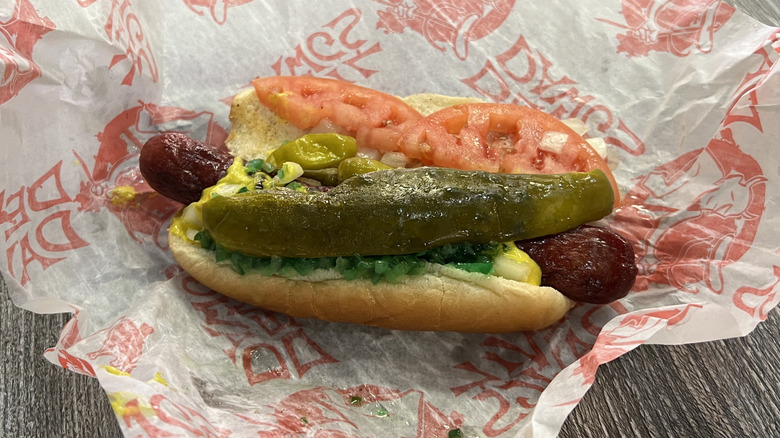
Upon entering Devil Dawgs’ South Loop location, the ambiance was distinctly urban, with graffiti-adorned walls and a neon-lit interior. The ordering process, utilizing a touchscreen kiosk, reflected a modern approach to a traditional food. The signature Chicago dog, priced at $5.95, was served alongside a 24-ounce Caramel Salty Pretzel shake, which, at nearly $3 more than the dog itself, highlighted the premium nature of accompanying beverages. The visual presentation of the dog was as described by tradition: a vibrant array of toppings—mustard, neon relish, chopped onions, tomato crescents, sport peppers, and celery salt—all meticulously arranged atop a poppy seed bun. The sausage itself, though described as "warm (not hot) and rather shriveled," offered a decent snap from its casing and a satisfying chew.
The initial bite was a revelation of layered flavors. The pickled tang of the sport peppers and the sharpness of the mustard provided immediate impact, effectively masking the inherent flavor of the sausage. The ripe tomatoes and the vinegary dill pickle spear contributed a crucial acidity that sliced through the richness of the hot dog. The verdict on taste was overwhelmingly positive: delicious. However, the structural integrity of the Chicago dog presented a significant challenge. The sheer volume and moisture content of the toppings proved to be a formidable adversary for the petite, unseeded bun. With each bite, the bun succumbed to the onslaught, transforming into a mushy, dripping mess. This structural failure detracted from the overall dining experience, leading to a sense of satiation born more from the overwhelming quantity of toppings than from a balanced consumption. The accompanying shake, while decadent, served more as a palate cleanser and a distraction from the dog’s structural shortcomings than an integral part of its enjoyment.
The Seattle Revelation at Matt’s Famous Chili Dogs
Matt’s Famous Chili Dogs, situated in Seattle’s Industrial District, presented a more understated facade. The modest, one-room building, under the characteristically overcast Seattle sky, offered little indication of the culinary experience within. However, initial impressions proved deceptive. Within a remarkably short three minutes of ordering, the Seattle Dog was presented. Priced at $6.39, this iteration of the regional staple featured the essential elements: a toasted bun, the hot dog, a generous smear of cream cheese, and a heaping portion of grilled onions. The dog itself, while shorter than its Chicago counterpart, possessed a noticeably larger diameter. The "green-bean snap" of the casing released a pleasing aroma of steam upon being bitten.
The pure-beef frankfurter, reportedly made in-house, delivered a satisfying beefy flavor, a testament to its quality without being overly assertive. This foundational taste was beautifully complemented by the salty crunch of the shoestring fries ($3.19) and the sweet chill of the chocolate shake ($5.49). The combination of grilled onions and meat is a classic pairing, but it was the cream cheese that elevated this dog from good to exceptional. Its cool creaminess adhered the sweet, smoky diced onions to the sausage, creating a harmonious blend of flavors and textures. The cool, ample spread of cream cheese offered a delightful contrast in both texture and temperature, adding a substantial element to the simple combination. Crucially, the minimalist approach to toppings meant the airy bun remained intact until the very last bite, a significant victory in terms of construction and overall eating experience.
Analysis of Implications and Broader Impact
The comparison between Chicago and Seattle hot dog styles reveals more than just differing topping preferences; it highlights fundamental philosophies in culinary construction. Chicago’s approach is one of abundance, a desire to pack as much flavor and variety as possible into a single bite, often at the expense of structural integrity. This can be seen as a reflection of a city known for its bold architecture and ambitious spirit. The Chicago dog, in its complexity, invites a certain level of indulgence and perhaps even a touch of chaos, mirroring the vibrant, sometimes overwhelming, energy of the city. The "seven-ingredient" rule, while aiming for balance, can inadvertently lead to a deluge of moisture and a battle against entropy.
Seattle’s style, conversely, emphasizes harmony and balance through simplicity. The cream cheese and grilled onions create a unified flavor profile that complements, rather than overwhelms, the sausage. This approach prioritizes a clean, satisfying eating experience where each component plays a distinct yet integrated role. The toasted bun’s resilience is a testament to this focus on practicality and enjoyment. This minimalist elegance could be interpreted as a reflection of the Pacific Northwest’s appreciation for natural beauty and understated quality. The success of the Seattle dog lies in its ability to deliver a profound flavor experience without sacrificing the fundamental structure of the food. The cream cheese, often viewed with skepticism by outsiders, proves to be a genius addition, enhancing both taste and texture.
The implications of this comparison extend beyond mere gastronomic preference. It speaks to the diverse ways in which regional cultures interpret and celebrate a common food item. The passion surrounding these regional variations underscores the deep connection people have with their local cuisine and the pride they take in its unique attributes. Debates over ketchup or no ketchup, the ideal relish hue, or the necessity of cream cheese are not just about food; they are about identity and tradition.
Conclusion: The Reigning "Wiener"
While both the Chicago and Seattle hot dog styles offer distinct and delicious experiences, the Seattle iteration, with its thoughtful simplicity, structural superiority, and delightful textural contrast, emerges as the more refined and satisfying option. The careful balance achieved through the combination of cream cheese and grilled onions, coupled with a bun that stands up to the task, creates an eating experience that is both deeply flavorful and remarkably coherent. It is a testament to the idea that sometimes, less is indeed more. Therefore, in this culinary showdown, the West Coast dog, with its understated elegance and surprising depth, earns the coveted title of "wiener," a designation that, while perhaps a touch playful, acknowledges its triumph in delivering a superior hot dog experience. This verdict, however, is offered with a profound understanding that the passion for each style runs deep, and the debate over which is truly "better" is likely to continue for generations to come.
