
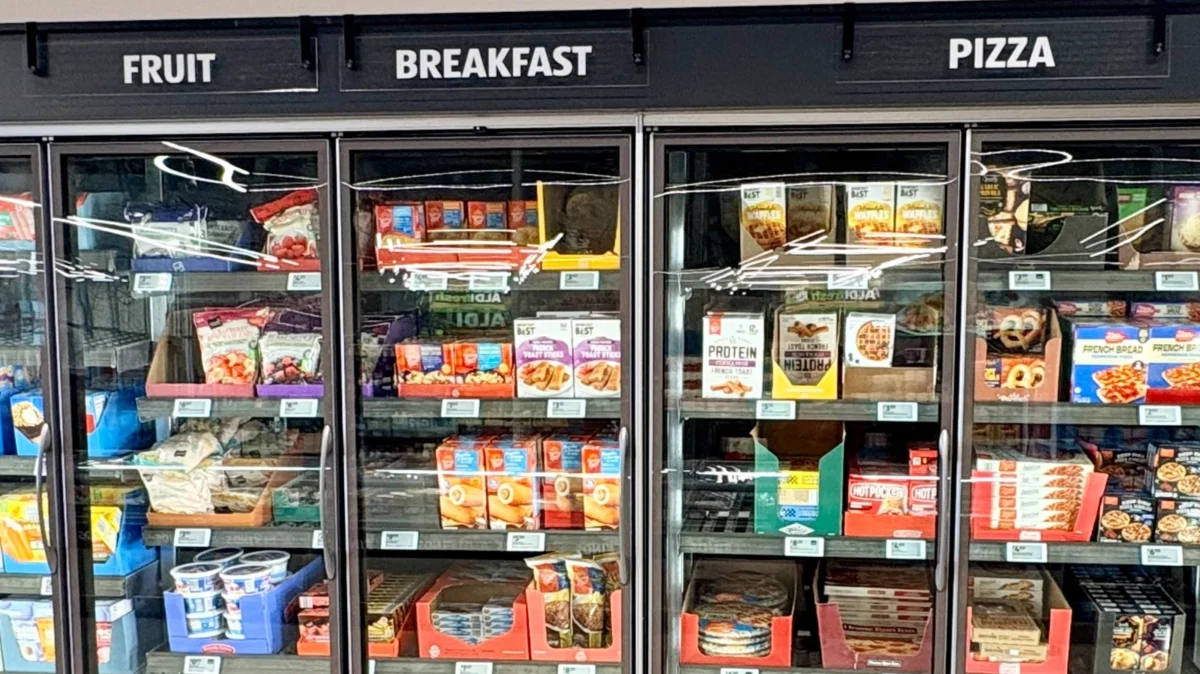
In a move poised to disrupt the fast-food breakfast landscape, discount grocery giant Aldi has unveiled a new frozen offering designed to replicate the popular McDonald’s McGriddle at a significantly lower price point. The "Breakfast Best Griddle Sandwich," launched on June 17, presents consumers with a convenient and budget-friendly alternative to the drive-thru staple. This new addition to Aldi’s extensive "Aldi Finds" program promises a familiar taste profile, featuring a savory sausage patty, a fluffy scrambled egg round, and a slice of American cheese, all sandwiched between two sweet maple-flavored pancakes. While the product aims for a McGriddle-like experience, it notably employs a more traditional pancake formulation compared to McDonald’s signature thicker griddle cakes.
The strategic release of the Griddle Sandwich addresses a growing consumer demand for affordable and time-saving breakfast solutions. As reported, the average cost of a McDonald’s breakfast sandwich, particularly the McGriddle, can approach $7, a price point that many find increasingly difficult to justify for a daily indulgence. Aldi’s offering, priced at $5.49 for a pack of four, translates to a mere $1.37 per sandwich, representing a substantial saving of over $5 compared to its fast-food counterpart. This economic advantage is a key selling proposition, particularly for consumers facing rising inflation and seeking to optimize their grocery budgets without sacrificing convenience.
The convenience factor is further amplified by the product’s rapid preparation time. Consumers can heat the Griddle Sandwich in a microwave in just over a minute, providing a hot and ready meal for those rushing to work or attending early morning commitments. This contrasts sharply with the potential delays associated with navigating busy drive-thru lines or waiting for food delivery services, which can sometimes result in a less-than-optimal temperature for consumption.
While customer reviews for the newly released product are still emerging, the anticipation is palpable. Aldi has cultivated a strong reputation for its high-quality and cost-effective frozen breakfast items, many of which have garnered widespread acclaim and achieved cult status among shoppers. The company’s existing line of breakfast sandwiches, which includes alternatives to other fast-food favorites like the Egg McMuffin, often receives enthusiastic endorsements online, with some consumers even declaring them superior to their branded inspirations. The immense popularity of these items has, in some instances, led to them selling out rapidly in certain regions, underscoring the demand for Aldi’s budget-friendly breakfast solutions. This precedent suggests that the Breakfast Best Griddle Sandwich has a strong likelihood of becoming a sought-after item, potentially joining the ranks of Aldi’s most celebrated frozen finds.
Nutritional Profile: A Healthier Alternative Emerges
Beyond its economic and convenience benefits, the Aldi Breakfast Best Griddle Sandwich presents a compelling nutritional advantage over the McDonald’s McGriddle. A comparative analysis reveals significant differences in key health metrics, positioning Aldi’s offering as a potentially more mindful choice for breakfast.
The McDonald’s Sausage, Egg, and Cheese McGriddle, a benchmark for this category, contains approximately 550 calories, 44 grams of carbohydrates, 33 grams of fat, 19 grams of protein, 15 grams of sugar, and 2 grams of fiber per serving. A particularly concerning statistic is its sodium content, which stands at a substantial 1,290 milligrams per sandwich. This figure is particularly noteworthy when considered against the American Heart Association’s recommendation for an optimal daily sodium intake of 1,500 milligrams for adults. Consuming a single McGriddle brings individuals close to their daily limit, leaving little room for other sodium-rich foods throughout the day.
In contrast, the Aldi Breakfast Best Griddle Sandwich offers a more modest nutritional profile. Each sandwich contains approximately 340 calories, 39 grams of carbohydrates, 15 grams of fat, 14 grams of protein, 11 grams of sugar, and 2 grams of fiber. Crucially, its sodium content is significantly lower, at 640 milligrams per sandwich. This reduction in sodium makes the Aldi version more conducive to meeting dietary guidelines that suggest aiming for 600 milligrams of sodium or less per meal.
The Aldi sandwich demonstrates a notable reduction in fat, sugar, and sodium compared to its McDonald’s counterpart. This healthier composition, combined with its lower price and enhanced convenience, solidifies the Griddle Sandwich’s position as a strong contender among Aldi’s best frozen breakfast items. However, it is important to acknowledge that both processed and fast-food breakfast sandwiches, including the Aldi option, remain less healthy than meals prepared from scratch using fresh, whole ingredients. This caveat underscores the importance of a balanced dietary approach, even when opting for more health-conscious convenience foods.
The Broader Context: Aldi’s Strategic Expansion in the Frozen Aisle
The introduction of the Breakfast Best Griddle Sandwich is not an isolated event but rather a strategic move within Aldi’s ongoing expansion and refinement of its private-label frozen food offerings. Over the past decade, Aldi has significantly invested in its frozen section, recognizing it as a key driver of customer loyalty and sales. This investment has allowed the retailer to develop a diverse range of products that often rival or surpass the quality and taste of national brands, all while maintaining its signature low prices.
Aldi’s "Aldi Finds" program, a cornerstone of its retail strategy, plays a pivotal role in introducing new and innovative products to its shelves. These limited-time offers create a sense of urgency and excitement among shoppers, encouraging frequent store visits and impulse purchases. The success of previous "Aldi Finds" in the breakfast category, such as highly praised breakfast sandwiches and pastries, has paved the way for the Griddle Sandwich’s debut. The retailer has consistently demonstrated an ability to identify consumer trends and capitalize on them by offering accessible and desirable alternatives to more expensive or less convenient options.
The McGriddle, a popular item on McDonald’s menu since its introduction in 2003, represents a significant market segment. By developing a direct competitor, Aldi is not only tapping into an existing demand but also challenging the dominance of fast-food chains in the breakfast market. This strategy aligns with Aldi’s broader objective of becoming a one-stop shop for a wide array of grocery needs, including convenient meal solutions. The company’s success in the frozen aisle is a testament to its robust supply chain management, efficient operational model, and keen understanding of consumer preferences.
Implications for the Fast-Food Industry and Consumer Behavior
The availability of a high-quality, affordable, and nutritionally comparable alternative to a popular fast-food breakfast item like the McGriddle has several implications for both the fast-food industry and consumer behavior.
Firstly, it intensifies competition in the breakfast market. Fast-food chains may need to re-evaluate their pricing strategies and explore opportunities to enhance the perceived value of their offerings. This could manifest in promotional deals, loyalty programs, or the introduction of new, more affordable breakfast items. The pressure to remain competitive may also drive innovation in product development, encouraging a focus on both taste and nutritional value.
Secondly, the success of Aldi’s Griddle Sandwich could influence broader consumer purchasing habits. As shoppers become more accustomed to finding satisfying and cost-effective alternatives at discount grocers, their reliance on traditional fast-food options for breakfast may decrease. This shift could lead to a reallocation of consumer spending, with a greater portion directed towards grocery stores that offer a compelling mix of convenience, quality, and affordability.
Furthermore, the nutritional advantages of the Aldi product highlight a growing consumer awareness and demand for healthier convenience foods. Retailers and food manufacturers that can effectively balance taste, convenience, and health will likely see increased market share. This trend suggests a move towards more conscious consumption, where consumers actively seek out options that align with their dietary goals and overall well-being.
The introduction of the Aldi Breakfast Best Griddle Sandwich represents a significant development in the evolving landscape of convenient and affordable breakfast solutions. By offering a direct, budget-friendly, and nutritionally improved alternative to a beloved fast-food item, Aldi is poised to capture a substantial segment of the breakfast market. This move not only benefits budget-conscious consumers but also signals a broader shift in how individuals approach their morning meals, prioritizing value, convenience, and increasingly, health. As Aldi continues to innovate in its frozen food categories, consumers can anticipate further disruptions and a wider array of appealing options designed to meet their diverse needs and preferences.
