
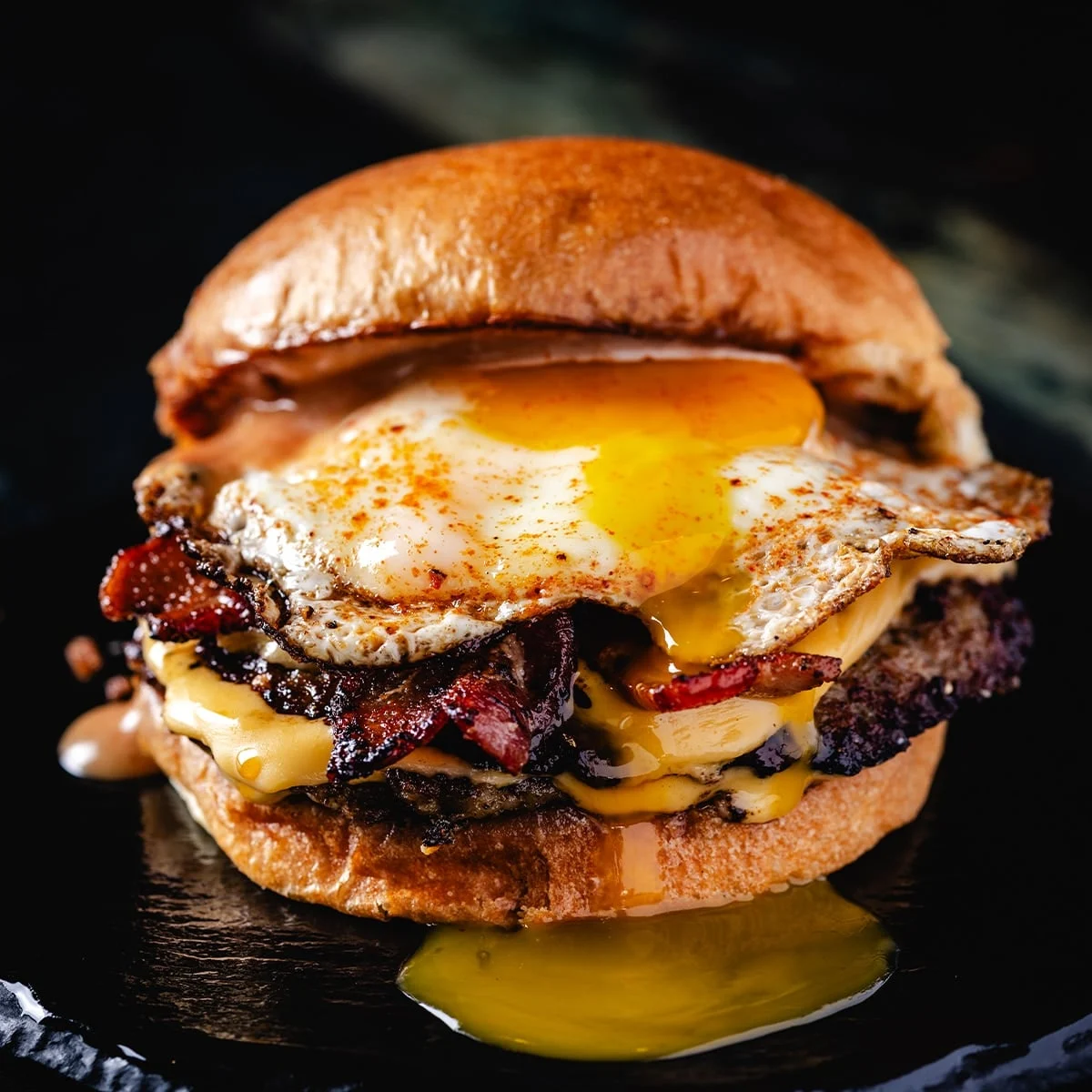
The breakfast smash burger has emerged as a significant development in the contemporary culinary landscape, representing a fusion of traditional morning staples and the high-heat searing techniques popularized by mid-century American diners. This dish, characterized by thin, caramelized sausage patties, crispy bacon, melted American cheese, and a fried egg served on a toasted brioche bun, signifies a broader shift in consumer behavior toward elevated home-cooked meals. As outdoor griddling equipment becomes increasingly accessible to the domestic market, the transition of the "smash" technique from professional kitchens to backyard patios has redefined the expectations for weekend breakfast and brunch.
The Culinary Anatomy of the Breakfast Smash Burger
The construction of a breakfast smash burger deviates from the standard beef-based hamburger by utilizing pork sausage as the primary protein. This choice is foundational to the flavor profile, as the higher fat content and seasoning of breakfast sausage facilitate a more pronounced Maillard reaction when subjected to the intense pressure of a burger press. The Maillard reaction, a chemical process between amino acids and reducing sugars that gives browned food its distinctive flavor, is the scientific cornerstone of the smash burger’s appeal.
Supporting the sausage are several layers of texture and flavor. Crispy bacon provides a secondary salt profile and crunch, while American cheese—favored for its superior melting point and emulsification properties—acts as a binding agent. The inclusion of a fried egg with a liquid yolk introduces a natural sauce element that coats the other ingredients upon the first bite. To balance the savory and salty notes, a maple-infused mayonnaise sauce is utilized, incorporating the sweetness of maple syrup with the acidity of traditional burger condiments. The vessel for these ingredients, the brioche bun, is chosen for its high egg and butter content, which allows it to remain structurally sound while absorbing the juices from the meat and egg.

The Rise of the Outdoor Griddle Market
The popularity of recipes like the breakfast smash burger is inextricably linked to the rapid expansion of the outdoor griddle market. Historically, the "smash" technique was confined to commercial flat-top grills found in short-order diners. However, the last decade has seen a surge in consumer-grade flat-top grills, led by brands such as Blackstone, Camp Chef, and Weber.
According to market research data, the outdoor cooking industry saw a significant uptick beginning in 2020, as domestic lockdowns encouraged consumers to invest in home infrastructure. The griddle segment, in particular, has seen double-digit annual growth. Unlike traditional ribbed grills, flat-tops provide a continuous heated surface area, which is essential for creating the "crust" associated with smashed meats. This hardware evolution has empowered home cooks to replicate restaurant-quality textures that were previously unattainable in a standard kitchen setting.
Chronology and Evolution of the Smash Technique
The origins of the smash burger can be traced back to the early 20th century, specifically to the American Midwest.
- The 1920s-1930s: Establishments like White Castle and various independent diners began using the smashing technique to speed up cooking times. By flattening the meat, chefs increased the surface area in contact with the heat, allowing for a faster cook and a unique textural contrast.
- The Mid-Century Diner Era: The technique became a staple of the American "greasy spoon." During this period, the focus remained almost exclusively on beef patties for lunch and dinner.
- The 2000s Renaissance: The founding of Smashburger in 2007 and the global expansion of Shake Shack brought the artisanal smash burger to the forefront of the "fast-casual" dining sector.
- The 2020s Breakfast Pivot: Culinary influencers and recipe developers began applying the smash technique to breakfast proteins. The "Breakfast Smash Burger" represents the current pinnacle of this evolution, moving the technique into the earliest meal of the day.
Technical Execution and Methodology
The preparation of the breakfast smash burger requires a specific sequence of operations to ensure structural integrity and flavor optimization.

First, the griddle must be preheated to a medium-high temperature, typically between 375°F and 400°F. The sausage is portioned into spherical balls rather than pre-formed patties. This is a critical step; the spherical shape allows for maximum compression during the "smash" phase. Once the sausage is placed on the heat, a heavy-duty press or spatula is used to flatten the meat to a thickness of approximately one-quarter inch.
Professional-grade execution often involves the use of parchment paper between the press and the meat to prevent sticking. The patties are seasoned immediately after smashing. Because the meat is so thin, the cooking time is minimal—often less than two minutes per side. The cheese is applied immediately after the flip to ensure total melting. Simultaneously, bacon and eggs are prepared on the same surface, allowing the flavors to intermingle—a process known in the industry as "cross-seasoning."
Nutritional Analysis and Consumer Health Trends
The breakfast smash burger is positioned as a high-calorie, indulgent meal. Data indicates that a single serving can contain approximately 1,209 calories, with 95 grams of fat and 41 grams of protein. The sodium content is also high, often exceeding 4,600 mg due to the processed nature of sausage, bacon, and American cheese.
While these figures are substantial, the rise of this dish aligns with the "cheat meal" culture and the "Quality over Quantity" trend in modern dieting. Consumers are increasingly opting for fewer, more calorie-dense indulgent meals rather than frequent low-quality fast food. Furthermore, the transparency of home preparation allows for the selection of higher-quality fats and proteins compared to the industrial-grade oils often used in commercial drive-thrus.

Comparative Analysis: Home Preparation vs. Commercial Sector
The drive-thru breakfast market has long been dominated by giants such as McDonald’s and Wendy’s. However, the homemade breakfast smash burger offers several distinct advantages that are driving its popularity:
- Texture: Commercial fast food often utilizes pre-cooked or steamed patties. The home-griddled smash burger provides a level of crispness (the "lacey edge") that is difficult to maintain in a holding bin or delivery bag.
- Customization: Home cooks can utilize specific ingredients like candied bacon or artisanal brioche, which are not cost-effective for large-scale chains.
- Economic Value: While the initial investment in a griddle is required, the per-unit cost of a high-end breakfast burger at home is significantly lower than the $8 to $12 price point often found at "gourmet" brunch spots.
Expert Perspectives and Social Implications
Culinary analysts suggest that the breakfast smash burger is more than just a recipe; it is a social phenomenon. Susie Bulloch, a prominent figure in the grilling community and founder of Hey Grill Hey, has noted that these types of recipes are designed to create a "backyard experience." The process of cooking on a griddle is inherently performative and social, making it a centerpiece for family gatherings.
Furthermore, the "brunchification" of the burger reflects a broader trend where traditional meal boundaries are blurring. As remote work persists for a significant portion of the population, the distinction between "weekday breakfast" and "weekend brunch" has softened, allowing for more elaborate morning meal preparation.
Broader Impact on the Food Industry
The success of the breakfast smash burger has forced the restaurant industry to adapt. We are currently seeing an increase in "all-day breakfast" menus that feature smash-style patties. Additionally, spice and sauce manufacturers are capitalizing on this trend by releasing "burger rubs" and "maple-infused" condiments specifically marketed for breakfast use.

The meat processing industry has also seen shifts. There is an increasing demand for high-quality bulk breakfast sausage, as opposed to pre-shaped links, as consumers seek the raw material necessary for the smashing technique.
Future Outlook
As we look toward the future of domestic culinary trends, the breakfast smash burger appears to have significant staying power. It sits at the intersection of several growing movements: the DIY food culture, the outdoor living boom, and the preference for bold, savory-sweet flavor profiles.
Technological advancements in outdoor cooking equipment, such as built-in temperature sensors and more non-stick surfaces, will likely make the execution of this dish even more foolproof for the average consumer. While the nutritional density of the dish may limit it to a weekend or special-occasion meal, its role as a catalyst for the home-grilling movement is undeniable. The breakfast smash burger has effectively moved the "smash" from a fast-food gimmick to a sophisticated home-cooking technique, ensuring its place in the modern American culinary canon.
