
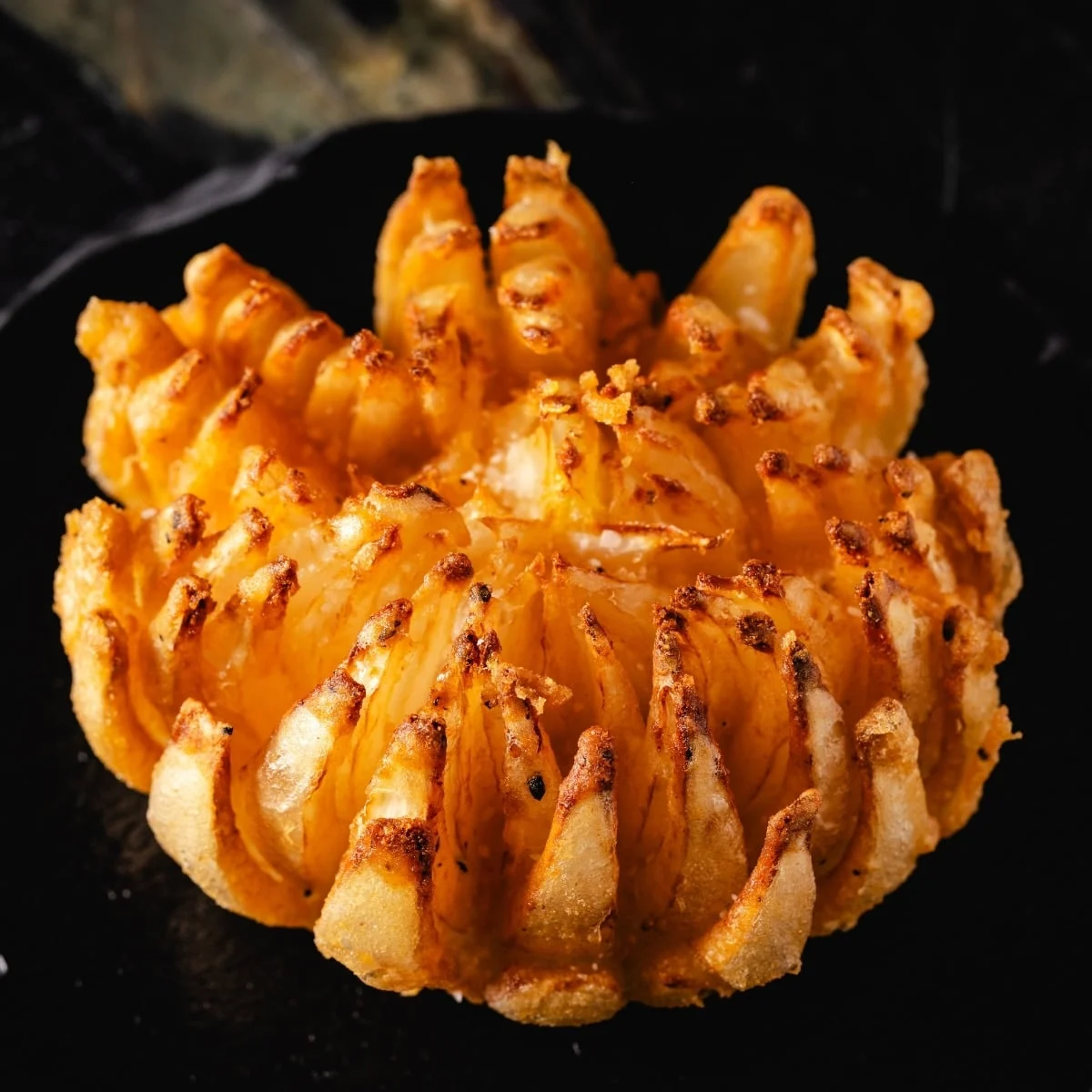
The Smoke-Fried Onion Blossom has emerged as a significant culinary development in the landscape of contemporary American backyard barbecue, representing a sophisticated fusion of traditional low-and-slow smoking techniques with high-heat deep-frying. This hybrid cooking method, popularized by culinary experts such as Susie Bulloch of Hey Grill Hey, addresses a long-standing challenge in home appetizer preparation: achieving the deep, resonant flavor of hardwood smoke while maintaining the structural integrity and "shatter-crisp" texture associated with high-end steakhouse appetizers. By utilizing a multi-stage thermal process, the Smoke-Fried Onion Blossom transforms a standard Vidalia onion into a complex, multi-textured dish that rivals the iconic "blooming" onions made famous by national restaurant chains in the late 1980s.
The evolution of this dish reflects a broader trend in the outdoor cooking industry, where home enthusiasts—often referred to as "Backyard BBQ Heroes"—increasingly seek to replicate professional kitchen results using consumer-grade pellet grills and smokers. The process requires a precise understanding of vegetable anatomy, moisture migration, and the Maillard reaction. At its core, the recipe relies on a three-ingredient foundation: a large sweet onion, a specialized batter mix, and a savory BBQ rub. However, the simplicity of the ingredients belies the technical precision required during the execution phase, which spans approximately one hour and involves two distinct cooking environments.

The Chronology of the Smoke-Fry Process
The preparation of a Smoke-Fried Onion Blossom follows a strict chronological sequence designed to optimize flavor absorption before sealing the exterior through frying. The process begins with the "blossom cut," a geometric slicing technique that leaves the root end intact while allowing the layers of the onion to fan out like petals. This increased surface area is critical for both smoke penetration and the eventual adhesion of the batter.
Once prepared, the onion enters the first phase of cooking: the smoke session. The smoker is preheated to 225 degrees Fahrenheit, a temperature low enough to prevent the onion from charring but high enough to begin breaking down the cellular structure of the vegetable. During this 45-minute interval, the onion is exposed to hardwood smoke—often fruitwoods like apple or cherry, or hardwoods like hickory—which infuses the sugars of the Vidalia onion with phenolic compounds. This phase is not intended to cook the onion to completion but rather to soften its texture and allow the "petals" to naturally fan out, creating the necessary gaps for the subsequent battering process.
The second phase involves the transition from the smoker to the frying station. After the 45-minute smoke, the onion is coated in a dry batter mix enhanced with a BBQ rub. This seasoning layer serves as the primary flavor driver, bridging the gap between the sweetness of the onion and the saltiness of the fried crust. The final stage is a rapid immersion in oil heated to 350 degrees Fahrenheit. This three-to-four-minute fry triggers the Maillard reaction, a chemical reaction between amino acids and reducing sugars that gives browned food its distinctive flavor. The result is a golden-brown exterior that encapsulates a tender, smoke-infused interior.

Technical Data and Nutritional Profile
From a technical standpoint, the Smoke-Fried Onion Blossom is a study in moisture management. The initial smoking phase removes a small percentage of surface moisture, which prevents the batter from becoming soggy during the frying stage. Data suggests that the ideal internal texture is achieved when the onion has softened significantly but retains enough turgidity to stand upright on a serving platter.
According to nutritional analysis provided for the standard preparation, a single serving of the blossom (calculated as one-quarter of a large onion) contains approximately 163 calories. The macronutrient breakdown is dominated by carbohydrates, totaling 37 grams, largely derived from the natural sugars in the Vidalia onion and the starch in the batter mix. The dish is notably low in protein (2 grams) and fat (0.1 grams prior to the frying oil absorption), though the final fat content will vary based on the type of oil used and the efficiency of the drainage process post-fry.
Micronutrient data indicates the presence of Vitamin C (8 mg), Calcium (35 mg), and Potassium (197 mg). The sodium content is measured at 672 mg, a figure primarily influenced by the salt content in the BBQ rub and batter mix. This nutritional profile positions the dish as a high-flavor, indulgent appetizer intended for communal consumption rather than a primary dietary staple.

The Role of the Vidalia Onion in Culinary Science
The selection of the Vidalia onion is not merely a regional preference but a scientific necessity for this specific recipe. Vidalia onions, grown exclusively in a 20-county region in Georgia defined by the Vidalia Onion Act of 1986, are characterized by an unusually low sulfur content in the soil. Sulfur is the element responsible for the "pungent" or "burning" sensation typically associated with onions.
Because Vidalia onions lack this high sulfur concentration, their natural sugar content is more perceptible to the human palate. When subjected to the smoke-frying process, these sugars undergo caramelization. The 45-minute smoke at 225 degrees Fahrenheit initiates this process, and the subsequent flash-fry at 350 degrees Fahrenheit completes it. The use of any other onion variety, such as a standard yellow or white onion, would result in a significantly sharper flavor profile that might clash with the delicate notes of the hardwood smoke and the spices in the BBQ rub.
Market Trends and the Rise of "Smoke-Frying"
The emergence of the Smoke-Fried Onion Blossom is part of a larger movement within the $15 billion global grill and barbecue market. Industry analysts have noted a significant uptick in "multi-modal" cooking, where consumers utilize multiple appliances to finish a single dish. The "smoke-fry" technique is the latest iteration of this trend, following the success of "reverse-seared" steaks and "smoke-braised" short ribs.

This movement is driven by a consumer desire for "restaurant-quality" experiences at home, particularly in the wake of rising casual dining costs. By mastering the onion blossom—a dish traditionally viewed as difficult to execute outside of a commercial kitchen—home cooks are able to achieve a sense of culinary mastery. Susie Bulloch, a leading figure in this space, emphasizes the "Backyard BBQ Hero" concept, which focuses on empowering home cooks with professional-grade techniques simplified for residential equipment.
Analysis of Implications for the Home Cook
The broader implication of the Smoke-Fried Onion Blossom recipe is the democratization of complex culinary techniques. Historically, deep-frying was viewed with trepidation by home cooks due to safety concerns and the difficulty of temperature control. However, the integration of cast iron skillets on outdoor grills and the availability of high-accuracy infrared thermometers have mitigated these barriers.
Furthermore, the "smoke-fry" method provides a solution to the "rubbery" texture often found in smoked-only vegetables. While smoking adds flavor, it rarely adds the textural contrast that consumers crave in appetizers. By adding the frying step, the cook achieves a sensory "double-hit": the olfactory satisfaction of wood smoke and the tactile satisfaction of a crispy crust.

Supporting Infrastructure: The Role of Dipping Sauces
In the professional culinary world, an appetizer is rarely served in isolation. For the Smoke-Fried Onion Blossom, the recommended accompaniment is a BBQ ranch dressing. This choice is strategic; the acidity and creaminess of the ranch dressing provide a necessary counterpoint to the salt and fat of the fried onion. The inclusion of BBQ sauce within the ranch dip echoes the smoke notes of the onion, creating a cohesive flavor loop.
The culinary community suggests that the success of the dish relies heavily on the "pro tips" shared by experienced pitmasters. These include allowing the oil to return to 350 degrees Fahrenheit between batches and ensuring the onion is thoroughly dried of excess batter before hitting the oil to prevent "clumping."
Conclusion
The Smoke-Fried Onion Blossom represents a sophisticated intersection of chemistry, tradition, and modern outdoor cooking technology. By deconstructing the classic steakhouse appetizer and rebuilding it through the lens of the American barbecue tradition, creators like Susie Bulloch have provided a roadmap for the next generation of outdoor cooking. As the "smoke-fry" technique continues to gain traction, it is expected that more traditional fried foods—from chicken wings to potatoes—will undergo a similar "smoky" transformation, further blurring the lines between the deep fryer and the smokehouse. This dish stands as a testament to the ongoing innovation in backyard BBQ, proving that even the simplest ingredients, when subjected to the right thermal processes, can result in a world-class culinary experience.
