
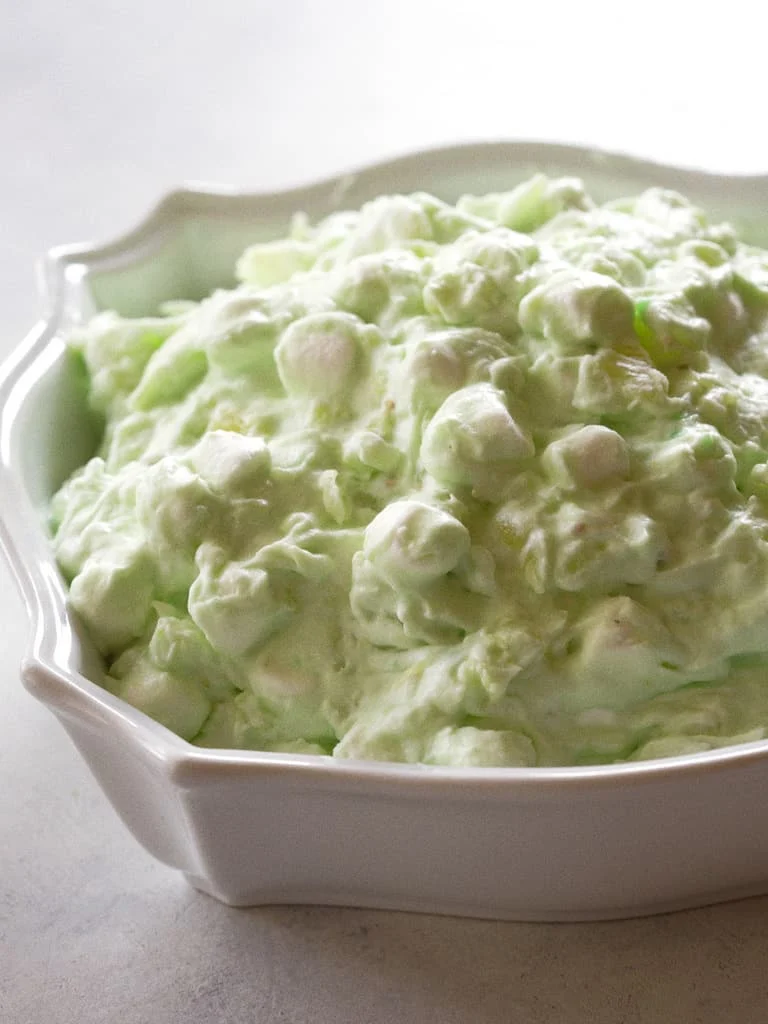
Watergate Salad, a deceptively simple dessert salad, has carved out a unique niche in American culinary history, its vibrant green hue and surprisingly sweet, fluffy texture becoming a staple at potlucks and holiday gatherings since its popularization in the late 1970s. While the recipe itself is straightforward, its name and origin story are intertwined with one of the most significant political scandals in United States history, adding a layer of intrigue to this otherwise unassuming dish.
At its core, Watergate Salad is a confectionary concoction that typically features a base of pistachio-flavored instant pudding mix, combined with crushed pineapple, miniature marshmallows, and a creamy binder. The original recipes, and many modern iterations, often relied on frozen whipped topping, commonly known by the brand name Cool Whip. However, a growing movement among home cooks emphasizes using freshly whipped cream, often stabilized to maintain its structure, for a lighter and arguably more refined texture. This distinction highlights a subtle but significant evolution in how the salad is prepared, reflecting a broader culinary trend towards fresh, homemade ingredients.
The recipe’s journey into the public consciousness is a fascinating narrative in itself. Initially developed by Kraft Kitchens and marketed as "Pistachio Pineapple Delight" in 1975, the dish was later rebranded by a food editor for a newspaper column. The renaming to "Watergate Salad" is widely believed to have been a strategic marketing move, capitalizing on the intense public interest surrounding the Watergate scandal, the presidential political scandal that rocked the Nixon administration in the early to mid-1970s. This period, marked by investigations into the break-in at the Democratic National Committee headquarters at the Watergate Hotel in Washington, D.C., and the subsequent cover-up, dominated headlines and public discourse.
The exact genesis of the name remains somewhat apocryphal, with some speculating that a chef at the Watergate Hotel itself may have been the creator of this now-classic dessert. Regardless of the precise origin, the moniker proved highly effective, imbuing the humble salad with a sense of notoriety and intrigue that propelled its popularity. The association, however coincidental, cemented the salad’s place in the American culinary lexicon, forever linking its sweet, airy composition to a period of significant political upheaval.
A Look Back: The Watergate Scandal and its Cultural Echo
To understand the impact of the Watergate Salad’s naming, it’s crucial to recall the context of the Watergate scandal. The scandal began in June 1972 with a break-in at the Democratic National Committee (DNC) headquarters in the Watergate complex. The subsequent investigation revealed a systematic campaign of political espionage, sabotage, and illegal activities orchestrated by individuals connected to President Richard Nixon’s re-election campaign. The ensuing revelations and congressional investigations led to widespread public distrust in government and ultimately resulted in President Nixon’s resignation in August 1974, avoiding impeachment proceedings.
The scandal permeated American culture, influencing media, art, and even everyday conversation. It was a period of intense scrutiny and skepticism towards authority, making any reference to "Watergate" instantly recognizable and attention-grabbing. The adoption of "Watergate Salad" as the name for a popular dessert likely tapped into this collective consciousness, offering a lighthearted, albeit indirectly connected, cultural reference point.
From Family Gatherings to Potluck Perfection
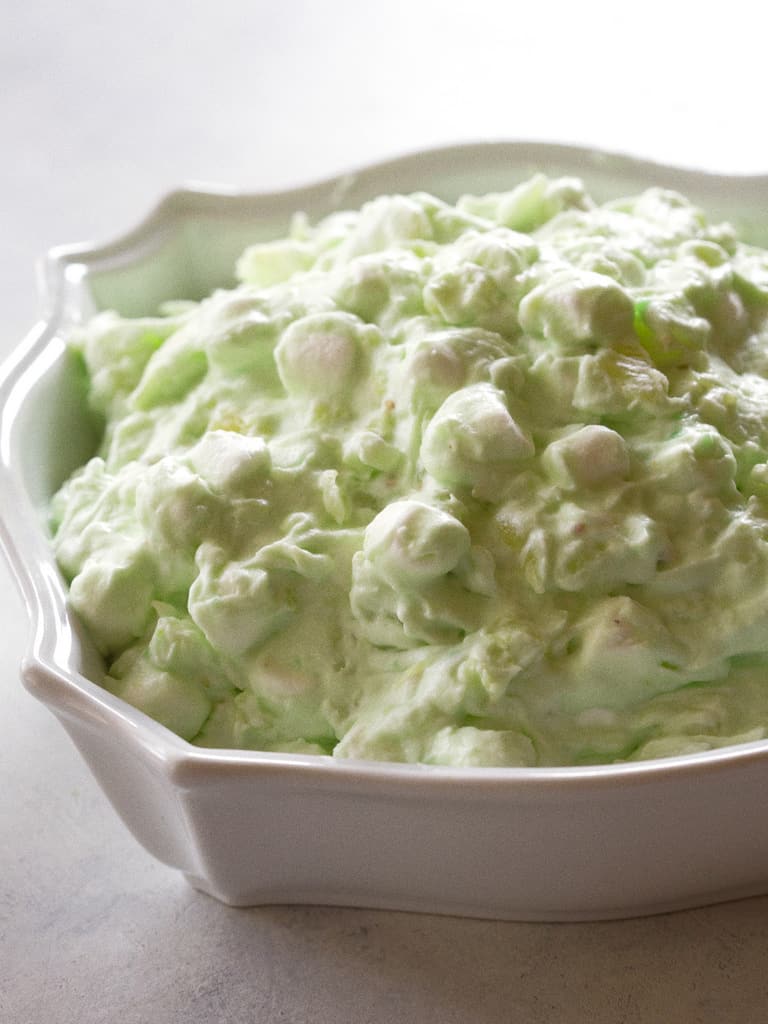
For many families, Watergate Salad has become an ingrained tradition, a nostalgic nod to past celebrations. The article notes a personal connection, with the author’s family having enjoyed the "green fluff" at gatherings since 1980. This anecdote underscores the salad’s enduring appeal, passed down through generations and becoming a comforting culinary touchstone. The author recounts how her sister, Shelly, was often tasked with making the salad, leading to variations over the years as the exact ingredient list was occasionally misremembered – a common occurrence with recipes that are more intuitively assembled than meticulously measured. This familial history mirrors the experience of many who have encountered this salad at various family reunions, church potlucks, and holiday feasts.
The simplicity of Watergate Salad is one of its most significant strengths. Its ingredients are readily available, and the preparation time is minimal, making it an ideal choice for busy hosts or for those contributing to shared meals. The recipe’s adaptability, allowing for variations in nuts or the type of whipped topping, further contributes to its widespread adoption. While the original formulation often featured pecans or walnuts, modern interpretations might omit nuts altogether or substitute them with shredded coconut for a different textural element.
The Fresh Whipped Cream Debate: Elevating the Classic
A key point of discussion surrounding Watergate Salad revolves around the use of whipped topping versus homemade whipped cream. The author expresses a preference for fresh whipped cream, a realization that dawned upon her in college. This sentiment reflects a broader culinary awakening for many, moving beyond convenience products to embrace the superior flavor and texture of freshly prepared ingredients.
The use of homemade whipped cream in Watergate Salad, while requiring a few extra steps, can elevate the dish significantly. Fresh cream, whipped to soft or medium peaks, offers a lighter, airier consistency than the denser, more stable texture of commercial whipped toppings. To ensure the fresh whipped cream holds its structure, especially when made in advance, stabilizers such as a touch of cornstarch or gelatin can be incorporated. This attention to detail transforms the salad from a simple, albeit tasty, assembly into a more refined dessert experience.
Despite the preference for fresh cream, the article acknowledges that Cool Whip remains a perfectly acceptable and widely used alternative. The convenience of frozen whipped topping is undeniable, and for many, it is the authentic ingredient that defines the "classic" Watergate Salad experience. The inclusion of this option ensures that the recipe remains accessible and true to its roots for those who prefer the original preparation.
Storage and Serving Suggestions
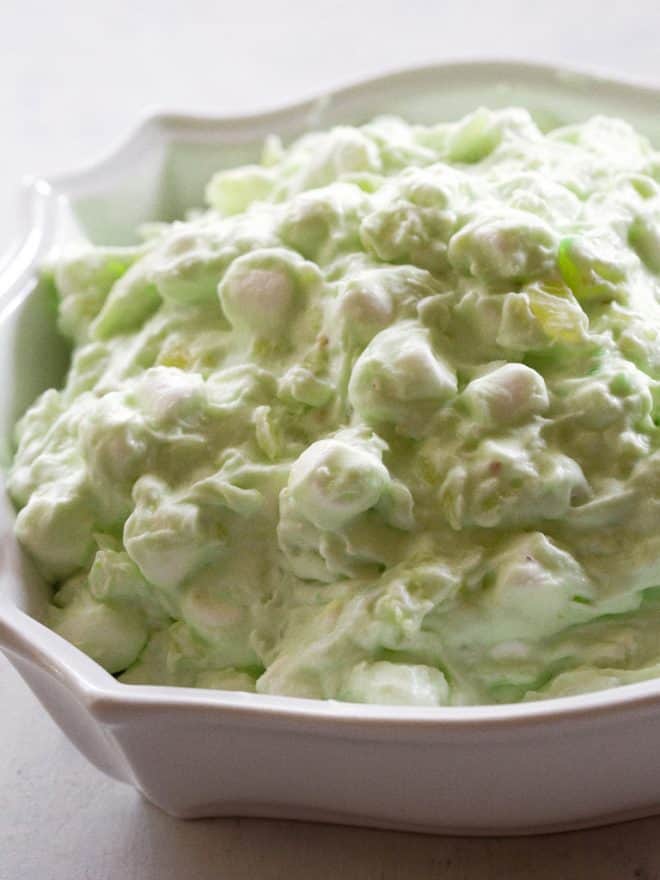
Proper storage is essential for maintaining the quality and freshness of Watergate Salad. The article advises that the salad will keep well in the refrigerator for at least two days when stored in an airtight container. This makes it a suitable make-ahead dish for parties and gatherings, reducing last-minute stress.
When it comes to serving, Watergate Salad is typically presented as a side dish or a light dessert. Its sweet and creamy profile pairs well with a variety of main courses, particularly those served at barbecues, picnics, or holiday buffets. Its vibrant green color also adds a cheerful visual element to any spread.
Broader Implications: The Enduring Appeal of Retro Desserts
The continued popularity of Watergate Salad, alongside other retro desserts like Ambrosia salad and Jell-O molds, speaks to a broader cultural trend. In an era often characterized by rapid innovation and sophisticated culinary techniques, there is a renewed appreciation for the comfort and familiarity of classic, nostalgic dishes. These desserts evoke memories of childhood, family traditions, and simpler times, offering a sense of continuity and connection to the past.
The enduring appeal of Watergate Salad lies in its perfect storm of factors: a simple and accessible recipe, a curious and memorable name tied to a significant historical event, and its role as a communal dish that brings people together. Whether prepared with homemade whipped cream or the convenience of Cool Whip, the "green fluff" continues to hold a special place in the hearts and on the tables of many Americans, a testament to the power of food to connect us to our history, our families, and our shared cultural experiences.
The recipe itself, stripped of its historical context, is a testament to accessible home cooking. The core ingredients – instant pudding, canned fruit, marshmallows, and a creamy element – are pantry staples for many. This inherent simplicity, combined with the unique branding opportunity presented by the Watergate scandal, created a culinary phenomenon that has outlasted many fleeting food trends. The fact that it remains a popular choice for potlucks over four decades after its name gained traction is a remarkable achievement for any dish, solidifying its status as a genuine American classic. The ongoing debate about fresh versus frozen whipped cream, while seemingly minor, highlights the way home cooks continually engage with and adapt recipes, infusing them with their own preferences and culinary knowledge, further perpetuating the dish’s life cycle.
