
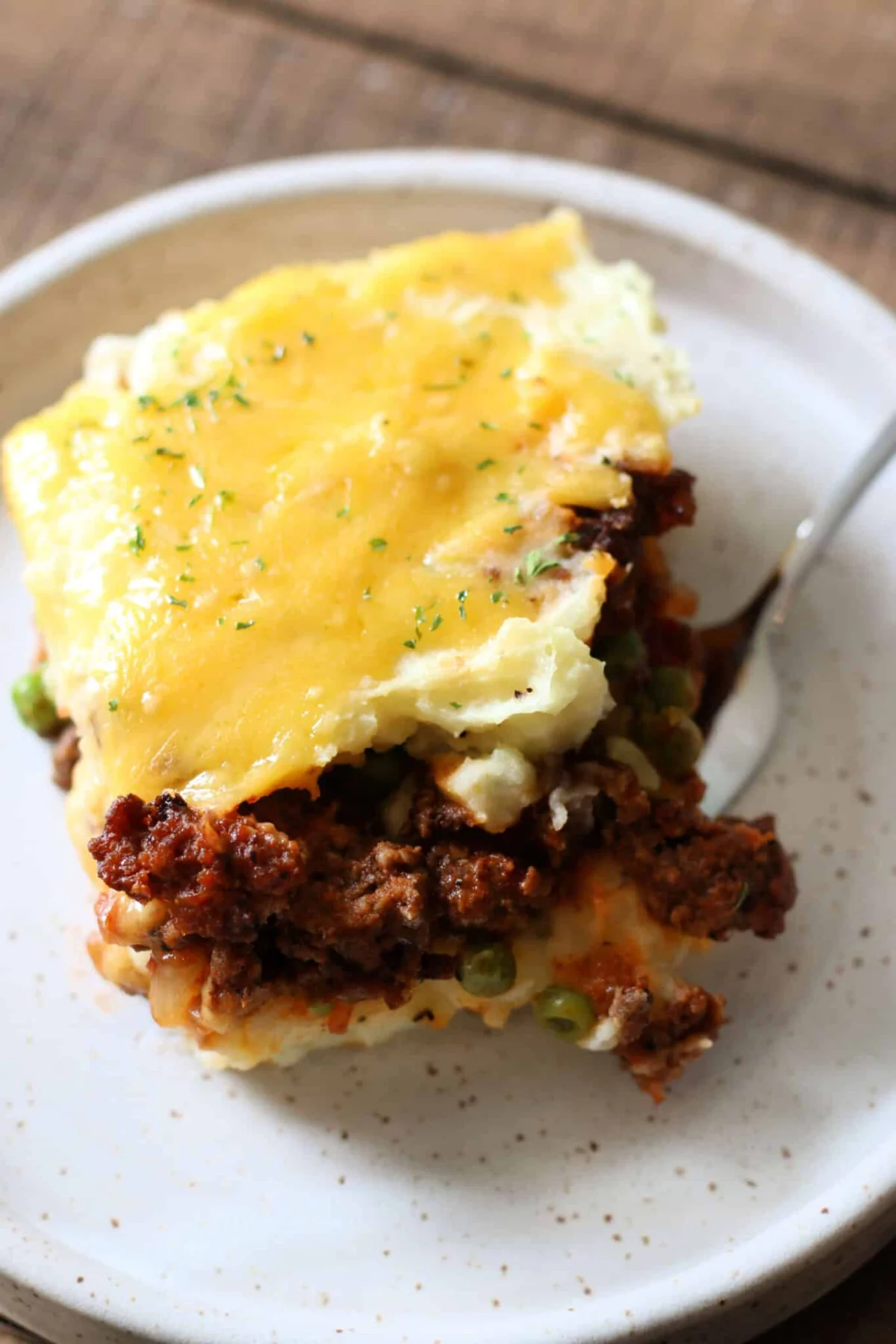
The Architectural Foundation of the Modern Casserole
The fundamental appeal of the Hamburger Mashed Potato Casserole lies in its three-tier construction. The base and crown of the dish are composed of high-starch potatoes—typically Russet or Yukon Gold—which are steamed to a precise level of tenderness before being emulsified with butter and half-and-half. This dairy integration is critical for structural integrity, providing a creamy medium that supports the heavier protein layer.

The central layer consists of ground beef, a staple of the North American diet. Unlike traditional meat pies that rely on flour-based gravies or "brown sauce," this specific iteration utilizes a combination of tomato paste and sweet barbecue sauce. This choice reflects a broader shift in domestic culinary preferences toward "sweet-savory" profiles, a trend that has seen consistent growth in the packaged sauce industry over the last decade. The inclusion of aromatic vegetables—onions, garlic powder, and paprika—serves to cut through the richness of the beef, while a secondary vegetable component, often mixed frozen peas and carrots, adds texture and nutritional density.

Chronology of Preparation: From Raw Ingredients to Finished Bake
The preparation of the Hamburger Mashed Potato Casserole follows a strict chronological sequence designed to maximize kitchen efficiency and ensure all components reach the final baking stage at optimal temperatures.

Phase I: Starch Processing
The process begins with the preparation of the potatoes. In a modern kitchen setting, high-pressure steaming has largely supplanted traditional boiling. Using an Instant Pot or similar pressure cooker, approximately 1.5 cups of water are added to the vessel, and the potatoes are elevated on a trivet to prevent waterlogging. Under high pressure, the potatoes reach a state of "fork-tenderness" within 20 minutes. For households without pressure-cooking technology, the alternative involves cubing the potatoes and boiling them in salted water until the cellular structure breaks down sufficiently for mashing.

Phase II: Protein Development
Simultaneously, the meat layer is developed in a separate skillet over medium-high heat. The ground beef is browned alongside diced onions, a process known as the Maillard reaction, which develops deep savory notes. Once the beef is no longer pink, excess lipids are drained—a crucial step to prevent the final casserole from becoming greasy. The seasoning phase follows, involving the integration of salt, pepper, garlic powder, and paprika. The introduction of tomato paste and barbecue sauce provides the necessary moisture and acidity to bind the beef crumbles together.

Phase III: Assembly and Thermal Finishing
The final stage is the assembly within an 8×8 inch baking dish. The methodology requires a "split-potato" approach: half of the mashed potatoes are spread across the bottom to form a foundation, followed by the entirety of the beef mixture. The remaining potatoes are spread on top, acting as a thermal blanket for the meat. A final layer of cheddar cheese is applied, which serves as both a flavor enhancer and a visual indicator of doneness. The dish is then baked at 350°F (177°C). Technical data suggests that metal pans require approximately 25 minutes of oven time, whereas glass pans, due to their different heat retention properties, require 30 minutes to achieve the desired "hot and bubbly" state.

Supporting Data: The Economics and Nutrition of Comfort Food
The rise of recipes like the Hamburger Mashed Potato Casserole can be contextualized through broader economic data. According to the United States Department of Agriculture (USDA), ground beef remains one of the most purchased protein sources in the country due to its versatility and relative affordability compared to whole muscle cuts. Similarly, potatoes are the most consumed vegetable in the United States, with the average American consuming approximately 110 pounds per year.

From a nutritional standpoint, the casserole provides a significant caloric density, making it a "satiety-heavy" meal. A standard serving offers a balance of macronutrients:

- Proteins: Derived from the ground beef and cheddar cheese.
- Carbohydrates: Sourced from the starchy potatoes and the sugars within the barbecue sauce.
- Fats: Provided by the beef, butter, and half-and-half.
- Micronutrients: Found in the integrated vegetables (carrots, peas, onions) and the vitamin C and potassium naturally present in potatoes.
Culinary Analysis: The "Shepherd’s Pie" Comparison
Culinary experts often categorize the Hamburger Mashed Potato Casserole as a "New World" variation of the Shepherd’s Pie. However, technical distinctions exist. A traditional Shepherd’s Pie must, by definition, use ground lamb. When beef is substituted, the dish is technically a "Cottage Pie." The Hamburger Mashed Potato Casserole diverges further by omitting the traditional Worcestershire sauce and beef stock in favor of a barbecue-centric profile.

This shift is indicative of the "Americanization" of European staples. The use of cheddar cheese as a topping, rather than the traditional scored potato crust, reflects a preference for melted textures common in the "casserole belt" of the United States. Furthermore, the inclusion of barbecue sauce introduces a smoky, sweet element that is absent in traditional British versions, aligning the dish more closely with American backyard cookout flavors.

Official Responses and Consumer Trends
While there are no "official" government statements on specific casserole recipes, the food service industry has noted a marked increase in "deconstructed" comfort foods. Market research firms like Mintel and Euromonitor have tracked a 15% increase in consumer interest in "home-style" meals since 2020, a trend driven by a desire for nostalgic flavors during periods of economic and social volatility.

Dietitians often suggest modifications to these recipes to align with modern health standards. Common recommendations include using lean ground beef (90/10 or higher), substituting half-and-half with whole milk or unsweetened almond milk to reduce saturated fat, and increasing the ratio of vegetables to meat. The "substitution ideas" mentioned in the original recipe—such as using different cheese varieties or varying the vegetable mix—allow for a customizable nutritional profile that can accommodate different dietary needs, including gluten-free requirements (provided the barbecue sauce is certified gluten-free).

Broader Impact and the Digital Recipe Economy
The Hamburger Mashed Potato Casserole is not merely a meal; it is a product of the digital recipe economy. Platforms like "365 Days of Crockpot," managed by culinary influencers like Karen Petersen, play a vital role in how modern families plan their nutrition. These platforms utilize affiliate marketing—specifically programs like the Amazon Services LLC Associates Program—to monetize free content. This ecosystem allows creators to provide detailed, step-by-step instructions and "filter" tools (allowing users to search by meat type or appliance) in exchange for a percentage of sales generated through linked kitchen tools and ingredients.

This digital shift has democratized culinary knowledge, allowing a specific recipe for a "Hamburger Mashed Potato Casserole" to reach millions of households instantly. The "pinning" culture on platforms like Pinterest further ensures the longevity of these recipes, turning a simple dinner idea into a recurring staple of the American domestic experience.

Implications for Future Domestic Cooking
The popularity of this casserole suggests that the future of domestic cooking will continue to prioritize "hybridization." By combining the speed of the Instant Pot with the traditional finish of the oven, and by blending international structures with local flavor profiles, home cooks are creating a new category of "efficient comfort." As kitchen technology continues to evolve, it is likely that we will see further iterations of the Hamburger Mashed Potato Casserole, perhaps incorporating plant-based meat alternatives or air-fryer finishing techniques to further reduce energy consumption and preparation time.

In conclusion, the Hamburger Mashed Potato Casserole stands as a testament to the resilience and adaptability of the American kitchen. It is a dish that honors the past through its layered, hearty structure while embracing the future through its use of modern appliances and bold, fusion-based flavors. For the modern family, it represents the ideal intersection of convenience, economy, and emotional satisfaction.
