
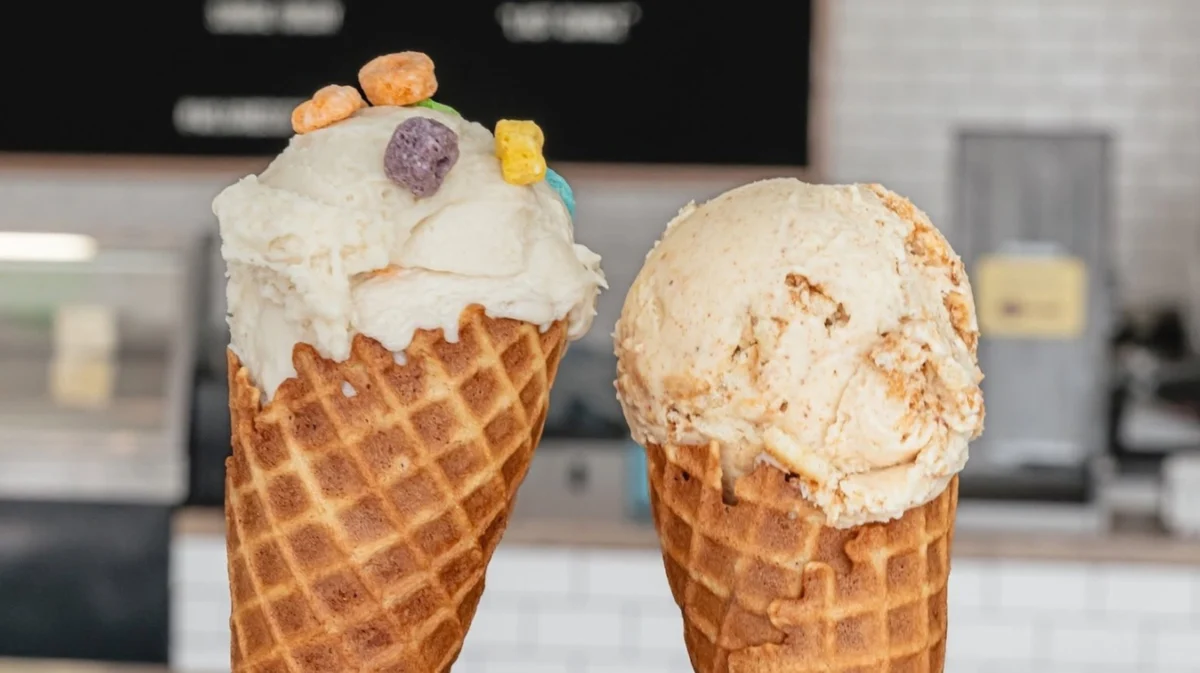
The culinary landscape of Houston has long been characterized by its diversity and willingness to push boundaries, but few establishments have managed to polarize and delight the public quite like Milk + Sugar Creamery. Since its inception in 2019, the shop has garnered a reputation not only for its decadent, artisanal frozen desserts but also for a firm, tongue-in-cheek policy: it does not serve vanilla. For a city that prides itself on hospitality, this refusal to provide a standard staple might seem counterintuitive, yet it has become a cornerstone of the brand’s identity, signaling a commitment to culinary innovation that has earned the shop national recognition.
A Journey from Inspiration to Implementation
The story of Milk + Sugar begins with the personal odyssey of husband-and-wife founders Percy and Chou Wong. During their extensive travels, the pair found themselves perpetually underwhelmed by the static, mass-produced offerings found in traditional freezer aisles. They observed that while the global ice cream market was expanding into adventurous territories, many local shops remained tethered to the "Big Three"—vanilla, chocolate, and strawberry—as a safety net.
Upon returning to Houston, the Wongs sought to bridge the gap between high-end pastry artistry and the accessibility of a neighborhood scoop shop. They spent months in the R&D phase, obsessing over the physics of ice cream. Their primary goals were technical: achieving a specific "chew," ensuring a controlled melting speed, and—perhaps most importantly—eliminating the crystallization that often plagues homemade or small-batch ice creams. By 2019, they were ready to launch, opening their first location with a manifesto that would become their signature: "Life is too short for plain vanilla."
The Philosophy of Flavor Over Tradition
The decision to exclude vanilla from the menu was not a random oversight; it was a deliberate strategic move designed to force the customer out of their comfort zone. In the competitive retail food environment, many businesses rely on the "vanilla consumer" to ensure steady sales. The Wongs, however, opted for a high-risk, high-reward model. By removing the option for a basic flavor, they ensured that every interaction between the customer and the menu was an engagement with their specific creative vision.
This policy is reinforced by signage within their shops, including a notice that explicitly states, "Seriously, we ain’t got vanilla." While some patrons initially express confusion, the long-term data suggests that this constraint actually increases customer satisfaction. By removing the "default" choice, the shop forces a trial-and-error process that frequently leads customers to discover new favorites, such as their Cereal Milk or Thai Tea offerings.
The Crafting Process: A 24-Hour Commitment
To maintain the quality required to justify the absence of traditional flavors, the production process at Milk + Sugar is intensive. Unlike industrial ice cream manufacturers that rely on stabilizers and high-speed churning to produce large quantities, the Wongs operate on a weekly production schedule. Each batch undergoes a 24-hour maturation process, allowing the fats and sugars to emulsify properly, which results in the dense, smooth mouthfeel that reviewers frequently cite as a hallmark of their product.
This level of detail creates a natural supply chain bottleneck. Because the ice cream is crafted in small batches once per week, the inventory is highly dynamic. When a specific flavor runs out, it is often not replaced until the following week’s production cycle. This scarcity, combined with the shop’s late-night operating hours on weekends, has led to a consistent "line culture" at their three Houston-area locations. Despite the wait times, the brand has maintained a high customer retention rate, indicating that the scarcity model acts as a marketing tool rather than a deterrent.
Analyzing the Menu and Consumer Trends
Milk + Sugar’s menu typically consists of 12 permanent staples supplemented by seasonal, limited-run flavors. The success of flavors like "Dulce de Horchata"—a fusion of traditional Latin American horchata with a caramel swirl—highlights the shop’s strategic alignment with Houston’s unique demographic profile. By incorporating elements of local food culture into their base, they ensure that the lack of vanilla is rarely missed.
Supporting data from customer reviews on platforms like Yelp indicates a distinct shift in consumer sentiment. While reviewers often note that they are "vanilla-first" eaters, the quality of the artisanal mix-ins—ranging from oatmeal cream pies to house-made streusels—frequently converts these skeptics. The "Happy Wife" and "Yum Cha" flavors, in particular, are noted for their complex flavor profiles, which rely on the interaction between the base cream and the texture of the add-ins.
Broader Impact on the Houston Dessert Scene
The rise of Milk + Sugar corresponds with a broader national trend in the artisanal food sector: the movement toward "bespoke" experiences. According to market research on the specialty food industry, consumers are increasingly seeking out brands that offer a distinct narrative or a curated experience. By positioning themselves as a destination rather than a convenience, the Wongs have moved their business from a commodity provider to a luxury experience provider.
This shift has significant implications for other small businesses in the industry. The success of a "no-vanilla" policy suggests that niche branding can be a viable strategy for independent operators. By curating a smaller, more focused menu, businesses can reduce food waste, simplify their supply chain, and foster a deeper emotional connection with their consumer base.
Recognition and Future Outlook
The effectiveness of this model was validated when the shop was featured on Tasting Table’s list of the best ice cream shops in the United States. This recognition brought the brand from a local Houston curiosity to a state-wide destination. The inclusion of gluten-free options and a rotating vegan flavor demonstrates that while the shop is firm on its "no-vanilla" stance, it is not exclusionary regarding dietary needs.
Looking ahead, the challenge for Milk + Sugar will be scaling this model without diluting the quality that made the brand successful in the first place. Maintaining a 24-hour production cycle across multiple locations requires significant operational discipline. However, given the Wongs’ history of rigorous quality control, the brand appears poised to continue its trajectory.
Conclusion: The Vanilla Paradox
The success of Milk + Sugar Creamery serves as a case study in the power of brand identity. By effectively telling the customer "no," the Wongs have paradoxically provided a more satisfying experience. The shop is a testament to the idea that if a product is of high enough quality, the consumer is willing to surrender their expectations in exchange for a superior culinary discovery.
In a world of infinite choice, where the "vanilla" option is everywhere, Milk + Sugar has managed to thrive by simply opting out of the standard. For the Houston community, the shop has become a fixture, not because it provides what everyone expects, but because it provides exactly what they didn’t know they wanted. The "no-vanilla" policy, once seen as a hurdle, is now recognized as a vital component of the shop’s success, proving that in the world of artisanal creamery, the most important ingredient is the courage to define the menu on your own terms.
