
For decades, Little Caesars carved out a dominant niche in the American quick-service restaurant (QSR) landscape by positioning itself as the undisputed king of value. Founded in 1959 in Garden City, Michigan, by Mike and Marian Ilitch, the chain revolutionized the industry with the "Hot-N-Ready" concept, which allowed customers to walk in and purchase a large pepperoni pizza without the wait. However, as the restaurant industry navigates the complexities of post-pandemic inflation, labor shortages, and shifting consumer expectations, the brand’s long-standing reputation for reliable, low-cost convenience is facing a wave of scrutiny. A growing chorus of customer feedback suggests that the brand is struggling to balance its historical price-point identity with the realities of modern operational costs and quality control.
The Evolution of the Value Proposition
The historical success of Little Caesars was built upon a clear, immutable promise: a standardized product at an accessible price. For years, the five-dollar "Hot-N-Ready" pizza served as a benchmark for fast-food affordability. In the early 2010s, this price point became synonymous with the brand, shielding it from many of the quality critiques directed at higher-end competitors.
However, the economic climate between 2020 and 2024 has fundamentally altered this dynamic. Supply chain disruptions, coupled with the rising cost of ingredients such as mozzarella and wheat, forced the company to phase out its signature price point. By 2022, the brand officially raised the price of its base "Hot-N-Ready" pepperoni pizza to $5.55, and in many markets, prices have climbed significantly higher. This shift has triggered a psychological disconnect for long-term patrons who viewed the chain as a recession-proof staple. The transition from a "five-dollar pizza" to a standard QSR pricing model has made the product’s inherent limitations—which were previously excused by the rock-bottom price—much more visible to the consumer.
Systematic Concerns Regarding Product Consistency
One of the most persistent complaints surfacing on digital forums and consumer advocacy platforms is the issue of product inconsistency. In the fast-food sector, predictability is the primary metric of success; consumers choose chains specifically because they expect the same experience in Seattle as they do in Miami.
Recent reports from customers indicate a decline in this standard. Observers note that the quality of the dough, the volume of toppings, and the overall bake temperature appear to vary wildly from one franchise location to another. This lack of uniformity is often attributed to the decentralized nature of franchise operations, where individual store managers may face pressure to cut costs to maintain margins in the face of rising food prices. When a customer receives a product that deviates from their expectations, the perception of value diminishes, leading to the "roll of the dice" sentiment expressed by frequent diners.
Ingredient Ratios and Structural Integrity
Beyond pricing and consistency, a significant portion of consumer frustration centers on the composition of the pizza itself. The "grease factor" remains a frequent point of contention. While pizza is inherently a high-fat food, anecdotal reports from social media platforms suggest that many patrons perceive the current iteration of the product as excessively oily. This has led to the proliferation of "hacks" among the fanbase, such as the practice of turning the box upside down to drain excess moisture—an act that underscores a fundamental dissatisfaction with the current preparation methods.
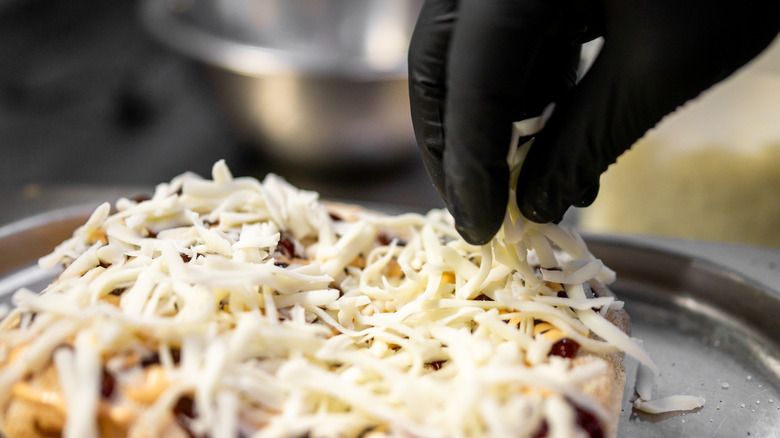
Furthermore, there is a recurring grievance regarding the scarcity of ingredients. Customers have frequently alleged that their orders are under-sauced or sparsely cheesed, leaving the crust to carry the burden of flavor. In the pizza industry, the ratio of sauce-to-cheese-to-dough is a delicate balance; when that balance is tilted toward the dough, the consumer is left with a product that feels "cheap" rather than "value-oriented." This is exacerbated by claims that the crust itself has lost its structural integrity, with some patrons describing the texture as akin to cardboard or overly dry, suggesting a potential change in dough hydration or proofing times.
The Financial Implication of Inflation
The broader impact of these complaints is a shift in market perception. Little Caesars is no longer competing solely on price; it is now competing on value-for-money. When the gap between the price of a Little Caesars pizza and a slightly more premium "fast-casual" pizza narrows, consumers are more likely to scrutinize the quality of the ingredients.
Economic data confirms that the QSR industry has seen a 15% to 25% increase in menu prices across the board since 2021. For a brand like Little Caesars, which built its entire business model on being the cheapest option available, these increases are particularly damaging. Data from industry analysts suggests that when "budget" brands raise prices, they lose their core demographic—those who prioritize cost over quality—while failing to capture a new demographic that prioritizes quality over cost. This leaves the brand in a difficult "middle ground" where it risks alienating its base without successfully upgrading its image.
Corporate Response and Operational Challenges
While Little Caesars maintains a massive global footprint—consistently ranking among the top three pizza chains in the United States by store count—the company has remained largely silent on specific complaints regarding product quality. Typically, large chains address such feedback through internal operational audits, training programs for franchise employees, and updated prep manuals.
However, the labor market for the restaurant industry remains volatile. High turnover rates in QSR environments mean that maintaining consistent training across thousands of locations is a monumental task. If employee training is truncated to save costs, the result is almost always a decline in the quality of the final product. Analysts suggest that the complaints regarding "lack of cheese" or "soggy crust" are symptomatic of a workforce that is either undertrained or working under extreme time constraints to meet the "Hot-N-Ready" output requirements during peak hours.
Looking Toward the Future
The current state of Little Caesars reflects a broader trend within the American dining landscape: the "value-menu crisis." As consumer purchasing power is strained by inflation, the tolerance for low-quality, high-cost food is at an all-time low. For Little Caesars to regain its standing, the company may need to pivot away from the strategy of aggressive cost-cutting and toward a more quality-focused marketing and operational strategy.
Whether this involves a revision of ingredient sourcing, a renewed focus on training, or a total restructuring of the "Hot-N-Ready" promise remains to be seen. What is clear is that the current discourse surrounding the brand highlights a significant disconnect between the company’s traditional identity and the modern consumer’s demand for quality. For now, the chain remains a significant player in the market, but the growing volume of negative feedback serves as a warning that even the most loyal customer base has a limit when it comes to the intersection of rising prices and falling standards. The challenge for Little Caesars in the coming years will be to prove that it can still provide the value that made it an American household name without sacrificing the very quality that keeps customers returning to the table.
