
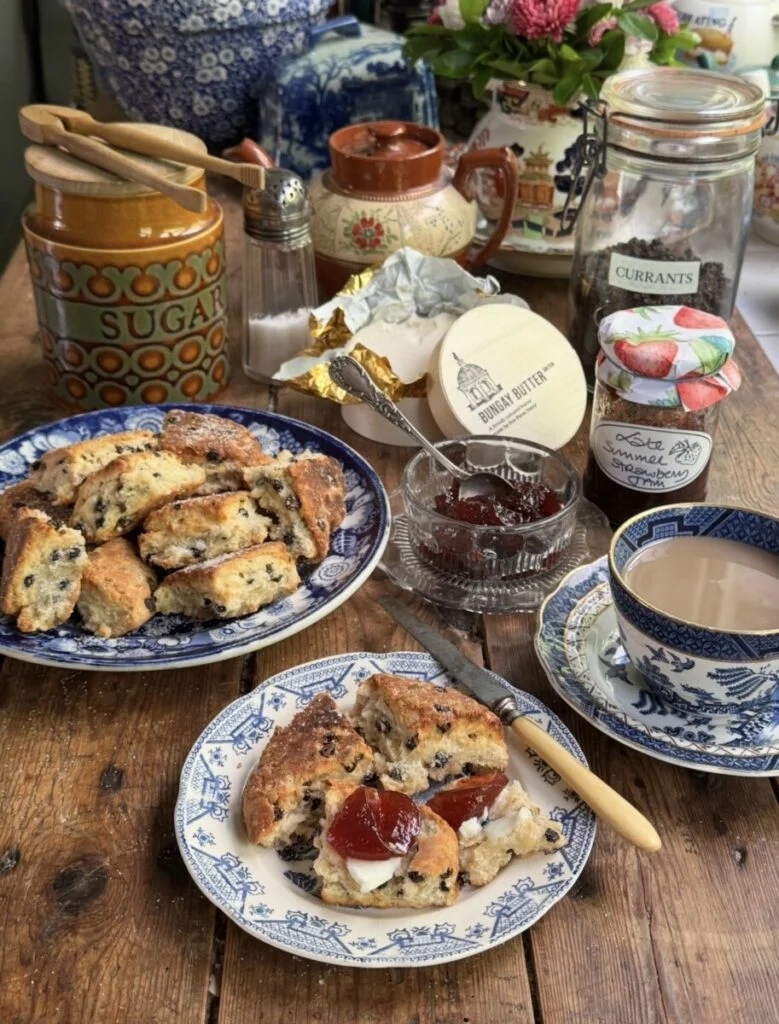
Historical Origins and Etymology
The nomenclature of the Singin Hinny is derived from two primary linguistic influences local to the region. The term "hinny" is a quintessential North East English endearment, synonymous with "honey," "love," or "dear," frequently used in colloquial speech to express affection. The prefix "singin" refers to the auditory experience of the baking process. When the wet, rich dough is placed onto a hot, heavy griddle, the combination of butter and lard reacts to the high surface temperature, creating a rhythmic, sustained sizzling or hissing sound. Folklore has long suggested that the name emerged from domestic settings where, when hungry children asked if the treats were ready, a cook would reply that they were "still singin, hinny," signifying that the cakes required more time on the heat.

Culinary Methodology and Technical Specifications
The preparation of a traditional Singin Hinny differs significantly from modern scone-making. Unlike contemporary recipes that often utilize baking powder or self-raising flour to achieve a light, aerated rise, the traditional method relies on the fat-to-flour ratio and the direct heat of the griddle to produce a dense, crumbly, and buttery texture.

The use of lard is critical to the authentic profile of the cake. In the 19th and early 20th centuries, lard was a staple fat in northern households due to its accessibility and high smoke point, which allowed for consistent cooking on open range fires or heavy iron griddles. The dough is typically rolled out into large rounds, which are then scored into quadrants rather than being cut into individual, uniform shapes. This practice of "large-round" cooking mirrors historical Scottish bannock or scone preparation, emphasizing a communal approach to serving.

The Role of Domestic Implements
Central to the legacy of the Singin Hinny is the "girdle" (or griddle) and the specialized tools used for turning the cakes. The traditional "Singin Hinny hands"—a wooden, tong-like implement—were essential for handling the cakes on the hot iron surface without damaging their delicate, crumbly crust. These implements highlight a period in British culinary history where domestic tools were purpose-built for specific regional recipes, reflecting a high degree of specialization in the kitchens of working-class families.

Cultural Significance and Evolution
Singin Hinnies were traditionally served during high tea and supper, often acting as a centerpiece for celebratory occasions such as birthdays. Their status as a staple of the North East diet was solidified during the height of the coal industry, where calorie-dense, portable, and easily cooked items were highly valued.

In recent years, there has been a resurgence of interest in regional British baking, leading to the Singin Hinny being categorized by organizations such as the National Trust as a significant element of regional heritage. Historical sites in Northumberland, including Cragside—the home of Lord Armstrong and a site of major historical importance—have highlighted the recipe as part of their efforts to preserve local culinary traditions. This institutional recognition has helped transition the Singin Hinny from a localized domestic practice to a recognized component of Northern English gastronomic identity.

Comparative Analysis: Singin Hinnies vs. Welsh Cakes
While the Singin Hinny and the Welsh cake share a common lineage as "griddle cakes," their technical differences are noteworthy. Welsh cakes frequently incorporate a higher sugar content and a different spice profile, often utilizing mixed spice or cinnamon more heavily than the traditional Singin Hinny. Furthermore, the Singin Hinny’s historical reliance on the specific butter-to-lard ratio provides a savory undertone that balances the sweetness of the currants, distinguishing it from the often sweeter, more dessert-oriented profile of the Welsh variety.

Socio-Economic Implications of Traditional Baking
The survival of the Singin Hinny recipe provides a unique window into the socio-economic history of Northern England. The reliance on currants, which were a luxury import in the early 19th century, suggests that these cakes were often reserved for special occasions rather than daily consumption. The transition of the recipe through generations serves as a proxy for the shifting availability of ingredients and the modernization of domestic cooking equipment. As gas and electric stoves replaced the open coal ranges of the Victorian era, the technique of "singing" the dough underwent a subtle evolution, requiring cooks to adapt their temperature control to maintain the signature texture.

Nutritional and Dietary Context
Modern nutritional analysis of the traditional Singin Hinny reveals a profile consistent with high-energy historical diets. With an average calorie content of approximately 128 kcal per serving, primarily derived from fats (6g) and carbohydrates (16g), the cake served as an efficient energy source for laborers and children alike. The current shift toward smaller portions and, occasionally, the substitution of lard with vegetable-based fats, reflects broader contemporary health trends; however, purists maintain that the inclusion of animal fats is essential for achieving the authentic flavor and mouthfeel associated with the traditional recipe.

The Legacy of Regional Heritage
The preservation of the Singin Hinny is part of a broader movement to document and sustain local food cultures that are often overshadowed by standardized, globalized baking trends. By analyzing the oral history associated with the "Singin Hinny hands" and the specific terminology used by older generations—such as the reference to the "girdle"—researchers and culinary historians can better understand the social cohesion fostered by domestic rituals.

In conclusion, the Singin Hinny is more than a simple griddle cake; it is a cultural marker of the North East. Its longevity in the face of changing culinary landscapes is a testament to the value placed on local tradition and the transmission of domestic skills across generations. As institutions and home cooks alike continue to document these recipes, the Singin Hinny serves as an enduring link to the social and economic history of Northumberland and County Durham, ensuring that the "singing" of the griddle remains a part of the region’s living heritage.
