
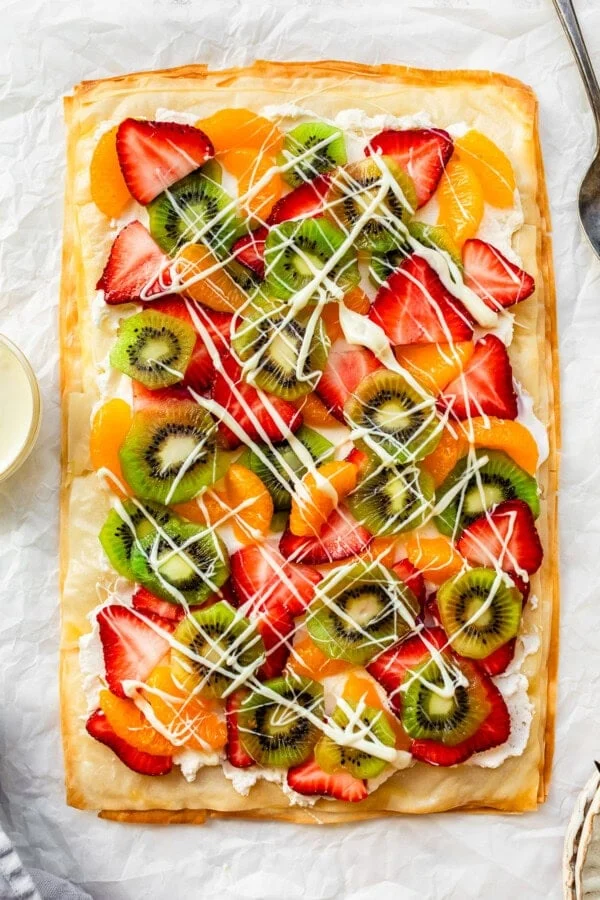
The phyllo fruit tart stands as a testament to the enduring appeal of light, fresh desserts, particularly as the warmer months of spring and summer beckon. Characterized by its delicate, flaky phyllo dough crust, a creamy, tangy cream cheese frosting, a vibrant array of fresh seasonal fruits, and a sophisticated drizzle of white chocolate, this dessert offers an elegant yet accessible culinary experience. It embodies a blend of ancient pastry techniques with contemporary preferences for lighter, fruit-forward indulgences, making it a staple for casual gatherings and formal occasions alike.
The Ancient Art of Phyllo: A Historical Foundation

At the heart of this delightful tart lies phyllo dough, a paper-thin, unleavened pastry fundamental to numerous cuisines across the Balkans, Middle East, and Mediterranean. The history of phyllo, or filo, dough is rich and stretches back centuries, with its origins often traced to the Byzantine Empire. Culinary historians suggest that early forms of phyllo-like pastries were developed in Constantinople, evolving from simpler flatbreads into the intricate, layered dough we recognize today. The technique of stretching dough to such extreme thinness was a significant culinary innovation, requiring considerable skill and patience.
Over time, phyllo became integral to Ottoman cuisine, giving rise to iconic dishes such as baklava and börek. Its widespread adoption throughout the Ottoman Empire led to regional variations and countless applications, from savory pies filled with meat and cheese to sweet confections layered with nuts and syrup. The delicate texture and crispness achieved through layering buttered sheets of phyllo provided a distinct sensory experience, setting it apart from heavier, yeasted doughs or shortcrust pastries. The transition of phyllo from a highly specialized, labor-intensive dough prepared by skilled artisans to a widely available, frozen product in modern supermarkets has significantly broadened its accessibility, empowering home bakers to recreate complex pastries with relative ease. This convenience is a key factor in the phyllo fruit tart’s popularity, allowing for impressive results without the extensive time commitment traditionally associated with such delicate crusts.
The Evolution of the Fruit Tart in Dessert Traditions

The concept of a fruit tart itself boasts a venerable history, evolving from medieval open-faced pies that showcased seasonal produce. Early tarts were often rustic, featuring thick crusts and simple fruit fillings, sometimes sweetened with honey or early forms of sugar. As sugar became more accessible and pastry-making techniques advanced during the Renaissance and subsequent culinary eras, tarts grew in sophistication. French pâtisserie, in particular, refined the art of the fruit tart, transforming it into an elegant dessert with delicate crusts, rich custards or creams, and meticulously arranged fresh fruit.
The modern fruit tart, often featuring a shortcrust or sweet pastry shell, a creamy filling like crème pâtissière, and a glazed fruit topping, became a symbol of refined dessert artistry. The phyllo fruit tart, however, presents a delightful divergence from this tradition. By substituting the heavy shortcrust with light, airy phyllo, it offers a contemporary interpretation that aligns with desires for less caloric and less dense desserts. This evolution reflects a broader trend in culinary innovation where classic structures are re-imagined with lighter, more health-conscious ingredients while retaining aesthetic appeal and flavor complexity.
Crafting the Modern Tart: Components and Culinary Appeal

The phyllo fruit tart’s structure is deceptively simple, yet each component plays a crucial role in its overall appeal.
- The Flaky Phyllo Crust: The foundation is a crisp, golden phyllo crust, achieved by layering multiple sheets brushed with melted butter. This process creates hundreds of individual layers that separate and crisp during baking, resulting in an exceptionally light and airy base that contrasts beautifully with the creamy topping. Unlike traditional pie crusts that require precise handling and chilling, phyllo offers a more forgiving and quicker alternative for achieving a desirable flaky texture.
- The Cream Cheese Frosting: A key element is the tangy, smooth cream cheese frosting. This component provides a rich, slightly sweet counterpoint to the tartness of the fruit and the delicate crunch of the phyllo. Culinary experts often highlight cream cheese as an ideal base for light desserts, as its inherent tanginess balances sweetness, preventing the dessert from becoming cloyingly rich. Its creamy texture also acts as a perfect adhesive for the fruit, ensuring an even distribution of flavor in every bite.
- The Fresh Fruit Medley: The visual and flavor centerpiece of the tart is the fresh fruit. The choice of fruit is paramount and dictates the tart’s seasonal character. Berries such as strawberries, blueberries, raspberries, and blackberries are popular choices for their vibrant colors and sweet-tart profiles. Sliced kiwis, peaches, grapes, and mandarins can also add diverse textures and flavors. The use of seasonal fruit not only ensures peak freshness and flavor but also aligns with sustainable eating practices, a growing concern among consumers.
- The White Chocolate Drizzle: The final touch, a drizzle of melted white chocolate, adds an extra layer of sweetness and a touch of sophisticated decadence. White chocolate, with its creamy texture and vanilla notes, complements the fruit without overpowering its natural flavors. It also enhances the visual presentation, creating an appealing contrast against the colorful fruit.
Nutritional Perspectives on Light Desserts
From a nutritional standpoint, the phyllo fruit tart, when compared to heavier traditional desserts, offers a more balanced profile. While it contains fats from butter, cream cheese, and white chocolate, the emphasis on fresh fruit significantly boosts its vitamin, mineral, and fiber content. A typical serving, as indicated by nutritional data, provides approximately 247 kcal, 31g carbohydrates, 5g protein, 12.5g fat (with 6.5g saturated fat), 22mg cholesterol, 207.5mg sodium, 2.5g fiber, and 17g sugar.

Dietitians frequently advocate for incorporating desserts that feature natural sugars from fruit rather than relying solely on refined sugars. The fiber content from the fruit aids in digestion and can contribute to a feeling of satiety. While the tart is an indulgence, its portion-controlled nature and reliance on fresh produce make it a more conscious choice than many denser, cream-laden alternatives. The "light" aspect not only refers to its airy texture but also its relative impact on caloric intake, making it an attractive option for those seeking a sweet treat without excessive guilt.
The Appeal of Seasonal Ingredients and Culinary Trends
The phyllo fruit tart strongly resonates with the contemporary culinary movement that prioritizes seasonal and fresh ingredients. Consumers are increasingly discerning about the origin and quality of their food, gravitating towards produce that is at its peak flavor and freshness. This emphasis on seasonality influences menu development in restaurants and home cooking alike. A spring tart might feature strawberries and rhubarb, while a summer rendition bursts with blueberries, peaches, and raspberries. This adaptability ensures the tart remains relevant and exciting throughout the year, reflecting the bounty of each season.

Moreover, the tart taps into the broader trend of seeking lighter, less heavy desserts. There is a perceptible shift away from overly rich, sugar-laden confections towards options that offer a cleaner, more refreshing finish to a meal. This aligns with a growing health consciousness and a desire for balance in dietary choices. The phyllo fruit tart perfectly encapsulates this trend, offering a delicate sweetness and vibrant freshness that satisfies without overwhelming the palate.
Culinary Accessibility and Home Baking Trends
The ease of preparation is a significant factor in the phyllo fruit tart’s widespread appeal among home bakers. While the finished product appears sophisticated, the process is remarkably straightforward, particularly with the availability of pre-made phyllo dough. This convenience allows individuals of varying baking skill levels to achieve professional-looking results. The recipe’s steps—melting butter, layering phyllo, baking, preparing frosting, and arranging fruit—are intuitive and do not require specialized equipment or advanced techniques.

This accessibility contributes to a broader trend in home baking, where consumers are increasingly looking for recipes that deliver impressive outcomes with minimal fuss. The phyllo fruit tart is a perfect example of a "shortcut" dessert that doesn’t compromise on quality or presentation. Its ability to be assembled relatively quickly, especially if the crust is baked ahead of time, makes it ideal for entertaining or impromptu sweet cravings. This blend of elegance and ease makes it a favorite for those who wish to create something special without spending hours in the kitchen.
Expert Commentary and Broader Implications
Culinary experts often commend recipes like the phyllo fruit tart for their ingenuity in combining classic elements with modern convenience. "This tart exemplifies how a traditional ingredient like phyllo dough can be adapted to fit contemporary dietary preferences and time constraints," notes a prominent food blogger, emphasizing the tart’s balance between indulgence and mindful eating. Nutritionists frequently point to such fruit-centric desserts as a positive step towards healthier dessert choices. "Integrating a diverse range of fresh fruits into desserts not only enhances flavor but also significantly boosts the nutritional value, offering essential vitamins and antioxidants," states a registered dietitian, underscoring the health benefits.

The broader implications of such desserts extend to the food industry, influencing product development towards lighter options and increased utilization of fresh produce. It also reinforces the value of home cooking and baking as a creative outlet that can be both rewarding and relatively simple. The phyllo fruit tart is more than just a recipe; it represents a culinary philosophy that champions freshness, balance, and aesthetic pleasure in the realm of desserts. It encourages experimentation with seasonal ingredients and offers a versatile canvas for personalizing flavors and textures.
Versatility and Customization: A Canvas for Creativity
Beyond the standard preparation, the phyllo fruit tart offers immense versatility, allowing for endless customization to suit individual preferences or available ingredients.

- Fruit Combinations: While berries are popular, other fruits like sliced stone fruits (peaches, nectarines, plums), tropical fruits (mango, pineapple, kiwi), or even a combination of citrus segments can be used. The key is to select fruits that are ripe but firm enough to hold their shape.
- Flavor Enhancements: A light apricot or berry glaze can be brushed over the fruit to add shine and an extra layer of sweetness, while also helping to preserve the fruit’s freshness. A sprinkle of toasted nuts (almonds, pistachios) or shredded coconut can add textural complexity and complementary flavors.
- Crust Variations: For a slight savory twist or added depth, a pinch of cinnamon or cardamom can be mixed with the melted butter brushed onto the phyllo layers. Some might even experiment with a hint of lemon zest in the butter for a brighter crust.
- Frosting Alternatives: While cream cheese frosting is classic, a lighter Greek yogurt-based cream or a mascarpone cheese filling could be used for a different texture and flavor profile. A lemon curd layer beneath the fruit could also introduce a zesty tang.
These variations allow the phyllo fruit tart to adapt to different occasions and palates, ensuring its continued relevance in the dessert repertoire.
Preservation and Presentation
Proper storage is crucial to maintain the tart’s delicate texture and the freshness of its components. To prevent the phyllo crust from becoming soggy, it is generally recommended to store the assembled tart in the refrigerator. However, for optimal crispness, some experts suggest assembling the tart shortly before serving, especially if using very juicy fruits. If preparing ahead, the baked phyllo crust can be stored at room temperature in an airtight container for a day or two, and the cream cheese frosting can be made and refrigerated separately. The fruit can be washed and prepped, then assembled just before guests arrive.

When presenting the tart, careful slicing with a sharp, thin knife is essential to maintain the integrity of the flaky crust and the artful arrangement of the fruit. Serving it slightly chilled enhances the refreshing quality, making it an ideal conclusion to any spring or summer meal.
In conclusion, the phyllo fruit tart is more than just a dessert; it is a culinary narrative that spans historical traditions and modern dietary preferences. Its accessibility, versatility, and refreshing flavor profile have cemented its place as a beloved option for those seeking an elegant yet light sweet treat. As culinary trends continue to emphasize fresh ingredients and balanced indulgence, this tart stands as a timeless example of how simplicity, when executed with care, can yield extraordinary results.
