
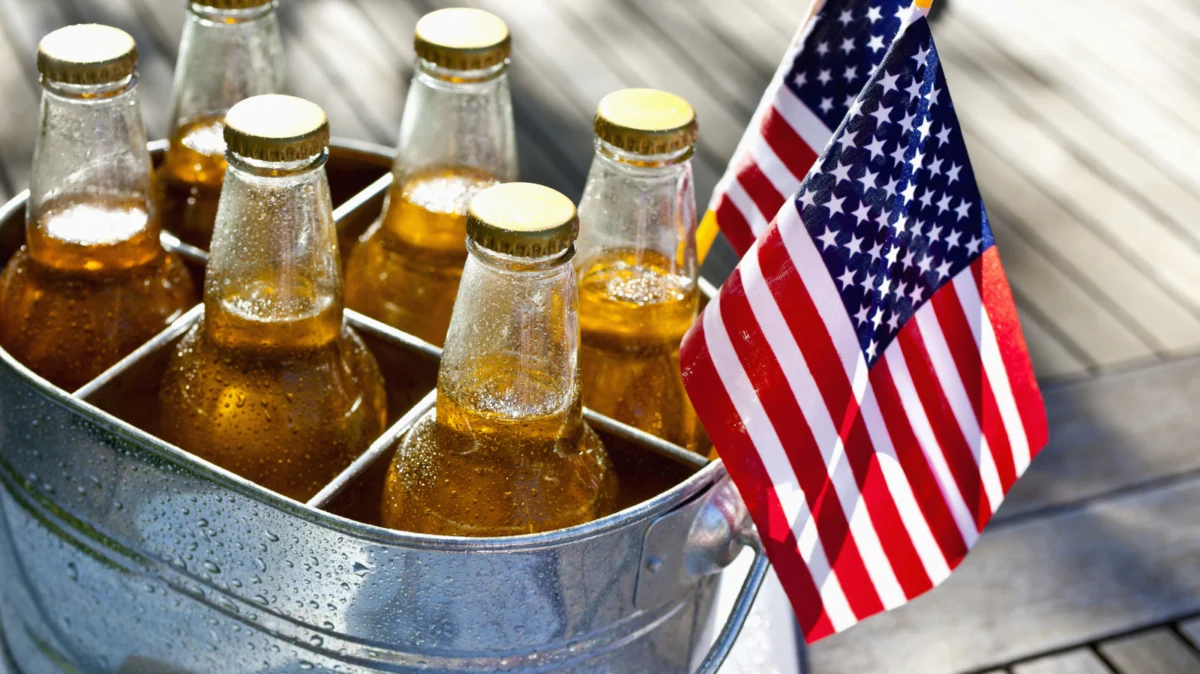
The American beer landscape is dominated by a handful of historic legacy brands that have defined the domestic market for over a century. While craft breweries and artisanal micro-batch producers have captured significant market share in the last two decades, the "Big Beer" segment remains the bedrock of the industry. In a recent comparative analysis of 10 iconic American beer brands, Miller High Life emerged as the top-rated selection, surpassing perennial favorites such as Yuengling and Budweiser. This distinction reflects a shifting consumer preference toward accessible, consistent, and well-balanced lagers that offer high utility without sacrificing quality.
Historical Context and The Evolution of Miller High Life
The origins of Miller High Life date back to 1903, when the Miller Brewing Company, founded by German immigrant Frederick Miller in Milwaukee, Wisconsin, introduced the product as its flagship brand. The name "High Life" was intended to capture the burgeoning optimism of the Edwardian era, positioning the beer as an accessible luxury for the working and middle classes.
Throughout the 20th century, the brand successfully navigated the turbulent landscape of American brewing, including the restrictive years of Prohibition and the subsequent consolidation of the industry. By the mid-1900s, it had solidified its reputation as the "Champagne of Beers," a marketing slogan that emphasized the product’s carbonation and perceived premium nature despite its mass-market price point. Unlike many of its competitors, which have undergone significant recipe shifts to accommodate changing industrial manufacturing standards, High Life has maintained a relatively consistent profile, relying on its proprietary yeast strain and Pacific Northwest hops.
The Anatomy of an Iconic Lager
To understand why Miller High Life currently leads consumer rankings, one must examine the technical specifications of the brew. With an Alcohol by Volume (ABV) of 4.6%, the beer occupies a "sessionable" space in the market—strong enough to provide a traditional beer experience but light enough to appeal to a broad demographic, including those who typically eschew heavier craft ales.
The flavor profile is characterized by a deliberate lack of aggressive sweetness. The brewing process utilizes a precise balance of malted barley and hops, resulting in a subtle bitterness that serves to clean the palate rather than overwhelm it. Laboratory and sensory analyses often highlight the absence of "skunking" or medicinal metallic notes, which are common faults in mass-produced light lagers. The mouthfeel is notably crisp, and the finish is dry, ensuring that the beer remains refreshing even in warmer environments. This structural integrity is what separates it from many of its competitors, which are often criticized for excessive wateriness or a lingering, syrupy aftertaste.
Comparative Market Performance
When evaluated against industry peers like Yuengling (America’s oldest operating brewery) and Budweiser (the historic volume leader), Miller High Life consistently scores higher in consumer "blind" taste tests and enthusiast forums. While Yuengling is often praised for its historical significance and amber-style characteristics, critics note that its regional availability and flavor profile can be polarizing. Conversely, Budweiser, while ubiquitous, has faced challenges in recent years regarding brand identity and perceived changes in consistency.
Data from industry analysts suggests that consumers are moving away from the "Light" category of beers, which often emphasize calorie reduction at the expense of body and flavor. High Life effectively occupies a middle ground: it provides the satisfying "full" body that many drinkers crave, yet it remains significantly more drinkable than heavier, malt-forward regional beers. This versatility has turned the brand into a cultural staple, appearing in everything from high-end cocktail bars—where it is used as a base for the "Spaghett" or as a sidecar to a shot of whiskey—to backyard social gatherings.
Economic Factors and Consumer Accessibility
The value proposition of Miller High Life is a primary driver of its enduring success. In an era of significant inflationary pressure on consumer goods, the beer remains one of the most affordable options on the market. As of late 2026, a 30-pack of 12-ounce cans is retailing at approximately $18.56, effectively pricing the product at roughly $0.62 per unit.
This pricing strategy has shielded the brand from the "luxury tax" often associated with craft beer, where a single four-pack of 16-ounce cans can retail for upwards of $16.00 to $20.00. By keeping the price point accessible, the manufacturer ensures that the brand remains a constant in the consumer’s "rotation." Retail data from major chains such as Walmart and Target confirms that brand loyalty for High Life is remarkably high, with long-term purchasers citing the consistency of the product as the primary reason for their continued support.
Shifts in Industry Perception
The perception of "cheap" beer has undergone a metamorphosis over the last decade. Historically, major domestic lagers were viewed as "entry-level" beverages, to be replaced by more sophisticated craft offerings as a drinker’s palate matured. Today, however, there is a renewed appreciation for "old school" brewing.
Industry experts note that many craft brewery workers and master brewers themselves list high-quality domestic lagers as their "go-to" drink after a shift. This phenomenon, often documented on platforms like Reddit, highlights a trend where consumers are looking for reliability. After years of experimenting with high-ABV stouts, hazy IPAs, and sour ales, there is a measurable return to the "standard" American lager. High Life has become the poster child for this trend, as it provides a clean, professional standard against which other mass-market beers are measured.
Implications for the Future of Domestic Brewing
The success of Miller High Life poses interesting questions for major brewing conglomerates. As the "Light" category loses steam, companies are forced to re-evaluate their portfolios. The dominance of High Life suggests that consumers are not necessarily looking for "less" (as in lower calories), but rather for "better" (as in higher quality ingredients and a more balanced finish).
If the current trajectory holds, we can expect to see more marketing efforts focused on heritage and "classic" recipes rather than technological innovations or extreme flavor profiles. The implication for the broader market is clear: the most successful beers of the coming decade may not be those that push the boundaries of what beer can be, but rather those that perfect the traditional, simple, and high-quality lager that has sustained the American palate for over 120 years.
In conclusion, Miller High Life’s position as the top iconic American beer is not a result of aggressive marketing, but rather a testament to the enduring appeal of quality, consistency, and value. By maintaining a product that remains true to its roots while offering a distinct, balanced flavor, the brand has successfully bridged the gap between the past and the present, securing its place as the definitive choice for the modern American beer drinker.
