
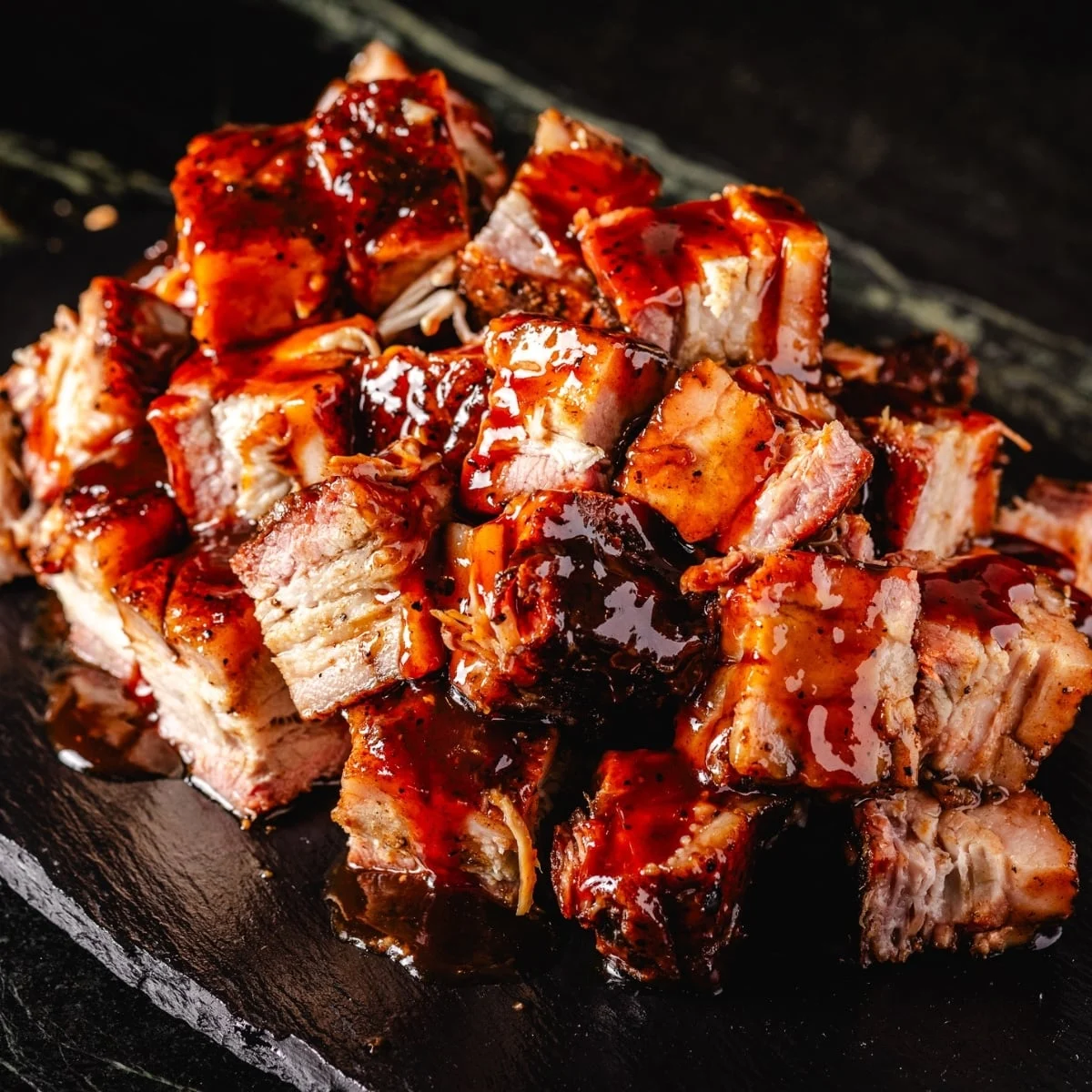
The Rise of Pork Belly in Modern Gastronomy
Historically, pork belly was viewed primarily as the raw material for bacon production. However, the last decade has seen a dramatic shift in how this cut is perceived in the United States and Europe. Influenced by Asian culinary traditions—particularly the "Dongpo" pork of China and the "Chashu" of Japan—Western barbecue enthusiasts began experimenting with the cut in the early 2010s. This led to the creation of "pork belly burnt ends," often referred to as "meat candy" due to their high fat content and caramelized exterior.
The Maple Bourbon BBQ Pork Belly represents an evolution of this trend. By focusing on a streamlined ingredient profile—signature rib rub, pork belly, maple bourbon glaze, and wood smoke—the recipe focuses on the quality of the meat and the precision of the thermal transition. Industry experts note that the success of such dishes relies heavily on the "Maillard reaction," a chemical reaction between amino acids and reducing sugars that gives browned food its distinctive flavor. In this specific preparation, the sugars in the maple syrup and the sugars present in the rib rub facilitate a deep, mahogany crust that contrasts with the unctuous interior.

Technical Specifications and Thermal Chronology
The preparation of Maple Bourbon BBQ Pork Belly is a multi-stage process that requires approximately five to seven hours of active thermal management. According to technical guidelines for the dish, the process is divided into three distinct phases: seasoning, smoking, and glazing.
Phase I: Preparation and Initial Smoke
The process begins with the selection of a high-quality pork belly, ideally with a balanced 1:1 fat-to-lean meat ratio. The meat is scored to allow the rendered fat to escape and the seasoning to penetrate deeper into the muscle fibers. A signature rib rub, typically consisting of brown sugar, paprika, salt, garlic powder, and onion powder, is applied liberally. The smoker is preheated to a consistent 225 degrees Fahrenheit (107 degrees Celsius). This low temperature is critical for the slow breakdown of collagen into gelatin, which provides the meat its signature "melt-in-the-mouth" texture.
Phase II: The Braising Interval
Once the internal temperature of the pork reaches approximately 160–165 degrees Fahrenheit, the meat enters the "stall"—a period where evaporative cooling prevents the internal temperature from rising. To combat this and ensure tenderness, the pork belly is often braised in a covered environment. This step traps moisture and accelerates the breakdown of connective tissues without drying out the exterior.

Phase III: The Glazing and Finishing
The final hour of cooking involves the application of the Maple Bourbon Glaze. The alcohol in the bourbon serves as a solvent for flavor compounds, while the maple syrup provides the viscosity needed to adhere to the meat. The smoker’s heat is used to "set" the glaze, turning it into a tacky, glass-like coating. The final target internal temperature is approximately 200 degrees Fahrenheit, at which point the fat has fully rendered and the meat offers minimal resistance to a probe.
Economic and Market Context of the BBQ Industry
The emergence of standardized, high-quality recipes like the Maple Bourbon BBQ Pork Belly coincides with significant growth in the global barbecue grill market. Valued at approximately $4.9 billion in 2022, the market is projected to reach nearly $7 billion by 2030. This growth is driven by a "premiumization" of the backyard cooking experience, where consumers are increasingly investing in pellet smokers, ceramic kamado grills, and high-accuracy digital thermometers like the Thermapen ONE.
Susie Bulloch, the founder of the Hey Grill Hey platform and a prominent figure in the BBQ community, has noted that the accessibility of these recipes is a primary driver of consumer engagement. By reducing the ingredient list to four essential items, the barrier to entry for complex barbecue is lowered, allowing "Backyard BBQ Heroes" to achieve professional-grade results. This democratization of culinary skill has led to a surge in social media engagement, with platforms like Facebook and Instagram serving as digital galleries for home cooks to showcase their results.

Nutritional Analysis and Dietary Impact
From a nutritional standpoint, Maple Bourbon BBQ Pork Belly is a calorie-dense dish designed for indulgence rather than daily consumption. A standard serving contains approximately 1,241 calories, with a significant portion derived from the 121 grams of fat. Of this fat, 44 grams are saturated, reflecting the nature of the pork belly cut.
However, the dish also provides 22 grams of protein and essential minerals such as potassium (539 mg) and iron (2 mg). The carbohydrate count remains relatively low at 16 grams, primarily sourced from the sugars in the glaze and rub. For those monitoring caloric intake, the high satiety levels of the fats and proteins mean that smaller portions are often sufficient for a complete dining experience.
Flavor Science: Why Maple and Bourbon?
The pairing of maple and bourbon with smoked pork is not accidental; it is rooted in the chemistry of flavor pairing. Bourbon, by law, must be aged in new charred oak containers. This aging process infuses the spirit with vanillin (the primary component of vanilla flavor) and wood tannins. When these notes meet the smoky environment of a barbecue pit, they reinforce the "woody" profile of the meat.

Maple syrup contributes a complex sweetness that includes hints of caramel and toffee. When combined with the savory, salty elements of a pork rub, it creates a "sweet and savory" (often called "swavory") profile that is highly palatable. Furthermore, the acidity often found in high-quality BBQ rubs helps to cut through the richness of the pork fat, providing a balanced sensory experience.
Broader Implications for the Culinary Industry
The success of the Maple Bourbon BBQ Pork Belly recipe highlights a broader trend in the food industry: the move toward "experiential cooking." Modern consumers are no longer looking for just a meal; they are looking for a process. The five-to-seven-hour commitment required to smoke a pork belly is viewed as a hobbyist activity that provides social currency and personal satisfaction.
Furthermore, the "four-ingredient" philosophy reflects a consumer desire for transparency and simplicity. In an era of highly processed foods, a dish that consists of meat, a dry spice blend, and a two-ingredient glaze is seen as "honest" cooking. This has forced commercial BBQ sauce and rub manufacturers to clean up their labels, removing high-fructose corn syrup and artificial preservatives to meet the standards of the modern pitmaster.

Conclusion and Future Outlook
As the barbecue season extends year-round due to advancements in grill insulation and outdoor heating technology, dishes like Maple Bourbon BBQ Pork Belly are expected to remain staples of the American diet. The versatility of the dish—serving as both a high-end appetizer for game-day events and a decadent main course—ensures its longevity in the culinary lexicon.
Looking forward, the integration of technology in the smoking process, such as Wi-Fi-enabled pellet grills that allow for remote temperature monitoring, will likely make these "low-and-slow" recipes even more foolproof. However, the core of the experience remains the same: the transformation of a humble cut of pork through the ancient elements of fire, smoke, and time, enhanced by the distinctly American flavors of maple and bourbon. The result is a dish that is as much a feat of engineering as it is a culinary triumph.
