
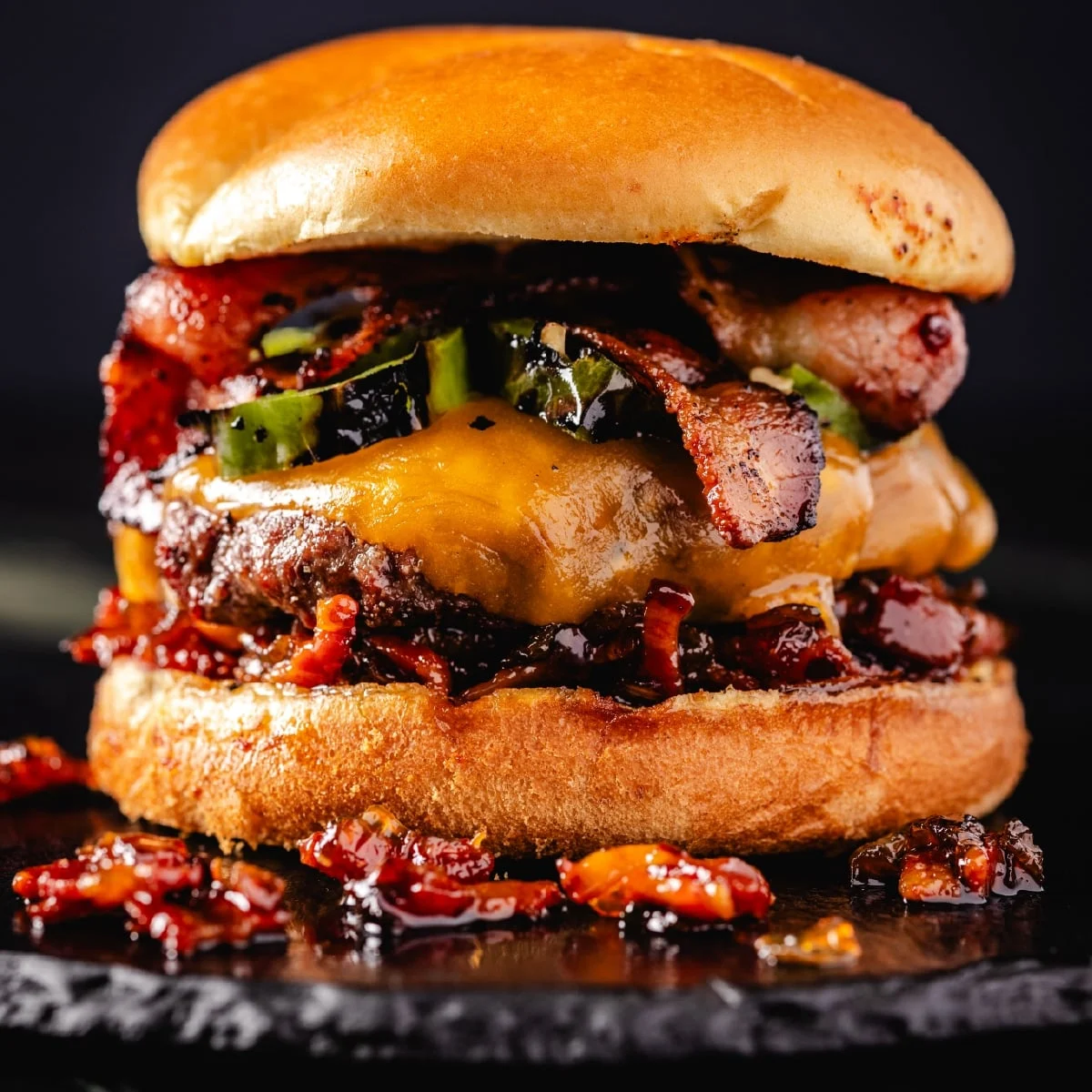
The landscape of American outdoor cooking has undergone a significant transformation, moving from simple backyard pastime to a sophisticated culinary discipline that blends competitive precision with accessible home techniques. At the center of this evolution is the Jalapeño Bacon Jam Cheeseburger, a dish that encapsulates the current trend of "elevated comfort food." This specific iteration of the classic American cheeseburger—characterized by its use of sharp cheddar, blistered jalapeño coins, crispy bacon, and a specialized whiskey onion bacon jam—represents more than just a meal; it is a product of high-stakes competitive barbecue culture refined for the domestic kitchen.
The dish gained prominence following its debut at the Key West Invitational, a high-profile barbecue competition that serves as a primary fundraiser for pediatric cancer research. Developed by Susie Bulloch, the founder of the digital platform Hey Grill Hey, the burger secured a second-place finish during the event’s "sandbar cookoff." The transition of this recipe from a competitive entry to a viral home-grilling staple highlights the increasing synergy between professional pitmasters and the multi-billion dollar home-grilling market.

Historical Context: The Key West Invitational and Competitive Philanthropy
The Jalapeño Bacon Jam Cheeseburger was born out of a unique intersection of culinary skill and charitable endeavor. The Key West Invitational is not a standard barbecue circuit event; it is an invitational that prioritizes community impact, specifically raising funds for pediatric cancer treatments and support. During the most recent iteration of the event, the competition saw a notable shift in demographic representation with the entry of two all-women’s teams led by Bulloch.
The "sandbar cookoff," held on the second day of the invitational, provided the specific constraints that led to the burger’s creation. Cooking in a coastal, outdoor environment requires chefs to manage variables such as high humidity, wind, and fluctuating heat sources. The second-place finish of the initial prototype proved that the combination of sweet, savory, and spicy elements could withstand the scrutiny of professional judges. Following the competition, the recipe was "tweaked" to ensure that the complex flavor profile could be replicated on standard backyard charcoal and gas grills without the specialized equipment often found on the professional circuit.
Technical Composition and Flavor Profile Analysis
The success of the Jalapeño Bacon Jam Cheeseburger relies on a layered approach to flavor and texture, often referred to in the culinary world as "flavor stacking." Each component is designed to address a specific sensory requirement:

- The Protein Base: The recipe utilizes seasoned beef patties, typically favoring an 80/20 lean-to-fat ratio. This ratio is critical in professional burger construction, as the 20% fat content ensures the patty remains moist during the high-heat searing process required to achieve a Maillard reaction—the chemical reaction between amino acids and reducing sugars that gives browned food its distinctive flavor.
- The Heat Element: Unlike raw peppers, the jalapeño coins in this recipe are "blistered" or grilled. This process softens the cellular structure of the pepper, mellowing the raw "green" heat and replacing it with a smoky, charred undertone.
- The Sweet-Savory Catalyst: The defining feature of the burger is the Whiskey Onion Bacon Jam. Bacon jam has seen a 45% increase in menu mentions over the last decade, transitioning from a niche gastropub ingredient to a mainstream condiment. The inclusion of whiskey provides an acidic backbone and deep oak notes that cut through the richness of the beef and cheese.
- Textural Contrast: The use of sharp cheddar provides a creamy, tangy melt, while the crispy bacon strips offer a structural crunch that contrasts with the soft brioche or toasted bun.
Chronology of Preparation and Execution
The transition from raw ingredients to a finished product is a time-sensitive operation, estimated at approximately 25 minutes. This efficiency is a hallmark of the "competition style" adapted for home use.
- Phase I: Preparation (0-10 Minutes): This involves the seasoning of the patties and the slicing of the jalapeños. Professionals recommend seasoning only the exterior of the patty to prevent the salt from breaking down the meat proteins prematurely, which can lead to a "sausage-like" texture.
- Phase II: The Sear (10-20 Minutes): The patties are placed over direct heat. In a charcoal environment, this imparts the "flame-kissed" crust mentioned in the original developer’s notes. Concurrent with the beef, the bacon and jalapeños are grilled to reach their respective peak textures.
- Phase III: The Assembly (20-25 Minutes): This is the critical "rest and melt" period. Cheese is applied roughly 10 degrees before the target internal temperature is reached, allowing for perfect adhesion to the meat. The jam is applied as the final layer to prevent the bun from becoming saturated and losing structural integrity.
Scientific Guidelines for Internal Temperature and Food Safety
A significant portion of modern grilling discourse focuses on the move away from "time-based" cooking toward "temperature-based" cooking. The United States Department of Agriculture (USDA) maintains a standard safety recommendation of 160°F (71°C) for ground beef to ensure the elimination of pathogens. However, within the culinary community, there is a nuanced spectrum of preference:
- Medium Rare (135°F): Offers a warm, red center; preferred by purists for maximum juice retention.
- Medium (145°F): Often cited by Bulloch and other experts as the "sweet spot," providing a balance of safety and tenderness.
- Medium Well (155°F): A slight hint of pink remains; the meat begins to firm significantly.
- Well Done (165°F): Fully cooked through; meets all USDA safety thresholds but may result in a drier texture if the fat content of the beef is too low.
The use of a digital instant-read thermometer has become the industry standard for home cooks, reflecting a broader trend toward precision in domestic meat preparation.

Nutritional Data and Dietary Implications
From a nutritional standpoint, the Jalapeño Bacon Jam Cheeseburger is a high-caloric, protein-dense meal. An analysis of the standard recipe yields the following data per serving:
- Total Calories: 662 kcal
- Protein: 34g (supporting muscle maintenance and satiety)
- Total Fat: 47g (with 19g of saturated fat)
- Carbohydrates: 23g (primarily derived from the bun and the sugars in the bacon jam)
- Sodium: 2434mg (a significant portion of the Recommended Dietary Allowance, attributed to the bacon, cheese, and seasoning)
The high sodium and fat content categorize this dish as an occasional "indulgence" meal rather than a daily staple. However, the high protein count and the inclusion of micronutrients like Vitamin A (369 IU) and Calcium (284 mg) provide some nutritional density.
Market Impact and the Rise of the "Barbecue Influencer"
The dissemination of recipes like the Jalapeño Bacon Jam Cheeseburger is a primary driver in the growth of the outdoor cooking industry. Market research indicates that the global grill market is expected to reach nearly $7 billion by 2030. This growth is fueled by "educational entertainment"—the fusion of recipe sharing and grilling tutorials provided by figures like Susie Bulloch.

By providing "Pro Tips"—such as the importance of high-quality charcoal or the specific layering of condiments—influencers bridge the gap between amateur enthusiasts and professional pitmasters. The "Hey Grill Hey" platform, for instance, leverages social media integration on Instagram and Facebook to create a feedback loop where home cooks share their "backyard wins," further validating the recipe’s efficacy.
Implications for Future Culinary Trends
The success of the Jalapeño Bacon Jam Cheeseburger suggests several ongoing trends in the food industry. First, there is a clear consumer appetite for "complex heat"—flavors that offer spiciness tempered by sweetness (the "swicy" trend). Second, the origin of the recipe at a pediatric cancer fundraiser underscores the growing importance of "socially conscious cooking," where the story behind the food is as important as the taste.
Finally, the democratization of competition-grade recipes means that the standard for "backyard food" has been permanently raised. The days of the simple, unseasoned frozen patty are giving way to hand-pressed, temperature-monitored, artisanally-topped creations. As more home cooks adopt these professional standards, the line between the restaurant kitchen and the backyard patio continues to blur, making gourmet experiences accessible to the general public.
