
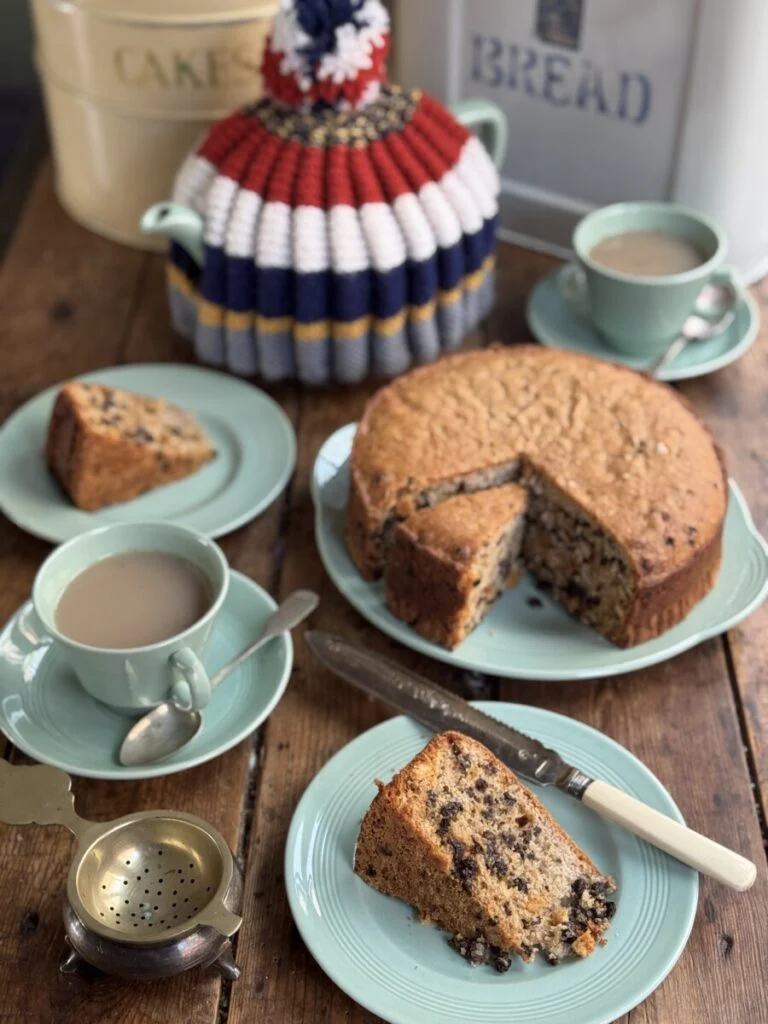
Liverpool, UK – A culinary artifact from over a century ago, the "St George’s Hall Cake," is experiencing a resurgence, offering modern palates a unique glimpse into Edwardian-era British baking. The recipe, unearthed from the historic "Liverpool School of Cookery Recipe Book" first published in 1900, presents a distinctive fruit cake characterized by currants, mixed peel, grated fresh ginger, and the less common inclusion of caraway seeds. Its recent revival by food historian and author Karen Burns-Booth, published on April 10, 2026, highlights a growing interest in preserving and celebrating Britain’s rich culinary heritage.

The St George’s Hall Cake stands apart from more traditional rich fruit cakes and tea loaves of its time due to a particular preparation method: the separation and beating of egg whites, which lends the cake a noticeably lighter texture. This departure from the dense, often heavy fruit cakes of the era makes it a refreshing discovery for contemporary bakers and food enthusiasts. The cake’s aromatic profile, featuring the warmth of ginger and the subtle, anise-like notes of caraway, coupled with the moist chewiness provided by mixed peel, creates a distinctive flavor experience, perfectly suited for afternoon tea or elevenses.
A Glimpse into Edwardian Culinary Education

The "Liverpool School of Cookery Recipe Book," the source of this fascinating recipe, represents a significant chapter in British social and culinary history. Established in 1875, the Liverpool School of Cookery was part of a broader movement across Victorian and Edwardian Britain to promote domestic science and improve household management. These cookery schools aimed to educate women, particularly young housekeepers, in practical skills, emphasizing economical, nutritious, and wholesome cooking. The books published by these institutions were not merely recipe collections but foundational texts for domestic education, influencing generations of home cooks.
The book itself was lauded in its time as "most valuable to young housekeepers, containing recipes most needed under all conditions and circumstances of everyday life." This suggests a practical, accessible approach to cooking, reflecting the social and economic realities of the early 20th century. The rediscovery of recipes like the St George’s Hall Cake from such a source underscores the enduring relevance of these historical documents in understanding the daily lives and tastes of past generations. The fact that a similar recipe also appears in "The Glasgow School of Cookery Book" from 1910 further illustrates the widespread influence of these institutions and the shared culinary trends across different British regions.

The St George’s Hall Legacy
The naming of the cake after St George’s Hall in Liverpool is not merely coincidental but likely an homage to one of the city’s most iconic and historically significant buildings. St George’s Hall, an architectural masterpiece of the Neoclassical style, was completed in 1854 and served as a grand civic building, housing law courts and a concert hall. It quickly became a symbol of Liverpool’s wealth, ambition, and cultural prominence during the Victorian era.

While the exact connection between the cake and the hall is not explicitly detailed in the original recipe, it is plausible that the cake was either served at functions held within the hall, developed by the cookery school in honor of this revered local landmark, or simply a popular local delicacy whose name evoked civic pride. Naming dishes after significant local landmarks was a common practice in British culinary tradition, imbuing them with a sense of place and identity. The hall itself has witnessed countless public events, celebrations, and civic gatherings, making it a fitting namesake for a cake intended for communal enjoyment.
Culinary Characteristics and Modern Adaptations

The St George’s Hall Cake’s unique composition highlights specific culinary preferences and techniques of its period. The use of currants, a readily available and economical dried fruit, along with mixed peel, was a staple in British baking. Ginger provided an exotic warmth, while caraway seeds, though less common in modern baking, were historically popular in cakes, biscuits, and breads, lending a distinctive, slightly liquorice-like flavor.
The method of separating eggs and folding in beaten whites, a technique more often associated with sponge cakes, suggests an intentional effort to achieve a lighter crumb than typically found in dense, long-keeping fruit cakes. This characteristic makes the St George’s Hall Cake particularly appealing to contemporary tastes, which often favor lighter textures. Karen Burns-Booth notes that while the cake is drier than modern rich fruit cakes, it is "delightful buttered after a few days." She also offers a practical adaptation for those less keen on caraway seeds, suggesting the substitution of mixed spice or ground cinnamon, reflecting a sensitivity to evolving flavor preferences while maintaining the cake’s historical essence.

Nutritional Profile and Dietary Context
The provided nutritional information for the St George’s Hall Cake (per serving: 117 Calories, 6g Total Fat, 3g Saturated Fat, 3g Unsaturated Fat, 64mg Cholesterol, 92mg Sodium, 13g Carbohydrates, 1g Fiber, 6g Sugar, 4g Protein) places it squarely within the realm of a modest treat. In the context of early 20th-century diets, which were often more labor-intensive and calorie-demanding, such a cake would have provided a welcome source of energy and a pleasurable indulgence.

Compared to many modern commercially produced cakes, the St George’s Hall Cake’s nutritional profile appears relatively balanced for a dessert item, particularly in its sugar content. The presence of fiber from the currants and protein from the eggs adds to its substance. While the fat content is notable, it is derived from traditional sources like butter and lard, which were standard in historical baking. Understanding these figures helps contextualize the cake not just as a recipe, but as a dietary component of a bygone era.
A Celebration for St George’s Day

The timing of the cake’s renewed prominence, leading up to St George’s Day on April 23rd, is particularly poignant. St George, the patron saint of England, is celebrated annually, and his day is often marked by parades, traditional English food, and cultural events. The St George’s Hall Cake offers a tangible and delicious way to partake in these celebrations, connecting contemporary festivities with historical culinary traditions. Karen Burns-Booth explicitly states her intention to bake the cake again for St George’s Day, underscoring its potential to become a modern culinary tradition for the occasion.
This revival aligns with a broader trend in England to embrace and promote national symbols and traditions, particularly through food. Just as hot cross buns are synonymous with Easter or plum pudding with Christmas, the St George’s Hall Cake could become a distinctive culinary emblem for St George’s Day, fostering a deeper connection to English heritage through taste and shared experience.

Broader Implications and Cultural Preservation
The reintroduction of the St George’s Hall Cake is more than just a culinary exercise; it represents an act of cultural preservation. Food historians and culinary archaeologists consistently emphasize the importance of historical recipes as primary sources that reveal insights into past economies, social structures, technological advancements, and cultural values. By reviving such recipes, we gain a deeper understanding of how people lived, ate, and celebrated.

The initiative taken by Karen Burns-Booth to delve into archives, like those at Leeds University Library where the digital copy of the "Liverpool School of Cookery Recipe Book" resides, highlights the invaluable role of academic institutions and independent researchers in making these historical treasures accessible to the public. This process not only enriches our culinary landscape but also educates the public about the origins and evolution of the food we consume.
Moreover, the popularity of such historical revivals can have positive implications for local tourism and regional identity. For Liverpool, the St George’s Hall Cake could become a unique culinary attraction, drawing visitors interested in experiencing the city’s rich history through its food. Local bakeries and cafes might consider offering this cake, further cementing its place in the city’s contemporary food scene.

In conclusion, the St George’s Hall Cake, with its unique blend of historical ingredients and baking techniques, offers a delightful and informative journey into England’s culinary past. Its revival serves as a testament to the enduring appeal of traditional recipes and the profound cultural value of preserving the tastes and stories of previous generations. As St George’s Day approaches, this venerable cake stands ready to become a cherished part of modern celebrations, bridging the gap between history and the contemporary table.
