
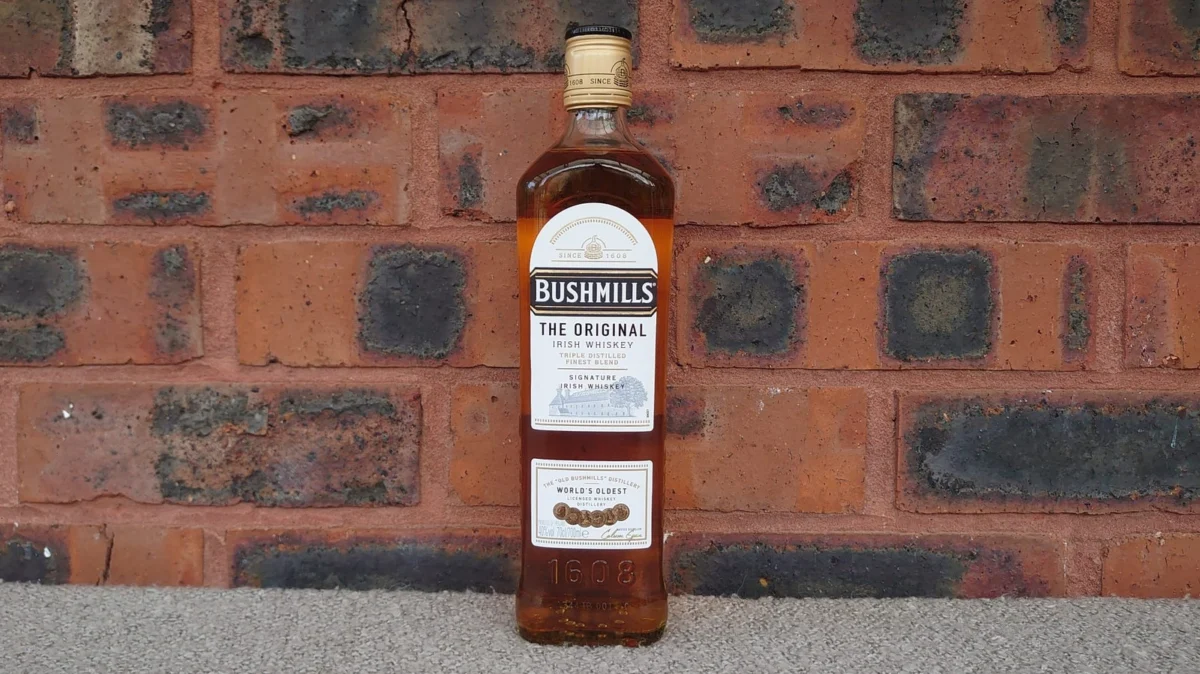
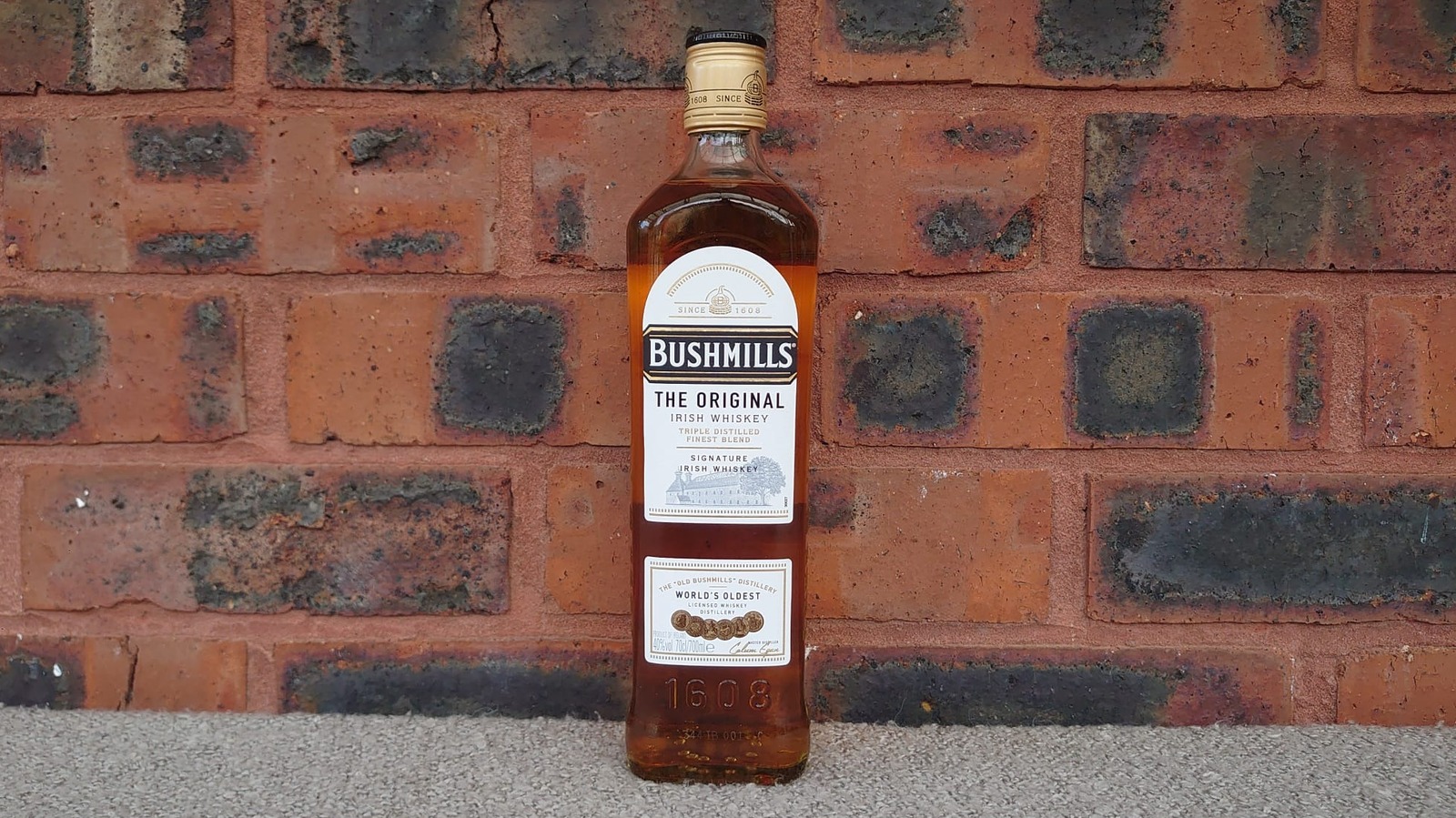
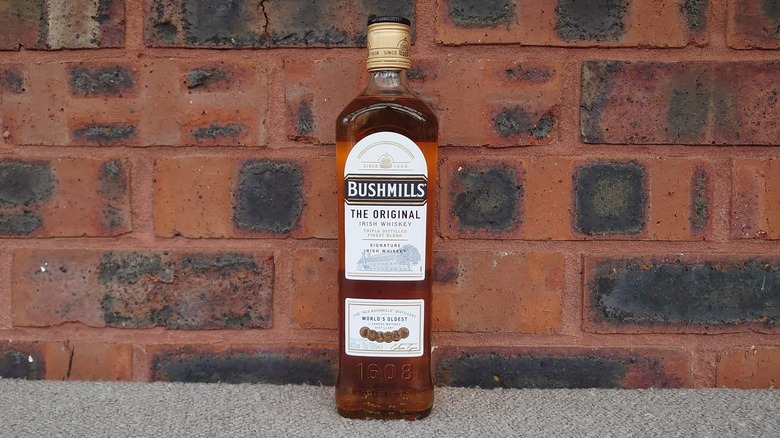
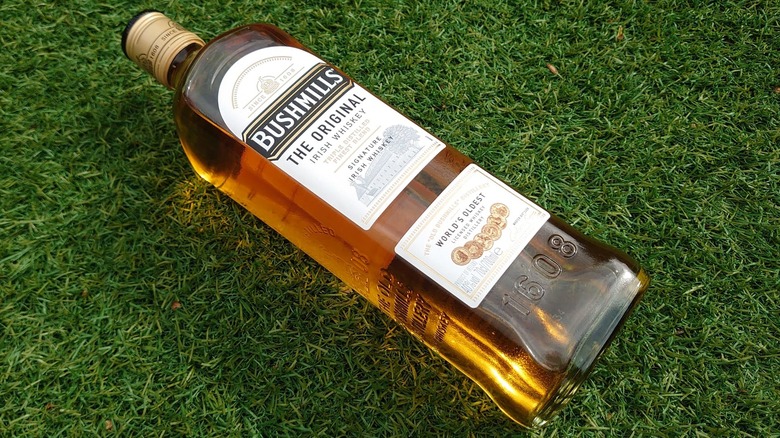
Bushmills Original stands as a definitive cornerstone of the global Irish whiskey market, serving as a primary reference point for consumers exploring the category. Distilled at the historic Old Bushmills Distillery in County Antrim, Northern Ireland, the spirit represents a convergence of centuries-old tradition and modern industrial consistency. While the whiskey is frequently characterized by its accessibility, a closer examination of its production methods, historical lineage, and market positioning reveals a complex narrative of resilience, branding, and technical precision.
Historical Chronology and Origins
The history of distillation in the Bushmills area is rooted in a 1608 royal license granted by King James I to Sir Thomas Philipps, permitting the distillation of spirits in the region. While the specific legal entity known as the Old Bushmills Distillery was not formally established until 1784, the site occupies a unique position in the annals of global spirits.
The nineteenth century marked a period of rapid expansion and subsequent instability for the distillery. Under the stewardship of James McKibbin in the 1830s, the brand achieved international recognition, extending its reach into English and American markets. The formal incorporation of the "Bushmills Old Distillery Company" in 1880 signaled a transition toward industrialized production, but this era was marred by a devastating fire in 1885 that destroyed significant portions of the facility.
The twentieth century presented a series of existential threats, including the global impact of the First and Second World Wars, the era of American Prohibition, and multiple periods of liquidation. Following the end of Prohibition in 1933, the company demonstrated significant foresight under the leadership of merchant Samuel Wilson Boyd, who maintained production levels to ensure readiness for the American market’s reopening. During World War II, the facility sustained damage from bombing raids, and its grounds were temporarily utilized to house Allied troops.
In the post-war era, the distillery underwent a succession of corporate transitions:
- 1946: Acquisition by Sir Isaac Wolfson.
- 1964: Purchase by Harrington United Breweries.
- 1972: Transition to joint ownership by Seagram and Irish Distillers.
- 1988: Acquisition by Pernod Ricard.
- 2005: Purchase by Diageo.
- 2014: Acquisition by Proximo Spirits, its current parent company.
Despite these frequent changes in corporate ownership, the brand has maintained a continuous operational presence in the village of Bushmills, utilizing the same water source and production methodology for generations.
Production Methodology and Technical Profile
Bushmills Original distinguishes itself from many other Irish offerings through its specific blend composition. While the wider Bushmills portfolio is celebrated for its commitment to single malt production, the Original is a blended whiskey, combining triple-distilled single malt with lighter, corn-based grain whiskey.
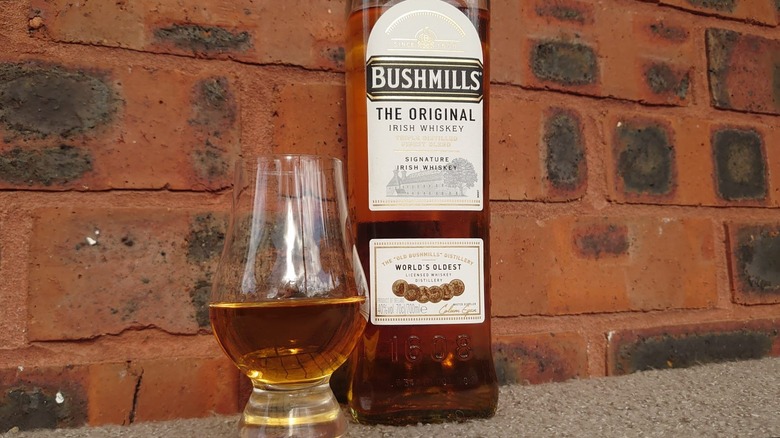
The triple-distillation process is the hallmark of the distillery’s house style. By distilling the spirit three times, the distillery removes heavier congeners and impurities, resulting in a cleaner, more approachable flavor profile that is notably devoid of the aggressive ethanol burn often associated with lower-cost spirits. The maturation process utilizes a combination of ex-bourbon and ex-sherry casks. The bourbon barrels impart notes of vanilla, toasted oak, and caramel, while the sherry casks contribute subtle fruitiness and depth. Bottled at 80 proof (40% ABV), the spirit is designed to maintain a balance between complexity and drinkability.
Sensory Analysis and Market Positioning
From a technical tasting perspective, Bushmills Original is categorized by a light, nuanced profile. On the nose, it presents clean, aromatic notes of green apple, light floral hints, and a foundation of toasted oak and vanilla. The palate is characterized by its smooth texture, offering a medium-bodied mouthfeel that highlights sweet malt and a subtle, persistent caramel finish.
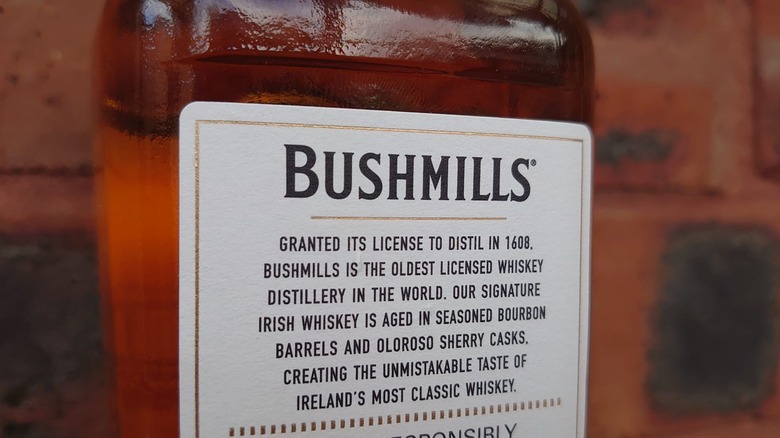
In the context of the broader Irish whiskey market, Bushmills Original acts as a foundational product. It is often positioned as an "entry-level" spirit, yet its technical consistency ensures that it remains relevant to seasoned drinkers who utilize it as a versatile base for classic cocktails. Unlike more robust or peated spirits, its profile does not dominate other ingredients in a cocktail, making it an ideal choice for an Old Fashioned, a Negroni, or a traditional Irish Coffee.
Competitive Landscape: Bushmills vs. Industry Peers
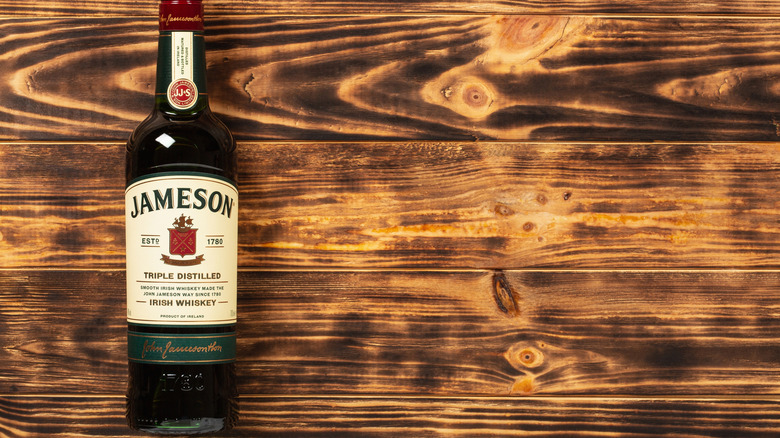
The most pertinent market comparison is with Jameson, the world’s best-selling Irish whiskey. Both brands utilize triple distillation and adhere to the 80-proof standard, yet they diverge significantly in their blending philosophy. Jameson employs a mix of single pot still and grain whiskey, which typically results in a spicier, more assertive character. In contrast, Bushmills leans into its malty, sweeter, and fruit-forward characteristics.
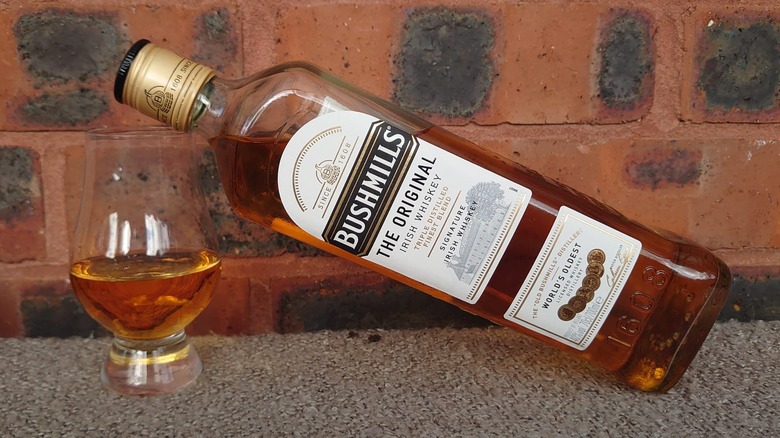
When comparing the Original to the Bushmills 10-Year Single Malt, the distinction is one of maturity and concentration. The 10-year expression, aged exclusively in bourbon and sherry casks for a minimum of a decade, offers a more profound depth of flavor, including notes of milk chocolate and dried fruit. While the Original serves as an everyday staple, the 10-year represents a step up in complexity, intended for contemplative consumption.
The Geography of the Brand
The branding of Bushmills is deeply intertwined with the geography of the River Bush. The distillery’s name is a derivative of the water source—the River Bush—and the historical prevalence of water-powered mills in the region. The distillery utilizes water from Saint Columb’s Rill, a tributary of the River Bush that flows over the unique basalt landscape of the Antrim coast, famously associated with the nearby Giant’s Causeway.
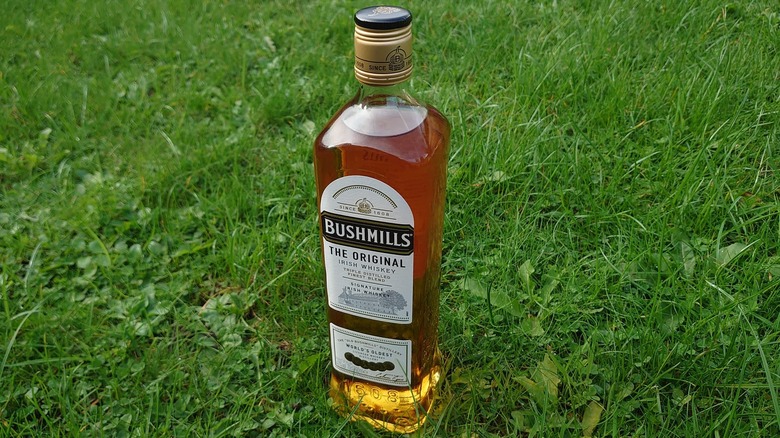
This connection to the land is a core component of the distillery’s corporate identity. Historical records even note that in the late 19th century, the company commissioned its own steamship to facilitate direct exports to the United States. The vessel, which traveled as far as Singapore and Japan, served as a potent marketing tool and a testament to the brand’s early ambition for global distribution.
Economic and Strategic Implications
At a price point typically ranging between $20 and $30, Bushmills Original occupies the "premium-standard" tier of the spirits market. It consistently outperforms many bottom-shelf competitors by offering a level of production quality that is strictly controlled by the master distiller. The brand’s ability to remain profitable while navigating the high costs of maintaining a historic facility—and adhering to the strict regulations of Irish whiskey production—highlights its operational efficiency.
The long-term strategy for the brand appears to be centered on "category recruitment." By maintaining an affordable, consistent, and approachable flagship product, the company effectively captures consumers who are new to the spirits category. Data from the industry suggests that consumers who start with an accessible, high-quality blend are statistically more likely to graduate to the brand’s higher-end single malt expressions, such as the 10, 12, 16, and 21-year-old offerings.
Conclusion
Bushmills Original remains a vital component of the global spirits industry. Its survival through fire, war, prohibition, and multiple corporate acquisitions speaks to the enduring strength of the brand’s identity. While it may be categorized as an uncomplicated, entry-level spirit, its technical merits—specifically its triple-distillation process and consistent maturation standards—ensure that it remains a benchmark for Irish whiskey. For the consumer, it provides a reliable, high-quality experience that bridges the gap between historical tradition and modern, globalized consumption. Whether enjoyed neat or as a component in a mixed drink, the spirit offers a tangible connection to one of the most storied production sites in the world of distillation.
