
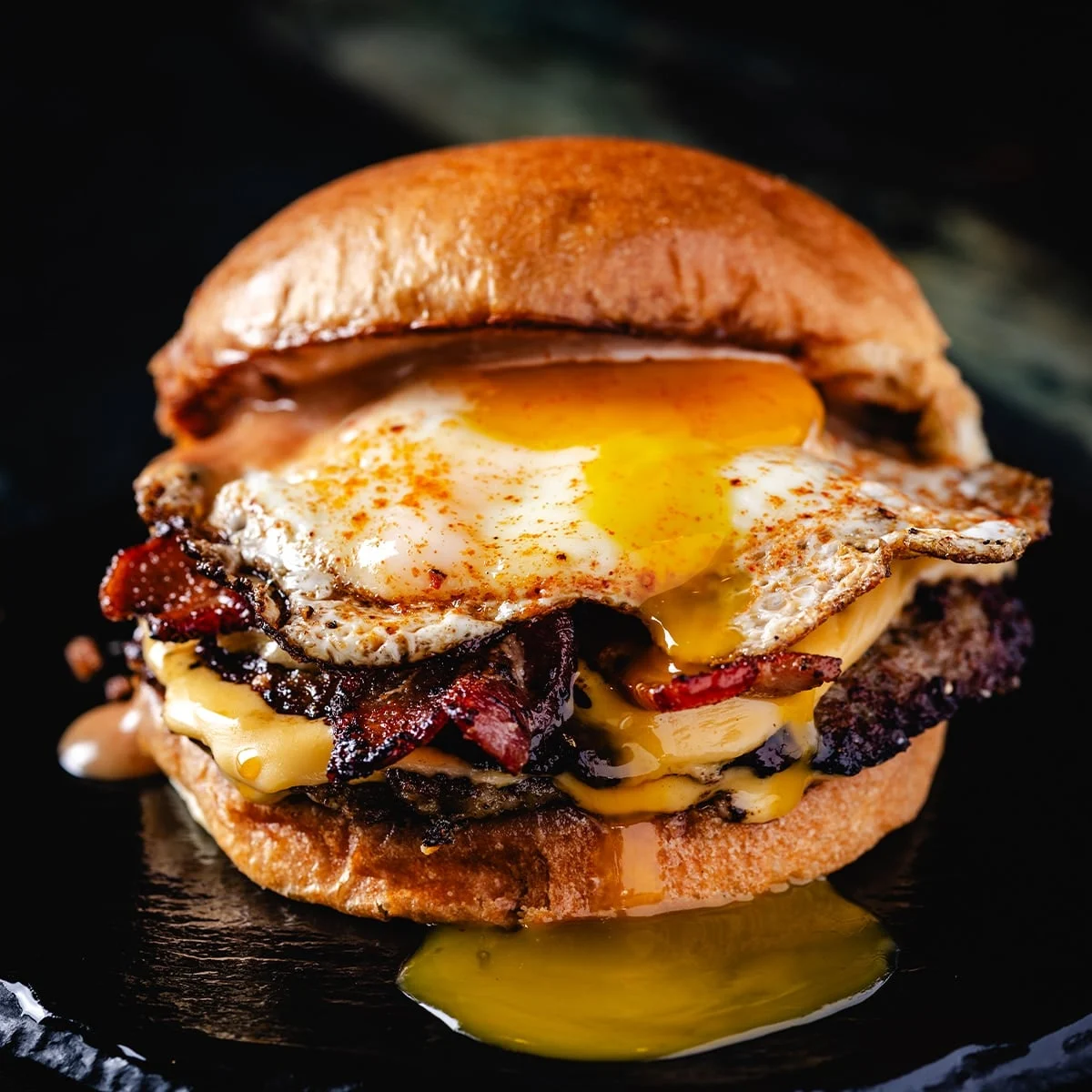
The traditional landscape of the American breakfast is currently undergoing a significant transformation as home cooks increasingly adopt professional-grade techniques, such as the "smashing" method once reserved for high-end diners and specialty burger boutiques. The Breakfast Smash Burger—a sophisticated assembly of crispy sausage patties, candied bacon, American cheese, and a sunnyside-up egg—represents the pinnacle of this culinary shift. This dish leverages the Maillard reaction through high-heat contact on a flat-top griddle, creating a texture and flavor profile that distinguishes it from standard breakfast sandwiches found in commercial fast-food sectors. By combining the savory elements of a traditional burger with the staple ingredients of a classic morning meal, this recipe has emerged as a cornerstone of the modern "backyard brunch" movement.
The Technical Foundation: The Science of the Smash
The primary appeal of the Breakfast Smash Burger lies in its texture, which is achieved through a specific thermal process. Unlike traditional thick patties, the smash burger begins as a loosely formed ball of ground sausage. When placed on a preheated griddle (typically between 375°F and 400°F) and pressed firmly with a heavy-duty spatula or burger press, the surface area in contact with the heat increases exponentially.

This action triggers the Maillard reaction, a chemical reaction between amino acids and reducing sugars that gives browned food its distinctive flavor. In the context of sausage, which often contains higher fat content and various spices, this browning creates a "lacey" edge—a thin, ultra-crispy perimeter that provides a structural and flavorful contrast to the tender center. Culinary experts note that the immediate application of pressure also helps the meat develop a crust before the internal juices can escape, provided the meat is only smashed once during the initial seconds of cooking.
Chronology of Preparation and Assembly
To achieve the optimal balance of temperature and texture, the preparation of a Breakfast Smash Burger follows a precise chronological order. This ensures that all components, from the toasted bun to the runny yolk, reach the plate in peak condition.
- Preparation of the Sauce and Aromatics: The process begins with the creation of a maple mayo burger sauce. This component serves as the flavor bridge, utilizing the creaminess of mayonnaise balanced by the sweetness of maple syrup and the tang of mustard or vinegar. This is prepared in advance to allow flavors to meld.
- Griddle Preheating and Bacon Rendering: The griddle is brought to medium-high heat. Bacon is the first protein to hit the surface, as its rendering fat provides a seasoned base for the subsequent ingredients. For a "candied" effect, the bacon is often dusted with a rub or glazed with maple syrup during the final minutes of its cook time.
- The Sausage Smash: Once the bacon is moved to a lower-heat zone, the sausage balls are placed on the hottest section of the griddle. They are immediately flattened using parchment paper (to prevent sticking) and a heavy press. The patties are seasoned and left undisturbed for approximately two to three minutes to develop a deep sear.
- Cheese and Egg Integration: After flipping the patties, slices of American cheese—chosen for its superior melting point and emulsification properties—are added. Simultaneously, eggs are cracked onto the griddle. The goal for the egg is a "sunny-side up" or "over-easy" finish, where the whites are fully set but the yolk remains liquid to serve as a natural sauce for the burger.
- Toasting and Final Assembly: In the final sixty seconds, brioche buns are toasted in the residual fats on the griddle. The sandwich is then built: sauce on the bottom bun, followed by two sausage patties, the bacon, the fried egg, and the top bun.
Supporting Data: The Outdoor Cooking Market and Consumer Trends
The rise of recipes like the Breakfast Smash Burger is closely tied to the explosive growth of the outdoor griddle market. According to data from the Hearth, Patio & Barbecue Association (HPBA), the "griddle" category has seen the most significant year-over-year growth within the outdoor cooking industry over the last five years.

Market research indicates that consumers are increasingly looking for versatility in their outdoor appliances. While traditional charcoal and gas grills remain popular, the flat-top griddle (popularized by brands such as Blackstone and Camp Chef) allows for the preparation of high-volume meals that were previously difficult to cook outdoors, such as pancakes, stir-fry, and specifically, smash burgers. This shift has turned the backyard into a secondary kitchen capable of handling all three meals of the day, with breakfast seeing the highest uptick in "outdoor participation" rates.
Furthermore, a 2023 consumer behavior report suggested that "elevated comfort food" is a leading driver in home culinary choices. The Breakfast Smash Burger fits this profile perfectly, offering the nostalgia of a diner meal with the quality control of home-sourced ingredients.
Nutritional Analysis and Dietary Implications
While the Breakfast Smash Burger is celebrated for its flavor, its nutritional profile reflects its status as an indulgent, high-calorie meal. Based on the standard recipe, a single serving contains approximately:

- Calories: 1,209 kcal
- Total Fat: 95g (with 27g of saturated fat)
- Protein: 41g
- Sodium: 4,639mg
- Cholesterol: 344mg
The high sodium content is largely attributed to the processed nature of breakfast sausage, bacon, and American cheese. From a dietary perspective, this meal is categorized as a "luxury" breakfast, often consumed during weekend brunches or special occasions rather than as a daily staple. The high protein count (41g) provides significant satiety, but the caloric density suggests that it is intended for those with high energy requirements or as a standalone meal for the day.
Industry Reactions and Expert Perspectives
Culinary influencers and professional chefs have noted that the "smash" technique has democratized gourmet cooking. Susie Bulloch, a prominent figure in the barbecue community and founder of Hey Grill Hey, has emphasized that the accessibility of this recipe is what makes it a "drive-thru killer." By utilizing a griddle, the home cook can achieve a level of caramelization that standard stovetop pans often struggle to replicate due to heat dissipation.
Professional breakfast chefs have also pointed out the importance of the bun selection. The choice of a brioche bun is not merely aesthetic; the high egg and butter content of the bread allows it to stand up to the heavy fats and juices of the sausage and the runny egg yolk without disintegrating. This "structural integrity" is a frequent topic of discussion in culinary forums dedicated to sandwich construction.

Broader Impact on Morning Culinary Culture
The Breakfast Smash Burger is more than just a recipe; it is emblematic of a broader cultural movement toward "maximalist" breakfasts. In the early 2000s, the trend was toward convenience and "on-the-go" nutrition (bars, shakes, and fast-food wraps). However, the current decade has seen a return to "slow mornings" where the process of cooking is as much a part of the experience as the eating itself.
Social media has played a pivotal role in this evolution. The visual appeal of a "yolk break" on a multi-layered smash burger is highly shareable, leading to a viral cycle that encourages more home cooks to attempt the dish. This has created a secondary market for specialized tools, such as heavy-duty stainless steel presses and infrared thermometers, as enthusiasts seek to perfect their technique.
In conclusion, the Breakfast Smash Burger represents a sophisticated intersection of chemistry, market trends, and culinary artistry. It challenges the traditional boundaries of breakfast by applying lunch and dinner techniques to morning proteins. As the outdoor cooking industry continues to innovate and the "home chef" culture grows, the smash burger technique is expected to remain a dominant force in the evolution of the American palate. Whether viewed as a weekend indulgence or a technical challenge, this dish has secured its place in the modern culinary canon, proving that the most important meal of the day is also ripe for innovation.
