
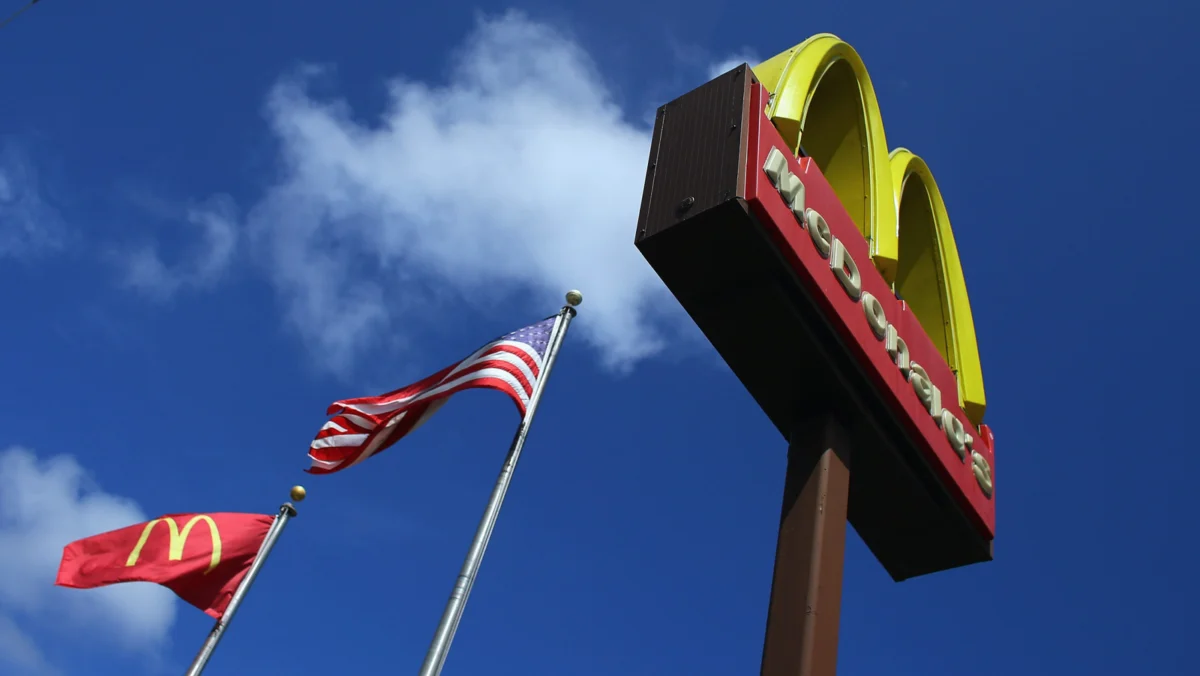
The year 1976 marked a pivotal moment in American history, a grand celebration of the nation’s 200th anniversary. Amidst a complex geopolitical landscape and a nation still processing the impacts of the Vietnam War and the Watergate scandal, a palpable wave of patriotism and nostalgic sentiment swept across the United States. This bicentennial fervor manifested in a nationwide outpouring of events, from large-scale concerts and parades to local bake-offs and community gatherings. Streets nationwide were adorned with patriotic decorations, with even fire hydrants painted in the iconic red, white, and blue. The culmination of these festivities arrived on July 4th, a day of profound national reflection and celebration. It was within this atmosphere of heightened national pride and summertime revelry that McDonald’s, a burgeoning fast-food giant, strategically aligned its marketing efforts to capture the spirit of the era.
McDonald’s launched a unique promotional campaign that year, offering a trio of specially flavored shakes designed to evoke the colors of the American flag: strawberry for red, vanilla for white, and blueberry for blue. This patriotic confectionery offering, while not explicitly called "milkshakes" by the company due to regulatory distinctions, provided a sweet and accessible way for Americans to participate in the Bicentennial spirit. Promotional materials from the time often featured illustrations that blended fast-food iconography with historical themes. One notable advertisement depicted a cartoonish Revolutionary War soldier sporting a hat emblazoned with the familiar Golden Arches of McDonald’s, a clever juxtaposition of modern commerce and historical heritage.
The reception to these Bicentennial shakes was largely positive, resonating with a public eager to embrace nostalgic and patriotic themes. In contemporary online forums dedicated to nostalgia, such as a 2025 Reddit thread discussing the 1976 promotion, individuals fondly recall the limited-edition treats. Comments like "Good old days for sure!" and "McDonald’s should bring that back" for the upcoming 250th-anniversary celebrations in 2026 highlight the enduring appeal of such themed promotions. One particularly insightful observation from a Reddit user noted that by mixing the three flavors, one could achieve a purple hue, humorously linking it to the popular "Grimace Shake" that became a viral sensation in 2023, itself a product of McDonald’s promotional efforts tied to another character’s birthday. This connection underscores how McDonald’s has consistently leveraged themed products to engage with its customer base and tap into cultural moments, both past and present.
A Broader Bicentennial Engagement Beyond the Menu
McDonald’s Bicentennial celebration extended far beyond its beverage offerings. The fast-food chain understood the power of immersive marketing and sought to engage consumers through educational and collectible items that reinforced the historical narrative. This strategic approach aimed to position McDonald’s not just as a purveyor of fast food, but as a brand that understood and celebrated American heritage.
Commemorative Placemats: A Glimpse into Revolutionary History
In addition to the patriotic shakes, McDonald’s released a limited series of paper placemats featuring historically inspired scenes rendered by artist Jay Killian. These placemats served as a tangible and accessible piece of Bicentennial memorabilia for families dining at McDonald’s. Each placemat offered a visual narrative of key moments and figures from the Revolutionary War era.
One design depicted Captain Parker rallying the Minutemen at Buckman Tavern in Lexington, Massachusetts, a scene that evokes the early skirmishes of the conflict. Another placemat showcased Ethan Allen and his "Green Mountain Boys" capturing Fort Ticonderoga, a significant early victory for the Continental Army. A third design illustrated the Battle of Rhode Island, highlighting the strategic importance of this theater of war. These placemats provided a simple yet effective way to introduce younger generations to historical events and figures, while simultaneously offering a collectible item for adults. The distribution of these placemats across thousands of McDonald’s locations ensured widespread reach and a constant reminder of the Bicentennial celebration.
The "Big Map": A Cartographic Journey Through Colonial America
Perhaps the most ambitious element of McDonald’s Bicentennial marketing campaign was the release of a commemorative "Big Map." This large-format folding map was designed to be more than just a promotional item; it was a functional guide to significant historical sites of 1776. The map meticulously detailed the original 13 colonies of the American Northeast, with particular focus on key locations in Pennsylvania, New Jersey, and Delaware.
Prominent historical sites such as Independence Hall in Philadelphia, the encampment at Valley Forge, and the Betsy Ross House were clearly marked. The map was intended to encourage a sense of exploration and historical discovery among American families, potentially inspiring road trips and visits to these hallowed grounds. Crucially, the "Big Map" also strategically incorporated McDonald’s locations along the depicted "road trip" routes. This ingenious integration allowed families to plan their historical journeys with the added convenience of knowing where they could stop for a meal, effectively merging patriotic tourism with the brand’s commercial interests. The "Big Map" became a valuable tool for both historical education and family travel planning, further solidifying McDonald’s presence in the Bicentennial narrative.
The Economic and Cultural Context of 1976
Understanding McDonald’s Bicentennial promotions requires acknowledging the broader economic and cultural context of the mid-1970s. The United States was navigating a period of economic uncertainty, marked by the oil crisis of the early 1970s and subsequent inflation. Despite these challenges, there was a strong desire for national unity and a revival of American pride. The Bicentennial provided a much-needed opportunity for collective celebration and a shared sense of identity.
Fast food was rapidly transforming the American dining landscape. McDonald’s, founded in 1940 and popularized by Ray Kroc in the 1950s, had by 1976 become a ubiquitous presence. The chain’s standardized operations, affordable pricing, and family-friendly atmosphere made it an accessible and popular choice for millions. In 1974, for instance, a Big Mac cost less than one dollar, making it an attractive option for budget-conscious consumers. This affordability, combined with a growing sense of national pride, created fertile ground for a patriotic marketing campaign.
The Bicentennial promotions were not merely about selling more shakes or maps; they were about associating the McDonald’s brand with positive national sentiment. By participating in the celebration, McDonald’s aimed to deepen its connection with American consumers and reinforce its image as a homegrown, iconic American brand. This strategy proved effective, as evidenced by the enduring nostalgic memories associated with these promotions decades later.
Looking Ahead: The Semiquincentennial and Future Celebrations
As the United States approaches its 250th anniversary, or Semiquincentennial, in 2026, there is considerable anticipation about how major corporations will commemorate this milestone. The current landscape suggests a potentially different approach compared to 1976. A review of the official "America250" website, which lists programming sponsors, reveals that while some major fast-food entities like Chick-fil-A and Starbucks are listed as partners, McDonald’s is notably absent from this roster.
This absence raises questions about the brand’s strategy for the upcoming major anniversary. Will McDonald’s opt for a more subdued approach, or will it announce surprise initiatives closer to the date? The precedent set by the 1976 campaign suggests that McDonald’s has a proven track record of successfully engaging with national celebrations. The fact that the 1976 promotions are still remembered and discussed with fondness indicates the long-term impact of such marketing efforts.
The comparison between the Bicentennial and the upcoming Semiquincentennial highlights the evolving nature of corporate social responsibility and national commemoration. In 1976, a direct, product-based celebration like the red, white, and blue shakes was a highly effective strategy. For 2026, the approach might involve different forms of engagement, potentially focusing on community initiatives, historical preservation partnerships, or digital experiences. The success of future commemorative campaigns will likely depend on McDonald’s ability to adapt its strategies to contemporary consumer expectations and the evolving cultural landscape surrounding national holidays and anniversaries. The legacy of the 1976 Bicentennial shakes serves as a valuable case study, demonstrating the power of a well-executed, theme-driven marketing campaign to embed a brand within the fabric of a nation’s historical moments.
