
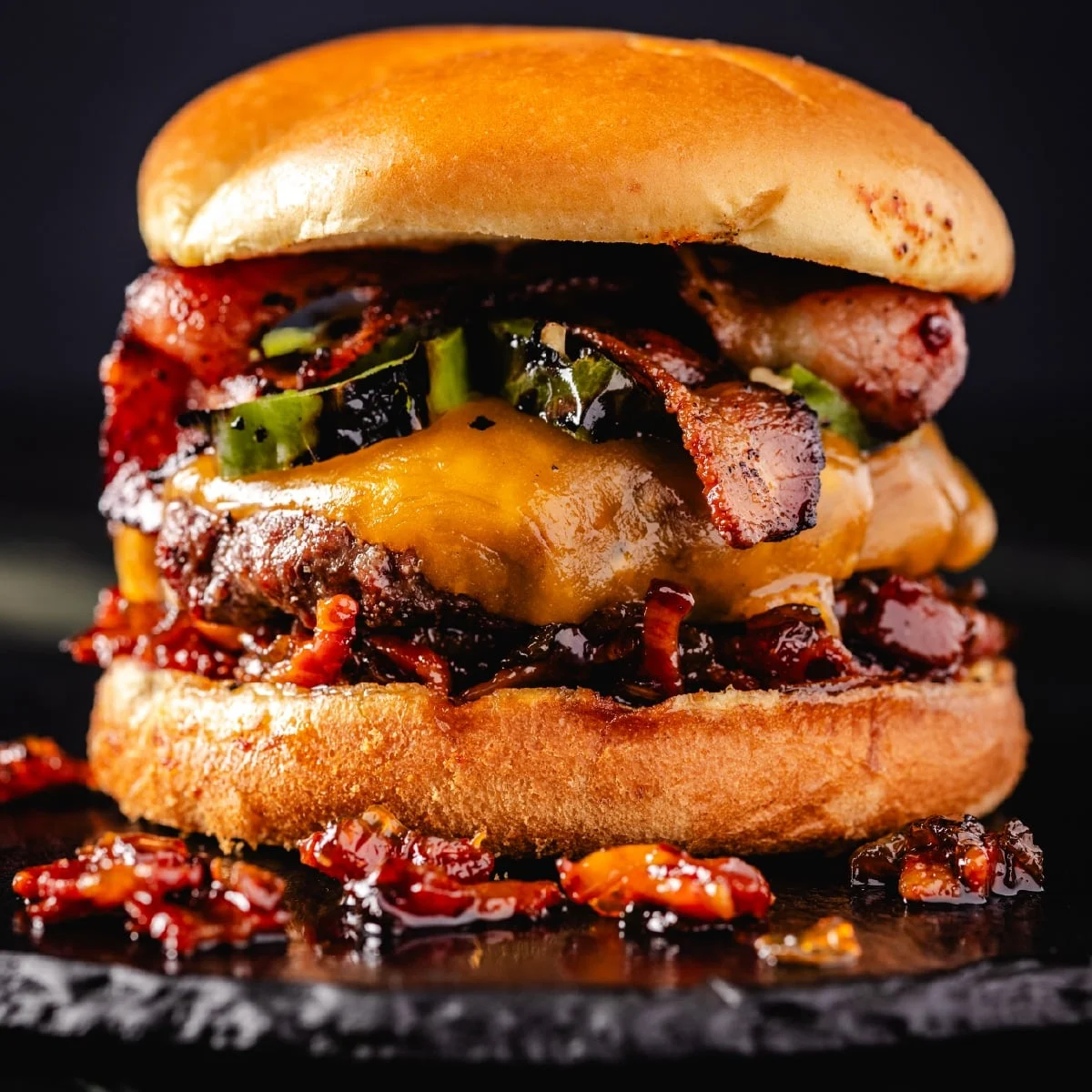
The culinary intersection of competitive barbecue and charitable philanthropy has yielded a new benchmark in gourmet grilling with the official release of a refined award-winning recipe. Originating from the high-stakes environment of the Key West Invitational, a premier barbecue competition and fundraiser for pediatric cancer, this specific burger configuration achieved a second-place finish during a grueling "sandbar cookoff." Developed by Susie Bulloch, a prominent figure in the professional grilling circuit and founder of the digital platform Hey Grill Hey, the recipe represents a strategic evolution of traditional American fare, integrating complex flavor profiles including sharp cheddar, charred jalapeño, and a specialized whiskey-infused onion bacon jam.
The Genesis of a Competitive Culinary Entry
The development of the Jalapeño Bacon Jam Cheeseburger was not a product of casual experimentation but rather a response to the rigors of professional competition. The Key West Invitational serves as a critical node in the American barbecue calendar, attracting elite pitmasters to Florida for the dual purpose of gastronomic excellence and social advocacy. During the event’s second day, teams were tasked with a "sandbar cookoff," an environment that demands both technical proficiency and logistical adaptability.

Bulloch, who gained notoriety for organizing and leading two all-women’s teams at the event, utilized the competition as a laboratory for texture and taste. The initial iteration of the burger, which secured the runner-up position, was subsequently subjected to a period of "tweaking" and refinement upon her return to her testing facilities. The objective was to translate a competition-grade product into a repeatable process for the domestic enthusiast without sacrificing the "flame-kissed" nuances provided by charcoal-based heat sources.
Anatomy of the Flavor Profile: A Technical Breakdown
The success of the burger is attributed to its multi-layered approach to flavor theory, balancing the four primary pillars of the palate: smoky, sweet, savory, and spicy.
- The Protein Base: The foundation consists of seasoned beef patties. In professional circles, the fat-to-lean ratio is paramount; typically, an 80/20 blend is preferred to ensure moisture retention during the high-heat searing process.
- The Heat Component: Blistered jalapeño "coins" provide a controlled capsaicin delivery. By grilling the peppers until the skin blisters, the chef initiates a chemical transformation that softens the raw bite of the vegetable while introducing a charred, earthy undertone.
- The Umami Accelerator: The Whiskey Onion Bacon Jam serves as the centerpiece of the recipe. This condiment utilizes the Maillard reaction—the browning of sugars and amino acids—to create a "sticky-sweet" glaze that bridges the gap between the saltiness of the bacon and the sharp acidity of the cheddar cheese.
- Textural Contrast: Crispy bacon strips and toasted buns provide the necessary structural integrity and "crunch," preventing the burger from becoming overly monochromatic in texture.
The Growth of Competitive Philanthropy in Barbecue
The Key West Invitational is part of a broader trend where the "low and slow" community leverages its subculture for significant social impact. Pediatric cancer remains one of the most underfunded areas of oncological research relative to its impact on the population. Events like the sandbar cookoff serve as high-visibility platforms that draw sponsors, tourists, and donors.

Barbecue competitions have historically been male-dominated spaces. The introduction of two all-women’s teams by Bulloch represents a demographic shift in the industry. Market data suggests that women are increasingly taking the lead in outdoor cooking sectors, a space previously dominated by male "grill masters." By securing a second-place finish in a field of seasoned veterans, the team demonstrated that technical skill in heat management and flavor layering is gender-neutral, further diversifying the professional BBQ landscape.
Grilling Logistics and Food Safety Standards
A critical component of the recipe’s documentation is the emphasis on internal temperature over chronological timing. In a professional kitchen, reliance on "minutes per side" is considered an unreliable metric due to variables such as ambient temperature, wind speed, and fuel consistency.
The United States Department of Agriculture (USDA) maintains a standard safety recommendation of 160°F (71°C) for ground beef to ensure the elimination of foodborne pathogens. However, within the culinary community, a "Medium" doneness of 145°F (63°C) is often cited as the optimal point for juice retention and texture. The recipe advises adding cheese approximately 10 degrees before reaching the target temperature, allowing for a perfect melt-to-crust ratio.

Temperature Reference Guide:
- Medium Rare: 135°F (57°C)
- Medium: 145°F (63°C)
- Medium Well: 155°F (68°C)
- Well Done: 160°F – 165°F (71°C – 74°C)
Nutritional Analysis and Economic Implications
From a nutritional standpoint, the Jalapeño Bacon Jam Cheeseburger is a calorie-dense offering, reflecting its status as a "celebratory" or "competition-style" meal. Standardized calculations indicate a single serving contains approximately 662 calories, with 47 grams of fat and 34 grams of protein. The sodium content, measured at 2434 mg, is significant, largely driven by the combination of bacon, cheese, and seasoned beef.
The economic impact of such recipes extends into the "premiumization" of the burger market. As consumers move away from fast-food staples, there is an increasing demand for high-quality ingredients like sharp aged cheddar and artisanal jams. The "home-grilling" boom, which accelerated significantly between 2020 and 2023, has created a robust market for specialty rubs, thermometers, and high-end charcoal, as enthusiasts attempt to replicate competition results in their backyards.
The Role of Specialty Condiments in Modern Cuisine
The inclusion of Whiskey Onion Bacon Jam highlights a significant shift in American condiment preferences. Traditional ketchups and mustards are increasingly being supplanted or supplemented by complex, house-made jams and reductions. These additions allow for a "chef-led" experience at home. The whiskey component, while largely losing its alcohol content during the reduction process, leaves behind oaky and vanilla notes that complement the smokiness of the grill.

Industry analysts note that the "sweet and savory" trend—often referred to as "swalty"—continues to dominate the palate of the American consumer. By combining the salt-cured properties of bacon with the natural sugars of caramelized onions and the heat of jalapeños, this burger hits multiple sensory targets simultaneously, which is a hallmark of successful competitive entries.
Professional Tips for Execution
To achieve the "sandbar" quality that earned the original burger its accolades, several technical "pro tips" are recommended by industry experts:
- Uniformity of Heat: When using charcoal, ensuring an even distribution of coals prevents hot spots that can lead to uneven cooking.
- Resting Period: Allowing the meat to rest for 2-3 minutes after removal from the heat source allows the muscle fibers to relax and reabsorb juices, preventing the "soggy bun" syndrome.
- Bacon Preparation: Cooking bacon to a "crispy" state is essential for structural contrast against the soft texture of the jam and the melted cheese.
Broader Impact on the Grilling Community
The release of this recipe is more than a culinary contribution; it is a documentation of a moment in the "BBQ Renaissance." Susie Bulloch’s transition from a competition pitmaster to a digital educator reflects the modern lifecycle of food trends. By sharing the technical secrets of a second-place competition burger, the "barrier to entry" for high-level grilling is lowered for the general public.

Furthermore, the focus on the Key West Invitational highlights the ongoing necessity of charitable integration within hobbyist communities. The "backyard win" mentioned by Bulloch serves as a psychological motivator for the domestic cook, framing the act of grilling not just as food preparation, but as a craft that fosters connection among family and friends.
As the barbecue season continues to expand beyond the traditional summer months, complex recipes like the Jalapeño Bacon Jam Cheeseburger are expected to drive interest in year-round outdoor cooking. The integration of spicy, sweet, and smoky elements ensures that the burger remains a versatile staple, capable of anchoring a high-end social gathering or a casual family dinner, all while carrying the pedigree of a Florida sandbar competition.
