
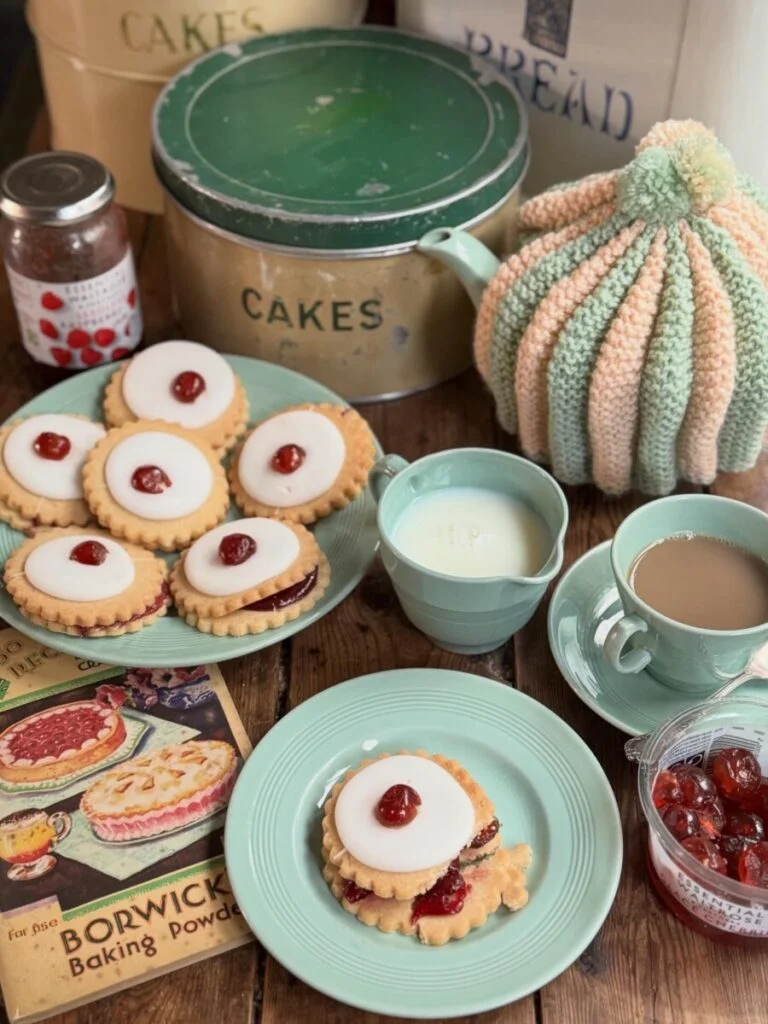
On 13 February 2026, the venerable Empire Biscuit continues to capture hearts and palates across the United Kingdom, particularly in its strongholds of Scotland and the North East of England. This humble jam-filled, icing-topped shortbread, a staple of countless biscuit tins, carries a rich history that intertwines culinary tradition with significant geopolitical shifts, as recently highlighted by food writer Karen Burns-Booth. Burns-Booth embarked on a personal quest to rediscover and recreate this nostalgic treat, a mission sparked by a fleeting glimpse and subsequent sell-out at a Greggs bakery in Alnwick, Northumberland, echoing the cherished memories of her maternal grandmother’s regular bakes.

The Historical Tapestry: From Linzer to Empire

The lineage of the Empire Biscuit can be traced back to the celebrated Linzer biscuit (or Linzer cookie in North America), a classic Austrian confection renowned for its delicate shortbread base, vibrant jam filling, and distinctive cut-out top. These elegant biscuits, often featuring intricate lattice work or a simple circular aperture, represent a tradition of European baking that emphasizes both flavor and visual appeal. The shortbread style, characterized by its high butter content, yields a crumbly, melt-in-the-mouth texture that perfectly complements the fruitiness of the jam.

As culinary traditions diffused across continents, variations of the Linzer biscuit made their way to the British Isles. Here, they evolved into what was initially known as the "German Biscuit" or "Deutsch Biscuit." This naming convention likely reflected the biscuit’s perceived Germanic or Central European origin, a common practice in an era when food names often indicated their geographical or cultural roots. These early British iterations maintained the core characteristics: two shortbread rounds sandwiched with jam, topped with icing, and traditionally adorned with a glacé cherry. Their popularity grew steadily, embedding them deeply into the regional baking landscape, particularly in areas with strong industrial and maritime links that facilitated cultural exchange.

A Name Forged in Conflict: The Impact of World War I

The early 20th century brought unprecedented global upheaval, and even seemingly innocuous items like biscuits were not immune to its profound effects. The outbreak of World War I in 1914 ignited a wave of anti-German sentiment across the United Kingdom and its allied nations. This period saw a widespread rejection of anything associated with Germany, leading to numerous linguistic and cultural changes designed to distance everyday life from the enemy nation. German street names were changed, German dog breeds were renamed (e.g., German Shepherd to Alsatian), and German-named food items were quickly rebranded.

It was in this charged atmosphere that the "German Biscuit" underwent its transformation, emerging as the "Empire Biscuit." This renaming was a deliberate act, designed to align the popular confection with British national identity and the vast reach of the British Empire, a powerful symbol of national pride and unity during wartime. The change was not merely semantic; it reflected a collective shift in public consciousness, where even the simplest tea-time treat could become a statement of allegiance. This historical context provides a fascinating insight into how geopolitical events can profoundly influence cultural practices, right down to the names we give our food. The new name stuck, and "Empire Biscuit" became the standard nomenclature, particularly in Scotland and the North East, where its popularity continued to soar.

Beyond the UK, the biscuit acquired other regional aliases, further illustrating its widespread appeal and adaptation. In New Zealand, for instance, it is often referred to as a "Belgium Biscuit" due to its distinctive white icing and cherry topping, which bear a resemblance to the iced and decorated Belgium Buns popular in the Commonwealth nation. This multiplicity of names underscores the biscuit’s enduring charm and its ability to integrate into diverse culinary traditions while retaining its fundamental character.

The Modern Revival: Karen Burns-Booth’s Culinary Expedition

Karen Burns-Booth’s recent culinary expedition highlights the Empire Biscuit’s persistent allure. Her experience in Alnwick, where the biscuits were quickly snapped up by eager customers at a Greggs bakery, underscores a broader trend: a renewed appreciation for classic, comforting bakes. This demand prompted Burns-Booth to delve into historical archives to unearth an authentic recipe, a quest that led her to a "vintage magazine" and, crucially, a copy of "Woman’s Companion from 1928."

The discovery of this 1928 recipe provided a tangible link to the biscuit’s past, offering a glimpse into the baking practices of nearly a century ago. Further validation came from James Morton, widely known as "The Hebridean Baker," whose online recipe proved remarkably similar to the vintage magazine’s instructions. Morton, a prominent figure in contemporary Scottish baking, is celebrated for his dedication to preserving and sharing traditional recipes, often with a modern twist. His endorsement of a recipe so closely aligned with a 1928 version speaks volumes about the enduring quality and authenticity of the Empire Biscuit’s original formulation.

Burns-Booth notes that while the recipe itself is straightforward, the execution demands a certain finesse. The art of sandwiching the two biscuit halves with jam and achieving the perfect consistency for the royal icing – ensuring it neither drips nor cracks – requires a baker’s touch. This practical insight from an experienced baker adds valuable context to the home-baking experience. The choice of decoration also presents a point of traditional versus contemporary preference: while Morton suggests modern gummy sweets, Burns-Booth, aligning with her grandmother’s practice, firmly advocates for the classic glacé cherry, preserving an aesthetic that is as much a part of the biscuit’s identity as its taste.

The Anatomy of a Classic: Ingredients and Craftsmanship

The core components of an Empire Biscuit are elegantly simple, yet their combination yields a deeply satisfying result. The biscuit base is typically a shortbread-style dough, relying on a generous proportion of butter, sugar, and flour. Some vintage recipes, as noted by Burns-Booth, even suggest the addition of cornflour or rice flour. This seemingly minor alteration serves a specific purpose: it reduces the gluten development in the dough, resulting in a "shorter," more tender, and crumbly biscuit. This technique, common in traditional baking, enhances the delicate texture that defines a well-made shortbread.

The filling is invariably a vibrant fruit jam, with raspberry being the most traditional choice, though strawberry jam is also a popular and equally delicious alternative. The quality of the jam is paramount; whether homemade or a good commercial variety, its sweet-tart profile provides a crucial counterpoint to the rich biscuit and sweet icing.

The crowning glory is the crisp white icing, often a simple mixture of icing sugar and water or lemon juice, applied smoothly over the top biscuit. The final flourish, the half glacé cherry, provides a burst of color and a touch of chewy sweetness, completing the biscuit’s iconic appearance. Each element plays a vital role, contributing to a harmonious balance of textures and flavors – the buttery crumble of the biscuit, the fruity tang of the jam, the sweet snap of the icing, and the candied chew of the cherry.

Cultural and Economic Footprint

The Empire Biscuit’s enduring popularity, particularly in Scotland and the North East of England, is more than just a culinary preference; it’s a cultural phenomenon. These regions boast a rich heritage of baking and tea-time traditions, where biscuits play a central role in daily rituals and social gatherings. The "biscuit tin" is a familiar fixture in British homes, a repository of comforting treats ready to be offered with a cup of tea during "elevenses" (a mid-morning snack) or as part of the more elaborate "Sunday tea tray." The Empire Biscuit, with its comforting familiarity and satisfying sweetness, perfectly fits into these cherished customs.

Its presence in national chains like Greggs is a testament to its commercial viability and widespread appeal. Greggs, a prominent bakery chain known for its popular and accessible baked goods, strategically incorporates regional favorites into its offerings. The rapid sell-out of Empire Biscuits in Alnwick underscores the strong consumer demand for these traditional treats, demonstrating that nostalgic foods hold significant market value. This commercial success helps to perpetuate the biscuit’s legacy, introducing it to new generations and maintaining its place in the national culinary consciousness.

Nutritional Information (Per Serving)

For those monitoring dietary intake, the Empire Biscuit, while a delightful treat, is, like most confections, best enjoyed in moderation. A typical serving (one biscuit) provides approximately:

- Calories: 265
- Total Fat: 11g
- Saturated Fat: 7g
- Unsaturated Fat: 4g
- Cholesterol: 31mg
- Sodium: 91mg
- Carbohydrates: 39g
- Fiber: 1g
- Sugar: 24g
- Protein: 2g
These figures reflect the rich ingredients – butter, sugar, and jam – that contribute to its deliciousness and energy content.

A Timeless Treat Endures

The Empire Biscuit stands as more than just a sweet confection; it is a tangible piece of culinary history, a testament to evolving traditions, national identity, and the comforting power of home baking. From its Austrian Linzer origins to its wartime renaming and its enduring presence in British biscuit tins, its journey is a fascinating narrative. Karen Burns-Booth’s personal connection and diligent research, coupled with the contemporary appeal demonstrated by bakers like James Morton and national chains such as Greggs, ensure that this delectable biscuit will continue to grace tea-time tables for generations to come. It embodies the essence of simple pleasures, offering a bite of nostalgia with every jammy, iced mouthful.
