
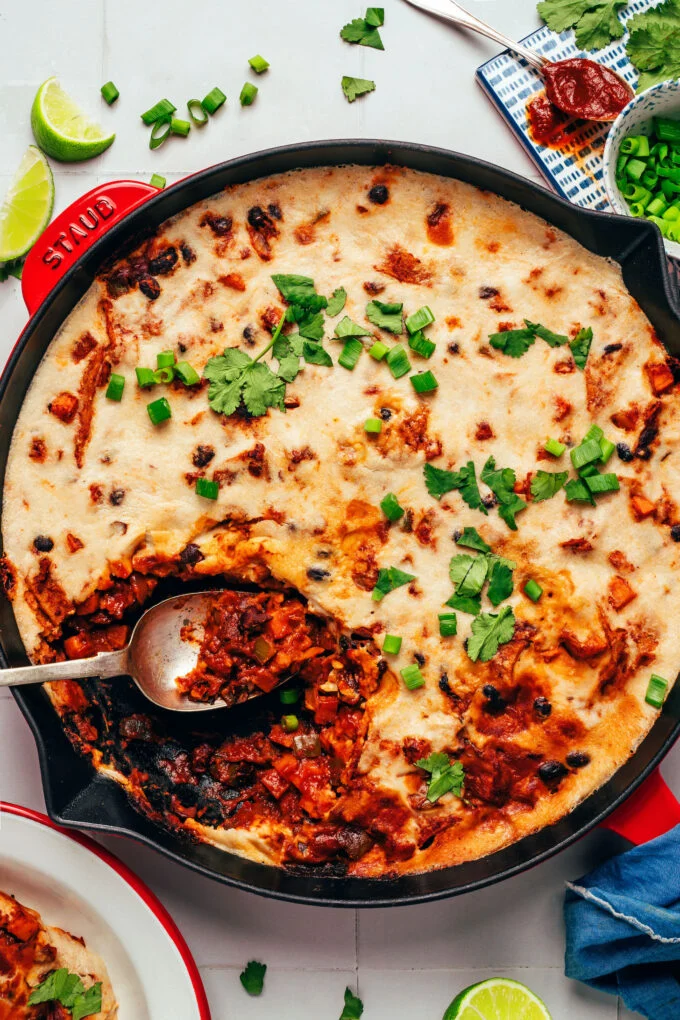
The culinary landscape of the 21st century has seen a significant shift toward efficiency and plant-based accessibility, a trend exemplified by the emergence of the Cheesy Vegan Enchilada Skillet. This dish represents a departure from traditional labor-intensive Mexican-inspired preparation, offering a streamlined, one-pan methodology that accommodates the demands of modern households. By deconstructing the classic enchilada—traditionally a labor-heavy process involving the individual filling and rolling of corn tortillas—this recipe provides a nutritional profile centered on legumes and root vegetables while maintaining the flavor profile associated with traditional red enchilada sauce.
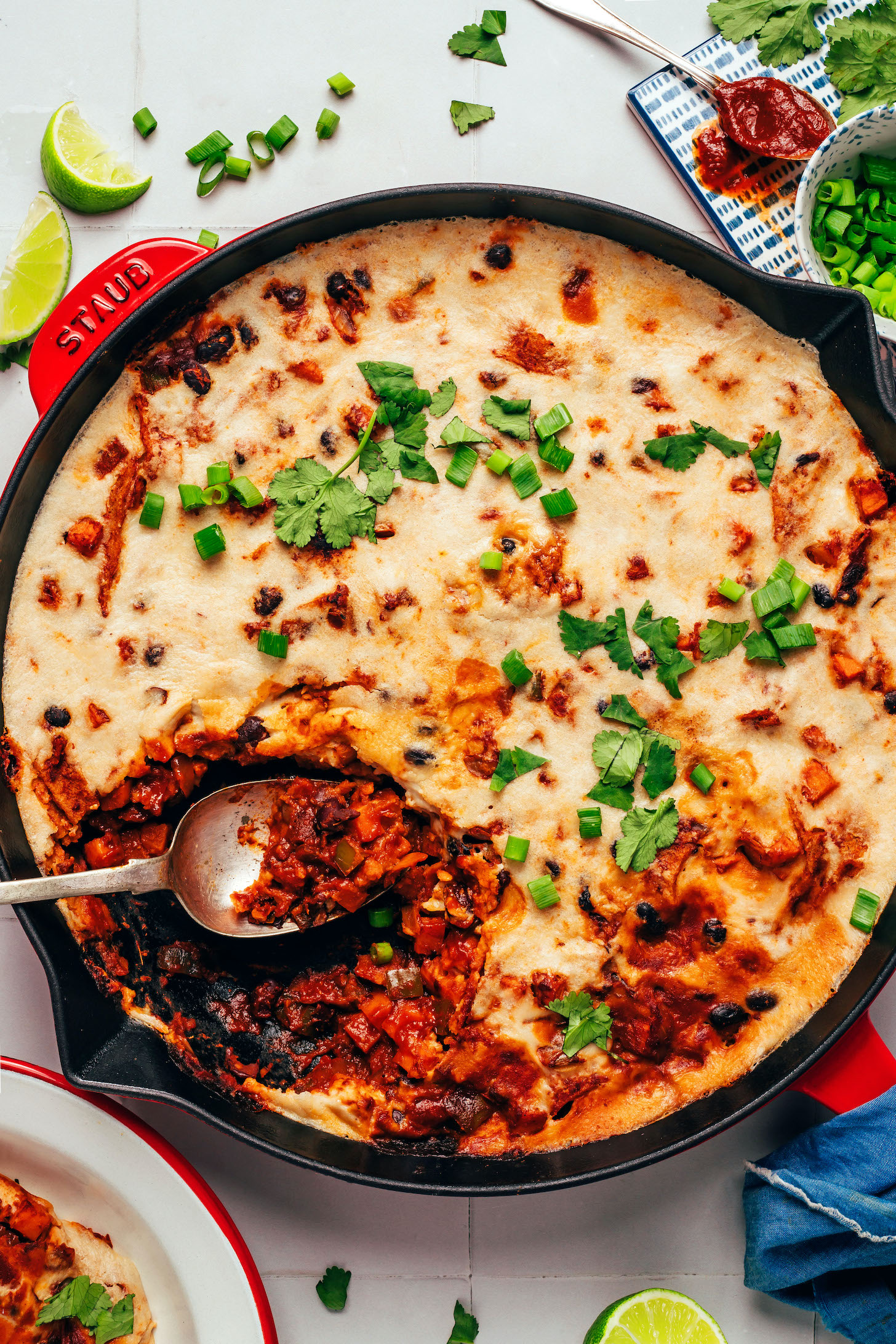
Historical Context and Culinary Evolution
The evolution of the enchilada is deeply rooted in the history of Mesoamerican cuisine. Historians trace the lineage of the dish back to the Mayan civilization, specifically referencing "papadzules," which involved corn tortillas dipped in a pumpkin seed sauce and filled with hard-boiled eggs. The transition to the modern iteration, characterized by the use of savory red sauces and various fillings, was documented in the 1831 publication El Cocinero mexicano. This historical text provided the first formal written record of the dish, establishing it as a staple of regional Mexican gastronomy.
For decades, the standard preparation of enchiladas has remained largely unchanged: filling, rolling, and baking. However, the rise of "skillet-style" meals in the late 2010s and early 2020s has sought to modernize this experience. The primary innovation of the current iteration lies in the abandonment of the rolling process. By slicing tortillas into strips and incorporating them directly into the sautéed vegetable base, the dish achieves a uniform distribution of textures. This method reduces preparation time from an average of 60 to 90 minutes down to approximately 30 minutes, addressing the growing consumer demand for high-quality, time-efficient home cooking.
Nutritional Profile and Ingredient Analysis
The Cheesy Vegan Enchilada Skillet is designed to meet specific nutritional benchmarks, providing approximately 416 calories per serving. The composition of the dish is notably high in fiber (14.3 grams) and contains 13.6 grams of protein, primarily derived from the inclusion of black beans and the cashew-based sauce.
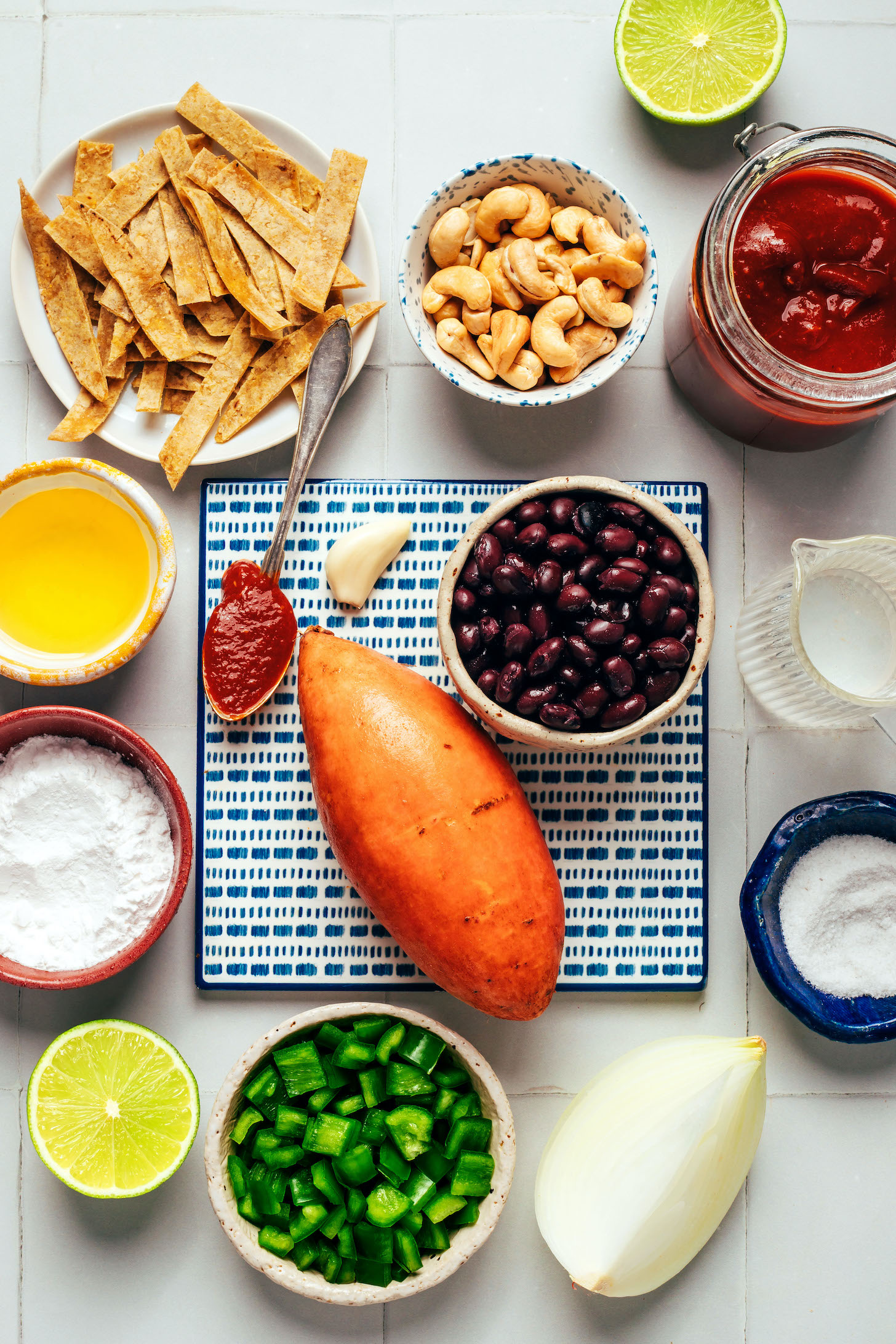
The utilization of a cashew-based "cheese" sauce represents a significant technological application in vegan cooking. By blending cashews with tapioca starch, water, and lime juice, the sauce mimics the melting properties of traditional dairy-based mozzarella or jack cheese. Tapioca starch, a key component, acts as a thickening agent that, when heated, undergoes gelatinization, creating a viscous, stretchy consistency that provides the necessary mouthfeel to satisfy consumer expectations of a "cheesy" dish.
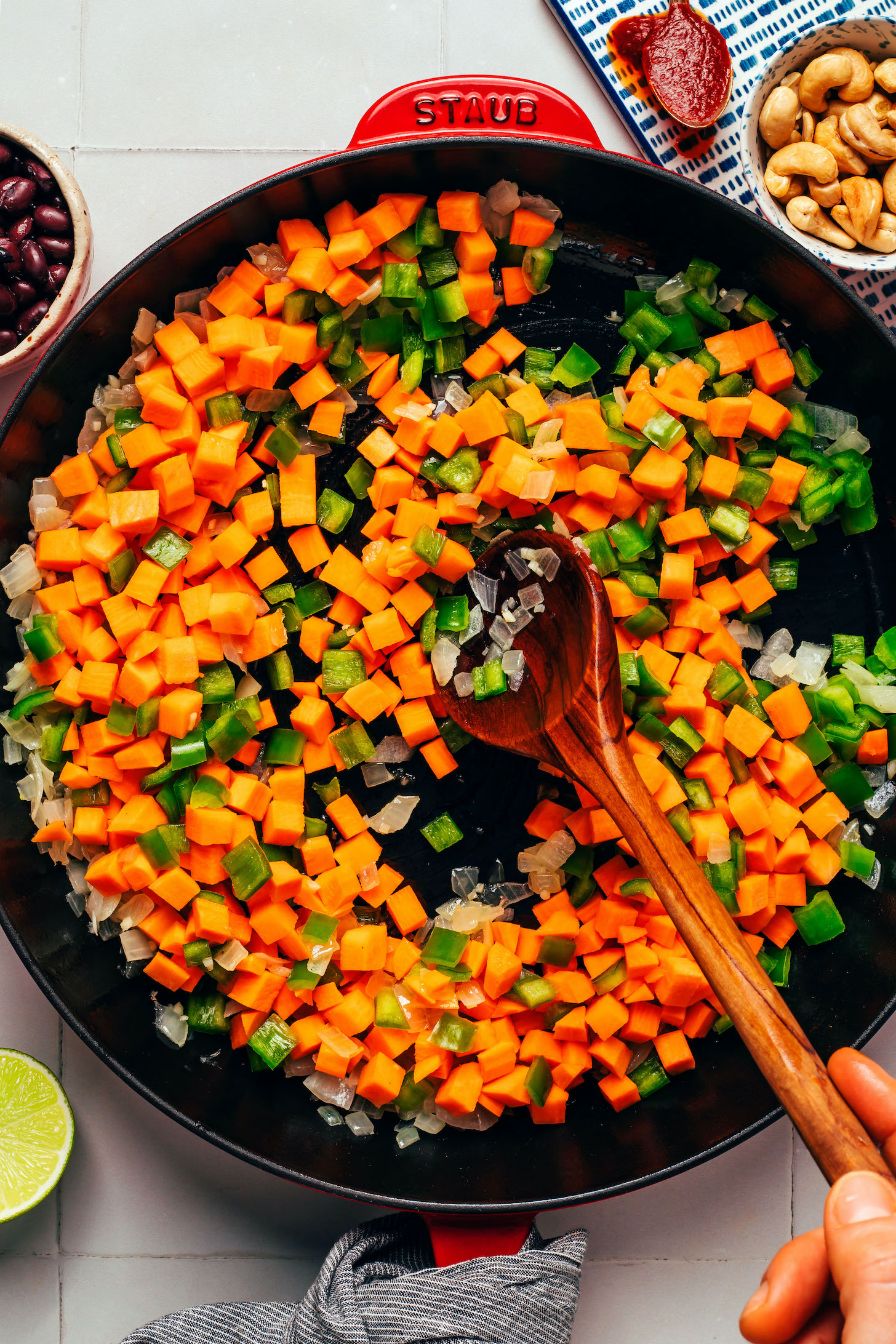
The vegetable component typically features sweet potatoes or winter squash, which provide complex carbohydrates and high concentrations of Vitamin A. The inclusion of onions, garlic, and poblano peppers adds a layer of depth through aromatics and mild spice. The flexibility of this ingredient list allows for seasonal adjustments, such as the substitution of kabocha or butternut squash during autumn months, or the addition of leafy greens like kale and spinach to boost micronutrient density.
Preparation Methodology and Technical Efficiency
The efficiency of this dish is predicated on a strictly ordered cooking sequence. The process begins with the sautéing of onions and aromatics, followed by the addition of root vegetables, which require the longest cooking time. A critical technical detail is the sizing of the sweet potato cubes; they must be kept between 1/4 and 1/2 inches to ensure they reach tenderness within the 20-minute active cooking window.
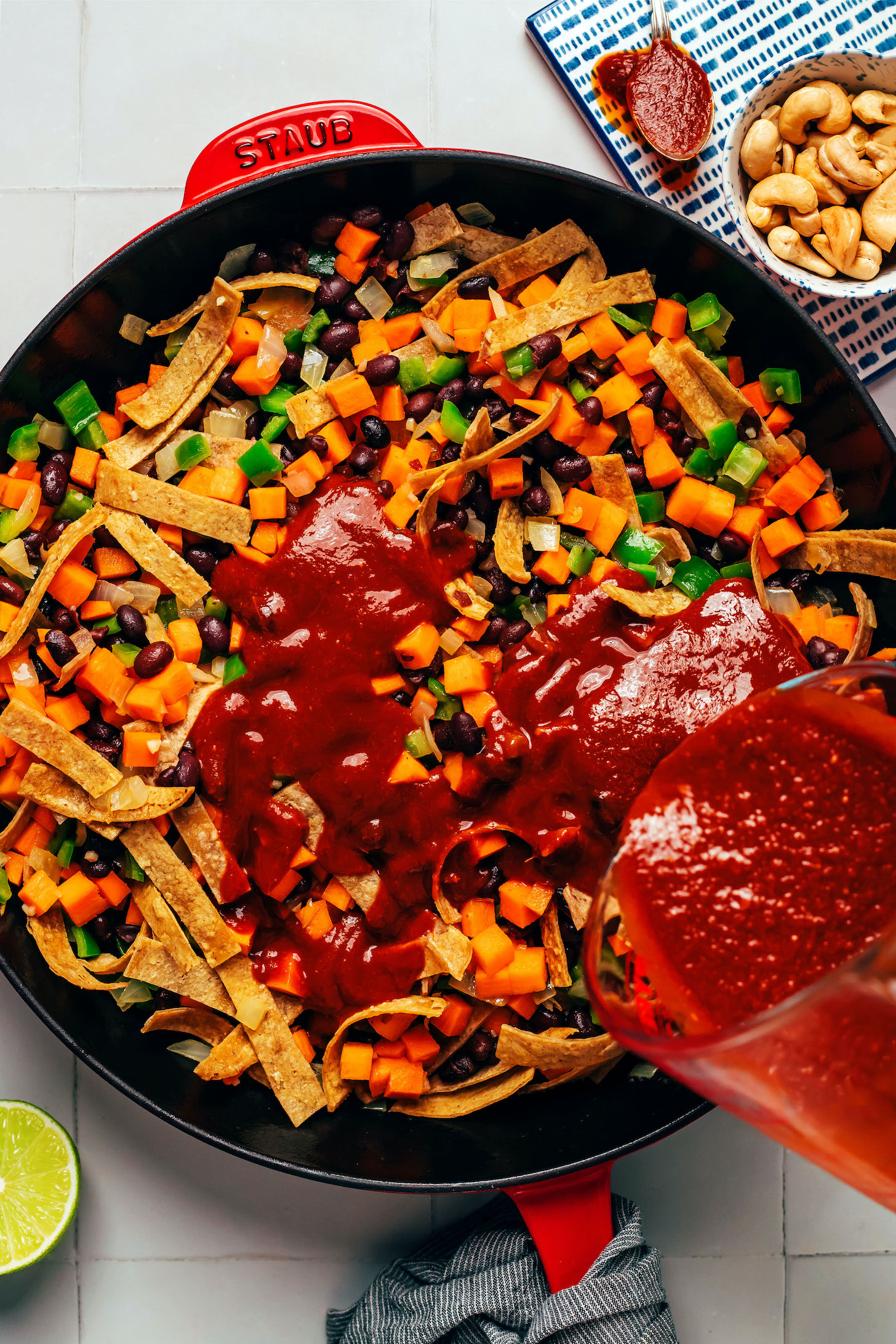
Once the base is established, the addition of black beans and tortilla strips facilitates the absorption of the red enchilada sauce. The final stage involves the application of the cashew sauce, which is poured over the surface. The pan is then covered, allowing steam to trap the heat and activate the tapioca starch, resulting in a cohesive, unified dish. This one-pan approach minimizes equipment usage, a factor cited by culinary efficiency experts as a major contributor to the sustained popularity of skillet meals in domestic settings.
Broader Culinary and Economic Implications
The emergence of such recipes reflects a broader trend in the food industry toward "at-home convenience." Market analysis indicates that consumers are increasingly seeking plant-based alternatives that do not require specialized equipment or complex techniques. By utilizing readily available ingredients—such as canned black beans, store-bought or simple homemade enchilada sauce, and staple produce—this recipe serves as a template for low-cost, high-yield meal preparation.
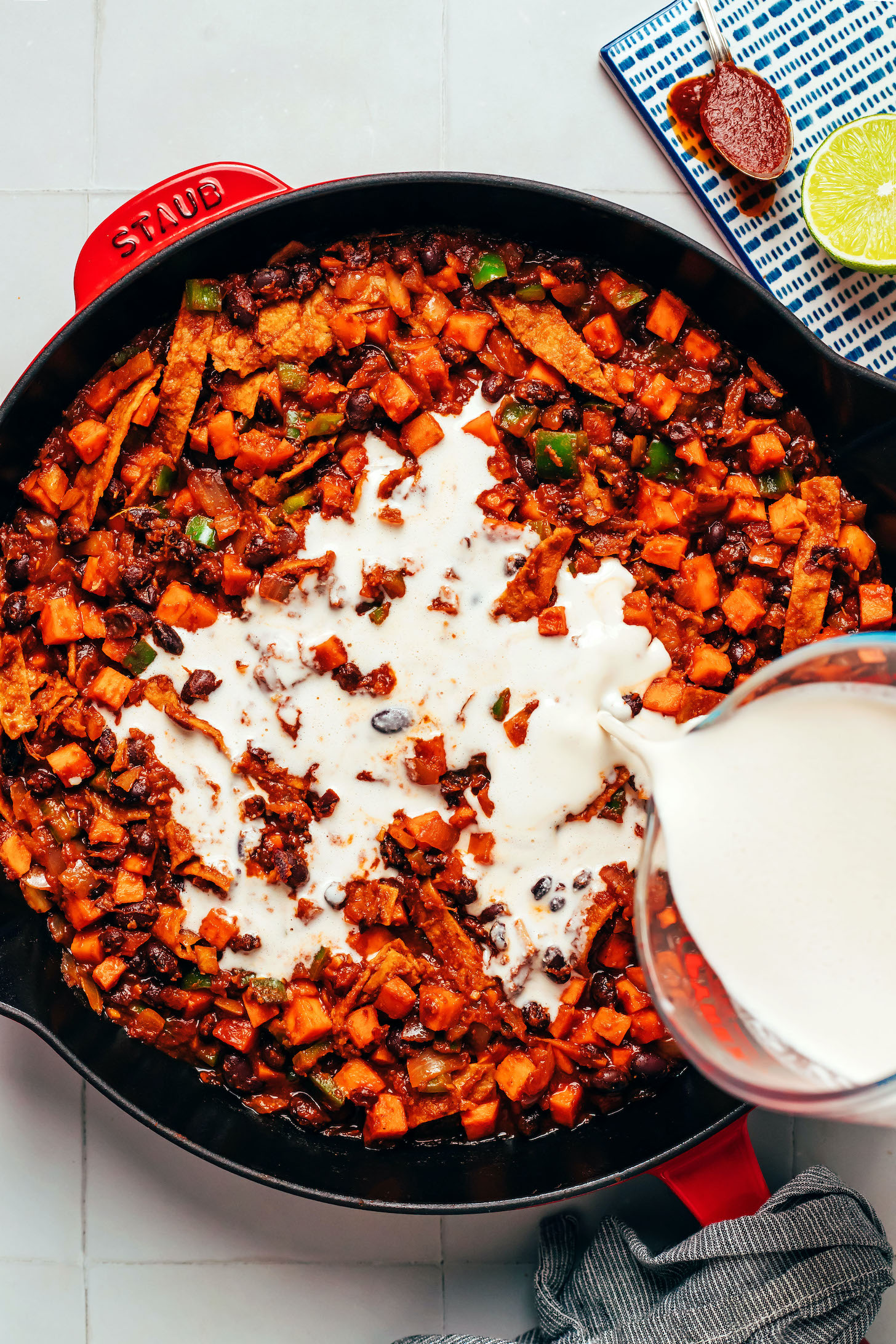
From an economic perspective, the reliance on staples like black beans and corn tortillas makes this dish an affordable option for households navigating rising food costs. Furthermore, its suitability for meal prepping—retaining quality for 3-4 days when refrigerated and remaining freezer-friendly for up to a month—aligns with consumer behaviors centered on reducing food waste and maximizing the utility of grocery purchases.
Expert Observations and Adaptability
Culinary observers note that the success of this recipe lies in its modularity. Because the foundation is a simple combination of starch, bean, and sauce, it is easily adaptable to include higher protein inputs. Suggestions from the test kitchen include the incorporation of shredded tofu or leftover cooked proteins, provided the liquid-to-solid ratio is adjusted to maintain the saucy consistency.
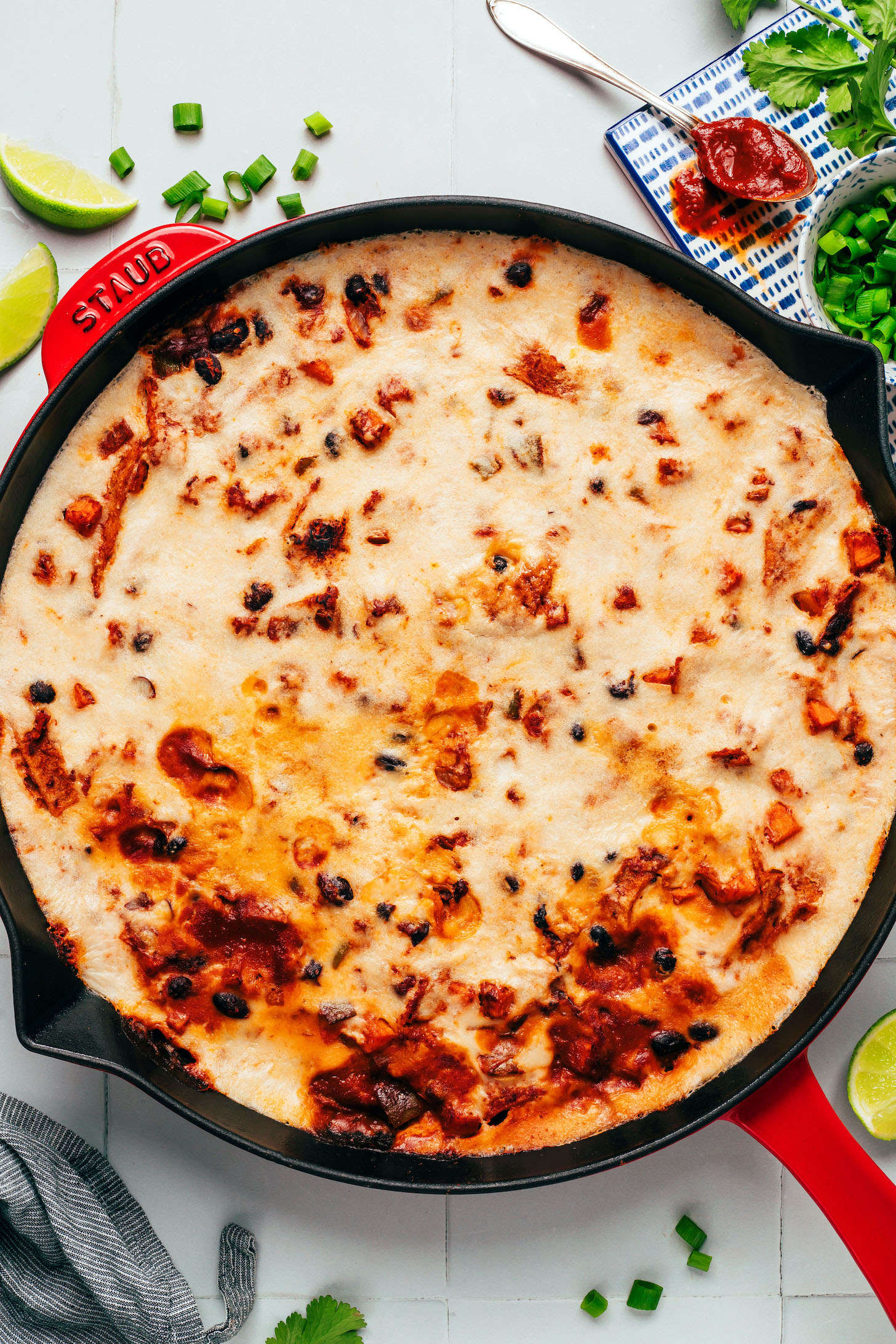
The choice of corn tortillas over flour is a significant structural decision. Culinary testing has shown that flour tortillas, when subjected to the moisture-heavy environment of a skillet, tend to lose their integrity, resulting in a gummy texture. Conversely, corn tortillas maintain their structural integrity during the short simmer, providing the necessary bite that differentiates the dish from a porridge or stew.
Conclusion and Future Outlook
The Cheesy Vegan Enchilada Skillet stands as a case study in how traditional cultural dishes can be adapted to suit contemporary lifestyle needs without compromising on flavor or nutritional integrity. As the food industry continues to prioritize health-conscious and time-efficient options, the reliance on plant-based fats like those found in cashews, combined with the convenience of one-pan preparation, is likely to remain a dominant influence in home-cooking trends.
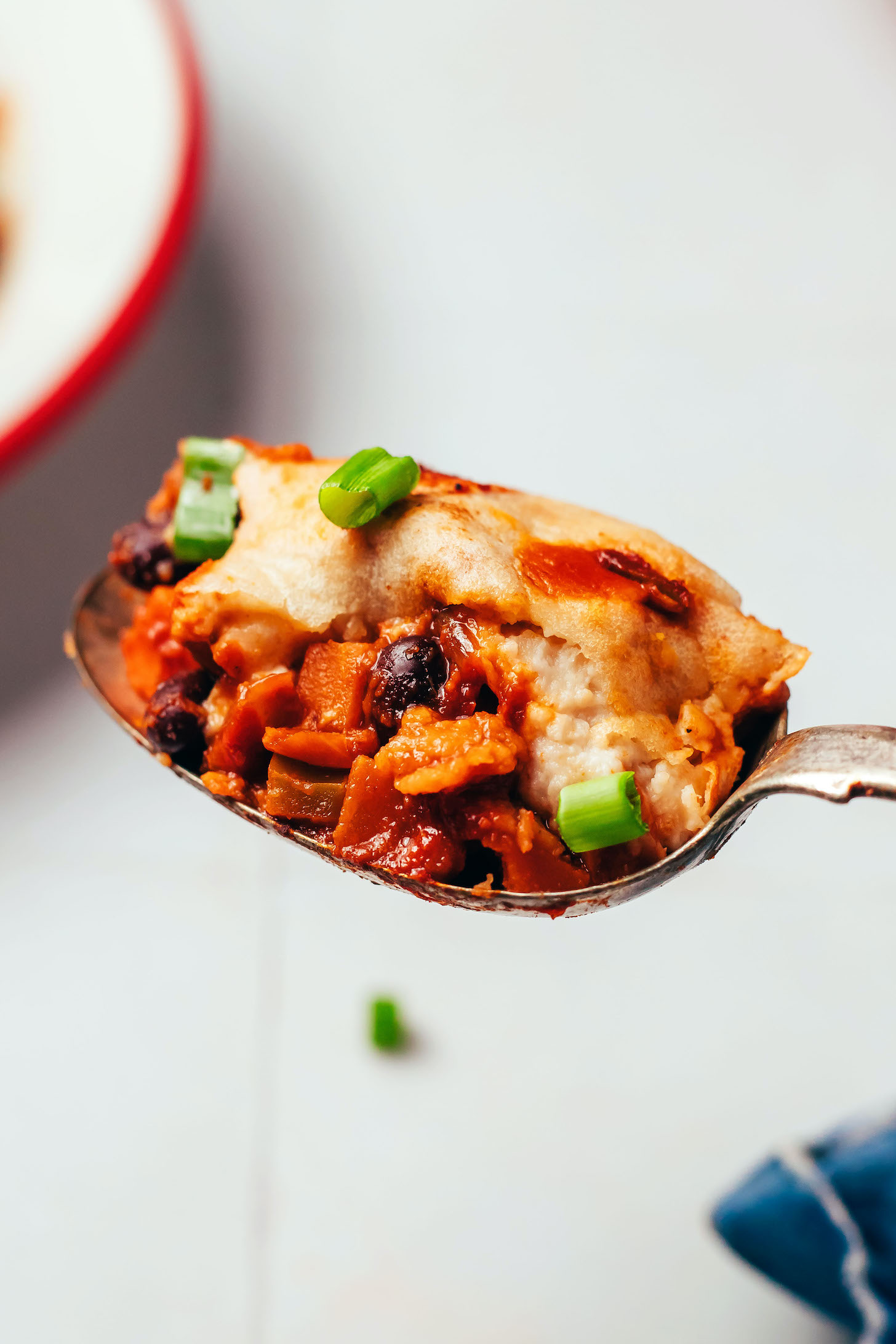
While the dish serves as a departure from the strict, authentic preparation of traditional Mexican enchiladas, it represents a successful bridge between convenience-focused modern cooking and the enduring flavors of historical regional cuisine. For the home cook, it provides a reliable, scalable, and nutritionally balanced meal that adheres to the constraints of a 30-minute time frame, demonstrating the practical application of culinary innovation in the domestic sphere.
