
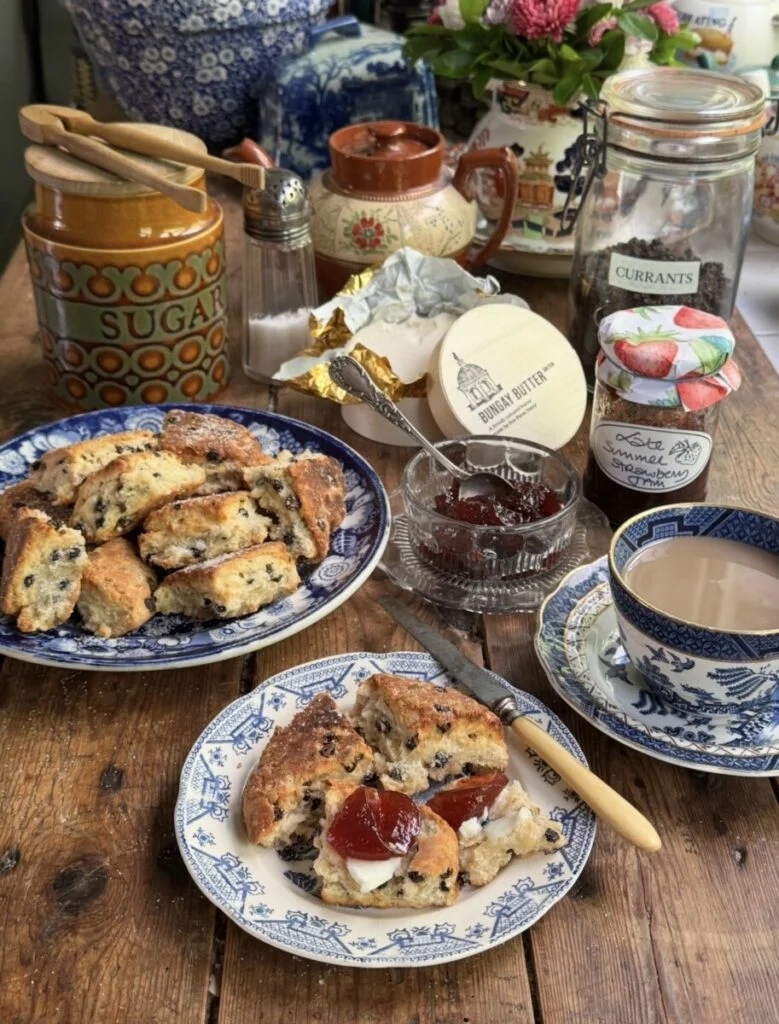
The Culinary Anatomy of a Singin’ Hinny
At their core, Singin’ Hinnies are defined by a specific composition of flour, fat, and currants, traditionally cooked on a hot griddle. Unlike contemporary versions that often mimic the smaller, individual shapes of Welsh cakes or standard tea scones, the original preparation involved crafting large, plate-sized rounds of dough. These were then scored into quarters, allowing for uniform cooking across the surface of the cast-iron griddle.

The hallmark of the recipe, and the source of its unique nomenclature, is the audible reaction between the dough and the heated cooking surface. The high fat content—traditionally a balanced ratio of butter and lard—creates a vigorous sizzling or "singing" sound when the mixture makes contact with the hot iron. This acoustic phenomenon, common in the kitchens of the Victorian and Edwardian eras, transformed the act of baking into a sensory experience that signaled the readiness of a meal.

Etymological and Historical Context
The term "Hinny" serves as a quintessential example of North East dialect, acting as an affectionate endearment derived from "honey." In the historical context of Northumberland and Durham, the term was frequently used by mothers and grandmothers, creating a lexicon of warmth within the household. Folklore surrounding the name suggests a common domestic scenario: impatient children, waiting for a meal, would be placated by the cook who insisted the cakes were not yet ready, as they were "still singin’, hinny."

This folklore reflects the realities of life in coal-mining communities and rural outposts, where time-efficient, calorie-dense foods were essential. The reliance on the griddle (or "girdle") was a practical necessity, as many working-class homes lacked the luxury of a consistent, temperature-controlled oven. The griddle allowed for rapid cooking over an open fire or a range, making these cakes a popular choice for high tea or as a hearty supper.

Comparative Analysis: Singin’ Hinnies vs. Regional Counterparts
While the Singin’ Hinny shares a familial resemblance with the Welsh cake, structural differences exist that delineate the two. Welsh cakes are typically smaller, individual discs cooked in batches and often dusted with extra sugar post-cooking. In contrast, the traditional Singin’ Hinny prioritizes the larger, quartered round, reflecting a different approach to portioning and communal eating.

The use of lard in the traditional recipe is also a point of distinction. Historically, the inclusion of lard provided a higher smoke point and a distinct texture, which was favored in the cold, damp climate of the North. As modern dietary preferences have shifted toward butter-only preparations, the traditional recipe has become a rare, authentic link to historical culinary practices. Nutritionists often highlight that while these items are high in carbohydrates and fats, they were historically balanced by the high physical labor demands of the population that consumed them.

Cultural Preservation and Modern Culinary Revival
In recent years, there has been a resurgence of interest in regional British baking, driven by institutions like the National Trust and food historians who advocate for the preservation of heritage recipes. The Singin’ Hinny has transitioned from a home-kitchen staple to an item of cultural pride, frequently featured in regional heritage centers and traditional tearooms.

This revival is not merely about culinary nostalgia; it is an exercise in cultural preservation. For residents of Northumberland and County Durham, the preparation of these cakes serves as a tactile connection to the past. By utilizing traditional tools—such as the wooden "Singin’ Hinny hands," an implement similar to tongs designed for turning the delicate, unbaked dough—home cooks ensure that the mechanical aspects of the recipe remain intact.

Socio-Economic Implications of Heritage Cooking
The continued relevance of the Singin’ Hinny raises broader questions about how regional food traditions survive in a globalized economy. The standardization of supermarket bakery items has led to a decline in the availability of "authentic" versions of these products. However, the rise of the "slow food" movement has provided a platform for such recipes to regain prominence.

Data from regional food audits suggest that the promotion of local heritage foods can have a measurable impact on regional tourism and identity. When tourists visit North East England, they are increasingly seeking out "authentic" experiences, which includes the consumption of traditional foods like Stottie cakes, Panackelty, and, of course, Singin’ Hinnies. This demand encourages local businesses to retain traditional methods, thereby supporting local agricultural supply chains and preserving specific culinary skills.

Challenges and Future Outlook
Despite their popularity, the Singin’ Hinny faces the challenge of simplification. Modern adaptations often remove the lard in favor of margarine or exclusively butter-based fats, and the traditional technique of cooking large rounds is frequently abandoned for the convenience of smaller, mass-produced discs. Food historians argue that while evolution is natural in cooking, the total loss of the "original" method would result in the erasure of a specific cultural narrative.

Furthermore, the nutritional profile of such traditional cakes requires careful consideration in a modern context. With rising rates of obesity and metabolic syndrome in the UK, the reintroduction of calorie-dense, lard-heavy recipes must be balanced with education regarding portion control and the historical context of their consumption. These were historically "treat" foods, consumed as part of a high-energy diet, and their modern-day consumption should be viewed through a lens of moderation.

Conclusion
The Singin’ Hinny is far more than a simple griddle cake. It is a vessel of history, a symbol of North East warmth, and a testament to the ingenuity of past generations who made the most of simple, accessible ingredients. As the culinary landscape continues to shift, the preservation of the Singin’ Hinny remains a vital component of the region’s cultural identity. Whether prepared on an antique cast-iron griddle or a modern induction range, the "singing" of the dough remains a reminder of a time when the kitchen was the undisputed heart of the home, and food was a direct expression of love, or as they would say in Northumberland, "hinny."
