
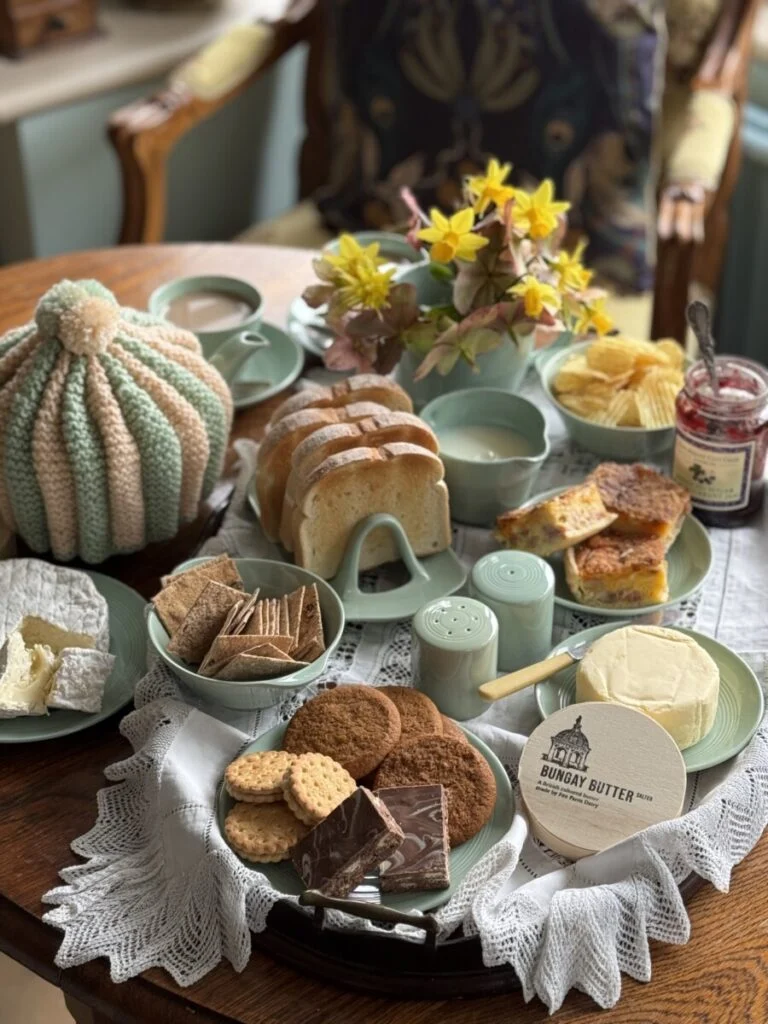
The enduring confusion surrounding the nomenclature of British tea services—specifically the distinction between "Afternoon Tea" and "High Tea"—often stems from a conflation of social class, historical timing, and regional linguistic evolution. While the terms are frequently used interchangeably in modern parlance, particularly in the United States and Australia, they represent two distinct traditions with separate origins, functions, and demographics in British social history. Understanding these differences requires a look back at the industrial and social landscapes of the 18th and 19th centuries.

Historical Origins and Societal Distinctions
The practice of taking tea in the afternoon began in the mid-19th century. Historians often point to Anna Maria Russell, the 7th Duchess of Bedford, as the catalyst for the phenomenon of Afternoon Tea. Around 1840, the Duchess reportedly found the gap between lunch and the late-scheduled dinner to be uncomfortably long, leading to feelings of fatigue and hunger. Her solution was to request a light snack—typically tea, bread and butter, and small cakes—to be served in her private chambers during the mid-afternoon.

This ritual quickly transitioned from a private necessity to a social event among the British aristocracy. By the 1850s, it had become a fixture in the drawing rooms of the upper classes. Because these refreshments were served on low, comfortable furniture—such as coffee tables or side tables in a parlor—it earned the moniker "Low Tea." It was a leisurely, refined experience intended to facilitate conversation and provide a mid-day respite.

Conversely, High Tea emerged as a functional, working-class tradition. Unlike the dainty offerings of the aristocratic afternoon tea, High Tea was a hearty, sustenance-focused meal. Historically, it was served at a "high" dining or kitchen table, hence the name. For laborers, the industrial revolution meant long, physically demanding hours, and the evening meal needed to be substantial enough to replenish energy. This meal typically occurred between 5:00 p.m. and 7:00 p.m. and served as the main evening meal for working families.

Chronology of Tea Service Evolution
The evolution of these two distinct traditions follows a clear timeline:

- Late 1700s to early 1800s: Early variations of afternoon tea begin appearing in fashionable spa towns like Bath and Harrogate. These gatherings were centered around the growing popularity of tea and refined social interaction.
- 1840s: The Duchess of Bedford formalizes the "Afternoon Tea" ritual in the British aristocratic circle, establishing the tradition of finger sandwiches, scones, and small cakes.
- 1850s to 1900s: High Tea gains prominence among the working and lower-middle classes. It is established as a substantial evening meal featuring hot dishes, meat, and bread.
- 20th Century: As social classes began to blend and the formal structure of the Victorian and Edwardian eras dissolved, the distinct meanings of these terms began to blur in public consciousness.
- Modern Era: The terms are increasingly misappropriated in international markets. In North America, "High Tea" is often incorrectly used as a synonym for an upscale, elegant "Afternoon Tea," leading to widespread cultural confusion.
The Composition of the Meal
The components of these two services differ significantly due to their original purposes. A traditional Afternoon Tea, or Low Tea, is characterized by its elegance and precision. The menu typically consists of three tiers of food: a bottom tier featuring delicate finger sandwiches (crusts removed, often filled with cucumber, egg mayonnaise, or smoked salmon); a middle tier featuring warm scones served with clotted cream and jam; and a top tier featuring petite fours, fruit tarts, or small cakes.

High Tea, by contrast, is far more robust. While tea remains the beverage of choice, the food is designed to be a complete dinner. Common staples include meat pies, sausages, cold cuts, Welsh rarebit, thick-cut bread (often called "doorstop" sandwiches), and hearty vegetable stews or soups. In many northern regions of the United Kingdom, this meal served the dual purpose of being a family gathering and a source of essential nutrition after a day of labor.

Linguistic Shifts and Global Misconceptions
The current confusion in international markets—particularly in the United States and Australia—highlights the fluid nature of language. In these regions, the word "High" is often misinterpreted as implying "high status" or "upscale." Consequently, many luxury hotels and marketing firms in the U.S. advertise "High Tea" to describe a sophisticated, white-tablecloth event.

From a historical perspective, this is a categorical error. If one were to serve a true "High Tea" to an upper-class Victorian, they would be presenting a working-class dinner, not a refined afternoon snack. This discrepancy often leads to friction when traditionalists encounter the modern, globalized usage of the terms. Public discussions on social media platforms and food history forums frequently highlight this tension, as purists emphasize the importance of maintaining historical integrity, while others argue that language naturally evolves to reflect contemporary usage.

Economic and Social Implications
The distinction between these teas serves as a case study in how social history influences culinary traditions. The survival of Afternoon Tea as a luxury experience can be attributed to its association with the leisure class and the "experience economy" of the 21st century. It has become a premium product in the hospitality industry, often tied to heritage tourism.

High Tea, meanwhile, has largely faded as a specific, class-defined meal and has instead been absorbed into the general concept of the "evening meal" or "tea," a regional term for dinner used in many parts of the United Kingdom. The disappearance of the distinct "High Tea" as a formal concept is a result of changing work hours, the decline of manual labor, and the rise of the standard dinner hour.

Analysis of the Cultural Legacy
The debate over the correct terminology, while seemingly trivial, touches upon the broader preservation of British cultural identity. For those interested in culinary history, maintaining the distinction between the two is a matter of accuracy. By acknowledging that Afternoon Tea is a social, upper-class tradition and High Tea is a functional, working-class tradition, we gain a clearer understanding of how the British class system once dictated even the smallest aspects of daily life, such as the furniture one sat upon while consuming tea.

While it is unlikely that the global misuse of these terms will be corrected in the near future, the historical record remains clear. The next time one is invited for "High Tea," it is worth noting whether one is being served a delicate cucumber sandwich or a savory meat pie—the former confirms an Afternoon Tea experience, while the latter honors the true, historic tradition of the High Tea. As culinary history continues to be studied and celebrated, these nuances ensure that the cultural narratives behind our daily meals are not lost to the passage of time.
