
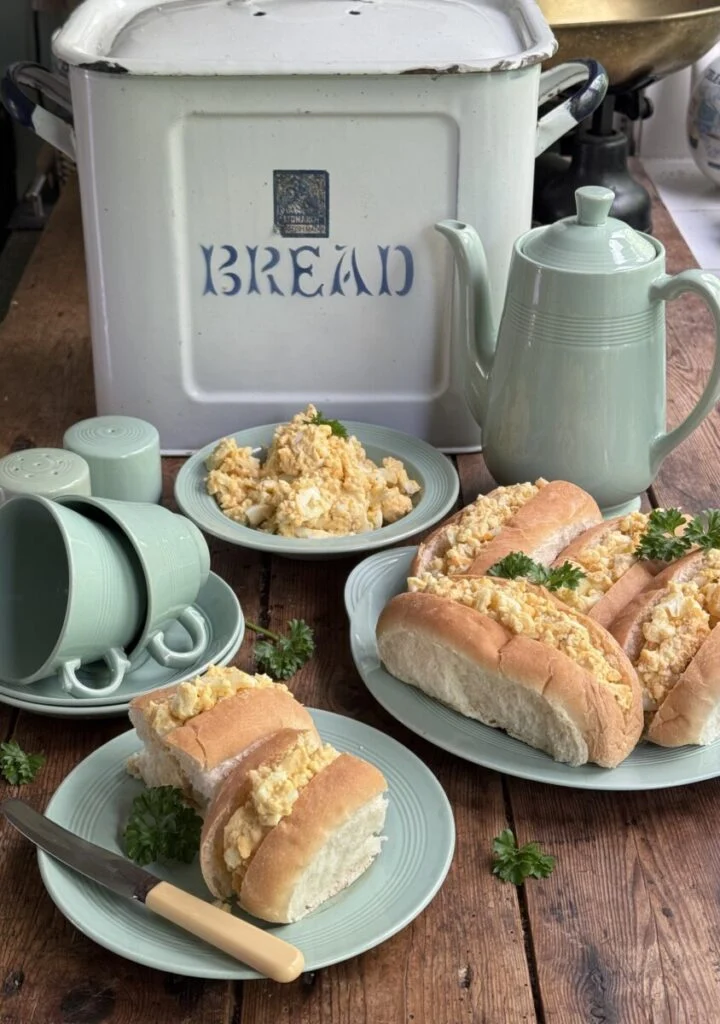
The seemingly humble egg salad, particularly as prepared in 1940s Britain, serves as a poignant culinary artifact, embodying the profound challenges and remarkable ingenuity of a nation grappling with the strictures of wartime rationing. This classic dish, often presented in bridge rolls and accompanied by a cup of camp coffee, reflects a period when every ingredient was precious, and resourcefulness was paramount in maintaining both nutrition and morale on the home front. Its preparation, involving homemade wartime salad cream and, historically, dried eggs, offers a unique window into the daily lives and culinary adaptations necessitated by the Second World War.

The Dawn of Rationing: A National Necessity
Britain’s entry into World War II in September 1939 quickly highlighted the vulnerability of its food supply. Dependent on imports for a significant portion of its food, the nation faced an immediate threat from German U-boat attacks on shipping lanes. To ensure equitable distribution, prevent hoarding, and maintain public health, the government introduced a comprehensive rationing system. This was not merely an economic measure but a strategic imperative to sustain the population through prolonged conflict.

Formal rationing began on January 8, 1940, with bacon, butter, and sugar being the first commodities to be rationed. Meat, tea, jam, biscuits, breakfast cereals, cheese, eggs, and fats soon followed. By 1942, nearly all foodstuffs were rationed, alongside other essentials like clothing and fuel. The Ministry of Food, established in September 1939, became a central pillar of national life, responsible for managing food supplies, setting prices, and guiding the public on how to eat healthily and economically within the tight constraints. Their omnipresent presence, through campaigns like "Dig for Victory" and "Waste Not, Want Not," fostered a collective sense of responsibility and patriotism around food.
Eggs in Wartime: The Scarcity of "Shell Eggs" and the Rise of Dried Alternatives

Eggs, a staple of the British diet, became particularly scarce. Fresh eggs, affectionately termed "shell eggs" to distinguish them from their powdered counterparts, were severely rationed. By 1941, an individual might receive only one fresh egg per week, if that. This scarcity led to the widespread introduction of dried eggs, primarily imported from the United States under the Lend-Lease Act. These powdered eggs, often packaged in tins, were a lifeline for British households, providing a vital source of protein and enabling the continuation of many traditional recipes, albeit with a different texture and flavour profile.
The Imperial War Museums’ archives contain numerous Ministry of Food posters and leaflets detailing how to reconstitute and cook with dried eggs. While initially met with skepticism and sometimes disdain due to their unfamiliar taste and appearance, dried eggs became an indispensable part of wartime cookery. They were used for baking, scrambled eggs, and, critically, in dishes like egg salad, where their rehydrated form could be mixed with other ingredients to create a palatable meal. The recipe for a 1940s egg salad would, by necessity, have largely relied on these dried eggs, a testament to the adaptive spirit of the era. For modern recreations, like the one recently shared by Karen Burns-Booth, the luxury of using fresh "shell eggs" offers a taste of the original concept without the wartime constraint.

The Ingenuity of Wartime Dressings: Homemade Salad Cream and "Royal Dressing"
The availability of oils and fats, crucial components of traditional mayonnaise, was also severely restricted during the war. This posed a significant challenge for dishes like egg salad, which relied on a creamy dressing. The Ministry of Food stepped in with innovative solutions, promoting homemade alternatives to store-bought salad cream and mayonnaise. These recipes prioritized readily available ingredients and often employed clever substitutions to achieve a similar texture and tang.

One notable example was the "Royal Dressing," a Ministry of Food creation designed to satisfy the craving for salad dressing without rationed oils or eggs. Its ingredients were remarkably simple: two ounces of National Flour, half a pint of milk or vegetable water, a tablespoon of vinegar, and seasonings (salt, pepper, and sugar). The method involved making a thick sauce from the flour and liquid, then beating in the vinegar and spices. This concoction, while far from the rich emulsified mayonnaise of peacetime, provided a much-needed moistening and flavourful binder for salads and eggs.
Another common wartime hack was "eggless mayonnaise," often created by mashing a small, boiled root vegetable like a potato until silky smooth. This starchy base was then slowly whisked with vinegar, mustard, salt, and a minimal amount of vegetable oil (if available, or even just milk) to achieve a creamy consistency. These recipes highlight the resourcefulness of wartime cooks, who learned to stretch scarce ingredients and create satisfying dishes from limited supplies.

More Than Just a Meal: Social Context and Culinary Accoutrements
The presentation and consumption of wartime egg salad were often imbued with a deeper social and cultural significance. The choice to serve it in "bridge rolls" speaks volumes about the enduring desire for normalcy and social ritual amidst the chaos of war. Bridge rolls, small, soft, oblong bread rolls, were traditionally served at "bridge parties" – social gatherings centered around the card game. Simple fillings, such as egg salad, sardine paste, or potted meat, were common. These gatherings, though perhaps less frequent and more austere than in peacetime, offered a vital reprieve and a chance for community and connection.

The mention of "Woodsware Beryl Utility Crockery" further underscores the prevailing conditions. Utility crockery, produced under government directives, was designed for maximum functionality and minimal use of resources. Brands like Woodsware Beryl featured simple, often pastel-coloured designs, lacking the elaborate decorations of pre-war china. This reflected the broader austerity measures and the shift from luxury to necessity in manufacturing. Dining on such plates, while perhaps less ornate, was a stark reminder of the collective effort and shared sacrifice.
A "pot of camp coffee" would complete the picture. Camp Coffee, a coffee and chicory essence, was a popular substitute for actual coffee beans, which were also rationed and expensive. Its convenience and distinctive flavour made it a common accompaniment to meals, particularly for those seeking a comforting hot beverage. The "obligatory parsley garnish," while seemingly trivial, hints at the enduring British tradition of making meals appealing, even when ingredients were sparse. These details paint a vivid picture of a meal that was not just about sustenance but also about upholding dignity and routine in extraordinary times.

Culinary Notes and Nutritional Realities
The Ministry of Food’s detailed culinary notes and recipes, like those for Royal Dressing, were critical for public education. They provided practical guidance on how to make the most of limited resources and how to maintain a balanced diet. For instance, using vegetable water (the liquid remaining from cooking or steaming vegetables) in dressings was a shrewd way to retain vitamins and minerals that might otherwise be discarded, aligning with the "Waste Not, Want Not" ethos.

Nutrition information, while not always explicitly detailed on labels as it is today, was implicitly managed by the Ministry of Food’s guidelines. A serving of wartime egg salad, made with the Royal Dressing and likely dried eggs, would have provided essential protein from the eggs, carbohydrates from the flour in the dressing, and some fats. The nutritional breakdown provided for a modern equivalent (Yield 4, Serving Size 1, Calories 119, Total Fat 9g, Saturated Fat 2g, Unsaturated Fat 7g, Cholesterol 189mg, Sodium 167mg, Carbohydrates 1g, Sugar 1g, Protein 6g) offers a glimpse into the relatively lean but sustaining nature of such a meal, especially when compared to pre-war culinary indulgences. These figures underscore the efficiency with which wartime diets were constructed to provide necessary energy and nutrients without excess.
The Lasting Legacy of Wartime Cuisine

The experience of wartime rationing left an indelible mark on British food culture. It fostered a generation of resourceful cooks who understood the value of every scrap and the art of substitution. The emphasis on home cooking, growing one’s own food (allotments flourished), and minimizing waste became deeply ingrained. While the immediate post-war years saw a gradual return to abundance, some of the lessons learned during rationing endured. The national palate adapted, and dishes born of necessity, such as various types of vegetable stews, meatless pies, and simplified cakes, became part of the culinary repertoire.
The Ministry of Food’s public health campaigns also had a lasting impact, raising awareness about nutrition and healthy eating habits. The collective memory of rationing instilled a certain pragmatism and appreciation for food that arguably persists in the British psyche. The "Wartime 1940’s Egg Salad" is more than just a recipe; it’s a narrative of resilience, a testament to how ordinary people adapted to extraordinary circumstances, finding comfort and continuity in the simple act of sharing a meal. Recreating such a dish today is not just a culinary exercise but an act of historical remembrance, connecting us to a pivotal era through the universal language of food.
