
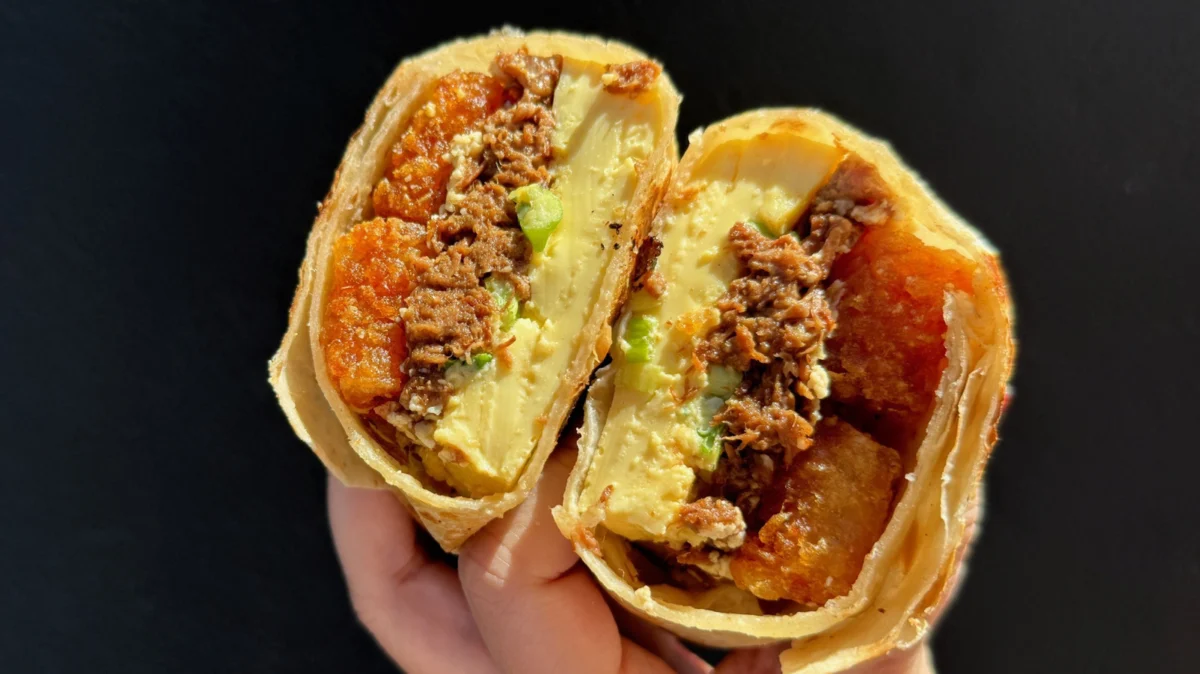
A culinary phenomenon is sweeping through Los Angeles, centered around a unique breakfast creation from Kang’s Kuisine. This Korean-inspired breakfast burrito, featuring slow-braised galbi-jjim (Korean short ribs), has achieved a level of viral popularity that leads to rapid sell-outs, prompting an examination of whether the hype truly matches the taste and experience. The $20 burrito, initially a passion project operating out of a Koreatown apartment, has now escalated to pop-up locations, drawing eager customers willing to pre-order and navigate limited availability to secure a taste of this internet-famous dish.
The Genesis of a Viral Sensation
Kang’s Kuisine began as the brainchild of Joshua Kang, who started crafting and selling his signature breakfast burritos from his residence. The concept was simple yet compelling: fuse the comforting elements of a breakfast burrito with the rich, savory flavors of traditional Korean galbi-jjim. What started as a local endeavor quickly gained traction, fueled by social media buzz and word-of-mouth. This organic growth led to a significant demand, necessitating a move to a more public and organized operational model.
The current operational hub for Kang’s Kuisine is Idyllic, a coffee bus situated within the vibrant 8th & Santa Fe creative campus in Los Angeles’ Arts District. This strategic relocation allows for a more streamlined pop-up experience, catering to a larger audience while maintaining the exclusivity that has become a hallmark of the brand. The pop-up operates on a bi-monthly schedule, with plans to increase frequency in response to sustained demand. Interested patrons are directed to the Kang’s Kuisine Instagram page for updates on upcoming pop-up dates and to the official website for pre-ordering, a critical step given the item’s rapid sell-out status.
A Detailed Examination of the Galbi-Jjim Breakfast Burrito
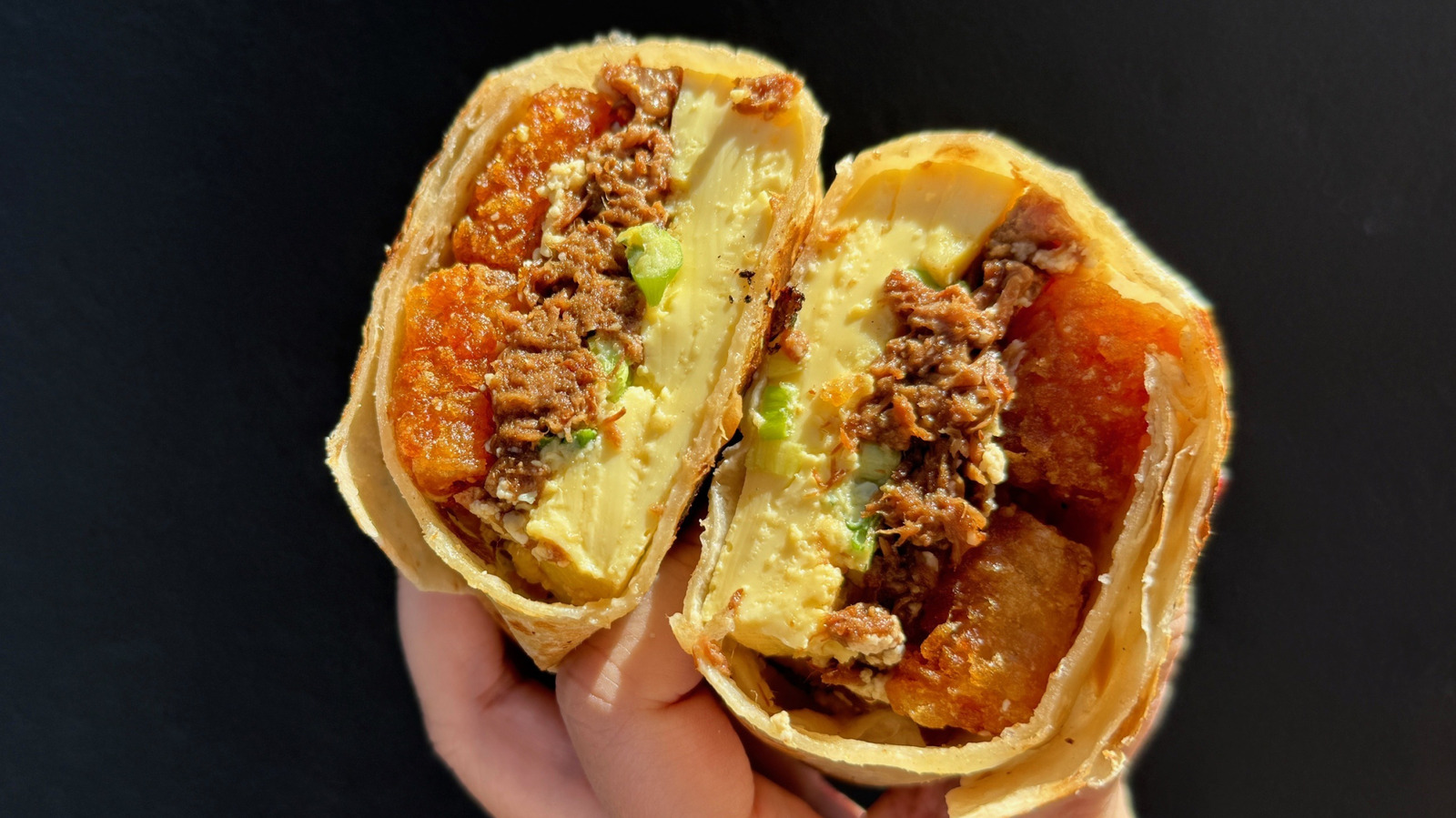
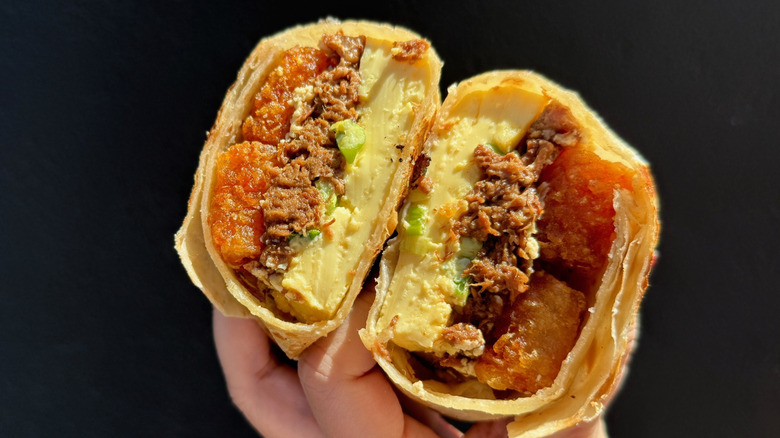
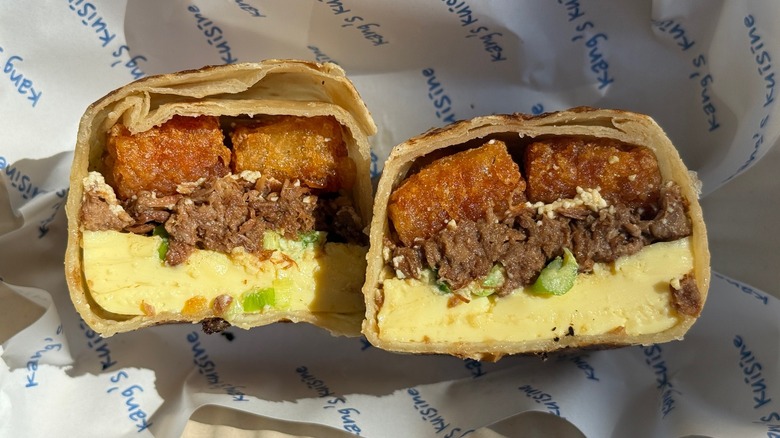
The Kang’s Kuisine breakfast burrito presents itself as a carefully constructed culinary package. Upon visual inspection, a distinct layering of ingredients is apparent, a departure from the often-homogenized filling of traditional burritos. The structure begins with a base of eggs, followed by a generous portion of the star ingredient, shredded galbi-jjim, and topped with a layer of tater tots. This thoughtful arrangement, as observed by food journalist Fiona Chandra for Tasting Table, contributes to a notable textural contrast, a key element in the burrito’s appeal.
The eggs are prepared not as scrambled eggs, but as a thick, fluffy patty, reminiscent of the egg component found in a well-executed breakfast sandwich. This patty is often garnished with scallions, adding a subtle oniony freshness. The galbi-jjim, the braised Korean short ribs, is the undeniable centerpiece, offering the characteristic sweet and savory profile that defines this beloved Korean dish. The marinade, typically a blend of soy sauce, garlic, ginger, and sugar, infuses the tender, shredded meat with deep, complex flavors.
Complementing the core components are a trio of accompaniments designed to enhance and balance the richness of the galbi-jjim and eggs. These include pickled onions, which provide a sharp, acidic counterpoint; a cilantro lime crema, offering a cooling and herbaceous note without excessive spice; and a gochugaru habanero salsa. The latter is noted for its significant heat, derived from Korean chili flakes (gochugaru) and habanero peppers, providing a fiery kick that many find to be the ideal complement to the burrito’s savory elements. Chandra’s tasting notes indicate a preference for the gochugaru habanero salsa, suggesting it elevates the overall flavor profile.
A particularly lauded aspect of the burrito’s construction is the inclusion of tater tots. These are intentionally placed to maintain their crispiness, offering a satisfying crunch that combats the potential for a soft or mushy texture often associated with breakfast burritos, especially when reheated. This attention to textural integrity is a significant contributor to the burrito’s praised quality.
Navigating the Demand: Logistics and Accessibility
The popularity of Kang’s Kuisine’s breakfast burrito has led to a streamlined, yet still competitive, pre-ordering system. The decision to move to an online pre-order model was a strategic response to manage the overwhelming demand and long wait times that characterized its earlier operations. This system, while efficient, necessitates prompt action from consumers. Orders are typically opened online at specific times, and the limited quantity means that securing a burrito requires vigilance.
The $20 price point positions this breakfast burrito as a premium offering within the Los Angeles food scene. This price reflects not only the quality of ingredients and the labor-intensive preparation of the galbi-jjim but also the exclusivity and viral appeal that drives demand. While the cost may be a consideration for some, the perceived value appears to be high for many who actively seek out the experience.
The pickup location at 8th & Santa Fe offers a pleasant environment for customers. The Arts District campus provides ample seating, allowing patrons to enjoy their freshly acquired burritos on-site. This amenity enhances the overall customer experience, transforming the act of picking up a pre-ordered item into a more leisurely and enjoyable occasion. Chandra’s experience highlights the ease of the pickup process, noting that while the burritos do sell out quickly, the ordering window is generally more manageable than the near-instantaneous sell-outs of some highly sought-after restaurant reservations.
The Verdict: Hype vs. Substance
In assessing whether Kang’s Kuisine’s galbi-jjim breakfast burrito lives up to its viral reputation, several factors come into play. The unique fusion of Korean barbecue flavors with the familiar format of a breakfast burrito is undeniably innovative. The meticulous construction, ensuring textural contrast with the crunchy tater tots and the distinct layers of ingredients, sets it apart from many competitors. The quality of the galbi-jjim, with its tender texture and balanced sweet and savory notes, is a significant draw.
However, the $20 price tag is a notable factor. While the quality is high, the portion of beef could be perceived as slightly undersized for the cost by some consumers. This observation suggests a potential area for adjustment to further enhance the perceived value. Furthermore, the recommendation to consume the burrito immediately to preserve the crispiness of the tater tots is a practical consideration. Reheating can diminish this desirable textural element, impacting the overall experience.
Despite these minor points, the consensus from those who have successfully navigated the ordering process and tasted the burrito is largely positive. The innovation, the quality of the core ingredients, and the thoughtful preparation contribute to a memorable culinary experience. The success of Kang’s Kuisine demonstrates a keen understanding of current food trends and a commitment to delivering a product that, for many, justifies the effort and cost involved.
Broader Implications and the Future of Food Trends
The success of Kang’s Kuisine’s galbi-jjim breakfast burrito is emblematic of a broader trend in the culinary landscape: the power of social media to propel niche food concepts into mainstream consciousness. Viral food items often emerge from independent kitchens and pop-up operations, leveraging platforms like Instagram and TikTok to build a following and generate demand. This phenomenon democratizes food trends to some extent, allowing smaller businesses to achieve significant reach and recognition.
The rapid sell-outs also highlight the evolving consumer palate, which is increasingly open to cross-cultural culinary fusions. The successful integration of Korean flavors into a typically American breakfast staple signifies a growing appreciation for diverse culinary traditions and a willingness to experiment with novel combinations.
The operational model employed by Kang’s Kuisine – a limited-run pop-up with a pre-order system – creates a sense of urgency and exclusivity, further fueling demand. This scarcity-driven marketing strategy, while effective, can also lead to frustration for those who are unable to secure an order. As the business grows, a key challenge will be to scale operations to meet demand without compromising the quality and unique appeal that made it popular in the first place.
The long-term implications for Kang’s Kuisine will depend on its ability to sustain this momentum. Expanding the frequency of pop-ups, potentially exploring more permanent locations, and continuously innovating within its niche will be crucial. The current success serves as a testament to the power of a well-executed, unique concept in a competitive market. The galbi-jjim breakfast burrito, while perhaps a product of hype, appears to have enough substance to suggest it is more than just a fleeting trend. It represents a delicious intersection of tradition and innovation, a testament to the dynamic and ever-evolving world of Los Angeles’ food scene.
