
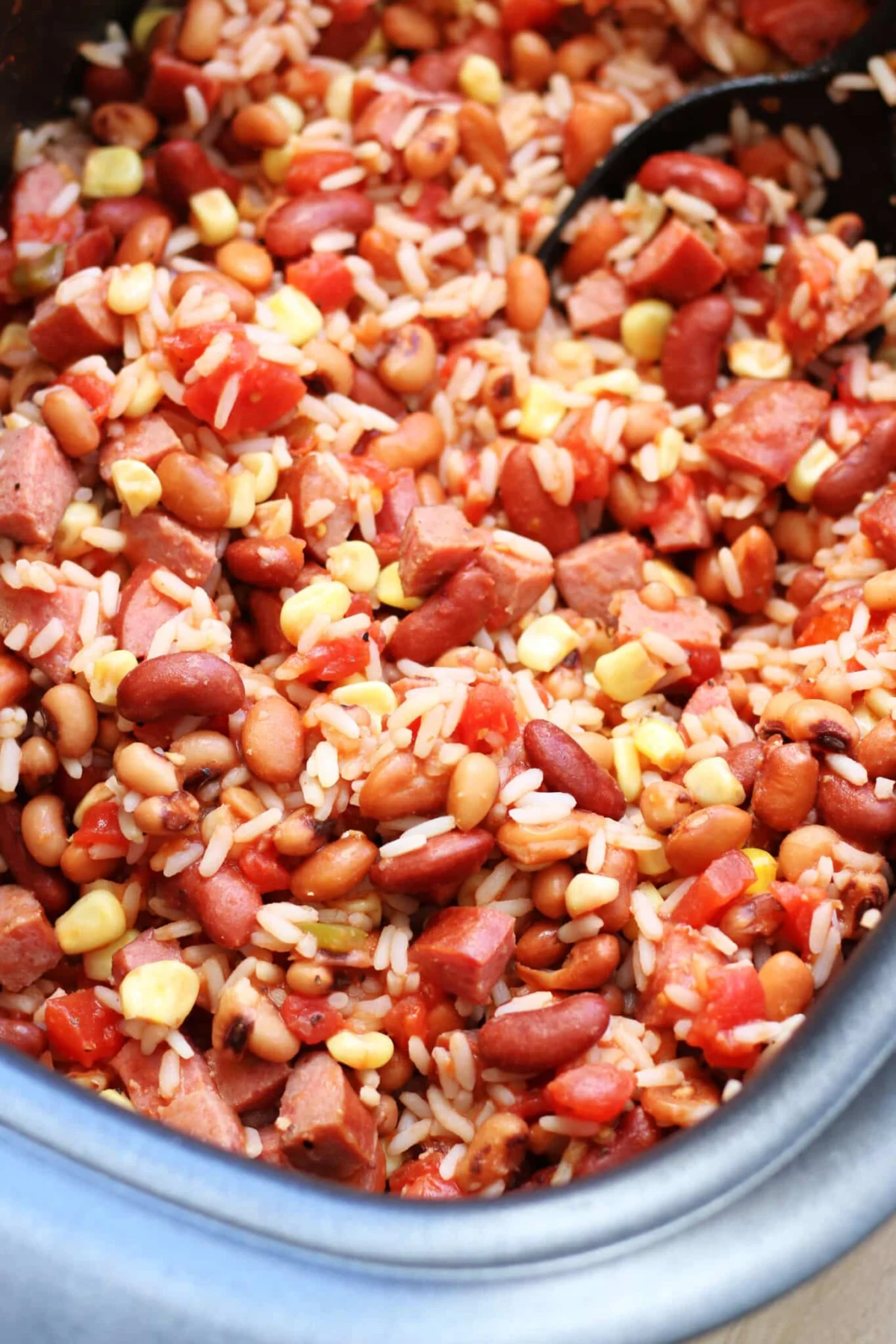
The evolution of American home cooking has frequently been defined by the intersection of convenience, regional identity, and the necessity of resourcefulness, a triad that is epitomized by the dish known as Texas Slop Suey. This one-pot meal, characterized by its hearty combination of smoked sausage, beans, corn, and rice, represents a modern adaptation of the "dump-and-go" culinary philosophy. Designed specifically for the slow cooker, the dish serves as a protein-dense and fiber-packed dinner solution that addresses the contemporary demand for nutritional efficiency and minimal labor. While the name may suggest a casual or haphazard assembly, the culinary logic behind the dish reflects a deep-seated tradition of Texas-style comfort food, blending the smoky profiles of the Southwest with the shelf-stable reliability of pantry staples.

The Origins and Etymology of Texas Slop Suey
To understand the emergence of Texas Slop Suey, one must examine the linguistic and cultural history of its predecessor, American Chop Suey. The term "Chop Suey" originated within the Chinese-American community in the late 19th century, referring to a dish of "odds and ends" cooked together. By the mid-20th century, this concept had been adapted into "American Chop Suey," which typically featured ground beef, macaroni, and tomato sauce.
The transition to "Texas Slop Suey" represents a regional pivot. In the Southern and Southwestern United States, the term "slop" is occasionally used colloquially—and often affectionately—to describe a thick, hearty mixture of ingredients that lacks a rigid structure but offers high satiety. The addition of "Texas" to the moniker signifies the inclusion of regional flavor profiles, specifically the use of smoked sausage (a nod to the German and Czech meat-processing traditions of Central Texas) and the inclusion of beans and corn, which are foundational to Tex-Mex and Southern cuisine.

The Mechanics of the Modern Slow Cooker Meal
The contemporary iteration of Texas Slop Suey is inextricably linked to the technology of the slow cooker. Originally patented by Irving Naxon in 1936 as a bean cooker and later popularized by the Rival Company in the 1970s under the "Crock-Pot" trademark, the slow cooker revolutionized domestic labor. For the modern household, the "dump meal" represents a pinnacle of efficiency.
The preparation of Texas Slop Suey follows a streamlined chronology:

- Assembly: All primary ingredients—sliced smoked sausage, canned or dried beans, corn, uncooked rice, and seasoned liquids—are added simultaneously to the stoneware insert.
- Integration: The ingredients are stirred to ensure even distribution of moisture, which is critical for the hydration of the rice.
- Thermal Processing: The device is set to either a "High" heat (typically reaching 200-300°F over 2-3 hours) or a "Low" heat (maintaining a gentler simmer over 4 hours).
- Completion: The process concludes when the rice has fully absorbed the surrounding flavors and reached a tender consistency, at which point the mixture is stirred a final time before serving.
This method eliminates the need for active monitoring, appealing to a workforce that increasingly balances professional obligations with the desire for home-cooked nutrition.
Nutritional Profile and Ingredient Analysis
From a nutritional standpoint, Texas Slop Suey is designed to be a "complete" meal, providing a balance of macronutrients and essential vitamins. Each component serves a specific functional purpose within the dietary framework.

Smoked Sausage: The Protein Anchor
Smoked sausage provides the primary protein source and the majority of the dish’s fat content, which carries the fat-soluble flavors of the seasonings. In Texas, these sausages are often hickory or pecan-smoked, adding a depth of flavor that would otherwise require hours of stove-top simmering to achieve.
Beans and Corn: The Fiber Foundation
The inclusion of beans—whether pinto, black, or kidney—introduces significant amounts of dietary fiber and plant-based protein. When combined with corn, these ingredients provide a texture contrast and a natural sweetness. Furthermore, the combination of beans and rice is a classic culinary pairing that creates a complete protein, containing all nine essential amino acids.

Rice: The Complex Carbohydrate
Rice serves as the thickening agent and the primary source of energy-dense carbohydrates. As the rice cooks within the slow cooker, it absorbs the juices released by the sausage and the starch from the beans, resulting in a cohesive, savory porridge-like consistency that is hallmark to the "slop suey" style.
Economic Implications and the "Pantry Clean-out" Strategy
The popularity of Texas Slop Suey is also a reflection of broader economic trends. As grocery prices have experienced volatility in recent years, consumers have shifted toward "pantry cooking"—the practice of creating meals from items already in stock.

Data from consumer research suggests that the average American household wastes approximately 30% of the food it purchases. Texas Slop Suey acts as a culinary "catch-all," allowing home cooks to utilize various types of canned beans, frozen corn, or leftover sausage. This versatility reduces food waste and lowers the cost-per-serving, making it a staple for budget-conscious families.
Industry analysts note that the "one-pot" category of recipes sees a significant spike in search engine traffic during periods of economic recession or high inflation. The ability to feed a family of four for under $15 USD using shelf-stable ingredients is a powerful incentive that maintains the dish’s relevance in the modern market.

Culinary Adaptability and Serving Innovations
While the core recipe for Texas Slop Suey is standardized, it allows for significant customization based on dietary needs and regional preferences.
Substitutions
- Vegetarian Options: Replacing smoked sausage with smoked tofu or plant-based sausage links, and using vegetable broth instead of meat-based liquids.
- Low-Carb Variations: Utilizing cauliflower rice in place of traditional white rice, though this requires a shorter cooking time to prevent the vegetable from becoming overly soft.
- Heat Profiles: The addition of diced jalapeños, green chiles, or cayenne pepper can shift the dish from a mild comfort meal to a spicy Southwestern staple.
The Creamy Element
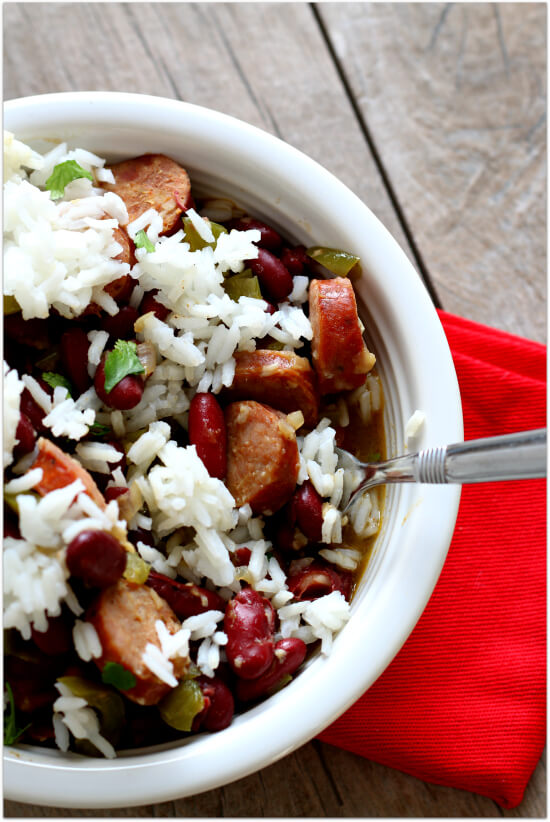
A notable trend in the serving of Texas Slop Suey is the addition of a "creamy element" to balance the saltiness of the sausage and the earthiness of the beans. While shredded cheddar or Monterey Jack cheese are traditional choices, some culinary influencers and home cooks have begun advocating for a large dollop of cottage cheese. This addition not only provides a temperature contrast but also significantly boosts the protein content of the meal without the high fat-to-protein ratio of traditional hard cheeses.
Broader Cultural Impact and Consumer Sentiment
The rise of digital recipe sharing platforms has transformed Texas Slop Suey from a local secret into a viral phenomenon. Platforms like Pinterest and specialized cooking blogs have allowed for the rapid dissemination of slow cooker techniques.
Market data indicates that approximately 80% of U.S. households own a slow cooker, and the "set-it-and-forget-it" niche remains one of the most profitable segments of the small appliance industry. Statements from home cooking enthusiasts often highlight the psychological benefits of the dish; the "aromatic payoff" of a slow-cooked meal greeting a resident upon their return from work is frequently cited as a major factor in the dish’s enduring appeal.
Nutritional experts have also weighed in, noting that while processed meats like smoked sausage should be consumed in moderation, the high fiber content from the beans and corn in Texas Slop Suey provides a much-needed nutrient boost for the average Western diet, which is often fiber-deficient.
Conclusion: The Future of Efficient Dining
Texas Slop Suey stands as a testament to the enduring nature of regional American cuisine and its ability to adapt to modern technology. It is a dish that prioritizes substance over form, offering a pragmatic solution to the perennial problem of the weeknight dinner.
As we look toward the future of domestic food preparation, the principles embodied by Texas Slop Suey—minimal prep, maximal nutrition, and economic efficiency—are likely to remain the guiding stars of the home kitchen. Whether it is called a "stew," a "goulash," or "slop," the fundamental appeal of a warm, filling, and easy-to-prepare meal is universal. In the vast landscape of Texas culinary traditions, this slow-cooked staple has secured its place as a reliable, flavorful, and quintessentially American innovation.
