
The culinary world often celebrates desserts that combine ethereal lightness with impressive visual appeal, and the homemade meringue roulade stands as a prime example. This sophisticated confection, characterized by its delicately crisp exterior and soft, marshmallowy interior, is a truly show-stopping dessert, naturally gluten-free and highly customizable, making it an ideal choice for special gatherings. Its unique texture, a captivating blend of fragility and chewiness, sets it apart, offering a melt-in-your-mouth experience that transcends mere sweetness. While its elegance might suggest complexity, understanding the foundational principles and executing precise techniques can empower home bakers to achieve this culinary triumph.
The Art and Science of Meringue: A Foundation for Success
At its core, a meringue roulade is an advanced form of meringue, often described as a more pliable cousin to the classic pavlova. The distinction lies in its capacity to be rolled, a characteristic that necessitates a specific internal structure—firm enough to hold its shape, yet supple enough to bend without fracturing completely. This delicate balance is achieved through careful manipulation of a few key ingredients, each playing a critical role in the meringue’s final form and texture.
The primary component, egg whites, are the structural backbone. When whipped, the proteins in the egg whites denature and form a stable foam, trapping air bubbles. This aeration is what gives meringue its signature lightness and volume. However, egg whites alone are insufficient for a stable structure capable of being rolled. This is where sugar, the second crucial ingredient, comes into play. Granulated sugar, ideally superfine or caster sugar, is gradually incorporated into the whipping egg whites. The sugar not only sweetens the meringue but, more importantly, dissolves into the protein matrix, stabilizing the foam and preventing it from collapsing. It also contributes to the crispness of the exterior and the chewy "marshmallow" quality of the interior. The smaller crystal size of superfine sugar is preferred because it dissolves more readily, reducing the risk of a grainy meringue and ensuring a smooth, stable structure. In lieu of superfine sugar, a standard culinary practice involves briefly pulsing granulated sugar in a food processor to achieve a finer consistency. This mechanical reduction in crystal size facilitates quicker dissolution and improved integration, directly impacting the meringue’s stability and texture.
Cream of tartar, an acidic salt, acts as a critical stabilizer. Its presence helps to strengthen the egg white foam by increasing the heat tolerance of the proteins and preventing over-whipping. This acidic environment also contributes to the meringue’s brilliant white color by inhibiting the Maillard reaction, which can cause browning. Similarly, a pinch of salt enhances the flavor profile, balancing the sweetness, while a touch of vanilla extract adds aromatic depth. Cornstarch is often included to further aid in stabilization and to create that characteristic soft, marshmallowy interior, absorbing excess moisture and lending a chewier texture. These components, working in concert, are essential for creating a meringue that possesses the unique structural integrity required for rolling.
Navigating the Preparation: A Step-by-Step Chronology
The creation of a meringue roulade is a meticulous process, demanding attention to detail at each stage, from ingredient preparation to the final delicate roll. The success hinges on understanding and executing specific techniques, especially concerning the whipping of egg whites and the critical timing of the rolling process.
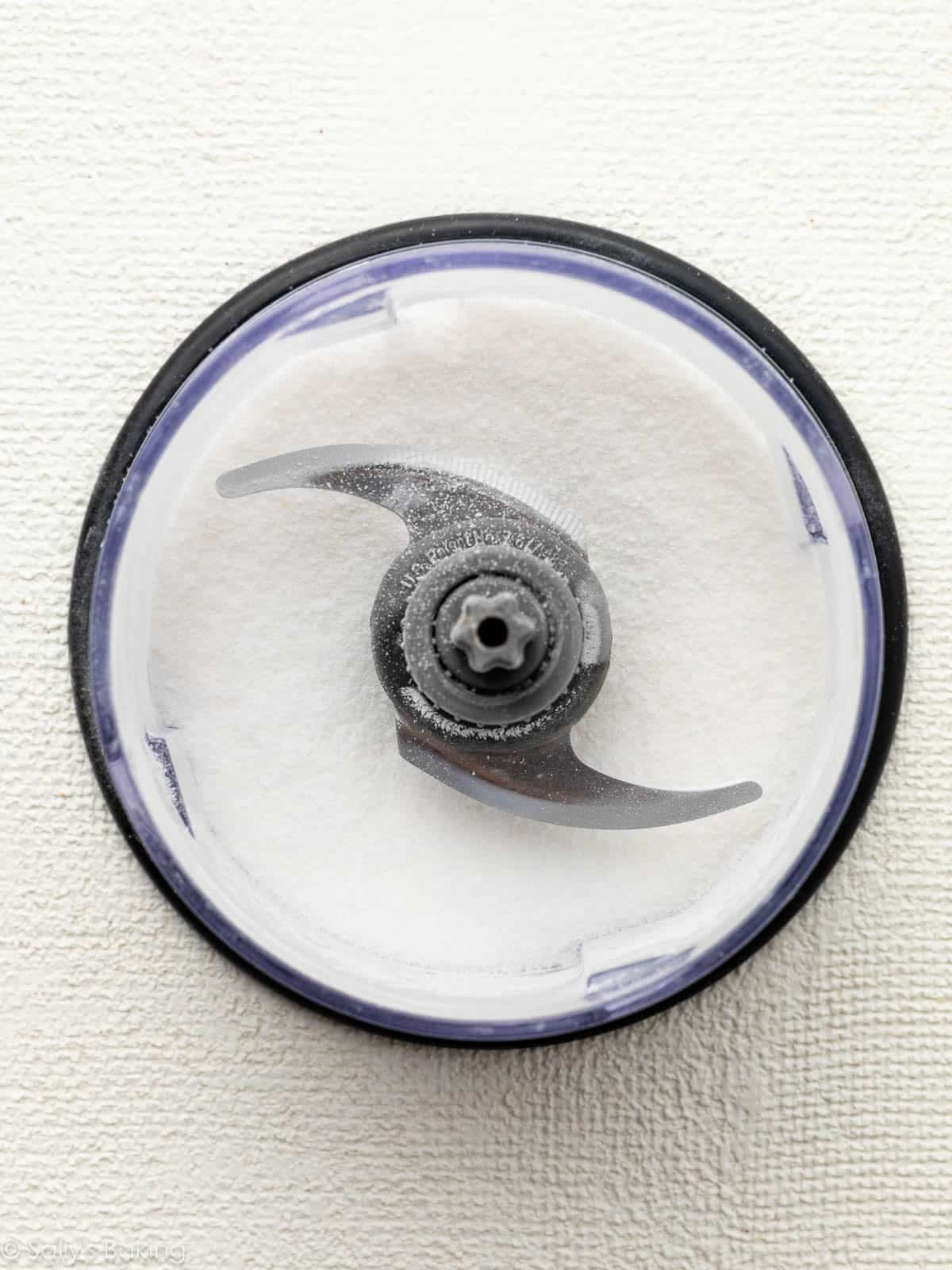
The journey begins with preparing the sugar. If superfine sugar is not readily available, pulsing granulated sugar in a food processor for a brief period (approximately 30-60 seconds) achieves the desired fine consistency, ensuring quicker dissolution during the whipping phase. This step is not merely a convenience but a fundamental aspect of meringue stability, preventing a gritty texture and potential weeping.
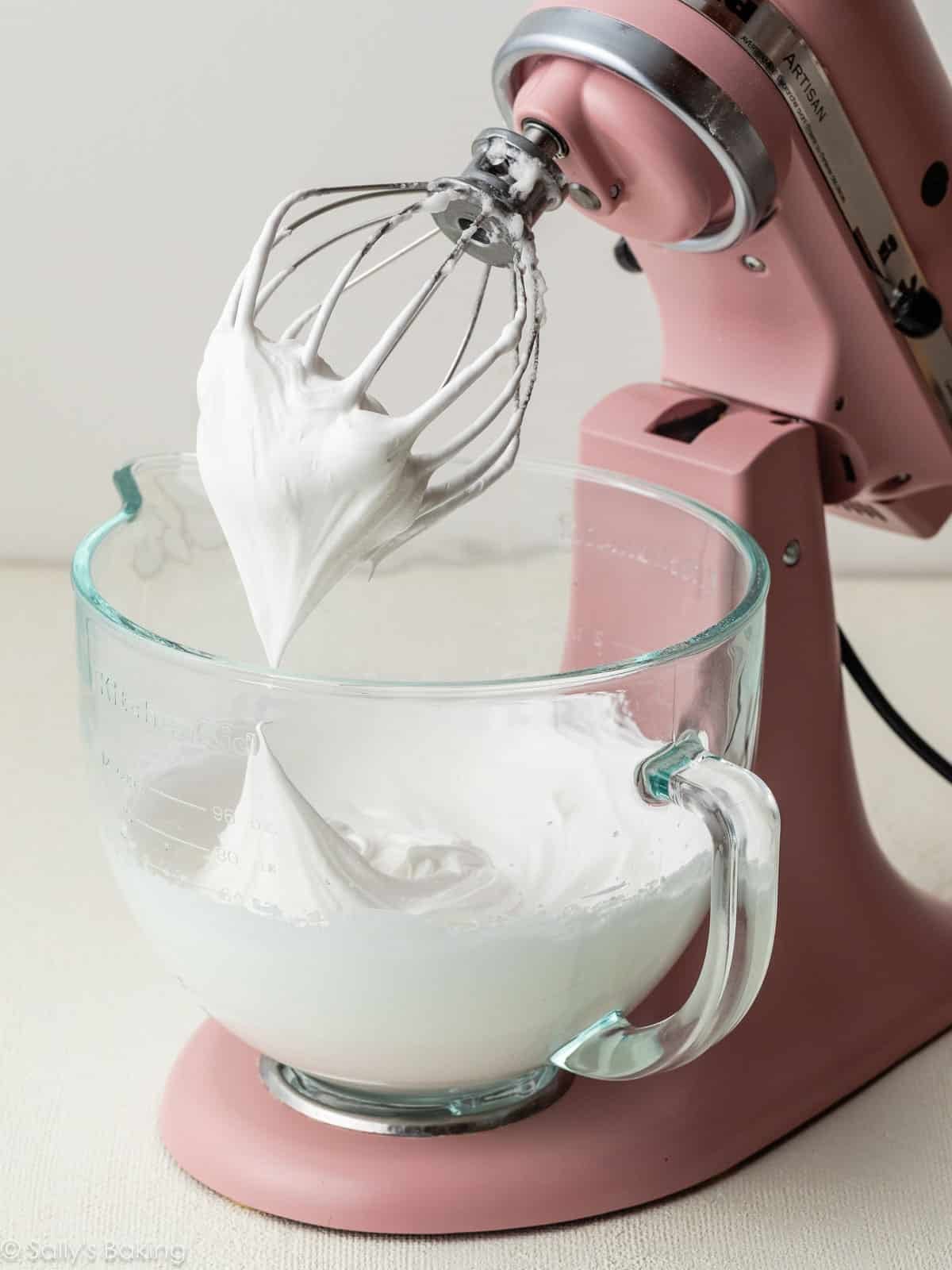
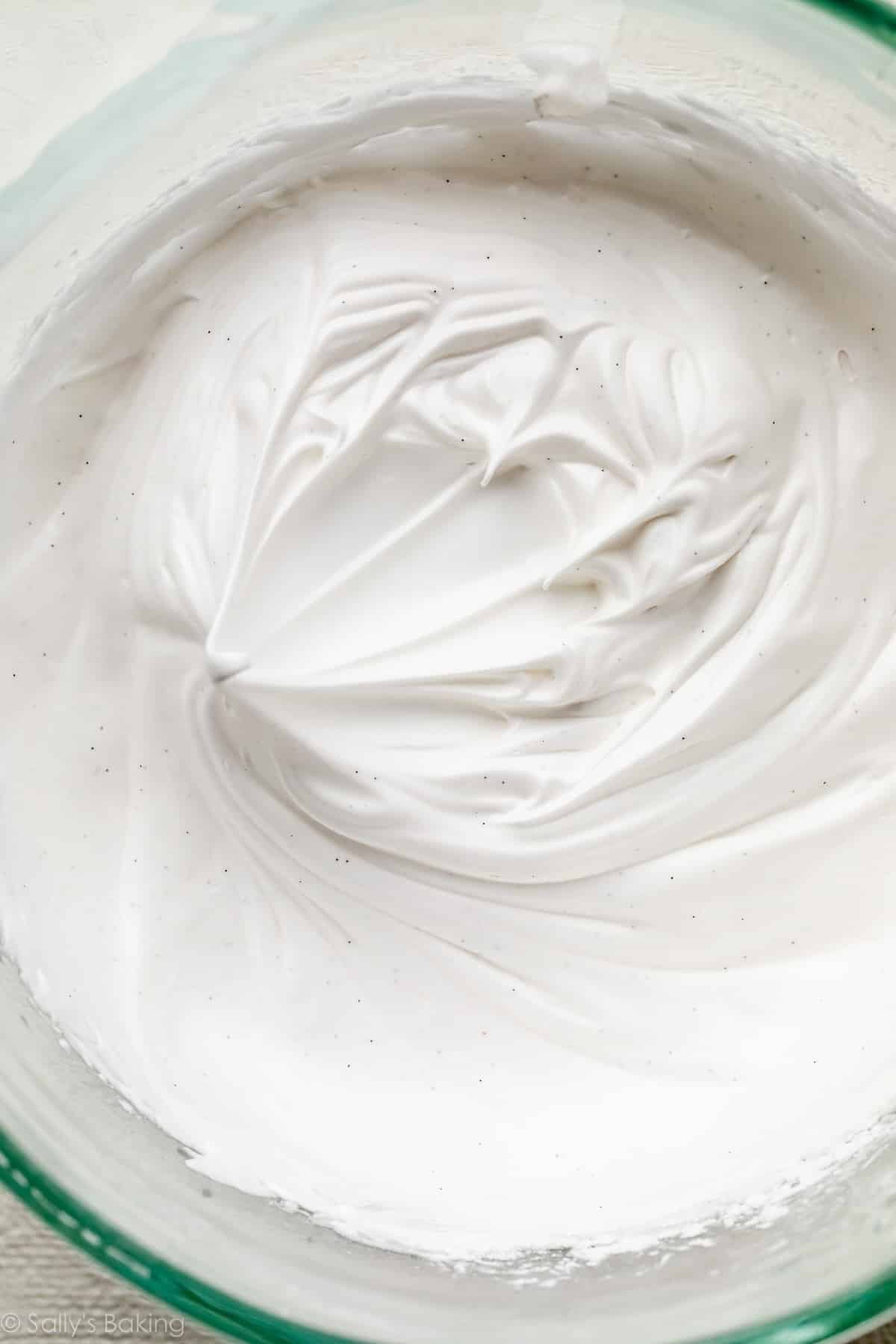
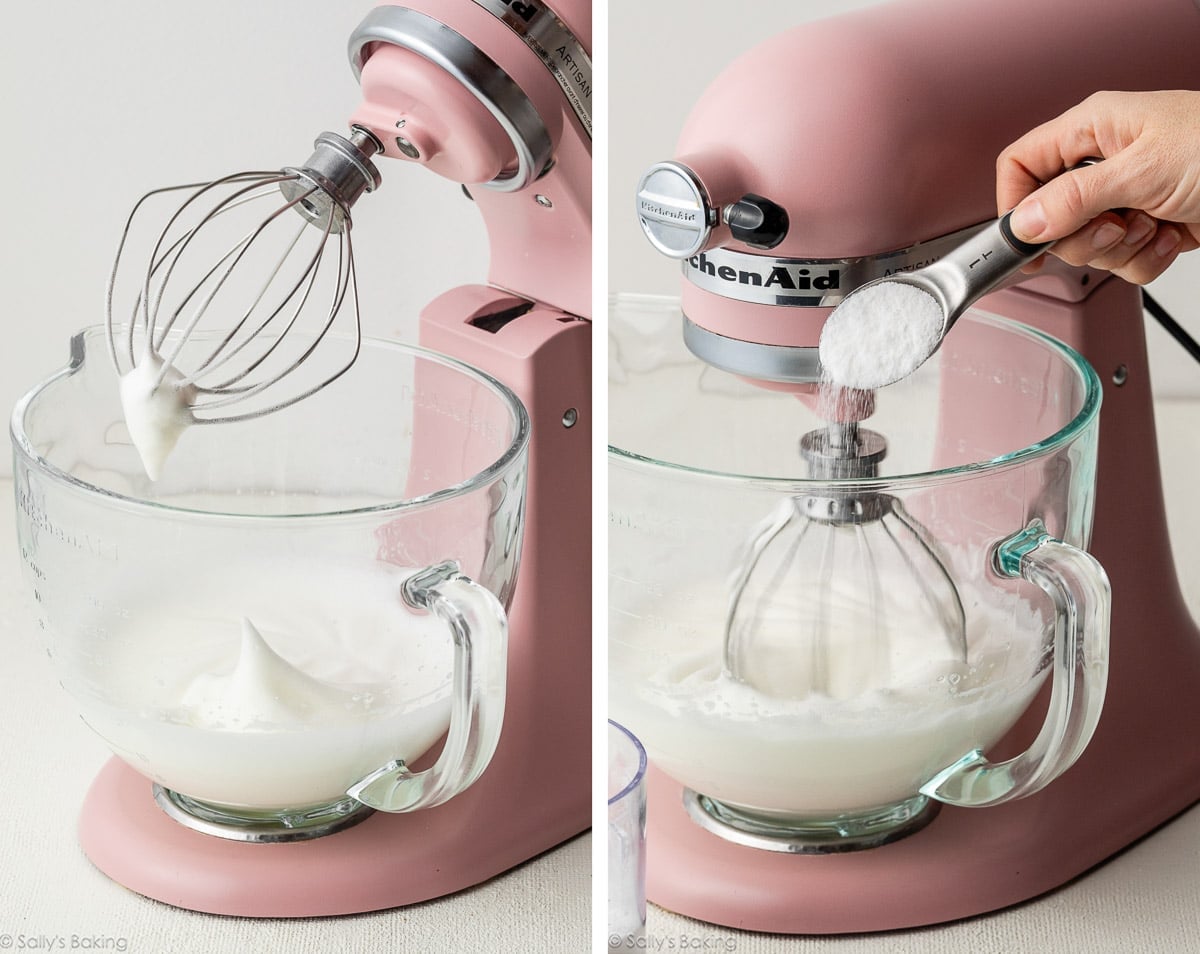
Next, the egg whites are whipped. It is imperative that the mixing bowl and whisk attachment are impeccably clean and free of any grease or egg yolk, as even a minuscule amount of fat can prevent the egg whites from foaming properly. Starting on medium speed, the egg whites are whipped until they become foamy and increase significantly in volume. At this juncture, the cream of tartar is added, and the speed is increased. The superfine sugar is then introduced gradually, one tablespoon at a time, allowing each addition to fully dissolve before the next is added. This slow incorporation is crucial for developing a strong, stable meringue. The mixture continues to whip until it achieves stiff, glossy peaks. A visual test for stiff peaks involves lifting the whisk; the meringue should hold its shape without drooping or falling off the attachment. This indicates that the protein structure is sufficiently developed and stabilized by the sugar. Finally, any remaining dry ingredients, such as cornstarch and salt, along with vanilla extract, are gently folded into the meringue, maintaining its aerated structure.
Precision Baking and the Critical Cooling Phase
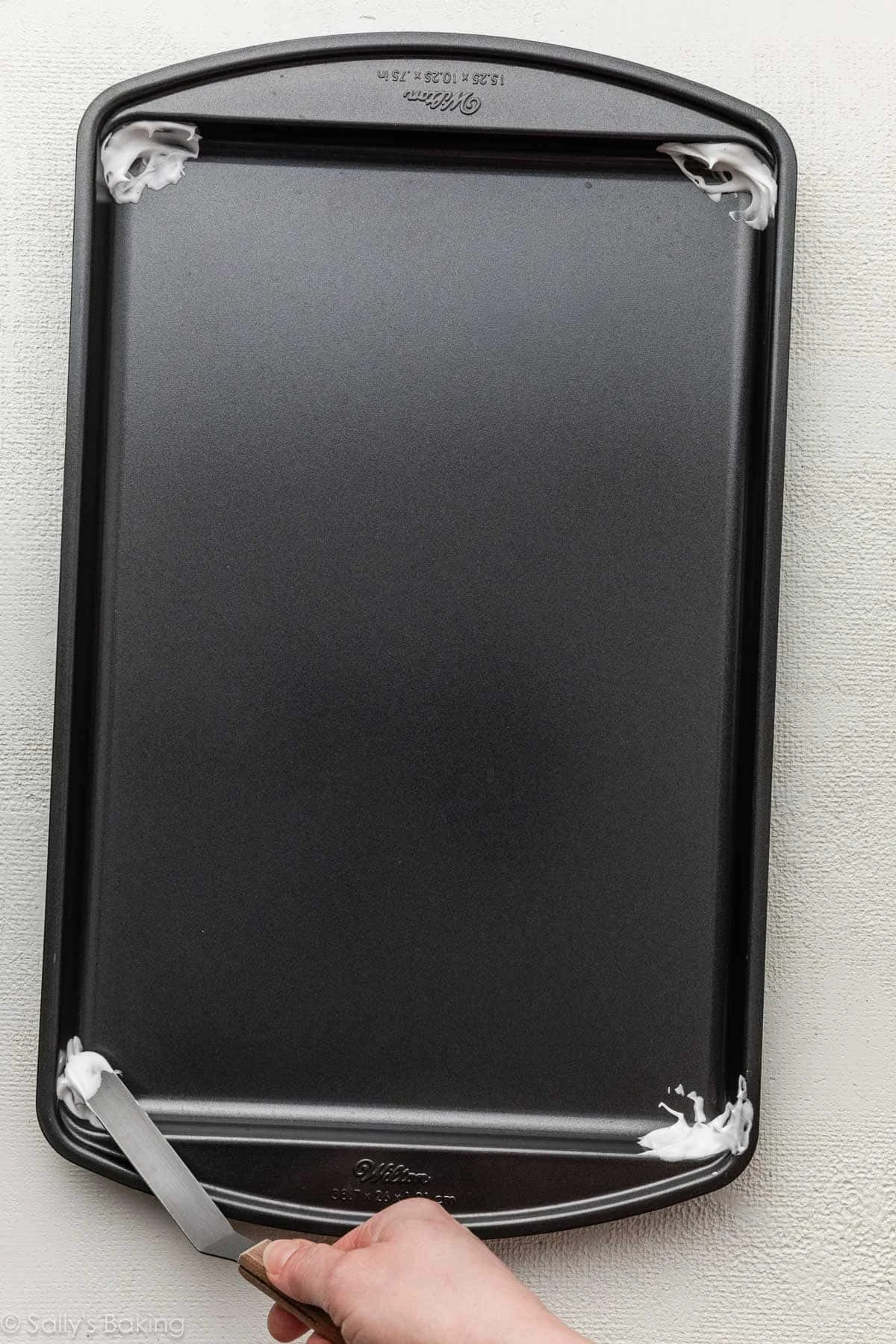
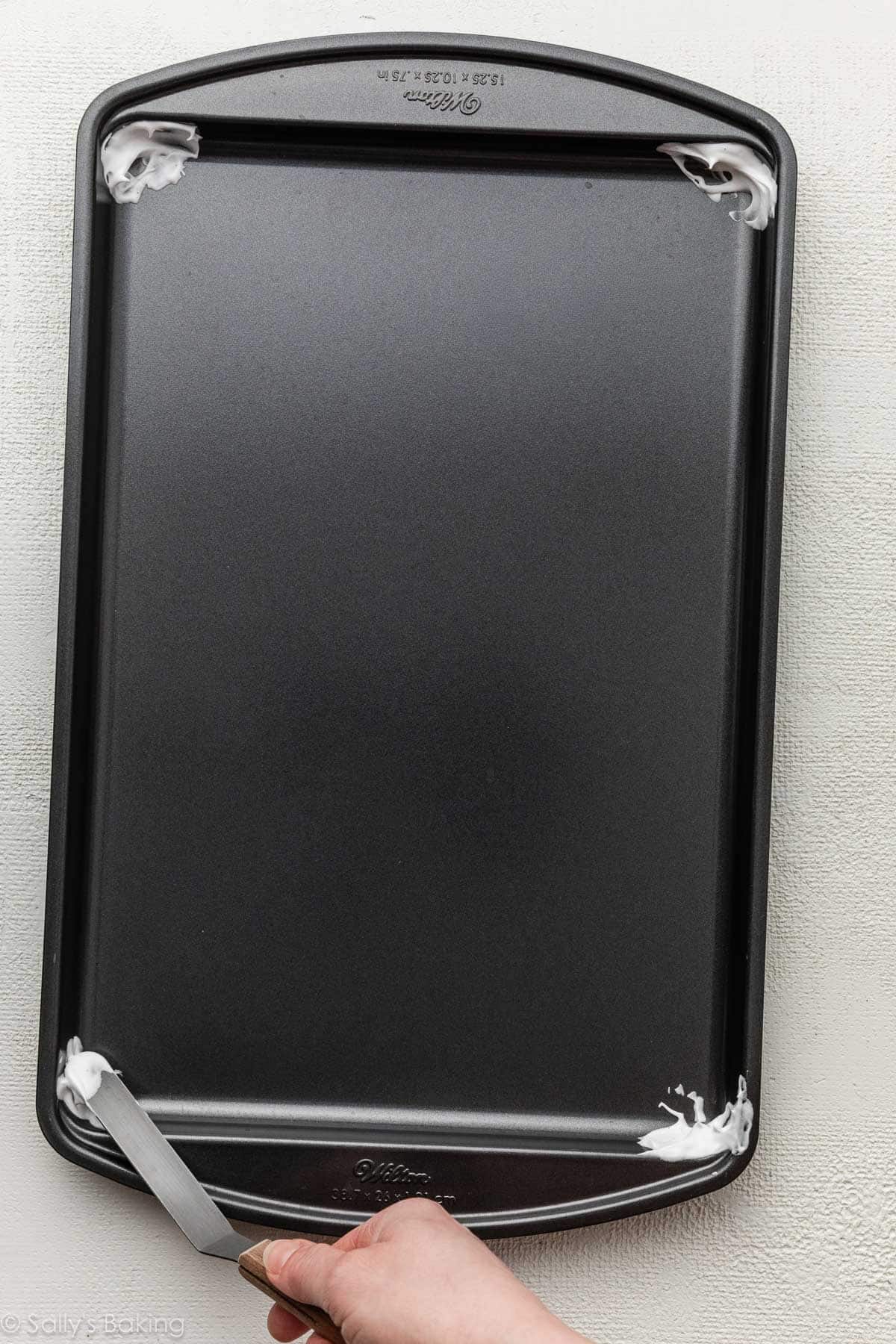
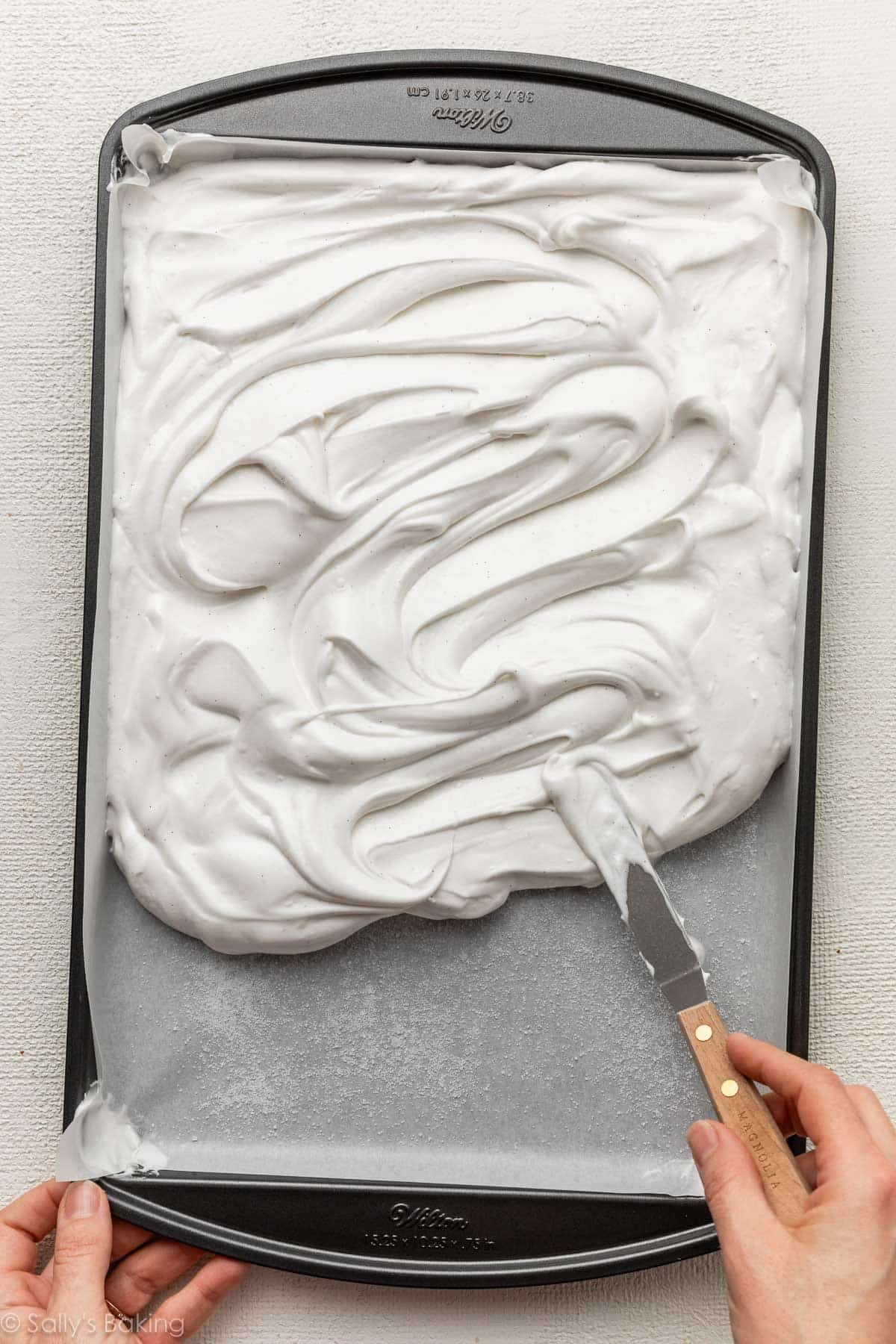
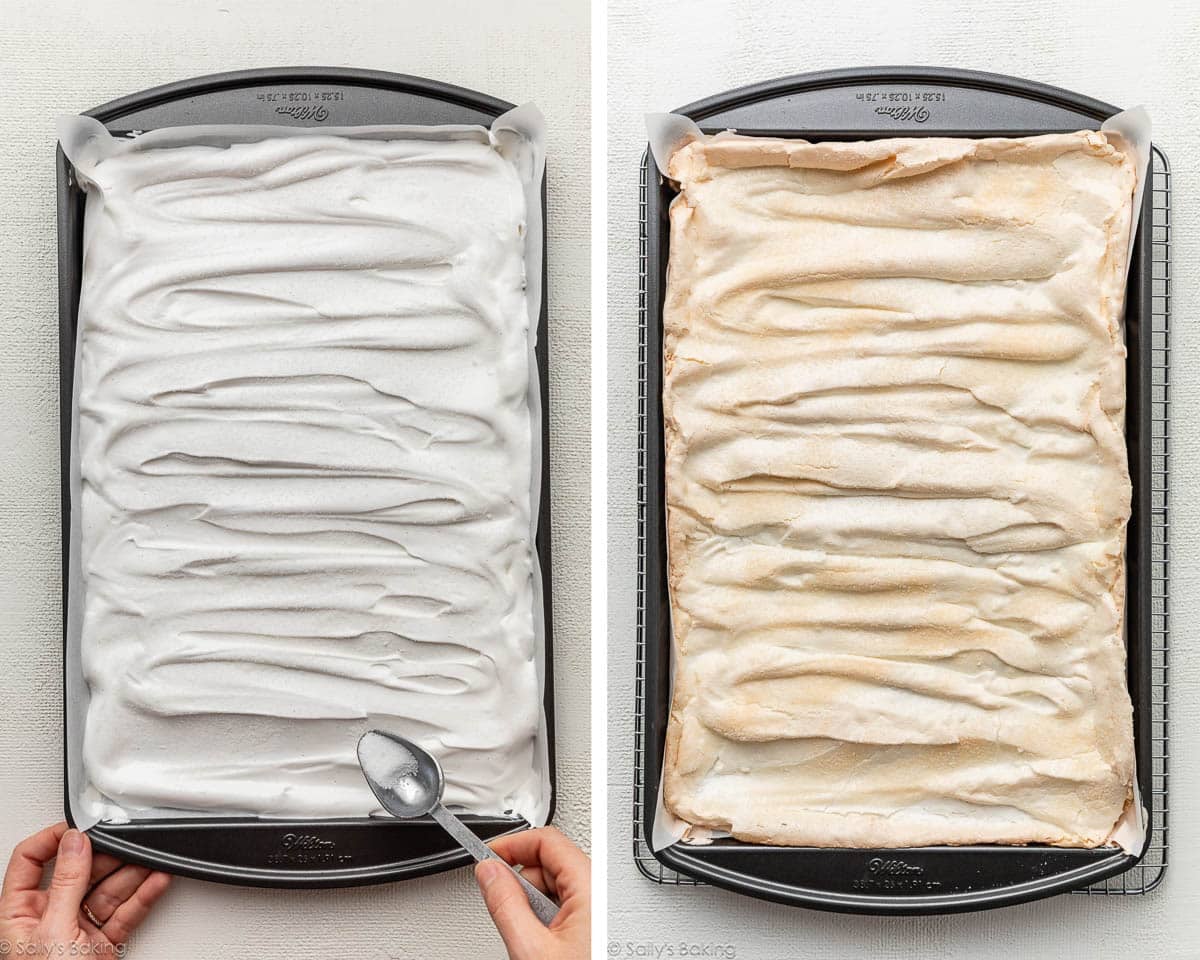
Once the meringue mixture is ready, careful preparation of the baking pan is essential to prevent sticking and facilitate an easy release. A common professional technique involves "gluing" parchment paper to the corners of a 10×15-inch jelly roll pan with small dabs of meringue. This ensures the parchment remains flat and stable during the spreading process. A light dusting of granulated sugar over the parchment paper before spreading the meringue further acts as a non-stick agent, creating a protective layer between the meringue and the paper. The meringue is then evenly spread across the prepared parchment, utilizing a small offset spatula for smooth and consistent coverage, ensuring uniform baking. A final sprinkle of granulated sugar over the top before baking adds to the crispness of the outer crust.
The meringue bakes at a moderate temperature, allowing it to puff up and develop its characteristic crisp shell while retaining a soft, marshmallowy interior. The ideal bake results in a top that is just set, not wet or tacky, and feels lightly crisp yet springy when gently touched. Visually, it should remain pale with only the barest hint of golden coloration on the surface. Over-baking is a common pitfall that leads to a brittle meringue, prone to severe cracking during rolling.
Upon removal from the oven, the timing of the initial roll is paramount. A crucial window of approximately 10 minutes for cooling allows the meringue to firm up slightly while retaining enough warmth and flexibility to be rolled without breaking. Allowing it to cool for too long will result in a stiff, unyielding slab that will inevitably crack upon manipulation.
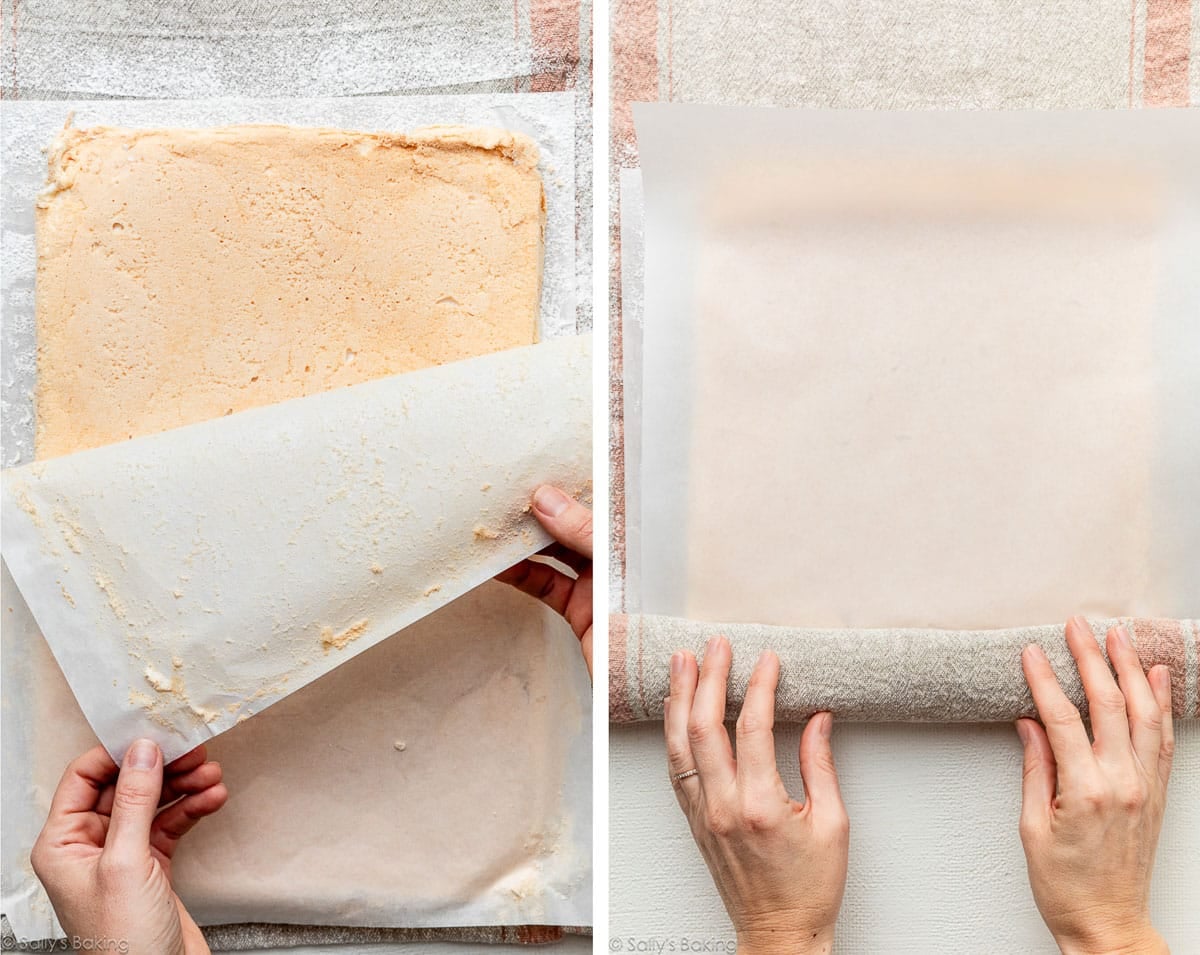
During this brief cooling period, the workstation is prepared for rolling. A clean kitchen towel is laid flat on the counter, topped with a fresh piece of parchment paper, aligned with one of the short ends of the towel. This parchment is then lightly dusted with confectioners’ sugar, creating a non-stick surface for the meringue.
After 10 minutes, the baked meringue, still attached to its original parchment, is carefully inverted onto the prepared sugar-dusted parchment and towel. The bottom parchment, which was in contact with the pan during baking, is then slowly and meticulously peeled away. This step requires a gentle hand, as the meringue is still delicate. Another light dusting of confectioners’ sugar can be applied to the exposed meringue surface. The initial roll, often referred to as "training" the meringue, is performed without any filling. Starting from one of the short ends, the meringue is gently rolled up, using the underlying parchment and towel to guide and support its structure. The key here is a loose, gentle roll, avoiding excessive pressure that could cause cracking. This initial roll helps to set the memory of the meringue’s flexible structure, preparing it for the subsequent filling and final roll. The rolled meringue is then set aside to cool completely in its rolled form.
The Cream Filling and Final Assembly: A Symphony of Flavors
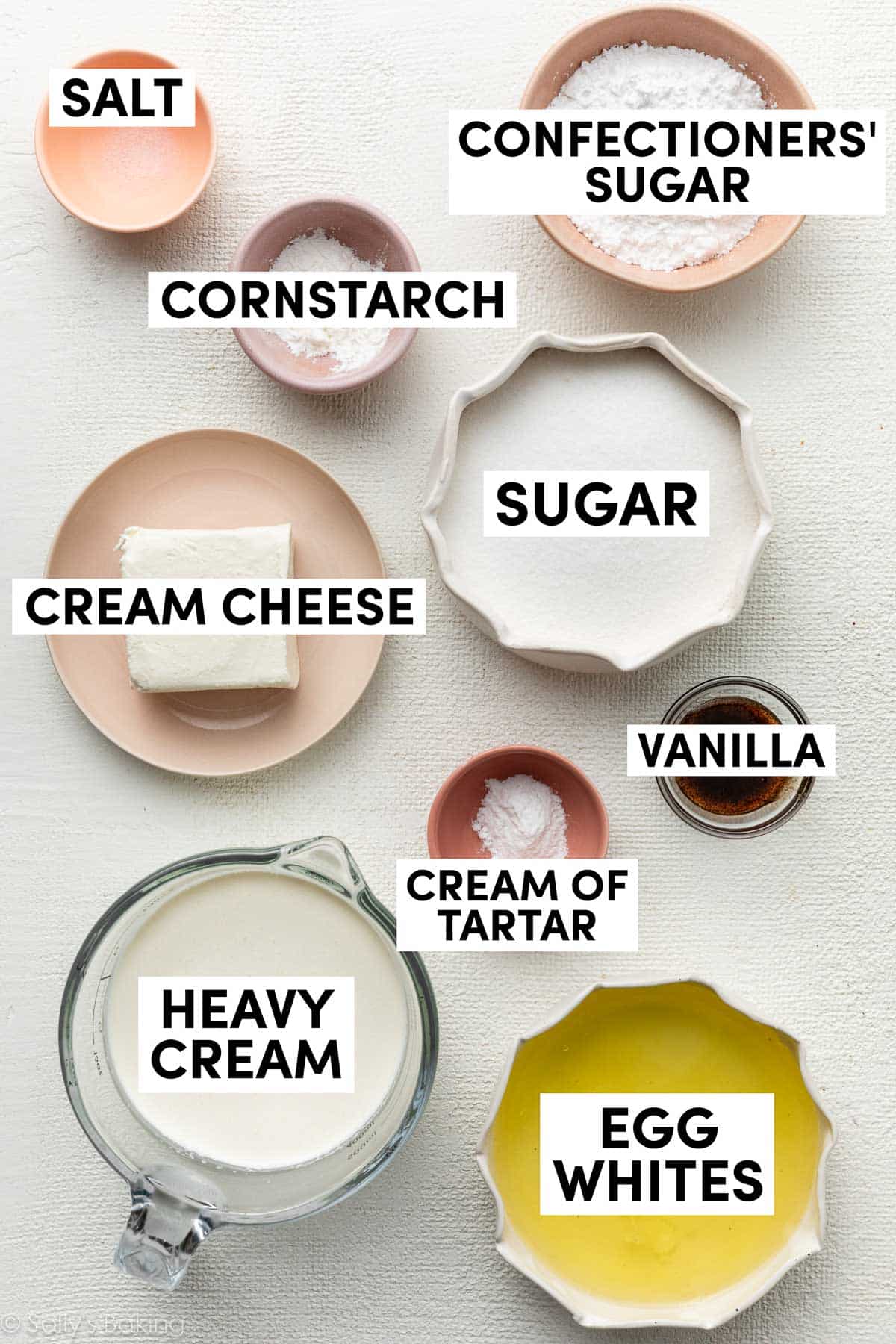
The filling for a meringue roulade is typically a rich, stable cream that complements the lightness of the meringue. A popular choice involves a stabilized whipped cream, often enhanced with cream cheese or mascarpone. This stabilization is critical, as a standard whipped cream might become too soft and runny, compromising the roulade’s structural integrity over time. The recipe developers at Sally’s Baking Addiction advocate for a cream cheese-based filling, which offers a thicker, more stable consistency than plain whipped cream, ensuring the roulade holds its shape and prevents weeping. Alternatively, mascarpone can be used, providing a similar rich and stable texture, akin to the filling used in classic fruit tarts.
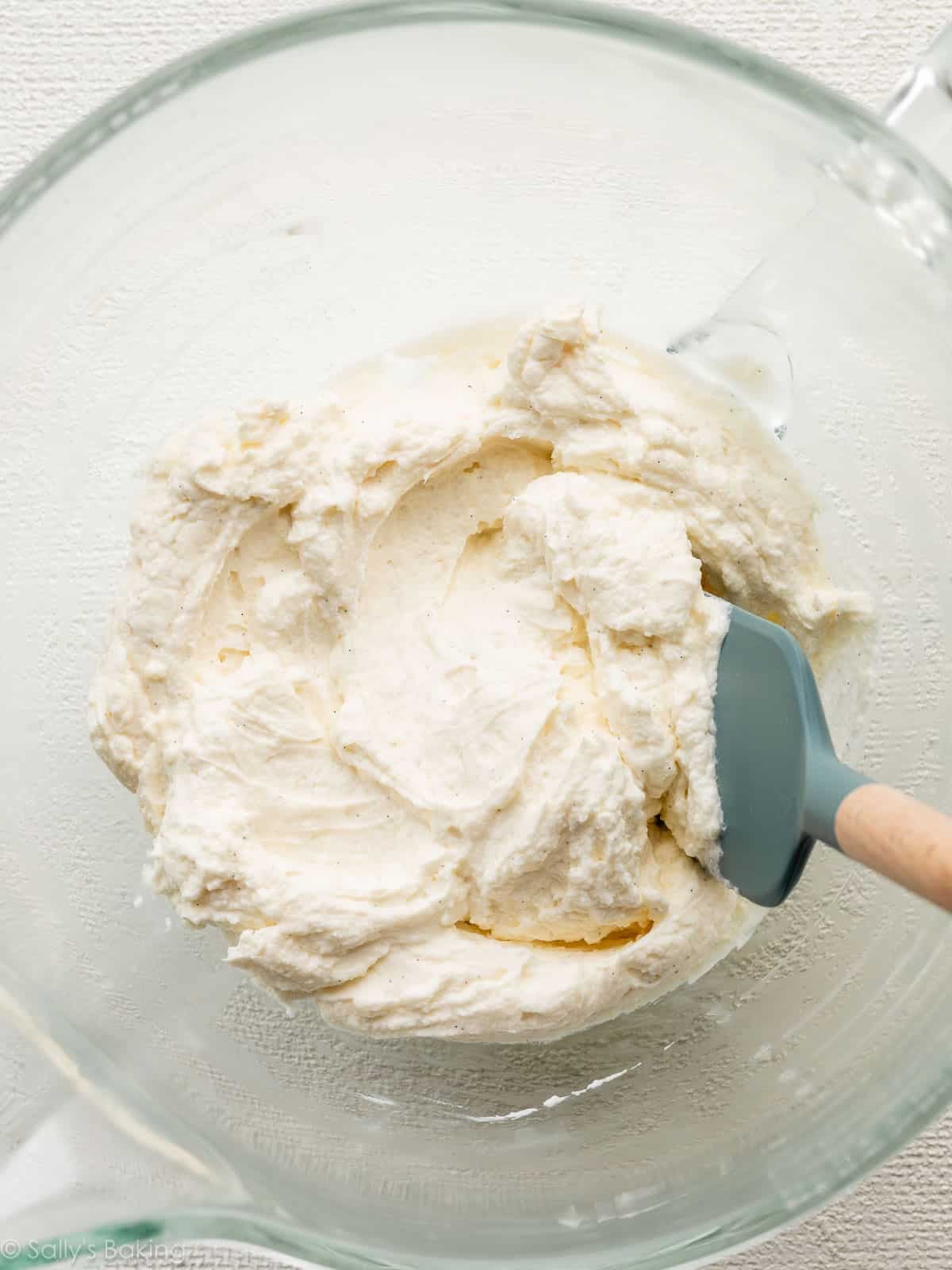
The cream filling is prepared by whipping heavy cream, powdered sugar, and vanilla extract until soft peaks form. In a separate bowl, cream cheese is beaten until smooth and creamy. The whipped cream is then gently folded into the cream cheese mixture, creating a luscious, pipeable filling.
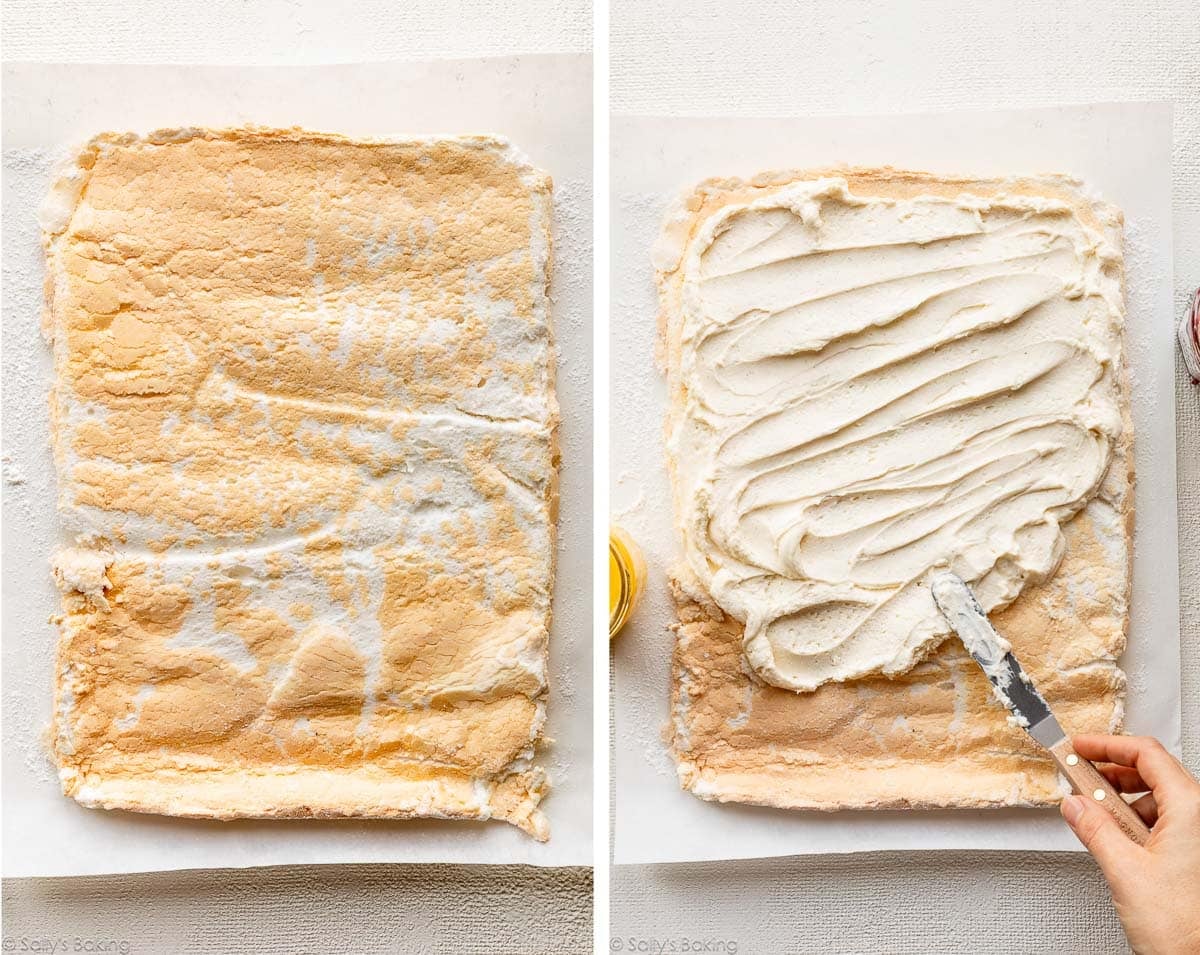
Once the meringue has cooled completely, it is gently unrolled. It is important to anticipate some minor cracking during this process; a few small fissures are entirely normal and part of the roulade’s rustic charm. However, if the meringue shatters or breaks into large pieces, it typically indicates over-baking or insufficient cooling time before the initial roll, leading to excessive brittleness. Even in such scenarios, the dessert is not entirely lost; the pieces can often be artfully reassembled, and the filling spread over them, with garnishes used to camouflage imperfections.
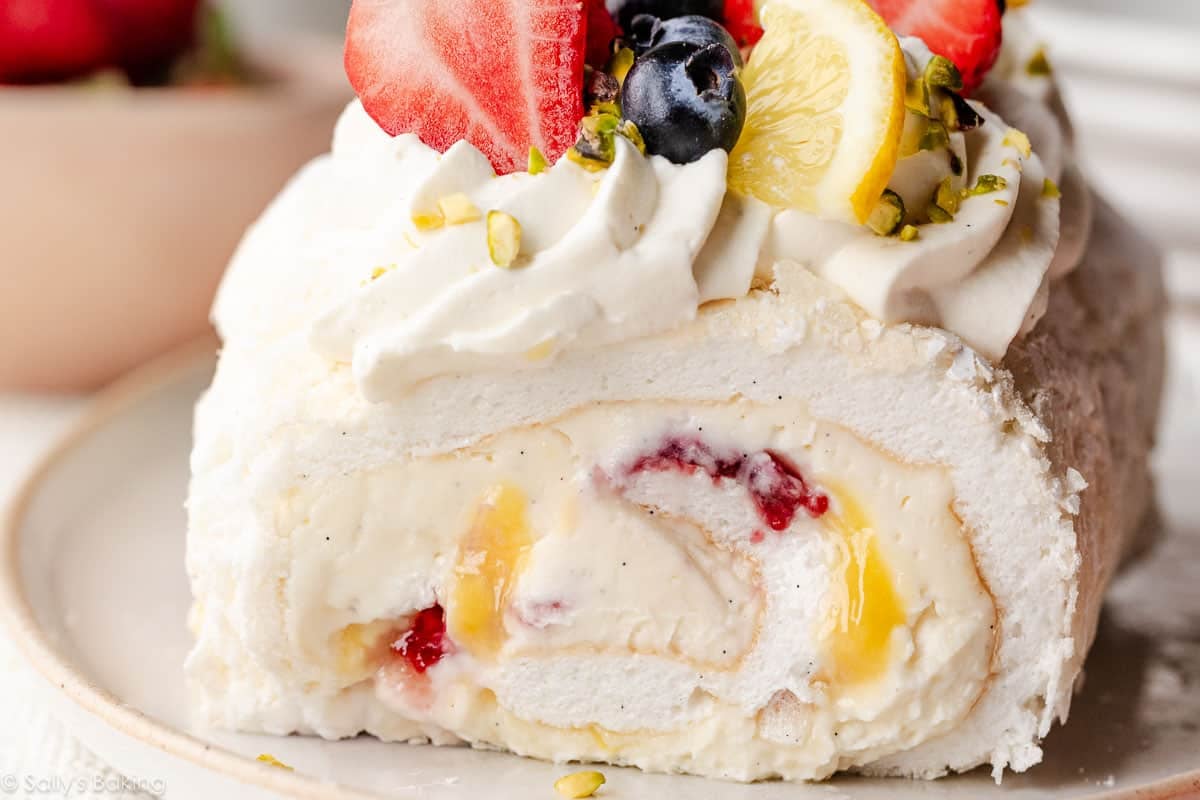
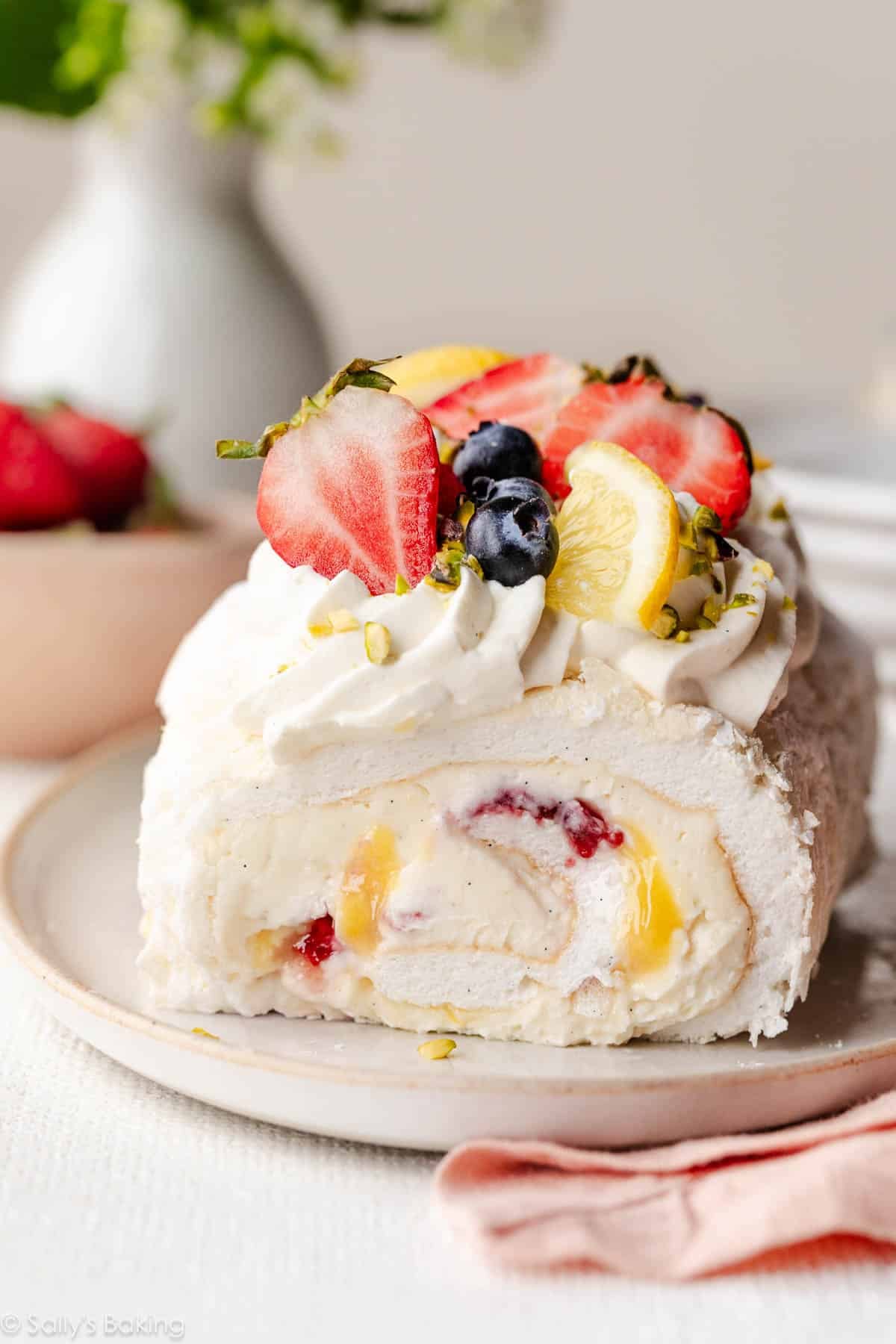
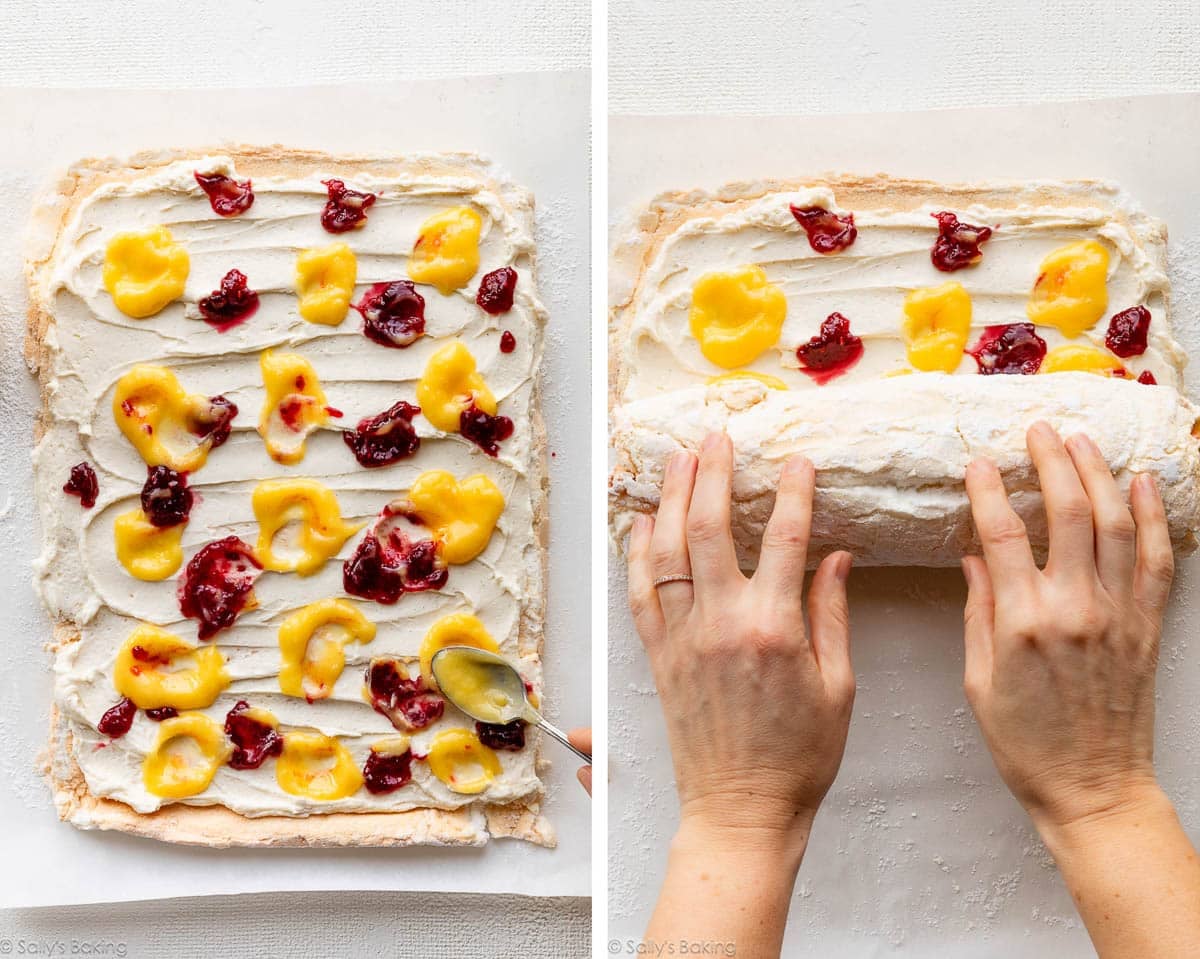
The prepared cream filling is then evenly spread over the unrolled meringue. This is also the stage for customization with additional flavor elements. Tangy lemon curd, vibrant raspberry jam, or other preferred fruit curds or preserves can be dolloped over the cream filling, creating beautiful swirls of flavor and color when the roulade is re-rolled. The combination of sweet cream and tart fruit is a classic pairing that elevates the dessert.
The final roll is executed carefully, without the aid of the towel or the inner parchment, using only the bottom piece of parchment to guide and support the meringue. This roll should be firm enough to create a tight spiral of filling but gentle enough to prevent major structural damage. The goal is to achieve an elegant, tightly wound log.
Troubleshooting and Expert Insights: Addressing Common Challenges
The meringue roulade, while rewarding, presents several common challenges that home bakers frequently encounter. Understanding the underlying reasons for these issues is key to mastering the technique.
One of the most frequent concerns is cracking. As highlighted by home baker Jordan, who commented, "This is a slightly challenging yet rewarding recipe!", minor cracks are an expected part of the meringue roulade’s character. However, excessive cracking or complete breakage often points to over-baking, which renders the meringue too brittle, or allowing it to cool for too long before the initial roll, causing it to lose its essential pliability. Rolling too tightly can also induce stress and lead to cracks. The implication is that precise temperature control and adherence to the 10-minute cooling window are paramount.
Another common issue is stickiness. Meringue is highly susceptible to humidity. Sugar, being hygroscopic, readily absorbs moisture from the air. In humid conditions, this can cause the meringue to become sticky and unstable, potentially adhering stubbornly to the parchment paper. To mitigate this, dusting the parchment with granulated sugar before spreading the meringue creates a barrier, as specified in the recipe guidelines. Baking on low-humidity days is also generally recommended for optimal results.
Weeping, characterized by the leakage of liquid from the meringue, is another concern. While some weeping is normal if the roulade is stored overnight, immediate weeping often indicates under-beating of the egg whites or incomplete dissolution of the sugar. If the sugar crystals are not fully integrated into the egg white foam, they can break down and form a syrup that seeps out, compromising the meringue’s stability. Achieving stiff, glossy peaks and ensuring the sugar is fully dissolved are critical steps to prevent this.
Home bakers, such as Kalani, have affirmed the recipe’s effectiveness, noting, "It was SO good and such a beautiful dessert. It was light and lovely. I also made the lemon curd as suggested, and those were our favorite bites!" This feedback underscores the importance of following instructions meticulously, particularly the preparatory steps and precise timings. Amy, another reader, echoed this sentiment: "I never thought I could make such an elegant dessert. It was time consuming but so worth it. It looked good and tasted great! Made my own lemon curd, too! Next time I will try a mocha filling." These testimonials highlight that despite the perceived difficulty, the adherence to detailed instructions yields a highly satisfying outcome, making the effort worthwhile.
Customization and Presentation: The Finishing Touches
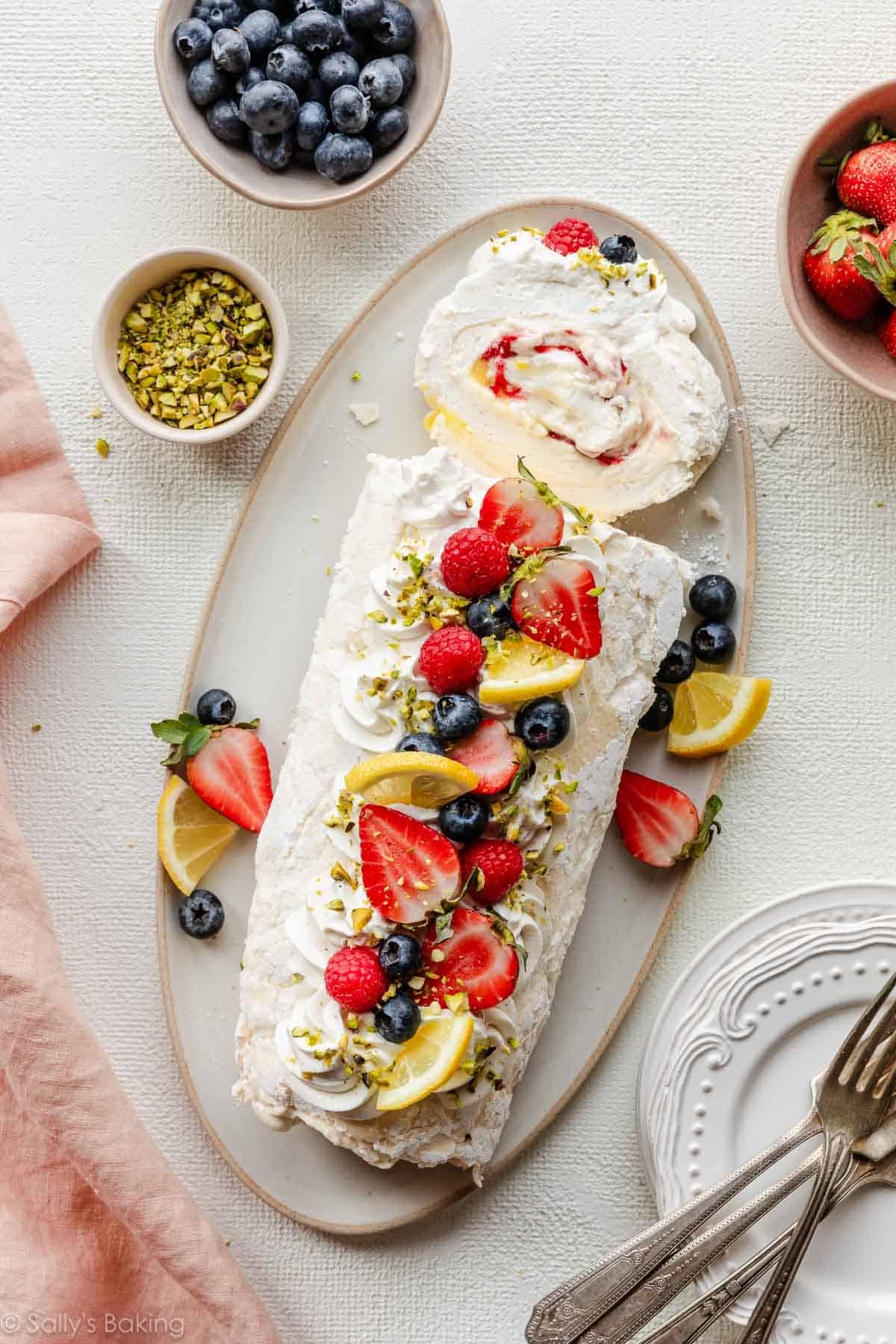
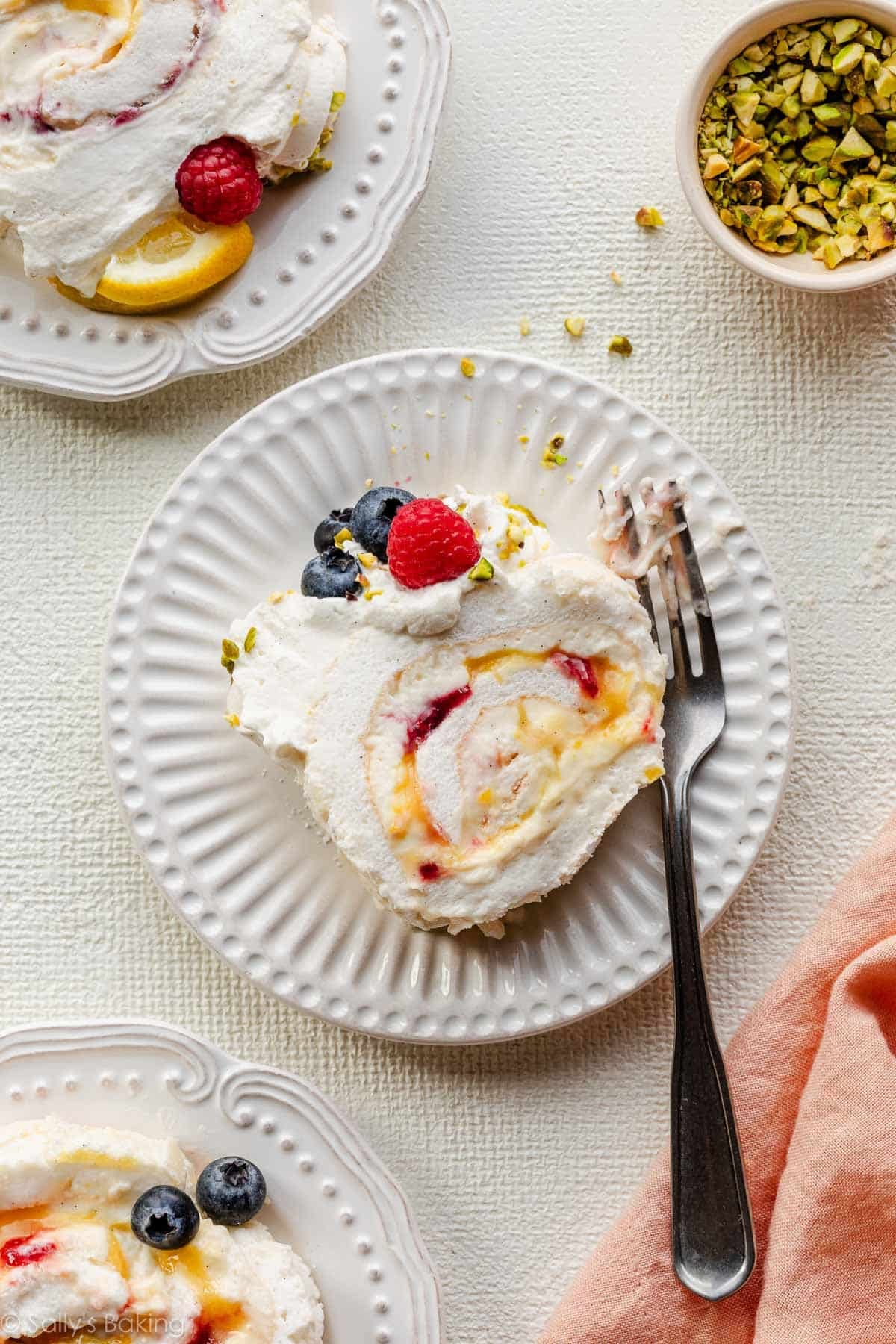
The beauty of the meringue roulade extends beyond its intrinsic qualities to its remarkable versatility in presentation and flavor customization. Once assembled, the roulade can be adorned in countless ways to suit the occasion or personal preference. Common garnishes include fresh berries, such as raspberries, blueberries, or sliced strawberries, which add a burst of color and a fresh, tart counterpoint to the sweet cream and meringue. A dusting of powdered sugar creates a delicate, snow-kissed effect, enhancing its elegant appearance. Toasted nuts, like sliced almonds or crushed pistachios, provide textural contrast and a nutty aroma. Chocolate shavings, either dark or white, can be sprinkled over the top for a touch of decadence. Fresh mint leaves offer a vibrant green accent and a refreshing note. Even edible flowers can be used for a truly luxurious and artistic presentation. For those seeking additional flavor, a drizzle of chocolate sauce, caramel, or an extra swirl of fruit curd can further elevate the dessert.
Implications and Broader Appeal
The meringue roulade occupies a unique position in the dessert repertoire. It is an "advanced baking recipe," as acknowledged by its developers, requiring technical precision and a keen eye for visual cues throughout the process. This inherent challenge, however, is precisely what makes its successful creation so profoundly rewarding. The ability to produce such an elegant and complex dessert from scratch instills a significant sense of accomplishment and "bragging rights" for the home baker.
Beyond the personal satisfaction, the meringue roulade offers several broader implications. Its naturally gluten-free nature makes it an inclusive option, catering to dietary restrictions without compromising on flavor or presentation. This is increasingly important in modern culinary trends where allergen-friendly options are highly valued. Its striking appearance and customizable fillings make it suitable for a wide array of special occasions, from holiday feasts to celebratory dinners, consistently impressing guests.
Ultimately, while aesthetics play a role in the initial allure of a meringue roulade, the emphasis remains firmly on taste. The delicate crispness, the pillowy marshmallow interior, and the creamy, flavorful filling combine to create a truly unforgettable dessert experience. The occasional crack or imperfection, far from detracting, often adds to its homemade charm, a testament to the effort and care invested in its creation. The meringue roulade stands as a testament to the idea that with patience, precision, and a willingness to embrace a learning curve, even the most elegant desserts are within reach of the dedicated home baker.
