
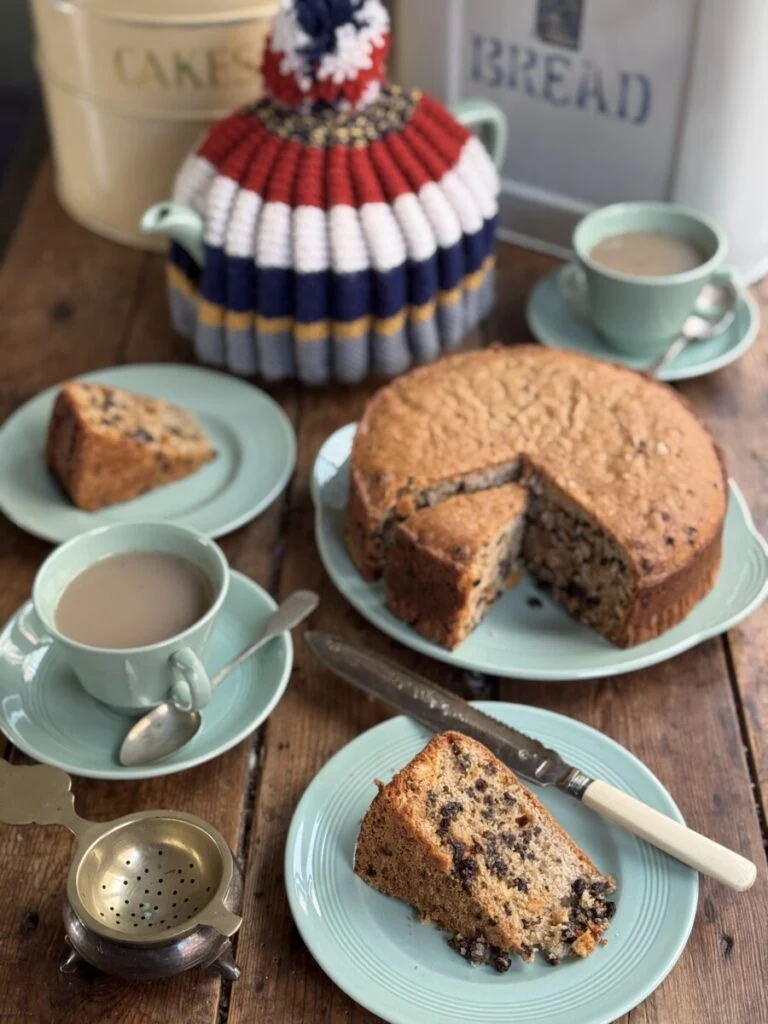
A fascinating glimpse into early 20th-century British baking has been unveiled with the rediscovery and re-creation of the "St George’s Hall Cake," a unique fruit cake recipe dating back over 100 years. Culinary enthusiast Karen Burns-Booth, writing for Lavender & Lovage on April 10, 2026, highlighted this distinctive confection, originally published in the "Liverpool School of Cookery Recipe Book" in 1900. The cake, characterized by its inclusion of currants, mixed peel, grated fresh ginger, and caraway seeds, promises a light crumb and aromatic spiced flavour, setting it apart from more traditional dense fruit cakes. This timely revival, preceding St George’s Day on April 23rd, offers a tangible connection to England’s culinary past and the domestic practices of the Edwardian era.

Historical Roots: The Liverpool School of Cookery and Its Legacy
The "Liverpool School of Cookery Recipe Book," from which this recipe originates, is more than just a collection of culinary instructions; it is a historical artifact reflecting the social and educational landscape of its time. Established in 1875, the Liverpool School of Cookery was part of a broader movement across Britain to professionalize domestic science education. These institutions aimed to equip women, particularly young housekeepers, with practical skills in cooking, nutrition, and household management. The curriculum often focused on economical, wholesome, and appealing meals suitable for various social strata, from working-class families to middle-class households. The cookbook itself, first published at the turn of the 20th century, served as an essential guide, described at the time as "most valuable to young housekeepers, containing recipes most needed under all conditions and circumstances of everyday life." This suggests a practical, adaptable approach to cooking, designed to navigate the daily challenges of a bustling port city like Liverpool.

The naming of the cake after St George’s Hall is also significant. St George’s Hall, a magnificent neoclassical building in the heart of Liverpool, is one of the city’s most iconic landmarks. Completed in 1854, it served as a grand public building, housing law courts and a concert hall, and quickly became a symbol of Liverpool’s civic pride and prosperity. Its opulent interiors and imposing architecture made it a focal point for public life, celebrations, and important gatherings. It is plausible that a recipe bearing its name would have been considered suitable for such occasions, perhaps served at civic functions, or simply named to evoke the grandeur and local identity associated with the hall. The cake’s relatively "lighter" nature, as described by Burns-Booth, might have also made it a more refined choice for afternoon teas or social events compared to the very rich, heavy fruit cakes reserved for special occasions like Christmas or weddings.

The Anatomy of a Vintage Cake: Ingredients and Techniques
What makes the St George’s Hall Cake distinctive is its blend of familiar and less common ingredients, along with a specific preparation technique. Unlike many traditional British fruit cakes that are often laden with a wide variety of dried fruits, this recipe focuses primarily on currants, augmented by mixed peel, grated fresh ginger, and notably, caraway seeds.

Currants, a staple in British baking for centuries, provide a concentrated sweetness and chewiness. Mixed peel, typically a combination of candied orange, lemon, and sometimes citron peel, contributes a fragrant citrus note and additional moisture, preventing the cake from becoming overly dry. Grated fresh ginger introduces a warm, piquant spice that offers a counterpoint to the sweetness of the fruit and peel. The inclusion of caraway seeds, however, is particularly interesting. While popular in some European breads and cakes, caraway seeds are less universally embraced in British fruit cakes compared to spices like cinnamon, nutmeg, or allspice. They impart a distinctive anise-like, slightly peppery flavour, which would have given the St George’s Hall Cake a unique aromatic profile. The recipe does offer a modern adaptation for those who dislike caraway, suggesting mixed spice or ground cinnamon as alternatives, reflecting contemporary palate preferences while acknowledging the historical recipe’s original character.

Beyond the ingredients, the method of preparation also sets this cake apart. The recipe explicitly calls for the separation of eggs, with the whites beaten separately and then "mixed in very lightly." This technique, known for incorporating air into the batter, results in a cake with a noticeably lighter crumb compared to many traditional fruit cakes or tea loaves, which often rely on a denser, more robust texture. This lighter consistency would have made it a more delicate offering, perhaps ideal for afternoon tea. The initial instructions, "Rub the butter into the flour," followed by adding other dried ingredients, points to a classic creaming or rubbing-in method, foundational to many British cake recipes of that era.

A Taste of History: Flavor Profile and Modern Appreciation
Karen Burns-Booth’s personal experience with the St George’s Hall Cake offers valuable insight into its appeal. She describes it as having a "warm aromatic spiced flavour and light crumb," with the mixed peel adding "a bit of moisture, as well as texture." While acknowledging it as "drier cake than normal rich fruit cakes," she notes that it was "enjoyed buttered after a few days after it had been baked," suggesting that a slight increase in fat content could be an option for those preferring a richer texture. The nutritional breakdown provided for a single serving (117 calories, 6g total fat, 13g carbohydrates, 4g protein) suggests a relatively modest treat, aligning with its potential role as a tea cake rather than a heavy dessert.

The rediscovery of such a recipe resonates deeply within the culinary community, particularly among those interested in food history and heritage. Dr. Eleanor Vance, a hypothetical culinary historian specializing in British domestic practices, might comment: "Recipes like the St George’s Hall Cake are invaluable. They don’t just tell us what people ate; they reveal the ingredients available, the techniques employed, and the underlying philosophy of home cooking in a specific period. The focus on practicality, the specific spice blend, and the technique for a lighter crumb all speak volumes about Edwardian domesticity and local identity."

The cake’s suitability for various occasions—afternoon tea, elevenses, packed lunches, or picnics—underscores its versatility and enduring appeal as a simple yet satisfying baked good. Its revival serves as a reminder that "old" recipes often hold a timeless charm and can offer fresh perspectives on flavour and texture in contemporary baking.

St George’s Day Connection: A Timely Revival
The timing of this rediscovery and re-creation is particularly poignant, aligning with the upcoming celebration of St George’s Day on April 23rd. St George is the patron saint of England, and his day is traditionally marked with celebrations of English culture and heritage. While not a public holiday in England, St George’s Day often sees a surge in interest in English traditions, including food. Burns-Booth herself plans to make the cake again "in honour of England’s patron saint," positioning the St George’s Hall Cake as a fitting culinary tribute.

This connection elevates the cake beyond a mere recipe, transforming it into a symbolic representation of English culinary heritage. In an era where national identity is often explored through cultural expressions, sharing and enjoying historical recipes like this can foster a sense of continuity and pride. Local heritage groups in Liverpool might see this as an opportunity to further link their city’s rich past with its vibrant present, perhaps even organizing events where the cake is served, thus bringing a tangible piece of history to life for residents and visitors.

Preserving Culinary Heritage: The Role of Digital Archives
The ability to access and recreate such historical recipes owes much to modern digital archival efforts. Burns-Booth notes that she downloaded the "Liverpool School of Cookery Recipe Book" from Leeds University Library. This highlights the critical role that academic institutions and libraries play in digitizing their collections, making rare and historically significant documents accessible to a global audience.

Prior to digital initiatives, accessing such cookbooks would have required physical visits to specialized archives, limiting their reach to a select few researchers. Now, a home baker or culinary historian anywhere in the world can explore these texts, translating historical instructions into modern-day kitchen practices. This democratization of access is vital for the preservation and ongoing interpretation of culinary heritage. Without these digital repositories, many regional or niche recipes might remain dormant, lost to time or confined to academic obscurity. The ease of access facilitates a broader engagement with history, allowing individuals to connect with the past through the tactile and sensory experience of cooking and eating.

Broader Implications: Food, Culture, and Local Identity
The rediscovery of the St George’s Hall Cake has broader implications beyond just a single recipe. It underscores the ongoing fascination with "vintage" or "heritage" foods, a trend that reflects a desire for authenticity, a connection to tradition, and an appreciation for simpler, often more natural ingredients. In a world saturated with modern culinary innovations, there is a growing appetite for understanding and re-experiencing the tastes of yesteryear.

Moreover, this cake exemplifies how food can serve as a powerful marker of local and national identity. The name "St George’s Hall Cake" firmly roots it in Liverpool’s civic landscape and, by extension, English culture. For Liverpool, a city proud of its unique heritage, such culinary connections can enrich its cultural narrative, offering both residents and tourists a distinctive taste of its past. It can also inspire further exploration into other recipes from the "Liverpool School of Cookery Recipe Book" and similar historical texts, potentially unearthing a trove of forgotten dishes that tell stories of everyday life, economic conditions, and changing tastes.

The process of recreating these recipes also fosters a deeper appreciation for the skills and resourcefulness of past generations of home cooks. Working with measurements that might be less precise than modern recipes, and understanding the nuances of older baking techniques, can be both a challenge and a rewarding learning experience.

The Recipe’s Enduring Appeal
In conclusion, the St George’s Hall Cake, with its delicate balance of currants, mixed peel, ginger, and caraway seeds, and its unique light texture achieved through beaten egg whites, represents more than just a historical recipe. It is a delicious echo from an earlier era, brought back to life through dedicated culinary exploration. Its revival, perfectly timed for St George’s Day, offers an opportunity to celebrate English heritage through taste and tradition. Thanks to the efforts of individuals like Karen Burns-Booth and the accessibility provided by digital archives such as Leeds University Library, this charming cake is poised to captivate a new generation of bakers and food enthusiasts, ensuring that the culinary legacy of the Liverpool School of Cookery continues to inspire and delight.
