
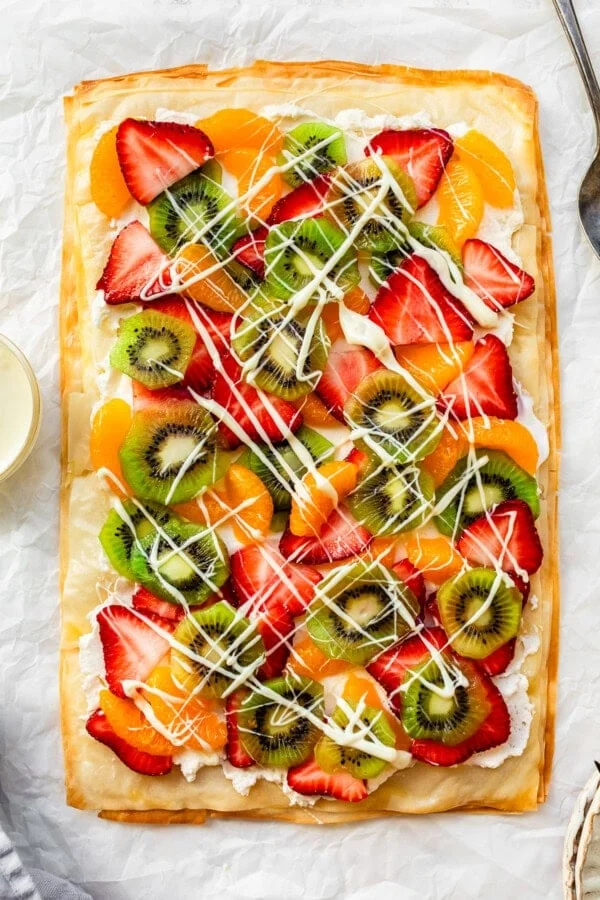
The culinary landscape continually seeks dishes that balance indulgence with lightness, and the Phyllo Fruit Tart stands as a prime example, perfectly suited for the vibrant seasons of spring and summer. This dessert marries a remarkably flaky phyllo crust with a luscious cream cheese frosting, crowned by a colorful medley of fresh seasonal fruits and finished with an elegant drizzle of white chocolate. Its appeal lies in its impressive visual presentation, coupled with an ease of preparation that belies its sophisticated appearance, making it an ideal choice for both casual gatherings and more formal occasions.
The Ancient Artistry of Phyllo Dough: A Culinary Foundation

At the heart of this tart’s distinctive character is phyllo dough, a staple in Mediterranean and Middle Eastern cuisines with a history spanning centuries. Derived from the Greek word "fyllo," meaning "leaf," phyllo dough is renowned for its paper-thin, translucent sheets, which are meticulously layered to create exceptionally light and crisp pastries. Unlike puff pastry, which relies on butter folded into the dough to create layers, phyllo achieves its characteristic flakiness through the individual brushing of each wafer-thin sheet with melted butter or oil before baking. This technique results in a delicate, shatteringly crisp texture that provides a stark contrast to the creamy filling and soft fruit topping. Its inherent lightness also makes it a favored alternative for those seeking a less dense crust than traditional butter-laden shortcrust or puff pastries, offering a distinctly airy foundation for fruit tarts.
The historical context of phyllo dough reveals its deep roots in various culinary traditions, from Turkish baklava to Greek spanakopita. Its widespread adoption underscores its versatility and unique textural contribution to both sweet and savory dishes. Often made from wheat flour, water, and a small amount of oil, phyllo dough is unleavened, allowing its thinness to be its primary characteristic. For home bakers, working with phyllo requires a degree of care—primarily keeping the delicate sheets covered with a damp cloth to prevent them from drying out and cracking—but the effort is richly rewarded with a crust that is both visually stunning and texturally superior for this type of light dessert. Its delicate nature necessitates gentle handling, yet its forgiving layers allow for minor imperfections to be hidden, making it accessible even for novice bakers.
A Culinary Endorsement: The Genesis of a Skinnytaste Favorite

The Phyllo Fruit Tart, as featured on the popular Skinnytaste platform, carries the personal endorsement of its esteemed founder, Gina. Her appreciation for desserts that offer both refreshment and a balanced sweetness is evident in this recipe’s design. "Years ago, my friend Gina shared this easy phyllo fruit tart recipe with my readers, and it’s been one of my long-time favorites," Gina states, highlighting the recipe’s enduring appeal. She further elaborates, "I enjoy a light dessert with fresh fruit that isn’t too sweet. Plus, I love anything with white chocolate!" This sentiment encapsulates the essence of the tart: a harmonious blend of natural fruit sweetness, the subtle tang of cream cheese, and the luxurious touch of white chocolate, all built upon a crisp, non-heavy crust.
The longevity of this recipe on a platform dedicated to health-conscious eating speaks volumes about its success. It aligns with a broader culinary trend towards lighter, more vibrant desserts that do not compromise on flavor or satisfaction. Its status as a "long-time favorite" suggests a consistent positive reception from a readership that values both taste and mindful indulgence. This recipe serves as a testament to the idea that delicious desserts can indeed be light and refreshing, challenging traditional notions of heavy, calorie-dense sweet treats. The recipe’s original publication date in August 2010 further solidifies its enduring presence, demonstrating its timeless appeal and consistent relevance in the evolving landscape of home cooking.
Deconstructing the Dessert: Synergy of Components

The success of the Phyllo Fruit Tart is attributed to the thoughtful integration of its core components, each playing a vital role in the overall sensory experience.
-
The Flaky Phyllo Crust: The foundation of the tart, this crust is prepared by layering multiple sheets of phyllo dough, each brushed with melted butter. When baked, these layers puff up and crisp, creating a delicate, golden-brown base that provides a satisfying crunch with every bite. The critical step of allowing the crust to cool completely before assembly is paramount; a warm crust risks softening the cream cheese frosting and causing the entire tart to become soggy, compromising its structural integrity and texture. The distinct texture of the phyllo crust provides a delightful contrast to the softer elements, creating a multi-sensory experience.
-
The Cream Cheese Frosting: This element serves as the creamy, tangy counterpoint to the crisp crust and sweet fruit. Typically made with softened cream cheese, powdered sugar, and a hint of vanilla, it whips into a smooth, spreadable consistency. Its slight acidity cuts through the sweetness, preventing the dessert from becoming cloyingly rich and enhancing the freshness of the fruit. The smooth texture of the frosting provides a luxurious bed for the fruit, visually separating the crisp base from the vibrant topping. The choice of cream cheese also adds a subtle richness without the heaviness of other dairy-based fillings.

-
The Fresh Fruit Medley: The choice of fruit is where the tart truly comes alive, offering a spectrum of colors, textures, and flavors. Seasonal fruits are highly recommended for optimal taste and freshness. Berries such as strawberries, blueberries, raspberries, and blackberries are popular choices due to their natural sweetness and vibrant hues. Sliced kiwi adds a touch of tartness and striking green, while mandarin orange segments or peach slices contribute juicy sweetness. The arrangement of the fruit is not merely aesthetic; it allows for a diverse flavor profile in each slice, making every bite an exploration of fruity notes. The visual appeal of a "rainbow of whatever seasonal fruit you want to use" is a key draw, making the tart adaptable to various preferences and occasions. The natural sugars and acidity of the fruit also contribute to the overall balance of flavors, preventing the tart from being overly sweet.
-
The White Chocolate Drizzle: The final flourish, a delicate drizzle of melted white chocolate, elevates the tart from a simple fruit dessert to an elegant confection. White chocolate, with its creamy texture and vanilla notes, complements the fruit without overpowering it. It adds an extra layer of sweetness and a touch of richness, visually tying together the colorful fruit and the pale frosting. The drizzle provides a subtle textural contrast and a sophisticated finish, transforming the tart into an impressive centerpiece. The controlled application of the drizzle also allows for moderation, ensuring it enhances rather than dominates the other flavors.
A Culinary Chronology: Crafting the Phyllo Fruit Tart

The preparation of the Phyllo Fruit Tart follows a logical sequence, designed to ensure each component reaches its optimal state before assembly. The process, while seemingly intricate due to the phyllo, is remarkably straightforward, emphasizing careful execution over complex techniques.
Phase 1: Preparing the Phyllo Crust
The initial step involves preheating the oven to the specified temperature and preparing a baking sheet. Melted butter is essential for achieving the signature flakiness. Phyllo dough, usually found frozen, must be thawed completely, preferably overnight in the refrigerator, and then brought to room temperature before use to prevent cracking. Sheets are carefully unrolled, and typically, a specified number of layers (e.g., 8-10 sheets) are used for a single tart. Each sheet is gently brushed with melted butter before the next is laid on top, creating a stack. This stack is then carefully transferred to the prepared baking sheet, and the edges are often folded or crimped to form a slight border, giving the tart its shape. The crust is then baked until it turns a beautiful golden brown and becomes crisp. The most crucial instruction here, as highlighted by the recipe, is to allow the phyllo crust to cool completely after baking. This prevents any residual heat or moisture from compromising the delicate crispness of the phyllo once the moist frosting and fruit are added. Failure to do so would result in a soggy base, detracting significantly from the tart’s intended texture and making the "flaky crust" claim invalid.
Phase 2: Crafting the Cream Cheese Frosting
While the crust cools, the cream cheese frosting is prepared. This typically involves beating softened cream cheese until smooth, then gradually incorporating powdered sugar until light and fluffy. A splash of vanilla extract enhances the flavor. The key to a smooth, lump-free frosting is ensuring the cream cheese is adequately softened to room temperature prior to mixing. This creamy concoction provides a cool, tangy, and sweet layer that perfectly complements the crisp crust and fresh fruit. Over-mixing should be avoided to maintain a light and airy consistency.

Phase 3: Assembling the Tart
Once the phyllo crust has cooled entirely, the assembly begins. The prepared cream cheese frosting is evenly spread over the cooled phyllo base, ensuring it covers the entire surface right up to the edges. This creates a pristine, white canvas for the vibrant fruit. Next, the fresh fruit, which should be washed, dried, and prepared (sliced, hulled, etc.), is artfully arranged over the frosting. This is an opportunity for creative expression, allowing for patterns, color blocking, or a simple, abundant scattering. The final touch is the white chocolate drizzle. White chocolate chips or baking bars are typically melted gently, either in a microwave or a double boiler, until smooth. This melted chocolate is then drizzled decoratively over the fruit and frosting, adding both visual appeal and an additional layer of sweetness. The entire preparation process, including cooling time, is estimated at 25 minutes, with only 5 minutes of active cook time and 10 minutes of prep, underscoring its efficiency.
Nutritional Insights and Dietary Considerations
Understanding the nutritional profile of the Phyllo Fruit Tart provides valuable context for its classification as a "lighter" dessert option. Per 1/8th slice, the tart offers:

- Calories: 247 kcal
- Carbohydrates: 31 g
- Protein: 5 g
- Fat: 12.5 g
- Saturated Fat: 6.5 g
- Cholesterol: 22 mg
- Sodium: 207.5 mg
- Fiber: 2.5 g
- Sugar: 17 g
When compared to traditional fruit tarts made with a butter-heavy shortcrust pastry and richer fillings, the phyllo version often presents a more favorable nutritional breakdown, particularly in terms of saturated fat and overall calorie content. The use of phyllo dough inherently reduces the fat content associated with the crust, contributing to its lighter profile. For instance, a typical butter pastry crust can easily contribute significantly more saturated fat per serving.
Furthermore, the generous topping of fresh fruit significantly boosts the nutritional value, providing essential vitamins, minerals, and dietary fiber. For instance, berries are rich in antioxidants, vitamin C, and manganese, while kiwi offers vitamin K and potassium. The fiber content (2.5g per serving) is a notable benefit, contributing to digestive health and promoting satiety. While the tart does contain sugar (17g per serving), a significant portion of this comes from the natural sugars in the fresh fruit, alongside the added sugars in the frosting and white chocolate. This balance makes it a more wholesome dessert choice compared to those relying solely on refined sugars. The protein content (5g) is also a positive aspect, contributing to satiety. For individuals monitoring sodium intake, the 207.5mg per serving should be noted, although it remains within moderate levels for a dessert.
Versatility and Customization: Adapting for Every Palate

One of the most appealing aspects of the Phyllo Fruit Tart is its remarkable adaptability. This recipe serves as an excellent template for culinary creativity, allowing home cooks to tailor it to their preferences, seasonal availability, or specific dietary needs.
- Fruit Variations: The phrase "rainbow of whatever seasonal fruit you want to use" truly unlocks a world of possibilities. In summer, stone fruits like peaches, nectarines, and plums can be beautifully arranged alongside berries. Autumn might see thinly sliced apples or pears, perhaps with a sprinkle of cinnamon, though their moisture content should be considered. Tropical fruits such as mango, pineapple, or passion fruit can introduce exotic flavors and vibrant colors. The key is to choose fruits that are ripe but firm enough to hold their shape when sliced, and to pat them dry to avoid excess moisture.
- Crust Enhancements: While butter is standard, a light dusting of cinnamon sugar between a few phyllo layers before baking can add a subtle warmth and sweetness to the crust, enhancing autumnal fruit pairings. For a subtle nutty flavor, a layer of finely ground nuts (like pistachios or almonds) could be sprinkled between some phyllo sheets.
- Frosting Alternatives: For those seeking variations, the cream cheese frosting can be adapted. A mascarpone cheese frosting offers a richer, creamier texture with a slightly less tangy profile. A Greek yogurt-based frosting, perhaps sweetened with a touch of honey and a hint of lemon zest, could further lighten the dessert while adding a probiotic benefit. Lemon curd could also be used as a base for a brighter, more zesty flavor profile, especially with berries.
- Drizzle Modifications: The white chocolate drizzle, while classic, can be swapped. Dark chocolate offers a more intense, slightly bitter contrast that pairs wonderfully with red fruits like raspberries and strawberries. A simple fruit glaze made from apricot jam or berry preserves (warmed and strained for smoothness) can add shine and an extra layer of fruit flavor. A caramel drizzle would introduce a different dimension of sweetness and richness, complementing apple or pear tarts.
These variations allow the tart to remain fresh and exciting, encouraging repeated preparation throughout the year, each time with a new seasonal twist, thus maximizing the recipe’s utility.
Optimal Storage and Serving Recommendations

Proper storage is crucial to maintaining the quality and integrity of the Phyllo Fruit Tart. Due to the perishable nature of the cream cheese frosting and fresh fruit, the tart must be refrigerated. It is best enjoyed within 1-2 days of preparation to ensure the crust retains its crispness and the fruit remains fresh. To prevent the phyllo crust from becoming soggy, it is advisable to assemble the tart as close to serving time as possible. If preparing in advance, the baked phyllo crust can be stored at room temperature in an airtight container for up to a day, and the frosting can be made and refrigerated separately. The fruit should be washed and prepared just before assembly to prevent premature spoilage or oxidation. Once assembled, cover the tart loosely with plastic wrap or foil to prevent drying out and absorb any strong odors from the refrigerator.
For serving, allow the tart to sit at room temperature for 10-15 minutes before slicing, which helps the frosting soften slightly for easier cutting and enhances its creamy texture. Serve chilled for the most refreshing experience, especially during hot weather. The
