
The culinary landscape continues to evolve, with convenience and personalized portions increasingly shaping home cooking trends. Amidst this shift, the emergence of individual blueberry upside-down cakes, specifically adaptable for both air fryer and conventional oven preparation, marks a notable development in approachable dessert crafting. This recipe offers a compelling solution for those seeking a sophisticated yet straightforward sweet treat, characterized by a luscious, naturally sweet berry topping and a remarkably tender cake base. Its dual preparation method addresses diverse household needs, from single servings or small gatherings facilitated by the air fryer to larger events accommodated by oven baking.
The Resurgence of Upside-Down Cakes and Modern Adaptations

Upside-down cakes, a classic dessert style, have seen a resurgence in popularity, particularly as home cooks embrace simplified baking techniques and innovative kitchen appliances. The fundamental appeal lies in the dramatic reveal: fruit, often caramelized with sugar and butter, is placed at the bottom of a baking dish before a simple cake batter is poured over it. Upon inversion after baking, the fruit forms a glistening, flavorful topping. Historically, this method provided a practical way to showcase seasonal fruits. The modern adaptation, particularly into individual portions and leveraging the air fryer, reflects a broader trend towards efficiency and portion control in contemporary kitchens. This specific iteration capitalizes on the air fryer’s capacity for rapid, even cooking, making what was once a more involved baking project accessible for impromptu indulgence.
The Air Fryer Revolution in Home Baking
The air fryer, initially popularized for its ability to create crispy fried textures with minimal oil, has expanded its utility into the realm of baking. Its compact size, rapid preheating capabilities, and efficient heat circulation make it an ideal tool for small-batch desserts. For recipes like these mini blueberry upside-down cakes, the air fryer offers distinct advantages: it avoids heating an entire kitchen, a significant benefit in warmer climates or during summer months; it provides quicker cooking times compared to a conventional oven for smaller quantities; and it often results in a perfectly golden-brown finish. This appliance has democratized baking, allowing individuals with limited oven access or those preferring smaller yields to enjoy freshly baked goods without extensive effort or energy consumption. The integration of such a versatile tool into dessert preparation underscores a shift towards more dynamic and flexible culinary practices.

The Distinct Appeal of Blueberries in Dessert
Blueberries are a perennially favored fruit in baking due to their unique flavor profile and textural transformation when cooked. When subjected to heat, blueberries soften and release their natural juices, creating a rich, jammy consistency that is both sweet and tart. This characteristic is central to the appeal of these upside-down cakes, where the berries form a vibrant, glossy layer that infuses the cake with a concentrated fruit essence. Beyond their sensory attributes, blueberries are also celebrated for their nutritional value, being rich in antioxidants, vitamins, and fiber. This combination of deliciousness and health benefits aligns with contemporary consumer preferences for desserts that offer both indulgence and perceived wellness advantages. The recipe’s emphasis on a "jammy berry topping" directly leverages these inherent qualities of the blueberry, ensuring a robust and satisfying fruit layer.
Author’s Perspective and Recipe Philosophy

Gina, the culinary expert behind Skinnytaste.com, articulates a clear philosophy that underpins this recipe: a preference for desserts that are "not overly sweet" and prioritize natural fruit flavors. This ethos is a cornerstone of the Skinnytaste brand, which aims to provide lighter, healthier alternatives without compromising on taste or satisfaction. The development of these mini blueberry upside-down cakes directly reflects this approach, allowing the natural sweetness of the blueberries to shine, complemented by a tender, subtly sweet cake base. Gina’s endorsement of the air fryer for this particular recipe highlights its practical benefits for the modern home cook, specifically its ability to produce small batches efficiently and without excessive kitchen heat. This insight from the recipe creator provides valuable context, revealing the intentional design choices aimed at maximizing both enjoyment and convenience. The inclusion of an alternative, larger "Blueberry Buttermilk Cake" recipe further illustrates the brand’s commitment to diverse baking options, catering to different scales and preferences while maintaining a focus on wholesome ingredients.
Essential Ingredients and Their Functional Roles
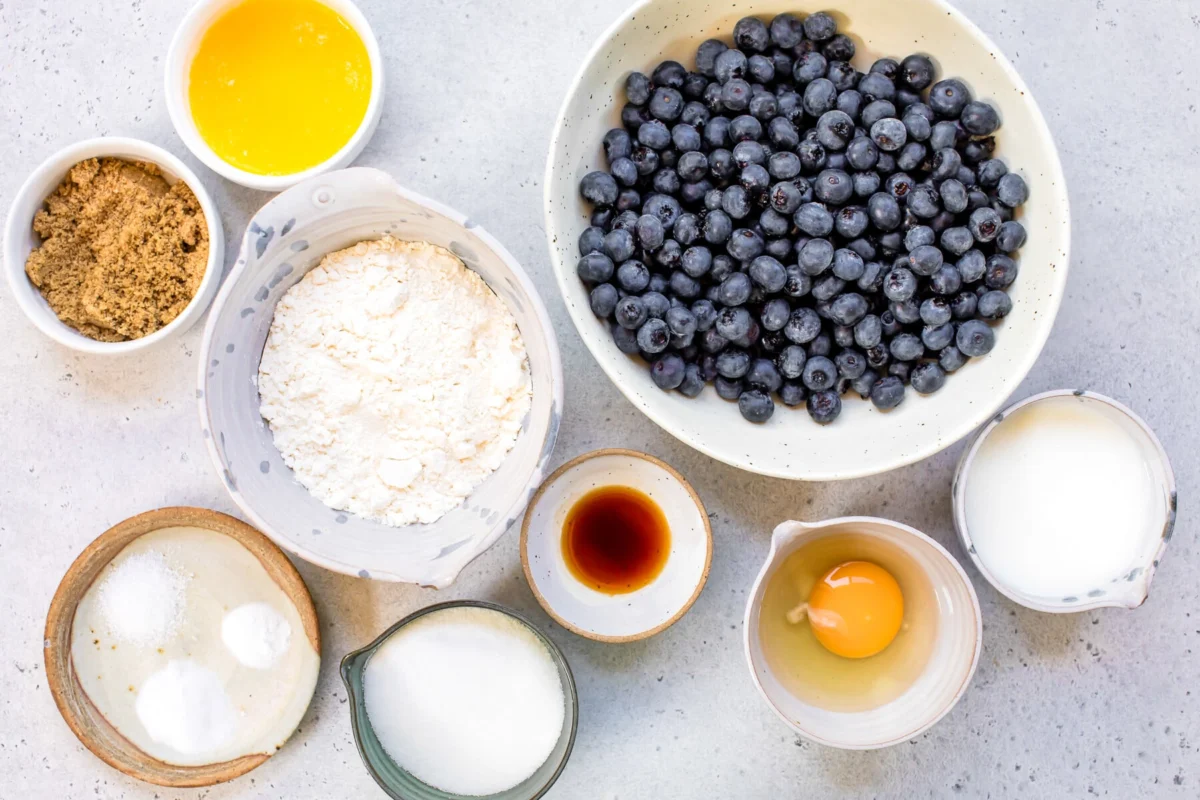
Crafting these individual blueberry upside-down cakes requires a careful selection of ingredients, each playing a critical role in achieving the desired texture, flavor, and appearance. While a detailed ingredient list with exact measurements is provided in the accompanying recipe card, understanding the function of each component enhances appreciation for the recipe’s design.

- Blueberries: The star ingredient, providing the primary flavor and forming the signature "jammy" topping. Fresh blueberries are ideal for their vibrant flavor and firm texture, though quality frozen blueberries can be used successfully, often without thawing, which helps prevent bleeding into the batter.
- Sweetener: Typically a granulated sugar or a sugar substitute, it caramelizes with the blueberries to form the glossy, rich topping and sweetens the cake batter. The amount is calibrated to balance the tartness of the blueberries without creating an "overly sweet" dessert, in line with the author’s preference.
- Butter: Essential for both the topping and the cake batter. In the topping, butter contributes to the caramelization process, adding richness and a smooth texture. In the batter, it provides moisture, flavor, and contributes to the cake’s tender crumb.
- Flour: All-purpose flour provides the structural integrity of the cake. Its protein content develops gluten, which forms the framework that holds the cake together.
- Leavening Agents (e.g., Baking Powder/Soda): These chemical agents are crucial for the cake’s light and tender texture. They produce carbon dioxide gas during baking, causing the batter to rise and create an airy crumb.
- Eggs: Eggs serve multiple functions: they bind the ingredients together, add moisture and richness, and contribute to the cake’s structure and leavening.
- Dairy (e.g., Milk, Buttermilk, or Yogurt): Provides moisture and contributes to the cake’s tenderness. Buttermilk or yogurt can also react with baking soda to aid in leavening and impart a subtle tang that complements the blueberries.
- Vanilla Extract: A common flavor enhancer in baking, vanilla adds depth and warmth, harmonizing with the fruit and other ingredients.
- Salt: A small amount of salt is vital for balancing the sweetness and enhancing the overall flavor profile of the cake, preventing it from tasting flat.
The careful proportioning of these elements is what ensures the success of the final product, yielding a cake that is moist, tender, and perfectly complemented by its fruity crown.
A Detailed Chronology of Preparation
The process of creating these blueberry upside-down cakes is designed for simplicity, emphasizing ease of execution whether utilizing an air fryer or a traditional oven. The chronological steps ensure a logical flow from ingredient preparation to the final baked good.

- Preparation of Baking Vessels: The first critical step involves preparing the individual ramekins or baking dishes. This typically includes greasing them thoroughly to prevent sticking and often dusting with a light layer of flour or sugar. For the upside-down cake effect, a small amount of melted butter and sweetener (e.g., brown sugar) is often placed at the bottom of each ramekin, creating the base for the caramelized topping.
- Arranging the Blueberries: Fresh or frozen blueberries are then carefully arranged over the butter-sweetener mixture in the bottom of each prepared ramekin. The quantity is important to ensure a generous and even fruit layer that will cover the cake upon inversion.
- Batter Preparation: The cake batter is typically a straightforward mixture. Dry ingredients (flour, leavening agents, salt) are whisked together in one bowl. Wet ingredients (melted butter, sugar, eggs, vanilla, dairy) are combined in another. The wet ingredients are then gently folded into the dry ingredients until just combined. Overmixing should be avoided to prevent the development of excessive gluten, which can lead to a tough cake. The consistency of the batter is crucial for a tender cake.
- Filling the Ramekins: Once the batter is ready, it is carefully spooned over the blueberries in each ramekin. Care is taken not to disturb the berry layer too much. The ramekins should be filled to an appropriate level, usually about two-thirds full, to allow for expansion during baking.
- Baking Process:
- Air Fryer Method: For individual cakes, the filled ramekins are placed in the air fryer basket. The temperature and cooking time are critical and must be carefully monitored. Air fryers often cook faster and more intensely than conventional ovens. The cakes are baked until golden brown and a toothpick inserted into the center of the cake portion comes out clean, indicating it is fully cooked.
- Oven Method: When preparing a larger batch or a single larger cake (e.g., in an 8×8 or 9×9-inch pan), the oven is preheated to the specified temperature. The baking time will be longer than in the air fryer, and the cakes are also tested for doneness with a toothpick.
- Cooling and Inversion: After baking, the cakes are allowed to cool slightly in their ramekins. This brief cooling period helps the fruit topping to set and makes the cakes easier to invert without breaking. Once slightly cooled, a plate is placed over the top of each ramekin, and with a quick, confident motion, the cake is inverted onto the plate, revealing the beautiful, jammy blueberry topping.
- Serving: These cakes are best served warm, perhaps with a dollop of whipped cream, a scoop of vanilla ice cream, or a dusting of powdered sugar, though they are perfectly delicious on their own.
This structured approach ensures consistent results and highlights the adaptability of the recipe to different cooking appliances.
Versatility and Customization: Expanding the Flavor Profile
The core recipe for blueberry upside-down cakes serves as an excellent foundation for various culinary explorations. Its inherent flexibility allows for numerous variations and substitutions, catering to diverse tastes, dietary needs, and seasonal availability of ingredients.

- Fruit Substitutions: While blueberries are featured, other fruits can be easily substituted. Sliced peaches, plums, apples, cherries, or even a mix of berries would work beautifully. The key is to select fruits that soften and release juices when baked, creating that desirable "jammy" topping. Adjustments to sweetener might be needed based on the fruit’s natural sweetness or tartness.
- Flavor Enhancements: Spices like cinnamon, nutmeg, or a hint of cardamom can be added to the fruit layer or the cake batter to introduce additional aromatic dimensions. A touch of lemon zest or orange zest can brighten the flavor profile and complement the fruit. A splash of liqueur (e.g., Grand Marnier for orange, kirsch for cherries) could also be incorporated into the fruit mixture for a more adult dessert.
- Sweetener Alternatives: For those managing sugar intake, sugar substitutes designed for baking can be used in both the topping and the cake batter. Natural sweeteners like maple syrup or honey could also be explored, potentially altering the texture of the topping slightly.
- Flour Modifications: To accommodate gluten sensitivities, a gluten-free all-purpose flour blend can often be substituted for regular flour. It is advisable to use a blend that contains xanthan gum for optimal texture.
- Dairy Alternatives: Plant-based milks (almond, soy, oat) and dairy-free yogurts can be used as alternatives to traditional dairy products for lactose-intolerant individuals or those following vegan diets. Ensure that any plant-based butter substitutes are suitable for baking.
- Topping Variations: Beyond the standard butter-sugar base, a hint of citrus juice (lemon or orange) can be added to the fruit layer for extra brightness. A sprinkle of chopped nuts (pecans, walnuts) or shredded coconut can also be added to the bottom of the ramekin alongside the fruit for added texture and flavor.
These variations allow home cooks to personalize the recipe, adapting it to their pantry, dietary requirements, and creative inclinations, making it a truly versatile dessert option.
Practical Considerations: Preparation, Storage, and Reheating
Understanding the practical aspects of meal preparation, including making dishes ahead of time, proper storage, and effective reheating, is crucial for efficient home cooking. This recipe for blueberry upside-down cakes offers considerable flexibility in these areas.

- Making Ahead: The individual blueberry upside-down cakes can be prepared up to a day in advance, making them an excellent option for entertaining or for simplifying weeknight dessert planning. After baking, allow the cakes to cool completely to room temperature before storing. This prevents condensation, which can make the cakes soggy.
- Storage: Once cooled, the cakes should be stored in an airtight container. If kept at room temperature on the counter, they typically maintain their quality for 1 to 2 days. For longer storage, refrigeration is recommended. In the refrigerator, stored in an airtight container, the cakes can remain fresh for up to 3-4 days. It is advisable to place a piece of parchment paper between layers if stacking them to prevent sticking.
- Reheating: To restore some of their freshly baked warmth and tenderness, individual cakes can be gently reheated.
- Microwave: For a quick reheat, individual cakes can be microwaved for 15-30 seconds, or until just warm. Overheating can dry them out.
- Oven/Toaster Oven: For a more even reheat, place the cakes in a preheated oven or toaster oven at a low temperature (around 300°F / 150°C) for 5-10 minutes. This method helps to crisp up the edges slightly and warm the entire cake through.
- Air Fryer: The air fryer can also be used for reheating at a lower temperature (e.g., 275-300°F) for a few minutes, monitoring closely to prevent overcooking.
Proper storage and reheating techniques ensure that the cakes retain their delightful texture and flavor, allowing for convenient enjoyment over several days.
Scaling the Recipe for Diverse Gatherings
A key attribute of a well-designed recipe is its adaptability to different scales of production. The Skinnytaste platform enhances this by providing an intuitive scaling feature, allowing users to easily adjust ingredient quantities for doubling or tripling a recipe without manual calculations. This functionality is particularly valuable for these blueberry upside-down cakes, catering to everything from a small, personal treat to a larger dessert for a crowd.

- Small Batches (Air Fryer): The recipe is initially optimized for small batches, perfectly suited for the air fryer, yielding typically four individual cakes. This is ideal for one or two people, or a small family, allowing for freshly baked dessert without leftovers.
- Larger Batches (Oven): When preparing more than four mini cakes, transitioning to a conventional oven becomes more efficient.
- Doubling the Recipe: For a double batch, an 8 x 8-inch baking pan is recommended. This size accommodates the increased volume of batter and fruit, ensuring even baking and the signature upside-down presentation.
- Tripling the Recipe: For a triple batch, a standard 9 x 13-inch baking dish is the appropriate choice. This larger pan size is ideal for feeding a substantial gathering, maintaining the integrity of the recipe while scaling up production.
The ability to seamlessly transition between air fryer and oven, and to scale the recipe up or down, underscores its utility and broad appeal. It eliminates the guesswork for home bakers, ensuring that whether they are serving a small family or a larger party, the convenience and quality of the blueberry upside-down cakes remain consistent.
Nutritional Profile and Dietary Implications
The provided nutritional data offers valuable insight into the dietary impact of these individual blueberry upside-down cakes, aligning with the Skinnytaste brand’s commitment to healthier eating. Each serving (one cake) contains approximately:

- Calories: 192 kcal
- Carbohydrates: 52 g
- Protein: 5.5 g
- Fat: 7.5 g
- Saturated Fat: 4 g
- Cholesterol: 62.5 mg
- Sodium: 204 mg
- Fiber: 2.5 g
- Sugar: 8.5 g
This profile positions the dessert as a relatively moderate indulgence compared to many conventional cakes and pastries, which often contain significantly higher calorie, fat, and sugar counts per serving.
- Calorie and Fat Content: At 192 kcal and 7.5 g of fat (4g saturated), these cakes can fit into a balanced diet, especially when consumed as an occasional treat. The individual portion size inherently aids in calorie control.
- Carbohydrates and Sugar: The carbohydrate content of 52g, with 8.5g of sugar, indicates a reliance on the natural sweetness of the blueberries and a controlled addition of sweetener. This aligns with the author’s preference for "less sweet" desserts and makes it a more mindful choice for those monitoring sugar intake, especially compared to desserts laden with refined sugars. The fiber content (2.5g) from the blueberries also contributes to satiety and digestive health.
- Protein and Sodium: The protein content (5.5g) adds a modest nutritional contribution, while the sodium level (204mg) is within typical ranges for baked goods and should be considered within an overall daily sodium intake.
The nutritional breakdown underscores the recipe’s design as a "lighter dessert." For individuals following specific dietary plans, this information allows for informed decision-making and potential modifications (e.g., using zero-calorie sweeteners, whole-wheat flour, or plant-based fats to further adjust the profile). The recipe offers a testament to the possibility of enjoying flavorful desserts that are also nutritionally considerate, reinforcing the broader trend towards healthier indulgence in the culinary world.
In conclusion, these individual blueberry upside-down cakes represent a harmonious blend of classic dessert appeal and modern culinary convenience. Their adaptability for air fryer or oven preparation, coupled with the inherent charm of a jammy fruit topping and tender cake, makes them an accessible and satisfying choice for any occasion. The thoughtful design, reflective of a preference for balanced sweetness and practical cooking methods, underscores its relevance in today’s home kitchens, providing a delightful answer to the quest for simple yet special desserts.
