
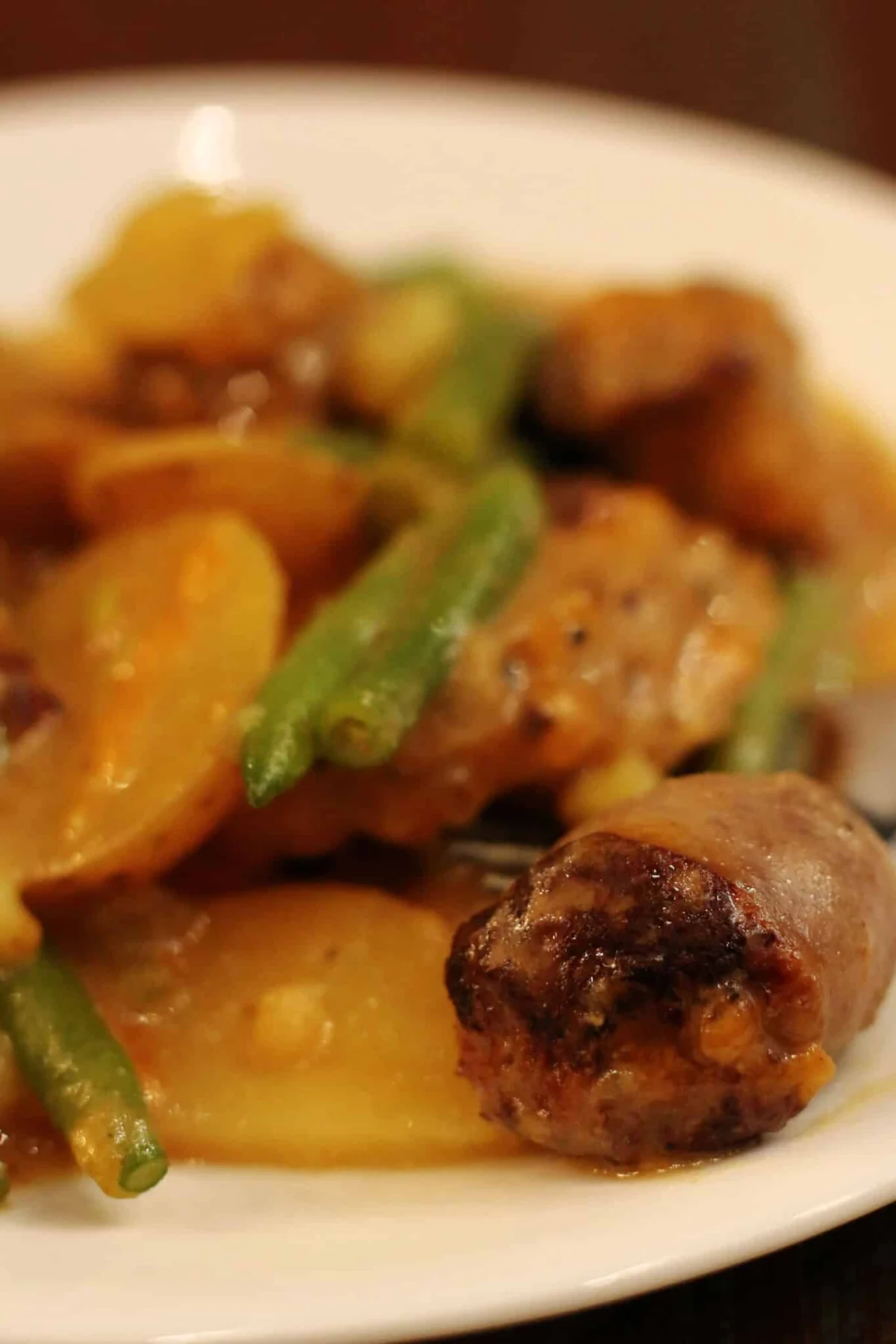
Technical Specifications and Culinary Methodology
The production of the Country Brat Casserole relies on a two-stage thermal process: high-heat searing followed by steam-induced pressure cooking. The initial phase utilizes the "Sauté" function of a multi-cooker, such as an Instant Pot, to facilitate the Maillard reaction on the surface of the bratwurst. This chemical reaction between amino acids and reducing sugars is critical for developing the savory, "browned" flavor profile that defines the dish.

Following the browning of the proteins, aromatic vegetables—specifically celery and onions—are introduced to the vessel. This four-minute sauté period allows for the translucent softening of the alliums and the release of volatile aromatic compounds. A crucial technical step follows: deglazing. By introducing a liquid medium, such as chicken or vegetable broth, the cook must scrape the bottom of the pot to incorporate the "fond"—the caramelized bits of meat and vegetable stuck to the surface. This prevents the "burn" error common in modern pressure cookers and ensures the liquid base is deeply seasoned.
The secondary phase involves the stratification of ingredients. Potatoes are scattered across the base, followed by a dry seasoning blend of salt, pepper, paprika, and garlic powder. Green beans are placed atop the assembly. The vessel is then sealed and subjected to high pressure for a duration of two minutes. While the active cooking time is brief, the process includes a "natural release" period of five to ten minutes, allowing the internal temperature to stabilize and the fibers of the meat and vegetables to relax before the final dairy-based emulsification.

Historical and Cultural Context: The Evolution of the Casserole
The Country Brat Casserole is a modern iteration of a culinary tradition that dates back to the early 20th century. The term "casserole" traditionally refers to both the vessel and the contents, gaining massive popularity in the United States during the 1950s as processed foods and standardized kitchen appliances became more accessible. Historically, these dishes served as a means of stretching expensive protein sources by combining them with abundant starches and vegetables.
The inclusion of bratwurst signals a specific regional influence, primarily from the Upper Midwest and Great Lakes regions of the United States. German-American immigrants in states like Wisconsin and Illinois popularized the bratwurst—a sausage typically composed of veal, pork, or beef—which has since become a staple of "country-style" American cooking. The transition of this ingredient from the outdoor grill to the indoor pressure cooker reflects a broader shift in domestic labor, where traditional weekend "comfort foods" are being re-engineered for weekday efficiency.

Market Trends and Consumer Data
The rise of recipes like the Country Brat Casserole is intrinsically linked to the explosive growth of the multi-cooker market. According to market research data, the global multi-cooker market was valued at approximately $720 million in 2020 and is projected to expand significantly through 2028. This growth is driven by a demographic shift toward "time-poverty" solutions. As households navigate increasingly crowded professional and personal schedules, the demand for appliances that combine the functions of a pressure cooker, slow cooker, and sauté pan has reached an all-time high.
Furthermore, consumer preference data indicates a resurgence in "comfort food" consumption. Analysts suggest that during periods of economic or social volatility, consumers gravitate toward familiar, high-calorie, and "savory" profiles. The Country Brat Casserole, with its combination of processed protein and melted cheddar cheese, aligns perfectly with these psychological consumption patterns. The versatility of the dish—allowing for substitutions such as mushrooms or different varietals of sausage—also appeals to the "fridge-clearing" trend, where consumers seek to minimize food waste by utilizing existing pantry staples.

Comparative Chronology of Preparation Methods
The Country Brat Casserole can be executed via two primary domestic technologies, each offering a different chronological footprint:
-
The Instant Pot (Pressure Cooker) Method:

- Preparation/Sauté: 10 minutes.
- Pressurization Time: 10–15 minutes (to reach pressure).
- Active Pressure Cook: 2 minutes.
- Depressurization (Natural Release): 10 minutes.
- Finishing: 3 minutes.
- Total Elapsed Time: Approximately 35–40 minutes.
-
The Slow Cooker (Crockpot) Method:
- Preparation/Browning (on stovetop): 10 minutes.
- Low-Heat Cycle: 6–8 hours.
- High-Heat Cycle: 3–4 hours.
- Finishing: 5 minutes.
- Total Elapsed Time: 4–8 hours.
The shift toward the pressure cooker method represents a 90% reduction in total elapsed time, a factor that has revolutionized the concept of the "slow-cooked flavor" for the modern workforce.

Nutritional Analysis and Ingredient Substitutions
From a nutritional standpoint, the Country Brat Casserole provides a dense source of macronutrients. The bratwurst offers significant protein and fat, while the potatoes provide complex carbohydrates. The inclusion of green beans introduces essential vitamins and fiber, though the final addition of milk and cheddar cheese increases the saturated fat and sodium content.
Nutritionists often recommend modifications for those seeking a lighter profile. Substituting traditional pork bratwurst with turkey or chicken-based sausages can reduce caloric density and fat intake. Additionally, the use of low-sodium broths and reduced-fat cheeses can align the dish with heart-healthy dietary guidelines without compromising the structural integrity of the casserole. The blog’s author, Karen Petersen, suggests the addition of mushrooms, which would introduce "umami" notes and additional micronutrients such as selenium and vitamin D.

Broader Implications for Domestic Labor and Home Economics
The institutionalization of recipes like the Country Brat Casserole has broader implications for the field of home economics. For decades, the "slow cooker" was the primary tool for the working-class kitchen, allowing a meal to cook unattended while residents were at work. However, the Instant Pot and its contemporaries have shifted the paradigm toward "just-in-time" production.
This shift reflects a change in how domestic labor is perceived and performed. The ability to produce a "hearty" meal in under an hour reduces the mental load of long-term meal planning. Furthermore, the one-pot nature of the dish minimizes "post-production" labor—specifically dishwashing and kitchen cleanup—which remains a significant factor in the decision-making process for evening meal preparation.

Institutional and Expert Responses
While no official government body regulates casserole recipes, culinary experts from institutions like the Culinary Institute of America often comment on the "one-pot" phenomenon. Analysts suggest that the success of these recipes lies in their "forgiveness." Unlike baking, which requires precise chemical ratios, the Country Brat Casserole is robust; slight variations in the size of the potato cubes or the volume of the broth rarely result in a failure of the final product.
Home cooking advocates also point to the economic efficiency of the dish. At a time when food inflation has impacted the price of dining out, a casserole that utilizes bulk-purchased sausages and shelf-stable root vegetables provides a cost-effective alternative for feeding a family of four to six. The "leftover" potential of the dish, as noted in the original content regarding the character Skyler, further enhances its value proposition, providing multiple meals from a single labor event.

Future Outlook: The Digitalization of the Recipe
The dissemination of the Country Brat Casserole recipe via digital platforms like Pinterest and specialized food blogs highlights the role of social media in modern culinary trends. The "Pin this recipe for later" call-to-action serves as a digital bookmarking system that has largely replaced the physical recipe box. As AI and algorithmic sorting become more integrated into the kitchen—through smart appliances and voice-activated assistants—recipes that are optimized for specific hardware (like the Instant Pot) are likely to dominate the digital landscape.
In conclusion, the Country Brat Casserole is more than a simple dinner option; it is a synthesis of cultural heritage, technological advancement, and economic necessity. As the domestic environment continues to evolve, the reliance on high-efficiency, flavor-dense, and versatile meals is expected to remain a cornerstone of the global culinary experience. Whether prepared in a high-pressure vessel or a slow-cooker, the dish stands as a testament to the enduring appeal of the American country-style palate adapted for the 21st century.
