
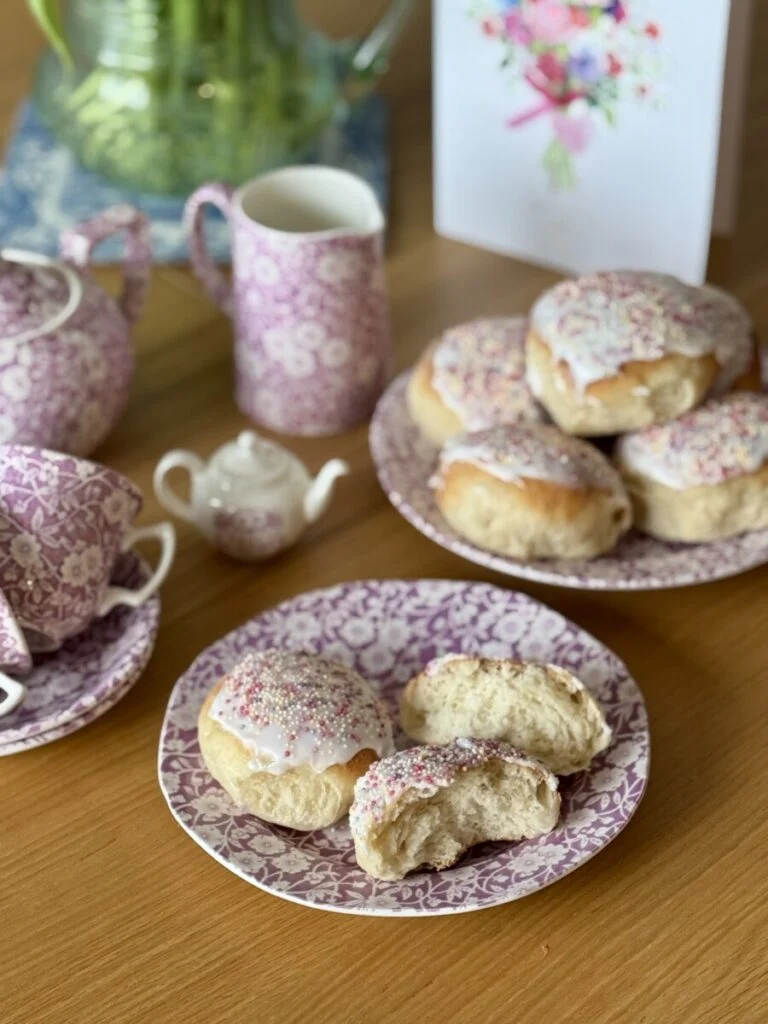
The Traditional Mothering Bun, a cherished regional delicacy hailing from Bristol in the South West of England, stands as a testament to Britain’s rich culinary heritage and its deeply interwoven cultural traditions. These delightful, sweet yeasted buns, adorned with icing and vibrant "hundreds and thousands" (sprinkles), are intrinsically linked to Mothering Sunday, offering a comforting and symbolic treat during the Lenten period. Their history traces back centuries, embodying a time-honored practice of celebration and familial connection.

The Historical Tapestry of Mothering Sunday
Mothering Sunday, observed annually in the United Kingdom and several other Commonwealth countries, is distinct from the American Mother’s Day. Its roots are firmly planted in religious and historical customs, dating back to at least the 16th century. Traditionally, it falls on the fourth Sunday of Lent, precisely three weeks before Easter Sunday. This positioning in the liturgical calendar is significant, as Lent is typically a period of fasting, reflection, and abstention from rich foods.

Historically, Mothering Sunday was a day when people, particularly servants, would return to their ‘mother church’ – the main church or cathedral of their area or the church where they were baptized. This pilgrimage often provided the only opportunity for scattered families to reunite. As they journeyed, children would pick wild flowers to present to their mothers, a precursor to the modern tradition of giving gifts.
The day also earned the moniker "Refreshment Sunday" or "Mid-Lent Sunday." This designation explicitly allowed for a temporary reprieve from the strict Lenten fast. On this day, the customary prohibitions on ingredients like butter, eggs, and cream were lifted, making it permissible to prepare and consume richer, celebratory foods. This historical context is crucial to understanding the emergence and popularity of sweet baked goods like the Mothering Bun and Simnel Cake, which became synonymous with the occasion. These treats were not merely indulgences but symbolic gestures of comfort and reunion, prepared to mark the brief suspension of Lenten austerity and to honor mothers.

The Evolution of the Mothering Bun
The Mothering Bun itself is a direct product of this "Refreshment Sunday" tradition. Originating likely in the 18th century, these buns quickly became a beloved regional specialty in Bristol. Initially, the toppings for these sweet yeasted buns were quite different from their modern iteration. Historical accounts suggest that early versions were often topped with aromatic spices like caraway seeds or aniseed, reflecting the culinary preferences and available ingredients of the era. These spices would have imparted a distinct, earthy warmth to the sweet dough.

However, as tastes evolved and ingredients became more readily available, the traditional toppings shifted. Today, the defining characteristic of a Mothering Bun is its sweet white icing generously adorned with "hundreds and thousands," known as sprinkles in other parts of the world. This change signifies a broader trend in British baking towards sweeter, more visually appealing confections, especially for celebratory occasions. The transition from subtle spice to vibrant sprinkles reflects a modernization of a centuries-old recipe, making it appealing to contemporary palates while retaining its core identity as a sweet, celebratory bun.
These buns are also part of a wider "canon of British sticky buns," a term affectionately used by many, including the late father of the author of the original article. This broader category encompasses numerous regional and seasonal varieties of sweet yeasted buns, some glazed with sugar, others elaborately iced. This highlights the diversity and depth of Britain’s baking traditions, where specific recipes are tied to particular regions and calendar dates, each carrying its own unique history and cultural significance.

Bristol’s Enduring Culinary Legacy
Bristol, a city with a formidable maritime history and a vibrant cultural identity, boasts a rich culinary heritage. As a significant port, it has long been a melting pot of influences, with trade routes bringing diverse ingredients and culinary techniques to its shores. The Mothering Bun is a prime example of how local traditions flourish within this broader historical context, becoming emblematic of Bristol’s unique character.

Today, the tradition of baking Mothering Buns is meticulously upheld by a select few artisan bakeries in Bristol, ensuring that this local specialty continues to delight new generations. Establishments such as Joe’s Bakery on Gloucester Road and Herbert’s Bakery are renowned for their commitment to this historical recipe. These bakeries play a crucial role as custodians of Bristol’s gastronomic past, painstakingly preparing these buns, especially in the days leading up to Mothering Sunday.
A spokesperson for Joe’s Bakery, a venerable institution known for its traditional bakes, commented on the significance: "The Mothering Bun is more than just a pastry; it’s a piece of Bristol’s soul. We take immense pride in continuing this centuries-old tradition, offering our community a taste of their heritage and a way to celebrate their mothers with something truly special and locally made." This sentiment is echoed by other local producers, who understand that these buns are not just about sustenance but about preserving cultural memory and fostering community spirit. The continued demand for these buns, particularly around Mothering Sunday, underscores their enduring popularity and cultural relevance within the region.

The Culinary Experience and Preservation
The preparation of Mothering Buns, as documented in various culinary sources including The Simple Things magazine (which sourced a recipe from Paul Hollywood’s British Baking in March 2015), involves a classic sweet yeasted dough. The process, while requiring time for rising, culminates in a batch of light, fluffy buns. Once baked and cooled, they are typically finished with a simple yet appealing white icing and a scattering of colourful sprinkles.

For home bakers, the process offers a tangible connection to historical baking practices and a rewarding experience. The buns are versatile; they can be enjoyed fresh, but also freeze well, allowing for convenient preparation in advance of the busy Mothering Sunday celebrations. When defrosted, a fresh application of icing and sprinkles restores their festive appearance. For those who enjoy them over several days, they keep well in a cake tin. Should they become slightly stale, a common fate for any bread product, they can be revived by splitting and buttering them, perhaps with a dollop of jam, transforming them into a delightful tea-time treat, akin to other British "sticky buns."
The act of making and sharing these buns transforms into a ritual, enriching family gatherings and reinforcing cultural identity. Serving them as part of an afternoon tea, perhaps on elegant pottery like Burleigh Pink Calico, elevates the experience, connecting the simple bun to a broader tradition of British hospitality and celebration.

Broader Implications and Future Outlook
The continued popularity of Traditional Mothering Buns carries several broader implications. Firstly, it highlights the importance of regional foodways in preserving local identity. In an increasingly globalized culinary landscape, these distinct local treats serve as anchors, reminding communities of their unique heritage. They contribute to a sense of place and collective memory, fostering pride in local traditions.

Secondly, the existence and thriving market for Mothering Buns, even in a niche capacity, demonstrate the resilience of artisan bakeries and small businesses. These establishments, often family-run, are vital for maintaining specialized skills and traditional recipes that might otherwise be lost. Their efforts ensure that future generations can continue to experience and appreciate these historical foods. The seasonal demand for Mothering Buns provides a predictable, albeit concentrated, economic boost for these local businesses.
Thirdly, the story of the Mothering Bun reflects a broader contemporary interest in provenance, authenticity, and sustainable food practices. Consumers are increasingly seeking out foods with a story, foods that connect them to history and community. The Mothering Bun perfectly fits this narrative, offering not just a sweet treat but a piece of living history.

Looking ahead, the future of the Mothering Bun, like many regional delicacies, hinges on continued awareness and engagement. Culinary historians, food writers, and local bakeries all play a role in documenting, promoting, and adapting these recipes for modern audiences while respecting their origins. As Mothering Sunday continues to be celebrated annually, these buns will likely remain a beloved fixture, serving as a sweet reminder of familial bonds, historical traditions, and the distinct culinary spirit of Bristol. The consistent timing of Mothering Sunday, falling on the fourth Sunday of Lent (e.g., March 15, 2026; March 7, 2027; March 26, 2028; March 11, 2029; March 31, 2030; March 23, 2031), ensures its place as a recurring cultural event, providing a predictable rhythm for the production and enjoyment of these treasured buns.
In essence, the Traditional Mothering Bun is more than a recipe; it is a delicious embodiment of history, regional pride, and the enduring power of food to connect us to our past and to each other. Its journey from a Lenten "refreshment" to a beloved Mothering Sunday staple underscores its deep cultural resonance within the South West of England.