
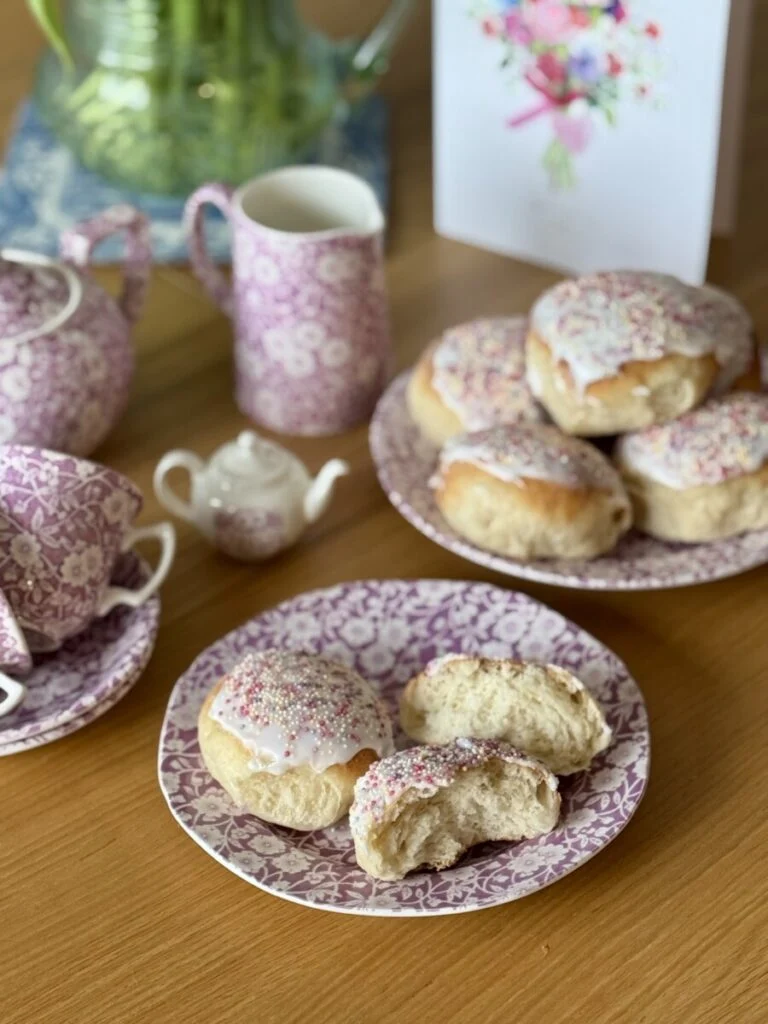
A cherished culinary tradition hailing from the historic city of Bristol in the South West of England, the Traditional Mothering Bun stands as a sweet, yeasted testament to centuries of British cultural heritage. These delightful buns, characterized by their light texture, sweet glaze, and often adorned with colourful sprinkles, are intrinsically linked to Mothering Sunday, a significant observance in the United Kingdom’s ecclesiastical calendar. Far from a mere confection, the Mothering Bun embodies a confluence of religious custom, regional identity, and familial affection, offering a tangible connection to a past where food played a pivotal role in marking special occasions and easing the rigours of fasting.

A Taste of Tradition: The Mothering Bun Defined
At its core, the Mothering Bun is a sweet, enriched yeast dough bun, traditionally topped with a simple icing and, in modern interpretations, a shower of "hundreds & thousands" (the British term for sprinkles). Historically, these buns featured flavourings such as caraway seeds or aniseed, reflecting a palate that appreciated more subtle, aromatic spices. The transition to the visually appealing and universally popular sprinkles highlights an evolution in taste and presentation, yet the fundamental character of a comforting, celebratory bake remains. These buns belong to a broader category of British "sticky buns," a term often used to encompass a variety of regional and seasonal sweet rolls, some glazed with sugar and others crowned with icing, each with its own unique story and place in the national culinary tapestry. The Mothering Bun’s distinct Bristolian identity, however, sets it apart, making it a proud emblem of the city’s gastronomic legacy.

The preparation of Mothering Buns involves a classic enriched dough, typically incorporating butter, eggs, and milk – ingredients that would otherwise be abstained from during the solemn period of Lent. This deliberate indulgence underscores the special nature of Mothering Sunday, offering a brief respite from the fasting practices that define the season. The process of making these buns, from the careful kneading of the dough to the patient rise and eventual baking, is itself a ritual, imbuing the final product with a sense of care and tradition. Once baked to a golden perfection, their soft interior and sweet, yielding crumb provide the ideal canvas for the crisp icing and playful scattering of sprinkles, creating a treat that is both visually appealing and deeply satisfying.
Mothering Sunday: A Historical Perspective

To fully appreciate the Mothering Bun, one must understand the context of Mothering Sunday itself. This observance, critically distinct from the American Mother’s Day, predates its transatlantic counterpart by several centuries, with roots tracing back to the 16th century. Mothering Sunday invariably falls on the fourth Sunday of Lent, precisely three weeks before Easter Sunday. Its origins are steeped in Christian tradition, specifically the practice where people would return to their "mother church" – the main church or cathedral of their diocese – for a special service. This pilgrimage, often undertaken by servants and apprentices who lived away from home, provided a rare opportunity to visit their families.
The journey home for these young workers often involved walking considerable distances, and it became customary for them to gather wildflowers along the way as gifts for their mothers. Furthermore, the day acquired the affectionate moniker "Refreshment Sunday." This was one of only two days during the Lenten period when the strictures of fasting were relaxed. On this day, traditionally forbidden ingredients such as butter, eggs, and cream, along with richer foods like cakes and sweet buns, were briefly permitted. This easing of the fast created the perfect occasion for baking and sharing special treats, with the Mothering Bun emerging as a regional favourite, particularly in the South West. The bun thus became a symbol of warmth, comfort, and the breaking of Lenten abstinence, offering a delightful culinary punctuation mark in a season of restraint.

Over the centuries, the religious significance of returning to the mother church gradually broadened to encompass a wider celebration of mothers and mother figures. However, the core traditions of gifts and special foods persisted. This evolution solidified the Mothering Bun’s role as a seasonal delicacy, inextricably linked to the warmth of family reunions and the joy of breaking bread together on this unique Lenten Sunday. The continuity of this tradition, even with minor adaptations to ingredients like the topping, speaks volumes about its enduring cultural resonance.
Bristol’s Edible Heritage: A Regional Delicacy

The Mothering Bun’s strong regional ties to Bristol are a testament to the city’s rich and often overlooked culinary history. Bristol, a major port city with a storied past, has long been a hub for trade and cultural exchange, which inevitably influenced its foodways. The Mothering Bun is not merely a recipe but a culinary landmark, deeply embedded in the local identity. For generations, Bristolians have anticipated Mothering Sunday not just for its familial sentiment but for the unique flavour of these buns, available only for a brief period each year.
Today, the tradition is proudly upheld by a select few artisan bakers within the city, such as the renowned Joe’s Bakery on Gloucester Road and Herbert’s Bakery. These establishments play a vital role as custodians of Bristol’s edible heritage, faithfully recreating the buns using traditional methods. Their commitment ensures that the distinct taste and texture of Mothering Buns continue to be experienced by new generations, preventing a beloved local delicacy from fading into obscurity. Visitors and locals alike flock to these bakeries in the days leading up to Mothering Sunday, eager to partake in this seasonal ritual, underscoring the buns’ continued popularity and cultural importance. The act of purchasing these buns from a local bakery is more than just a transaction; it is an participation in a living tradition, a small but significant act of cultural preservation.

The existence of such specific regional specialities, like the Mothering Bun, highlights the fascinating diversity of British cuisine beyond its more universally known dishes. Food historians often point to these local treats as crucial threads in the tapestry of national identity, each telling a story about a particular place, its history, and its people. The Mothering Bun, therefore, is not just a sweet treat; it is a delicious narrative, baked into the very fabric of Bristol.
The Revival of a Classic: Modern-Day Popularity

In an era where regional food traditions are experiencing a resurgence, the Mothering Bun has found renewed appreciation. The journey of rediscovering and sharing this recipe, as articulated by culinary enthusiasts, mirrors a broader trend of valuing authentic, historical recipes. The recipe, as sourced from The Simple Things magazine, itself adapted from Paul Hollywood’s British Baking, signifies how traditional recipes gain new life and reach wider audiences through modern media and culinary personalities. This cross-pollination ensures that recipes like the Mothering Bun are not confined to historical archives but are actively baked and enjoyed in contemporary homes.
For many, baking these buns can evoke a powerful sense of connection—to a region, to a holiday, and even to personal memories. The emotional resonance of such traditional foods is undeniable; they are not just sustenance but vehicles for nostalgia and expressions of love. The reported experience of finding the Mothering Buns to be a "firm favourite" at Lavender & Lovage, the source blog, after rigorous testing, underscores their enduring appeal. Serving them as part of an early Mothering Sunday afternoon tea, presented on elegant Burleigh Pink Calico pottery, further illustrates how these historical treats can be seamlessly integrated into modern celebrations, elevating the experience beyond a simple snack to a thoughtful culinary event. This act of sharing and enjoying these buns reinforces their role in creating new memories while honouring old traditions.

Culinary and Practical Considerations
Beyond their historical and cultural weight, Mothering Buns are also remarkably practical and versatile. The buns, once baked and cooled, can be frozen for later enjoyment, a significant advantage for those who wish to prepare ahead for Mothering Sunday. To serve, they simply need a few hours to defrost before the final touch of icing and sprinkles is applied, ensuring freshness and convenience. When stored in an airtight cake tin, they maintain their quality for three to four days, making them an ideal treat to share over several days.

Even as they age slightly, these buns offer another delightful permutation: if they become a bit stale or dry, splitting them open and serving them buttered, perhaps with a dollop of jam, transforms them into a comforting, homely snack. This adaptability speaks to the resourcefulness inherent in many traditional recipes, designed to make the most of ingredients and extend the enjoyment of a special bake.
From a nutritional standpoint, a single Mothering Bun (yielding 12 per recipe) provides approximately 220 calories. Each serving contains 5g of total fat (2g saturated, 2g unsaturated), 9mg of cholesterol, 390mg of sodium, 42g of carbohydrates (1g fiber, 23g sugar), and 4g of protein. While a sweet indulgence, understanding the nutritional breakdown allows for informed enjoyment within a balanced diet.

Looking Ahead: The Future of Mothering Buns
The continued celebration of Mothering Sunday and the Mothering Bun is a vibrant example of how cultural practices endure and adapt. As awareness of regional food heritage grows, fuelled by culinary tourism and a desire for authentic experiences, the Mothering Bun is poised to retain its special place. The future dates for Mothering Sunday serve as a constant reminder of this annual tradition:

- 2026: Sunday 15th March
- 2027: Sunday 7th March
- 2028: Sunday 26th March
- 2029: Sunday 11th March
- 2030: Sunday 31st March
- 2031: Sunday 23rd March
These fixed points in the calendar ensure that the rhythm of Mothering Sunday and its associated culinary delights continue to punctuate the Lenten season, offering a moment of joy and reflection for families across the UK. The efforts of local bakeries, combined with the enthusiasm of home bakers and food writers, collectively safeguard this sweet tradition. The Mothering Bun stands not only as a delicious treat but also as a powerful symbol of community, history, and the enduring love between mothers and their families, forever cementing its place in the heart of British culinary lore. As long as there are mothers to celebrate and a desire to connect with the past through flavour, the Traditional Mothering Bun will continue to rise.