
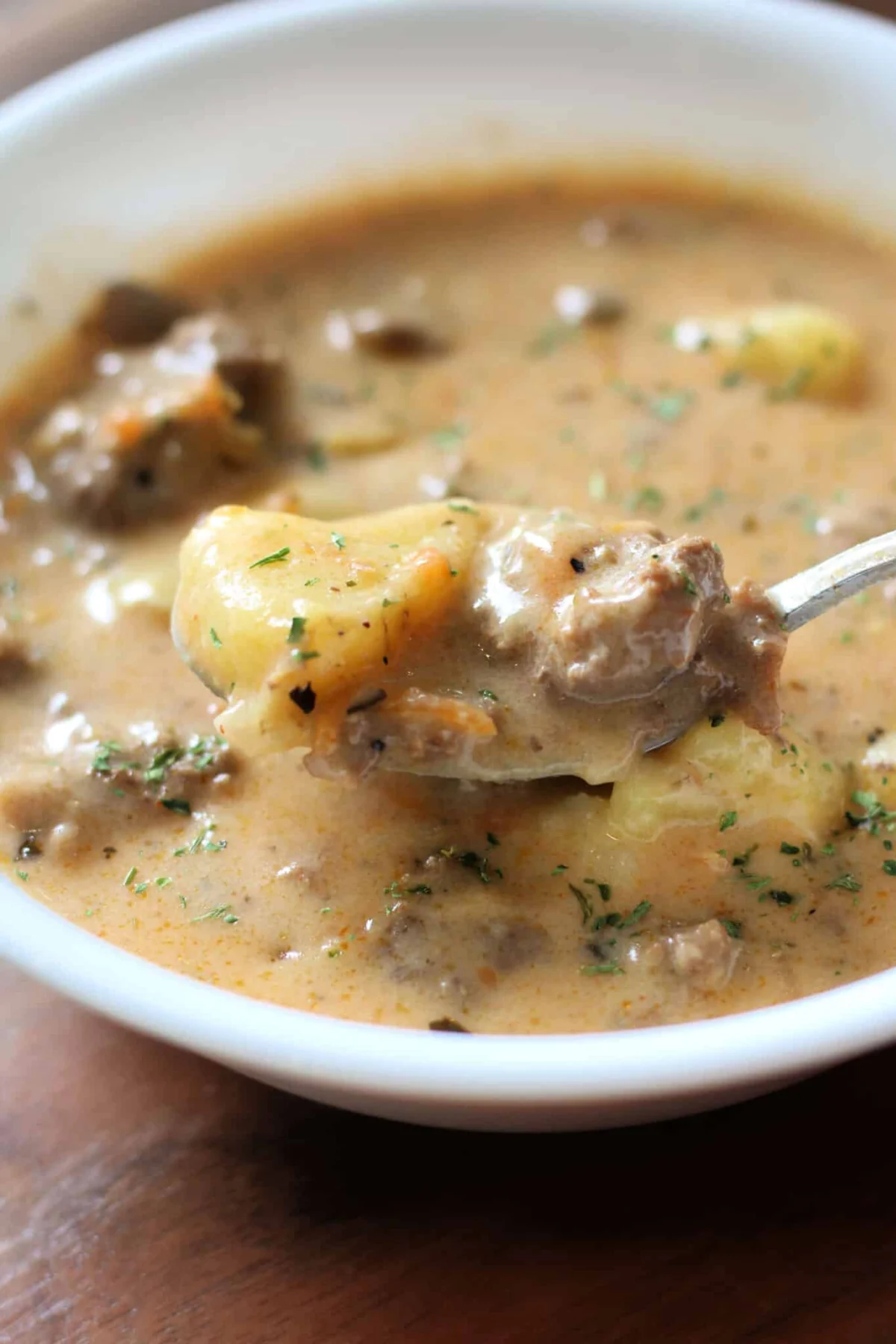
The culinary landscape of American comfort food has undergone a significant transformation over the last decade, shifting from traditional stovetop methods toward the efficiency of multicookers and slow cookers. Central to this evolution is the "deconstructed" meal—a trend where classic handheld dishes are reimagined as stews, casseroles, or soups. The bacon cheeseburger soup represents a pinnacle of this movement, blending the savory, high-protein profile of a traditional burger with the creamy, heart-warming texture of a potato-based chowder. This dish has gained substantial traction among home cooks seeking to replicate restaurant-quality flavors within the constraints of a busy domestic schedule. By utilizing modern kitchen technology such as the Instant Pot or the traditional crockpot, this recipe provides a blueprint for a nutrient-dense, family-friendly meal that emphasizes texture, temperature control, and flavor layering.

The Evolution of Cheeseburger-Inspired Cuisine
The concept of a cheeseburger soup is not entirely new, but its modern iteration is deeply rooted in the mid-century American "casserole culture." Historically, ground beef and potatoes served as the backbone of budget-friendly meals during the Great Depression and the post-WWII era. However, as the 21st-century palate evolved to demand more complex flavor profiles, the simple beef-and-potato stew was upgraded with the inclusion of sharp cheddars, smoked bacon, and specific aromatics like smoked paprika and dried basil.
The rise of digital recipe sharing platforms and social media has further propelled this specific dish into the spotlight. Culinary analysts observe that "mash-up" foods—those that combine two distinct food categories—perform exceptionally well in the digital space because they offer a sense of novelty while remaining anchored in familiar flavor territories. The bacon cheeseburger soup satisfies the psychological craving for a burger while providing the physical warmth associated with soup, making it a seasonal staple as temperatures fluctuate.

Technical Specifications and Ingredient Analysis
To achieve a professional-grade consistency, the selection of ingredients is paramount. The recipe relies on specific chemical interactions to maintain its creamy structure and prevent the common pitfalls of home-cooked dairy soups.
The Role of Yukon Gold Potatoes
Unlike Russet potatoes, which are high in starch and tend to disintegrate into a grainy texture when pressure-cooked, Yukon Gold potatoes are categorized as "all-purpose" or "waxy." They possess a medium starch content and a creamy yellow flesh that retains its shape even under the high-pressure environment of an Instant Pot. This ensures that every spoonful of soup contains distinct, tender bites of potato rather than a uniform mash.

Protein Selection and Fat Management
The use of ground beef provides the primary protein source. Journalistic culinary standards suggest using a lean-to-fat ratio of 80/20 or 90/10. While fat carries flavor, an excess of grease can lead to an unappealing oil slick on the surface of the soup. Therefore, the browning process—known scientifically as the Maillard reaction—is critical. This chemical reaction between amino acids and reducing sugars gives browned meat its distinctive flavor and color. Draining excess grease after this stage is a mandatory step for maintaining the soup’s structural integrity.
The Science of Dairy Tempering
One of the most complex aspects of creamy soup production is the introduction of dairy. Half-and-half or heavy cream can curdle if exposed to sudden temperature changes or high acidity. To prevent this, professional chefs utilize "tempering." This involves gradually raising the temperature of the cold dairy by whisking in small amounts of the hot soup broth before adding the entire mixture back into the pot. This stabilizes the proteins in the milk, ensuring a silky-smooth finish.

Procedural Chronology: Modern Preparation Methods
The bacon cheeseburger soup is designed for versatility, accommodating both the rapid-cycle pressure cooking of the Instant Pot and the long-cycle thermal retention of a slow cooker.
The Instant Pot Workflow
- Sauté and Aromatics: The process begins with the "Sauté" function. Ground beef and onions are cooked until the meat is no longer pink. This stage is essential for developing the base flavor profile.
- Seasoning Integration: Once the beef is browned and drained, a suite of spices—including garlic powder, paprika, basil, parsley, and tomato paste—is introduced. The tomato paste acts as a bridge, providing acidity to balance the richness of the cheese and beef.
- Pressure Cycle: Beef broth is added to deglaze the bottom of the pot, preventing the "Burn" notice common in multicookers. Potatoes and carrots are added before the unit is sealed. The soup is cooked under high pressure for precisely four minutes.
- Pressure Release and Thickening: After a natural pressure release of five to ten minutes, the remaining pressure is vented. A cornstarch slurry (a mixture of cornstarch and cold water) is stirred in under the sauté setting to achieve the desired viscosity.
- Final Emulsion: The tempered dairy, shredded cheddar, and pre-cooked bacon are folded in at the end to preserve their individual textures and flavors.
The Slow Cooker Alternative
For those opting for the crockpot method, the beef and onions must be browned on a traditional stovetop before being transferred to the slow cooker. The vegetables and broth are simmered on "Low" for six to eight hours or "High" for three to four hours. The dairy and thickening agents are added in the final 30 minutes of cooking to ensure the cream does not break down over the long heating period.

Economic and Cultural Impact of Home-Cooked Soups
The popularity of recipes like the bacon cheeseburger soup also reflects broader economic trends. As inflation impacts the cost of dining out, many consumers are turning to "copycat" recipes that emulate the experience of a restaurant meal at a fraction of the cost. Ground beef remains one of the more accessible animal proteins, and potatoes are a global staple known for their caloric efficiency and low price point.
Furthermore, the "one-pot meal" philosophy reduces water consumption and energy usage associated with dishwashing and multi-burner cooking. From a sustainability perspective, these recipes allow for the utilization of older vegetables—such as slightly softened carrots or onions—which might otherwise be discarded, thus contributing to food waste reduction in the domestic sphere.

Nutritional Profile and Consumer Customization
While often categorized as "comfort food," the bacon cheeseburger soup offers a balanced macronutrient profile when prepared with fresh ingredients. It provides significant amounts of protein from the beef and bacon, complex carbohydrates from the potatoes, and essential vitamins like Vitamin A from the carrots.
The Acid Balance Trend
A notable trend among enthusiasts of this dish is the addition of "acid" at the finish. Inferred data from culinary forums suggests that many home cooks now add a splash of pickle juice or a garnish of diced dill pickles to the final bowl. This mimics the flavor profile of a classic burger, where the vinegar in the pickles cuts through the fattiness of the cheese and beef, creating a more balanced sensory experience.

Dietary Adaptations
The recipe’s structure allows for various modifications to suit modern dietary restrictions:
- Gluten-Free: By ensuring the beef broth is certified gluten-free and using cornstarch as the thickener, the dish is naturally safe for those with celiac disease.
- Low-Carb/Keto: Some practitioners replace the Yukon Gold potatoes with cauliflower florets or radishes to reduce the glycemic index of the meal.
- Dairy-Free: Innovations in plant-based milks and cheeses have allowed for the substitution of traditional dairy with coconut cream and nutritional yeast-based cheese alternatives.
Official Responses and Food Safety Standards
Health organizations, including the USDA, emphasize the importance of internal temperatures when handling ground beef. To ensure safety, ground beef should reach an internal temperature of 160°F (71°C). The pressure-cooking method used in the Instant Pot easily exceeds this threshold, providing a safe environment for meat consumption. Furthermore, experts recommend that leftovers be refrigerated within two hours of cooking to prevent the growth of foodborne pathogens.

Culinary professionals also stress the importance of using block cheese rather than pre-shredded varieties. Pre-shredded cheese is often coated in potato starch or cellulose to prevent clumping in the bag; however, these additives can prevent the cheese from melting smoothly into a soup, resulting in a stringy or gritty texture.
Broader Implications for the Future of Home Cooking
The success of the bacon cheeseburger soup is a testament to the enduring appeal of traditional flavors when paired with modern convenience. As technology continues to integrate into the kitchen, the line between "fast food" and "slow food" is blurring. Consumers no longer have to choose between a meal that is quick to prepare and one that is rich in flavor.

Looking ahead, the trajectory of American home cooking appears to be heading toward more specialized "smart" appliances that can further automate the sautéing and thickening stages of soup production. However, the fundamental principles of cooking—the browning of meat, the tempering of cream, and the balancing of spices—remain the essential skills that define the quality of the final product. The bacon cheeseburger soup stands as a bridge between the past and the future, proving that even as our tools change, our craving for hearty, soulful nutrition remains constant.