
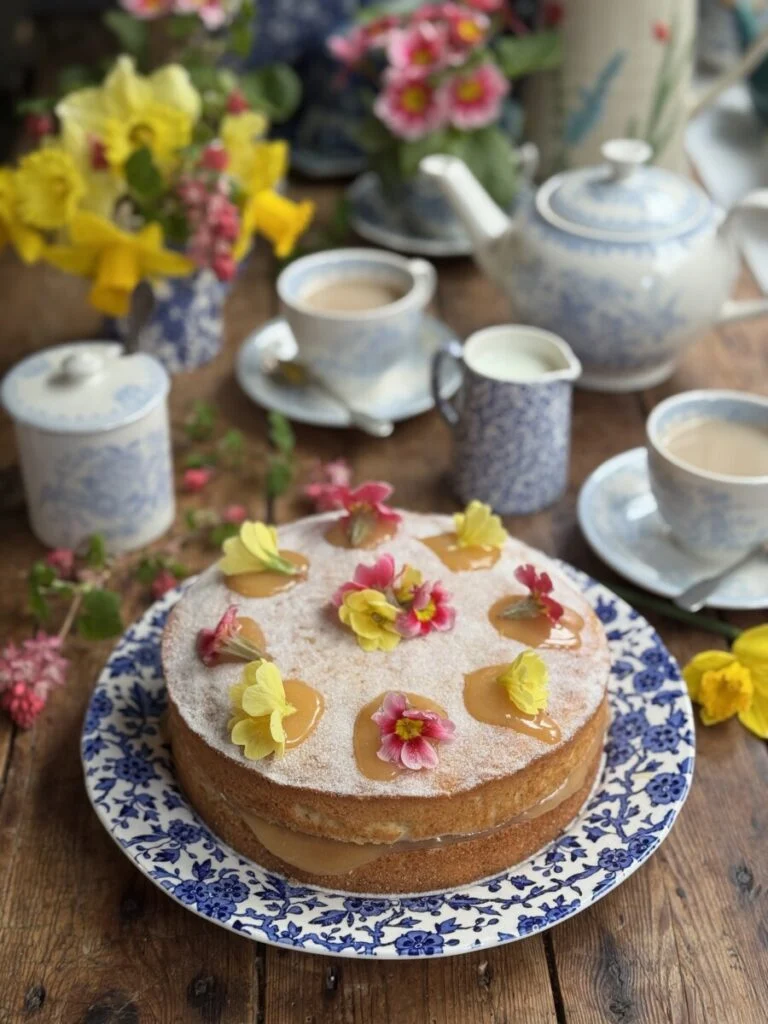
The arrival of spring, marked by the vernal equinox on March 20, 2026, is being celebrated in culinary circles with the unveiling of a Spring Posy Victoria Sandwich Cake, delicately filled with lemon curd. This classic British confection, known for its elegant simplicity, offers a harmonious blend of light sponge and tart citrus, making it an ideal accompaniment for a traditional afternoon tea. The recipe, published by culinary expert Karen Burns-Booth of Lavender and Lovage, highlights the enduring appeal of traditional baking techniques while embracing the vibrant aesthetic of the new season with edible flower decorations.

A British Staple: The Victoria Sandwich Cake
The Victoria Sandwich Cake, often simply called Victoria Sponge, holds a distinguished place in British culinary history. Its origins trace back to the mid-19th century, specifically during the reign of Queen Victoria, who was reputedly fond of a slice of this cake with her afternoon tea. Unlike heavier fruit cakes, the Victoria Sponge emerged as a lighter, more refined option, perfectly suited to the burgeoning tradition of afternoon tea. The introduction of baking powder in the mid-1800s revolutionized baking, allowing for the creation of this airy, tender sponge that defines the cake.

Traditionally, the Victoria Sandwich comprises two equally sized sponge cakes, sandwiched together with a layer of raspberry jam and a dusting of caster sugar. Over time, variations have emerged, including fillings of buttercream, fresh cream, and fruit preserves. The Spring Posy rendition, with its lemon curd filling, offers a zesty departure from the classic, providing a bright, tangy counterpoint to the sweet sponge. Culinary historians note that the cake’s enduring popularity lies in its straightforward preparation and universally appealing flavor profile, cementing its status as a benchmark of British home baking.
The Zest of Spring: The Allure of Lemon Curd

Lemon curd, a rich, creamy spread made from lemon juice, zest, eggs, sugar, and butter, is an integral component of this springtime dessert. While often associated with modern patisserie, lemon curd has a history dating back to the late 17th and early 18th centuries in England, where it was initially prepared as "lemon cheese" or "lemon cream." Early recipes involved curdling cream with lemon juice, but by the 19th century, the method evolved to incorporate eggs and butter, creating the smooth, vibrant spread we recognize today.
The sharp, intense citrus flavor of lemon curd provides a delightful contrast to the sweet, buttery sponge of the Victoria cake. Beyond its taste, lemons themselves offer nutritional benefits, being rich in Vitamin C and antioxidants. When prepared fresh, as suggested by Burns-Booth, homemade lemon curd ensures optimal flavor and texture, free from the artificial additives sometimes found in commercial varieties. The recipe advocates for the use of a family recipe for lemon curd, underscoring the tradition and personal touch often associated with home baking. The bright yellow hue of the curd also visually enhances the cake, evoking the cheerful colors of spring.

Celebrating the Spring Equinox: A Time of Renewal
The timing of this recipe’s release, coinciding with the Spring Equinox on March 20, 2026, is significant. The equinox, derived from the Latin words "aequus" (equal) and "nox" (night), marks the moment when the sun crosses the celestial equator, resulting in nearly equal periods of daylight and darkness across the globe. For the Northern Hemisphere, the vernal (spring) equinox signals the official end of winter and the beginning of spring, a period of rebirth, growth, and longer days.

Historically, the spring equinox has been a pivotal moment in cultures worldwide, celebrated with various festivals and rituals symbolizing fertility, renewal, and the triumph of light over darkness. Ancient civilizations observed the equinox to determine planting schedules and predict harvest yields. Modern celebrations often retain these themes, focusing on fresh produce and lighter meals after the heavier fare of winter. The Spring Posy Victoria Sandwich Cake perfectly encapsulates this spirit, with its light texture, bright lemon flavor, and floral decorations, mirroring the natural world’s reawakening. Meteorological offices confirm the astronomical significance of this date, distinguishing it from the meteorological start of spring, which typically begins earlier.
The Simplicity and Efficiency of "All-in-One" Baking

The recipe employs an "all-in-one" method for the sponge cake, a technique that has gained considerable popularity among home bakers for its simplicity and efficiency. This method involves placing all the cake ingredients into a single mixing bowl and beating them together simultaneously until a light, creamy batter is achieved. This contrasts with traditional creaming methods, which require butter and sugar to be beaten first, followed by eggs and then flour.
The "all-in-one" approach streamlines the baking process, reducing preparation time and washing up, making it accessible even for novice bakers. Despite its straightforwardness, it consistently yields a tender, moist crumb, provided the ingredients are at room temperature and mixed correctly. Culinary educators often recommend this method for its reliability, particularly for sponges and fairy cakes. The addition of vanilla, as specified in the recipe, further enhances the cake’s warmth and aroma, complementing the sharpness of the lemon curd.

Edible Flowers: A Feast for the Eyes and Palate
A distinctive feature of the Spring Posy Victoria Sandwich Cake is its decoration with edible spring flowers, such as crystallised primroses. The use of flowers in cuisine is a practice steeped in history, dating back to Roman times, and featuring prominently in medieval European, Asian, and Middle Eastern cookery. Beyond their aesthetic appeal, many edible flowers offer subtle flavors and aromas that can enhance a dish.

For spring cakes, popular choices include primroses, violets, pansies, and borage, which bring delicate colors and often a mild, fresh taste. Horticultural experts emphasize the critical importance of sourcing edible flowers safely, ensuring they are organically grown and free from pesticides or chemical treatments. Flowers picked from gardens must be positively identified as non-toxic. The visual impact of these natural adornments transforms the cake into a vibrant centerpiece, symbolizing the blossoming beauty of spring and adding a sophisticated touch to any tea time spread.
Elevating the Experience: The Elegance of British China

The presentation of the Spring Posy Victoria Sandwich Cake is further enhanced by serving it on elegant, British-made china, as recommended by Burns-Booth. Specifically, the mention of Burleigh pottery, with its distinct patterns like Blue Asiatic Pheasant, Blue Arden, and Blue Felicity, underscores the importance of heritage and craftsmanship in the culinary experience.
Burleigh, a brand with a history spanning over 160 years, is renowned for its traditional ceramic manufacturing techniques, particularly its use of tissue transfer printing. This meticulous process results in intricate and beautiful designs that have become synonymous with classic British tableware. Serving a traditional cake on such distinguished china elevates the occasion, transforming a simple tea into a refined ritual. The choice of these specific blue patterns from Burleigh suggests a preference for timeless elegance that complements the nostalgic charm of the Victoria Sandwich. This attention to detail in presentation reflects a broader appreciation for cultural heritage in both food and homeware.

Nutritional Insights and Adaptability
According to the provided nutrition information, a single serving of the Spring Posy Victoria Sandwich Cake (yielding 8 servings) contains approximately 147 calories, 8g total fat (4g saturated, 4g unsaturated), 141mg cholesterol, 98mg sodium, 15g carbohydrates (0g fiber, 15g sugar), and 4g protein. This profile indicates a moderate calorie dessert, with the fat content primarily coming from butter/margarine and eggs, and the sugar from the sponge and lemon curd. For individuals monitoring dietary intake, these figures provide a useful guide. Culinary nutritionists often advise enjoying such treats in moderation as part of a balanced diet.

The recipe also offers considerable flexibility, detailed in the "Cook’s Notes." Bakers can substitute lemon curd with other fruit preserves like raspberry, strawberry, or blackcurrant jam, or explore different fruit curds. The addition of whipped cream or buttercream to the filling can further enrich the cake, though this would alter the nutritional values. Practical advice on ingredient weights, such as adjusting for large eggs (7.5 oz/210g) or scaling down for smaller 7-inch tins (using 2 medium eggs, 4 oz/55g, and reducing baking time to approximately 20 minutes), demonstrates the recipe’s adaptability for various preferences and occasions. The use of soft margarine as an alternative to butter is also noted, providing options for different dietary needs or preferences.
A Culinary Symbol for Festive Occasions

Beyond the Spring Equinox, the Spring Posy Victoria Sandwich Cake with Lemon Curd is presented as a fitting centerpiece for other significant spring celebrations, including Mother’s Day and Easter. These holidays are traditionally marked by family gatherings and special meals, where homemade cakes often play a central role.
For Mother’s Day, the cake’s elegant appearance and fresh, delicate flavors make it a thoughtful and impressive tribute. For Easter, it aligns with the themes of new beginnings and lighter, celebratory foods after the solemnity of Lent. The presence of edible flowers further enhances its festive appeal, embodying the joyous spirit of these occasions. The recipe serves as a timely reminder of the pleasure derived from traditional baking and sharing homemade treats with loved ones, solidifying its place not just as a dessert, but as a symbol of seasonal celebration and familial warmth.