
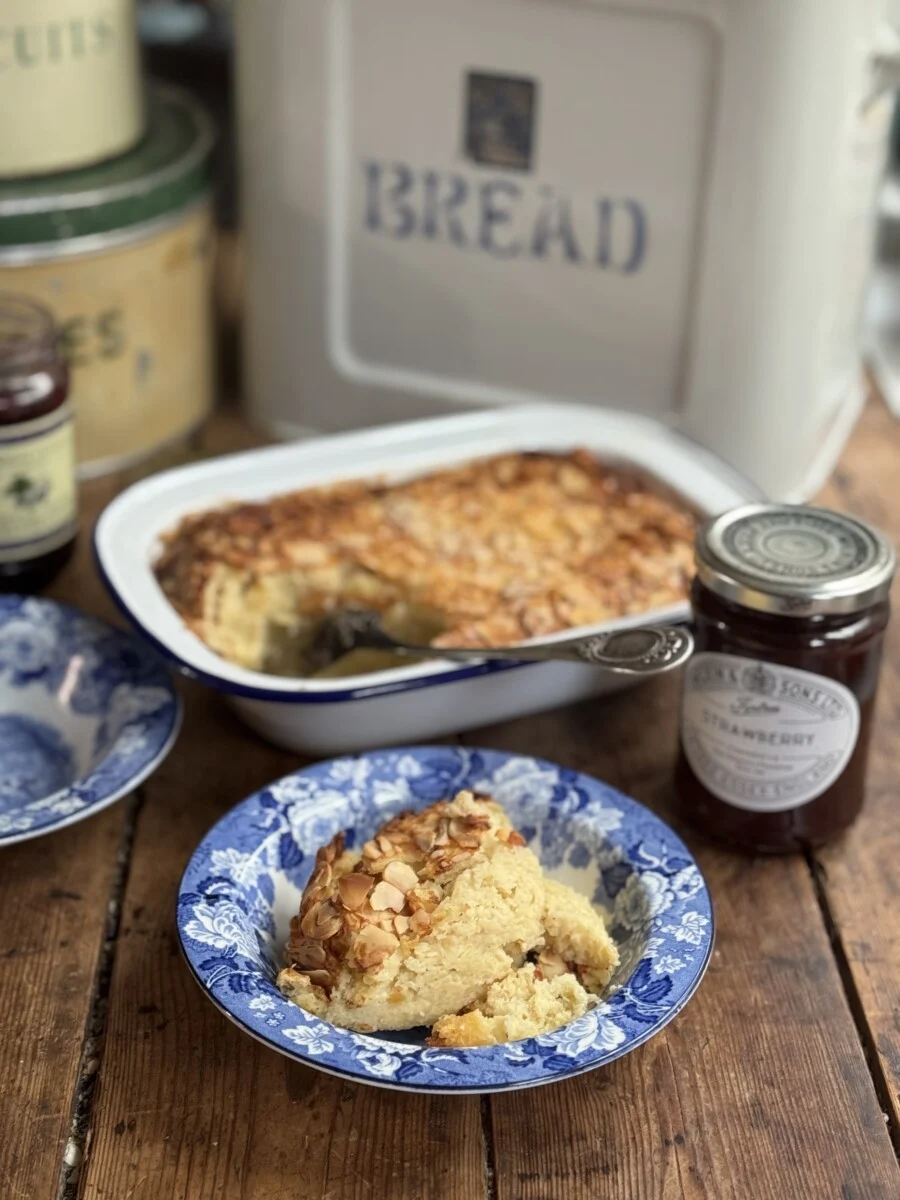
The culinary landscape of Britain is currently experiencing a resurgence of interest in its historic and traditional dishes, with an ancient almond pudding from the mid-18th century gaining renewed attention. Known as Ipswich Pudding, and sometimes referred to as Suffolk Almond Pudding, this delightful baked dessert offers a unique blend of a classic bread pudding and a lighter batter pudding, characterized by its soufflé-like rise and rich almond flavour. Food writer Karen Burns-Booth, through her popular culinary platform Lavender and Lovage, has recently highlighted this recipe, breathing new life into a dish with roots stretching back to at least 1750, making it an ideal "afters" for contemporary family meals and seasonal celebrations.

The Ipswich Pudding stands out for its simplicity and elegance, built upon a foundation of white breadcrumbs, eggs, milk, and ground almonds. These humble ingredients, readily available in past centuries, combine to create a remarkably sophisticated dessert. The preparation involves warming milk and cream before pouring it over breadcrumbs, allowing them to soak and soften. This mixture is then enriched with sugar, ground almonds, and beaten eggs, before being baked in a water bath, a technique crucial for achieving its characteristic puffed, golden-brown crust and tender, moist interior. The result is a pudding that manages to be both substantial and delicate, a testament to the ingenuity of historical British cookery.
A Journey Through Time: The Pudding’s Historical Footprint

The documented history of Ipswich Pudding provides a fascinating glimpse into British culinary evolution. Its earliest known appearance is attributed to Hannah Glasse’s seminal work, "The Art of Cookery Made Plain and Easy," first published in 1747. Glasse’s cookbook was revolutionary for its time, aiming to simplify cooking for the burgeoning middle classes and became an instant bestseller, remaining in print for over a century. The inclusion of Ipswich Pudding in such a foundational text underscores its significance in 18th-century British gastronomy. By presenting recipes in a straightforward, accessible manner, Glasse helped to disseminate dishes like the Ipswich Pudding far beyond aristocratic kitchens.
The mid-18th century was a period of significant change in Britain, marked by burgeoning trade, colonial expansion, and the early stages of the Industrial Revolution. This era saw an increased availability of ingredients, although resourcefulness and the prevention of waste remained paramount in household management. Puddings, in their myriad forms, were a cornerstone of the British diet, serving as both comforting staples and celebratory indulgences. They often made use of readily available ingredients such as bread, milk, and eggs, transformed through simple cooking methods into satisfying dishes. The use of ground almonds in Ipswich Pudding, however, suggests a certain refinement, as almonds were considered a prized ingredient, often imported.

Further reinforcing its historical presence, a recipe for Ipswich Pudding also appeared in "The Ladies Companion" in 1836. This later publication indicates the pudding’s enduring popularity and its continued relevance in Victorian households. The transition from the Georgian to the Victorian era brought shifts in culinary tastes and techniques, yet the Ipswich Pudding evidently maintained its appeal, suggesting a timeless quality that transcends specific periods. While the exact historical development between these two major cookbook appearances remains somewhat obscure, their presence confirms the pudding’s status as a well-established and appreciated dish for over a century.
The Enigma of Origin: Ipswich or Suffolk?

One of the intriguing aspects of this historical dessert is the debate surrounding its geographical namesake. While it is widely known as Ipswich Pudding, Karen Burns-Booth notes the alternative designation of Suffolk Almond Pudding. This raises questions about its true origins: did it genuinely originate in the town of Ipswich, a historic port and county town of Suffolk, or is "Ipswich" merely a descriptor for a regional Suffolk delicacy?
Historically, many traditional British dishes adopted names from towns or counties, indicating a local specialty or a prominent ingredient associated with that region. Examples include Yorkshire Pudding, Bakewell Tart, and Cornish Pasty. However, a definitive historical link between the Ipswich Pudding recipe and the specific culinary traditions of Ipswich itself has proven elusive for researchers. Burns-Booth’s own investigations into vintage cookbooks and culinary archives yielded no conclusive evidence pinpointing its genesis directly to the Suffolk town.

Despite this ambiguity, the strong association with Suffolk, whether through its alternative name or its presence in East Anglian culinary discourse, solidifies its regional identity. This regional connection is vital for the preservation of culinary heritage, as it anchors dishes to specific cultural landscapes. Even if its precise birthplace within Suffolk remains a delightful mystery, the pudding serves as a delicious ambassador for the county’s rich gastronomic past.
Ingredients and Adaptations: A Taste of Evolution

The core ingredients of Ipswich Pudding – white breadcrumbs, eggs, milk, and ground almonds – reflect a pragmatic yet indulgent approach to dessert making. Breadcrumbs provided bulk and texture, often utilizing stale bread, a common practice in historical cookery to minimize waste. The eggs and milk contribute to the custard-like richness and structure, while ground almonds impart a distinctive, nutty flavour that elevates the pudding beyond a simple bread and butter concoction.
Traditionally, 18th and 19th-century recipes often featured floral flavourings such as rose water or orange flower water. These were popular additions in historical European cuisine, lending delicate, aromatic notes to both sweet and savoury dishes. However, modern palates have largely shifted away from floral essences in desserts. Karen Burns-Booth, in her contemporary adaptation, opted for almond extract to intensify the existing almond flavour, catering to a broader, more modern taste preference. She also suggests vanilla extract as a viable alternative, demonstrating the pudding’s adaptability to individual preferences. This modern adjustment highlights how classic recipes can be sensitively updated to appeal to contemporary diners while retaining their essential character.

The cooking method, involving a bain-marie (water bath), is crucial for the Ipswich Pudding’s unique texture. Baking it in a roasting tin partially filled with boiling water ensures gentle, even cooking, preventing the custard from curdling and allowing the pudding to puff up elegantly, much like a soufflé. This technique results in a moist, delicate interior and a beautifully golden, slightly crisp surface, making each spoonful a harmonious blend of textures and flavours.
A Culinary Renaissance: Modern Appeal and Broader Implications

The renewed interest in Ipswich Pudding is part of a broader trend of culinary heritage revival, where forgotten or lesser-known traditional recipes are being rediscovered and celebrated by home cooks, chefs, and food writers. This movement reflects a desire for authenticity, comfort, and a connection to the past in an increasingly fast-paced world.
Karen Burns-Booth’s personal endorsement speaks volumes. Her husband, described as not having a sweet tooth, "absolutely loved it, proclaiming it to be similar in taste to Bakewell Pudding." This comparison is significant, as Bakewell Pudding (or Tart) is a beloved and well-known British dessert, famous for its almond and jam components. The Ipswich Pudding’s ability to impress even a discerning palate, and its resemblance to another cherished classic, underscores its potential for widespread modern appeal.

The pudding’s versatility makes it suitable for various occasions. Burns-Booth suggests it as a "perfect pud for any family meals," specifically mentioning Easter and Mothering Sunday. Its comforting warmth and rich flavour make it an ideal dessert for gatherings, offering a taste of tradition that resonates across generations. Served with stewed fruit, compote, or a dollop of favourite jam – blackcurrant, strawberry, and raspberry being noted as particular favourites – the pudding transforms into a truly decadent experience. The contrast between the sweet, nutty pudding and the tart fruit or jam creates a balanced and satisfying finish to any meal.
From a nutritional perspective, the Ipswich Pudding, as presented, offers a substantial serving. With approximately 625 calories per serving, along with 40g total fat (15g saturated), 44g carbohydrates (37g sugar), and 24g protein, it is clearly an indulgent dessert. This profile is consistent with historical puddings, which often served as rich, energy-dense components of a meal, particularly in eras where physical labour was more prevalent and food scarcity a greater concern. While modern dietary guidelines might suggest moderation, its occasional enjoyment as a celebratory treat remains perfectly aligned with its historical and cultural role.

The implications of such culinary revivals extend beyond the dinner table. They contribute to the preservation of intangible cultural heritage, ensuring that recipes and cooking traditions are not lost to time. For regions like Suffolk, the renewed interest in dishes like Ipswich Pudding can also foster a sense of local pride and potentially contribute to culinary tourism, drawing visitors interested in experiencing authentic regional flavours. Food blogs and online platforms play a crucial role in this process, acting as modern-day custodians and disseminators of historical recipes, making them accessible to a global audience.
In conclusion, the Ipswich Pudding stands as a testament to the enduring appeal of traditional British cookery. From its origins in Hannah Glasse’s 18th-century kitchens to its modern revival by culinary enthusiasts like Karen Burns-Booth, this baked almond delicacy continues to captivate with its unique blend of textures and flavours. Whether its name truly reflects a specific Ipswich genesis or broadly refers to a Suffolk specialty, its status as a thoroughly delectable and comforting dessert is undeniable. As discerning palates increasingly seek out authentic, historically rich culinary experiences, the Ipswich Pudding is poised to reclaim its rightful place as a cherished British classic, ready to be enjoyed as a delightful "afters" for generations to come.