
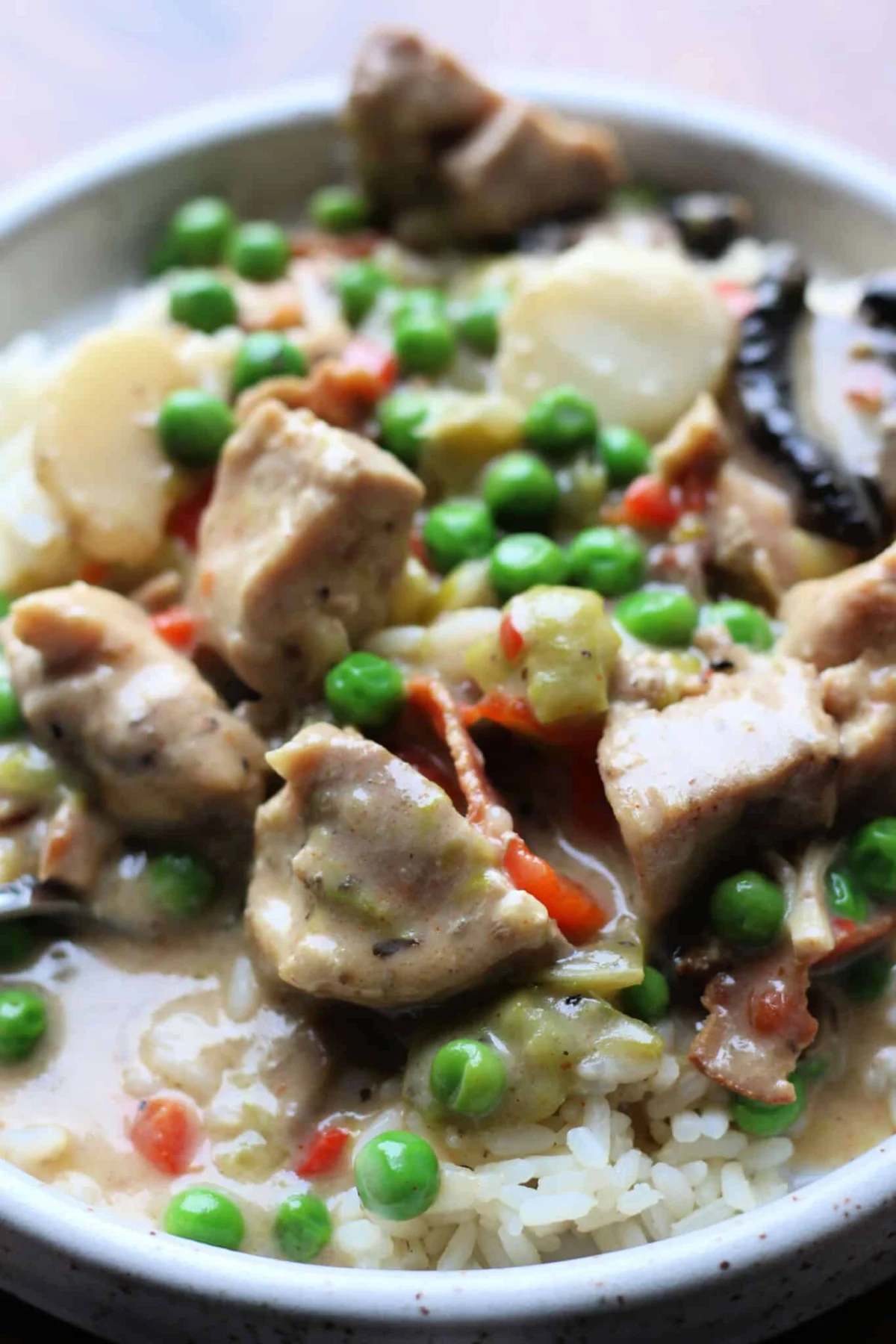
The Modern Resurgence of Chicken à la King
Historically, Chicken à la King emerged in the late 19th century, with various claims to its origin ranging from the chefs at Delmonico’s in New York City to the kitchens of the Brighton Beach Hotel. By the mid-20th century, it had become a hallmark of American comfort food, frequently appearing at wedding banquets and in school cafeterias. However, as culinary tastes shifted toward fresher, less processed ingredients in the 1990s, the dish’s popularity waned.

The current revival, as exemplified by the Doe’s variation, is rooted in the "one-pot meal" movement. Market data indicates that the global multi-cooker market, led by brands such as Instant Pot, is projected to reach a valuation of approximately $2.5 billion by 2026. This growth is driven by the consumer’s desire for nutrient-dense, home-cooked meals that do not require hours of active supervision. Doe’s Chicken à la King leverages this technology to tenderize chicken breast rapidly while maintaining the structural integrity of accompanying vegetables like bell peppers and celery.

Technical Workflow: A Chronology of Preparation
The preparation of Doe’s Chicken à la King follows a precise technical sequence designed to maximize flavor extraction through various thermal processes. Whether utilizing a high-pressure environment or a prolonged low-heat cycle, the dish relies on a foundational "build" of flavors.

Phase I: Flavor Extraction and Sautéing
The process begins with the "Sauté" function of the multi-cooker. Unlike traditional slow cooker recipes that often utilize "dump-and-go" methods, this recipe insists on the rendering of bacon fat. The bacon is cooked until crispy, providing both a textural contrast and a smoky fat base in which the aromatics—mushrooms and celery—are subsequently softened. This five-minute sauté phase is critical for the Maillard reaction, which develops the complex flavors that a standard boiling process would lack.

Phase II: The Pressure Cycle
Once the aromatics are prepared, the deglazing of the pot with chicken broth ensures that any browned bits (fond) are incorporated into the sauce. The addition of the primary proteins and seasonings—including paprika, poultry seasoning, and garlic powder—precedes the sealing of the vessel. In an Instant Pot, the dish undergoes a high-pressure cycle for four minutes. This rapid pressurization forces moisture into the chicken fibers, ensuring tenderness in a fraction of the time required by traditional braising.

Phase III: The Tempering and Thickening Process
The final phase occurs after a natural or manual pressure release. To prevent the "breaking" or curdling of the dairy component, a tempering technique is employed. A portion of the hot cooking liquid is whisked into the half-and-half before the mixture is reintroduced to the pot. Finally, a cornstarch slurry is added under the sauté setting to achieve the signature velvety consistency of a true "à la King" sauce.

Ingredient Analysis and Textural Complexity
What distinguishes the Doe’s variation from standard historical recipes is the deliberate focus on textural diversity. Traditional Chicken à la King is often criticized for a monolithic, soft texture. Doe’s recipe counters this through three specific additions:

- Crispy Bacon: Adds a salty, crunchy element that persists even when submerged in cream sauce.
- Water Chestnuts: A non-traditional inclusion that provides a consistent, aquatic "snap" that does not soften during the cooking process.
- Frozen Peas: Added at the very end of the process to maintain their vibrant green color and "pop," providing a burst of sweetness to balance the savory sauce.
From a nutritional standpoint, the dish provides a high-protein profile, supplemented by the micronutrients found in pimentos (Vitamin A and C) and mushrooms (B vitamins and selenium). While the cream-based sauce increases the caloric density, the use of half-and-half rather than heavy cream offers a slightly lighter alternative without sacrificing the "mouthfeel" associated with luxury comfort food.

Market Context and Consumer Reactions
Culinary analysts note that recipes like Doe’s Chicken à la King gain significant traction on digital platforms such as Pinterest and specialized cooking blogs. The ability to filter recipes by appliance type (Crockpot vs. Instant Pot) or dietary restriction (Gluten-Free, Low-Carb) has transformed how home cooks approach meal planning.

While official statements from appliance manufacturers emphasize "simplicity," professional recipe developers like Karen Petersen argue that the success of these dishes depends on the user’s understanding of "layering." In statements regarding the development of such recipes, experts suggest that the "one-pot" label is often a misnomer; the most successful dishes require an active initial phase (sautéing) and a finishing phase (thickening) to achieve restaurant-quality results.

Consumer feedback on this specific preparation often highlights the "interest" in every bite. The interaction between the creamy sauce and the various "crunches" provided by the water chestnuts and bacon creates a sensory experience that exceeds the expectations typically associated with "slow cooker food."

The Role of "Doe’s" Adaptation in Culinary Heritage
The attribution to "Doe" refers to a specific lineage of the recipe popularized through community-driven platforms like Cooks.com. This highlights the democratic nature of modern recipe evolution. No longer dictated solely by executive chefs in Manhattan hotels, the "definitive" version of a dish is now often a composite of family traditions and community tweaks. The addition of pimentos, for instance, is a nod to the Victorian-era roots of the dish, where the bright red peppers were considered an exotic and decorative garnish.

Broader Implications for Domestic Science
The transition of Chicken à la King from a complex stovetop béchamel-based dish to a streamlined multi-cooker recipe reflects a broader shift in domestic science. We are seeing a "re-professionalization" of the home kitchen, where specialized tools allow for the execution of French-style sauces with a lower margin of error.

The use of the Instant Pot, specifically, addresses the "time-poverty" of the modern workforce. By reducing a forty-minute simmering process to a four-minute pressure cycle, technology has enabled the survival of "slow food" flavors in a "fast food" era. Furthermore, the adaptability of the recipe—allowing for substitutions such as chicken thighs for breasts or different vegetable blends—caters to the current trend of "fridge-clearing" and sustainable cooking.

Conclusion: The Future of Classic Comfort
As we look toward the future of home dining, Doe’s Chicken à la King stands as a testament to the endurance of classic flavor profiles. The dish’s ability to evolve from the silver platters of the Gilded Age to the stainless-steel inserts of the modern Instant Pot demonstrates a unique culinary resilience.

By prioritizing texture, leveraging modern heat-application technology, and maintaining the core "creamy and savory" DNA of the original, this recipe ensures that Chicken à la King remains a relevant, nutritious, and highly sought-after meal for the modern family. The intersection of history, technology, and community-driven adaptation continues to define the landscape of American home cooking, proving that even the oldest classics can be revitalized for a new generation of digital-savvy chefs.