
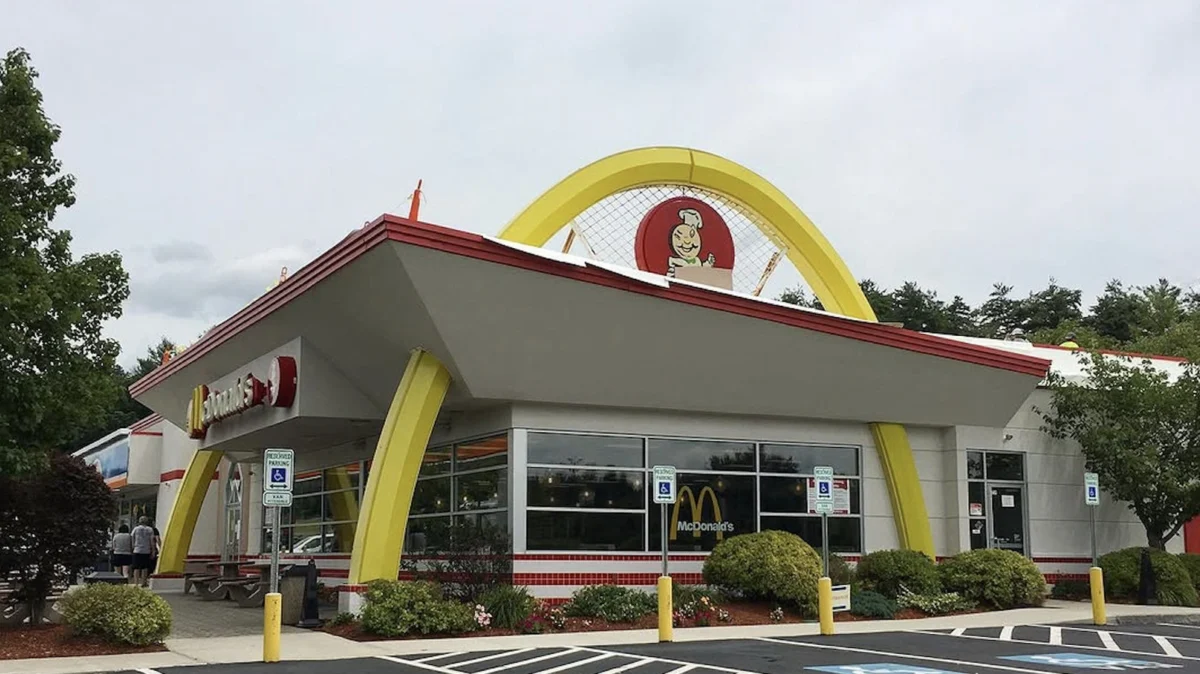
The iconic golden arches of McDonald’s have long served as beacons for weary travelers, offering a consistent promise of a quick meal and a familiar respite. However, along the often monotonous stretch of the Massachusetts Turnpike, one particular McDonald’s location transcends the typical roadside experience, transforming a routine rest stop into a destination in itself. The Ludlow Service Plaza McDonald’s, nestled just off Interstate 90, stands as a remarkably preserved homage to the fast-food giant’s mid-century origins, beckoning travelers with its vibrant, retro aesthetic and a nostalgic charm that sets it apart from its contemporary, minimalist counterparts. This unique establishment, while not an original historic site, offers a deliberate and immersive dive into the visual language and brand identity of McDonald’s during its formative decades, making it a must-see for both devoted fans of the chain and casual road-trippers seeking an unexpected delight.
A Glimpse into McDonald’s Golden Age
The Ludlow Service Plaza McDonald’s is a testament to a bygone era of American consumer culture, meticulously designed to evoke the spirit of the 1950s. From the moment travelers approach the service plaza, the familiar golden arches, rendered in a classic, slightly vintage style, are prominently displayed, signaling the unique nature of this particular outpost. These arches, a cornerstone of the McDonald’s brand identity since its inception, are not merely decorative but serve as a direct visual link to the company’s foundational years. Unlike the sleek, modern interpretations often seen today, the arches at Ludlow possess a certain weight and character, hinting at the simpler, more whimsical advertising and design prevalent in the mid-20th century.
Beyond the iconic arches, the exterior of the Ludlow McDonald’s features Speedee, the original McDonald’s mascot. This cheerful, anthropomorphic hamburger character, who predates Ronald McDonald, is strategically placed near the entryway sign, offering a welcoming, albeit vintage, greeting. Speedee’s presence is a deliberate nod to the brand’s early marketing efforts, designed to create a friendly and approachable image. Inside, the retro theme continues with a vibrant and inviting dining area. Booths and chairs are upholstered in bold, cheerful colors, reminiscent of diner furniture from the 1950s and early 1960s. This interior design choice is a stark contrast to the minimalist, often muted color palettes favored by many modern fast-food establishments, creating a distinctly different atmosphere that encourages patrons to linger and soak in the nostalgic ambiance.
Contextualizing the Ludlow McDonald’s: A Modern Interpretation of Classic Design
It is important to clarify that the Ludlow Service Plaza McDonald’s is not an original, historically preserved location in the same vein as the McDonald’s #1 in Downey, California, which holds the distinction of being the oldest operating McDonald’s in the United States. That historic site opened its doors in 1940, predating the Massachusetts Turnpike’s completion by several years. The Ludlow McDonald’s, on the other hand, opened its doors in the year 2000, after the Massachusetts Turnpike had been a well-established transportation artery for decades.
The Massachusetts Turnpike, officially the John F. Kennedy Memorial Highway, began its phased construction in the late 1940s, with significant portions opening to traffic in the early 1950s. The completion of the Pike, a vital east-west corridor, revolutionized travel across the state. Service plazas were an integral part of the Turnpike’s design, offering essential amenities to motorists. The decision to design the Ludlow McDonald’s with a strong 1950s aesthetic, despite its later construction date, represents a conscious effort by the franchise or the plaza developers to tap into the enduring appeal of mid-century Americana. This approach allows for the enjoyment of a classic design without the preservation challenges and limitations that would come with an actual historic structure. It offers a curated experience, a carefully crafted echo of a past era, making it accessible and enjoyable for a wider audience.
A Welcome Respite on a Long Journey
The Massachusetts Turnpike, particularly the stretch west of Boston, can often feel like a lengthy and sometimes arduous drive. Traffic congestion, extensive construction projects, and the sheer distance can test the patience of even the most seasoned travelers. In this context, the Ludlow McDonald’s serves a dual purpose: providing sustenance and offering a much-needed mental and visual break. Its prominent location within the service plaza makes it an unmissable landmark for those seeking a break from the monotony of highway travel.
The appeal of the Ludlow McDonald’s lies not just in its food but in the experience it offers. For many, the drive itself can become a source of stress, and finding a place that injects a sense of fun and visual interest can significantly improve the journey. The bright colors, the playful mascot, and the overall retro charm contribute to a more positive and memorable road trip. This psychological benefit is a significant factor in why visitors often highlight the design of this particular McDonald’s, even if their experiences with the service itself have been mixed.
Navigating Mixed Reviews and an Uncertain Future
While the visual appeal of the Ludlow McDonald’s is widely celebrated, feedback regarding the operational aspects of the restaurant has been more varied. Reports suggest that some visitors have encountered less-than-ideal service experiences. This divergence between the positive reception of the design and the less enthusiastic reviews of the service is a common phenomenon in the hospitality industry, where tangible elements like decor can sometimes overshadow operational execution.
However, the overarching sentiment from many who have visited this location emphasizes the joy derived from the unique design. The retro vibes are a powerful draw, offering a refreshing contrast to the typical fast-food environment. For those planning a journey along the Massachusetts Turnpike, a stop at this McDonald’s is frequently recommended as a worthwhile detour, even if just for a brief photo opportunity or a quick meal.
The future of this beloved roadside attraction, however, is uncertain. The State of Massachusetts has confirmed plans for the demolition and subsequent rebuilding of the Ludlow Service Plaza. This announcement casts a shadow over the continued existence of the 1950s-themed McDonald’s. While the exact timeline for these renovations has not been definitively established, the prospect of its eventual replacement means that those wishing to experience its unique charm must do so sooner rather than later. This impending change adds a layer of urgency for enthusiasts and casual visitors alike, encouraging them to "channel their inner Speedee" and visit before this nostalgic chapter of the Massachusetts Turnpike closes.
Broader Implications and the Enduring Appeal of Nostalgia
The Ludlow McDonald’s is more than just a quirky restaurant; it represents a broader trend in consumer spaces, where nostalgia is increasingly leveraged to create unique and memorable experiences. In an era dominated by digital interfaces and increasingly standardized commercial environments, physical spaces that offer a tangible connection to the past hold significant appeal. These retro-themed establishments tap into a collective memory, offering a sense of comfort, familiarity, and escapism.
The success of such themed locations, even those that are not historically authentic but rather carefully curated imitations, speaks to a consumer desire for experiences that go beyond mere transactional convenience. People are willing to seek out and patronize businesses that provide a distinct atmosphere and a story to tell. This phenomenon is not unique to fast food; it can be observed in retro-themed bars, vintage clothing stores, and museums dedicated to popular culture.
The impending demolition of the Ludlow McDonald’s serves as a reminder of the transient nature of even beloved commercial spaces. While the physical structure may be replaced, the memories and the positive experiences it has provided to countless travelers will endure. The story of this unique McDonald’s highlights the power of design and thematic execution in transforming an ordinary service stop into a noteworthy destination, a testament to the enduring appeal of a bygone era and the creative ways brands can engage with their audience. The possibility of similar themed experiences emerging in future iterations of the service plaza remains to be seen, but the legacy of this 1950s-inspired McDonald’s on the Massachusetts Turnpike is already cemented as a memorable chapter in the region’s roadside history.