
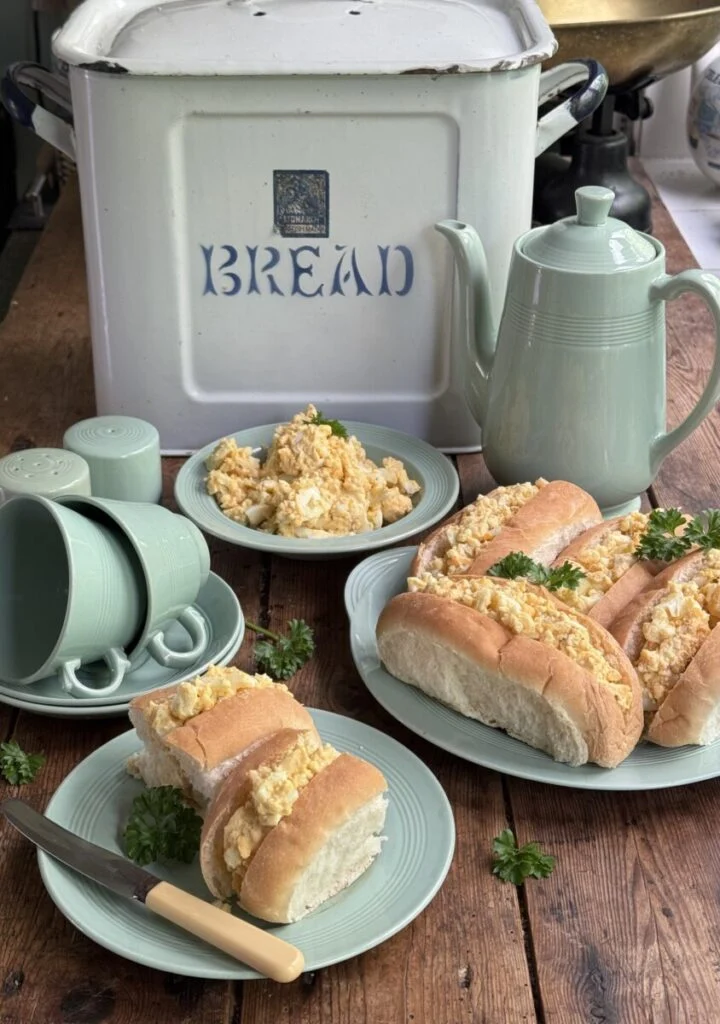
A recent culinary spotlight by Karen Burns-Booth, published on June 15, 2026, on her platform Lavender and Lovage, revisits the iconic "Wartime 1940’s Egg Salad," a dish emblematic of British resourcefulness during the Second World War. This detailed re-creation, featuring homemade wartime salad cream and an homage to dried eggs, offers a poignant glimpse into the challenges and culinary ingenuity of the home front. The article highlights how simple ingredients, combined with innovative techniques, transformed everyday meals into symbols of national resilience, served with historical accuracy on Woodsware Beryl utility crockery alongside classic bridge rolls and a pot of Camp Coffee.

The Historical Imperative: Food Rationing in Wartime Britain
The outbreak of the Second World War in September 1939 plunged Britain into an unprecedented era of national rationing, a necessity driven by the severe disruption of global trade routes and the relentless U-boat campaign in the Atlantic. As an island nation heavily reliant on imports for over two-thirds of its food supply, ensuring adequate nutrition for its populace became a paramount strategic concern. The government swiftly established the Ministry of Food, tasked with managing food distribution, promoting efficient consumption, and educating the public on how to "Make Do and Mend" in the kitchen. This initiative was not merely about scarcity; it was a comprehensive effort to maintain national morale, ensure equitable distribution, and foster public health amidst severe constraints.

Rationing began in January 1940 with bacon, butter, and sugar, gradually extending to include meat, tea, jam, biscuits, breakfast cereals, cheese, eggs, milk, and canned goods. Each citizen received a ration book, dictating weekly allowances. For eggs, this meant a drastic reduction in availability, often to one fresh egg per person per week, or none at all, making them a highly coveted item. The scarcity spurred a nationwide effort to find substitutes and clever cooking methods, turning dried eggs into a household staple and homemade dressings into culinary necessities.
Eggs: From Shell to Powdered Gold

The scarcity of fresh "shell eggs" was one of the most keenly felt aspects of wartime rationing. Prior to the war, Britain imported a significant volume of eggs, primarily from Denmark and Poland. With these supply lines severed, domestic production struggled to meet demand. To address this critical shortfall, vast quantities of dried eggs began to arrive from the United States and Canada under the Lend-Lease Act. These powdered eggs, often packaged in distinctive yellow tins, became a cornerstone of wartime cooking.
Initially, dried eggs were met with skepticism by a populace accustomed to fresh produce. However, the Ministry of Food launched extensive campaigns, featuring colorful posters and instructional leaflets, to educate homemakers on how to reconstitute and use them effectively. They were promoted for baking, making omelets, and creating various savory dishes, including, crucially, egg salad and salad dressings. Despite their different texture and taste profile compared to fresh eggs, dried eggs proved invaluable in providing essential protein and versatility to a restricted diet, playing a vital role in sustaining the nation’s nutritional needs and culinary traditions. Karen Burns-Booth’s re-creation thoughtfully acknowledges this historical reality, even while noting her use of fresh eggs for the contemporary rendition, highlighting the contrast between the original constraints and modern accessibility.

The Ingenuity of Wartime Dressings: Salad Cream and Its Alternatives
The classic egg salad, or "egg mayonnaise" as it is often known, traditionally relies on mayonnaise made from oil and fresh eggs. However, with both ingredients severely rationed, the luxury of commercially produced mayonnaise or even making it at home became almost impossible. This challenge led to the resurgence and adaptation of "salad cream" – a British dressing with a thinner consistency and sharper flavor profile than mayonnaise, often made with a base of cooked flour or cornflour, vinegar, and minimal oil or egg.

The Ministry of Food actively encouraged the creation of homemade alternatives. One notable example cited in Burns-Booth’s article is the "Royal Dressing." This recipe, consisting of national flour, milk or vegetable water, vinegar, salt, pepper, and sugar, illustrates the ingenuity required. It formed a sauce thick enough to coat a spoon, providing a creamy texture and tangy flavor without relying on scarce fats or eggs. Similarly, "eggless mayonnaise" became a common staple, typically crafted by mashing boiled root vegetables like potatoes or parsnips until silky smooth, then slowly whisking in vinegar, mustard, salt, and a minimal amount of vegetable oil. These innovative dressings ensured that salads, even those made with humble ingredients, could still offer a palatable and satisfying experience, embodying the spirit of making the most of what was available.
A Period Table: Bridge Rolls and Utility Crockery

The presentation of the "Wartime 1940’s Egg Salad" in Burns-Booth’s feature extends beyond the recipe itself, meticulously recreating the dining context of the era. The egg salad is served in "bridge rolls" – small, soft bread rolls traditionally associated with afternoon tea and social gatherings like bridge parties. These rolls, often with simple fillings, were a common sight in homes that could still afford such modest entertainments, providing a touch of normalcy amidst the austerity.
Further enhancing the authenticity is the choice of "Woodsware Beryl utility crockery." Utility ware was a direct response to wartime restrictions on manufacturing. To conserve resources and labor, the government imposed strict controls on the production of non-essential goods, including ceramics. "Utility" designs were characterized by their simplicity, lack of elaborate decoration, and standardized forms, often in muted pastel colors like the distinctive Beryl green. Brands like Woodsware produced durable, functional tableware that met government specifications while still offering a modicum of aesthetic appeal. Serving the egg salad on such crockery, accompanied by a pot of "Camp Coffee" – a chicory and coffee essence popular during the war due to coffee rationing – transports the viewer directly to a 1940s British kitchen, emphasizing the holistic approach to historical re-enactment.

The Enduring Resonance of Wartime Cuisine
The continued fascination with wartime recipes, as exemplified by Karen Burns-Booth’s 2026 article, speaks volumes about their enduring cultural significance. These dishes are more than just food; they are tangible links to a pivotal period in national history, embodying themes of resilience, community, and innovation under duress. Culinary historians and enthusiasts frequently laud efforts to preserve and share these tangible pieces of history, recognizing their educational value in illustrating how ordinary people coped with extraordinary circumstances.

The revival of such recipes also resonates with contemporary concerns. In an era increasingly focused on sustainability, reducing food waste, and mindful consumption, the principles of wartime cooking – resourcefulness, using every scrap, and creative substitution – find renewed relevance. The "Dig for Victory" campaign, which encouraged home gardening to supplement rations, parallels modern movements towards local food production and urban farming. The underlying message of making the most of what you have, and finding joy in simple pleasures, transcends generations.
Analysis and Implications for Culinary Heritage

Karen Burns-Booth’s contribution through her "Wartime 1940’s Egg Salad" article is significant for several reasons. Firstly, it serves as a contemporary bridge, connecting modern audiences with historical culinary practices. By meticulously detailing not just the recipe but also its presentation and the societal context, she offers an immersive experience that goes beyond mere instruction. The inclusion of historical details about dried eggs, the Ministry of Food’s directives, and the utility of specific tableware demonstrates a deep commitment to historical accuracy and authenticity.
Secondly, the article implicitly underscores the ongoing relevance of historical foodways in understanding national identity and collective memory. The act of re-creating and sharing these recipes helps to keep alive the stories of the home front, ensuring that the ingenuity and sacrifices of previous generations are not forgotten. The positive reception of such content, as evidenced by its publication and likely engagement, suggests a sustained public appetite for heritage-driven culinary narratives.

Finally, the article highlights the power of food as a medium for historical education. By engaging with these recipes, individuals gain a tangible connection to the past, fostering a deeper appreciation for the resourcefulness and resilience that defined life during the Second World War. It is a reminder that even in times of severe scarcity, the human spirit finds ways to adapt, innovate, and maintain a sense of normalcy and comfort through the shared experience of food. The careful reconstruction of a wartime egg salad, therefore, is not just a culinary exercise, but a vital act of historical preservation and cultural commentary.
