
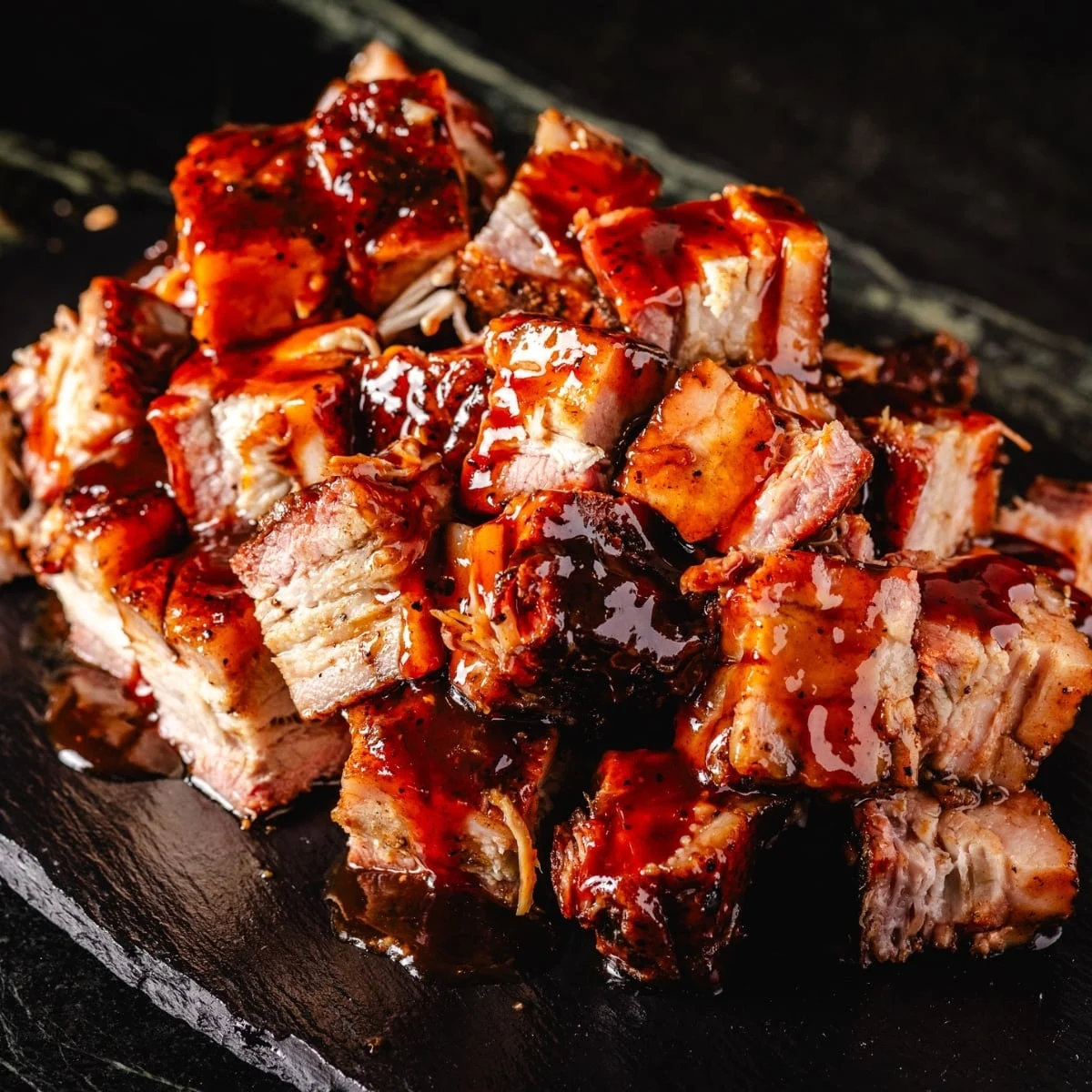
The evolution of backyard barbecue has transitioned from simple weekend grilling to a sophisticated culinary discipline, characterized by the rise of specialized cuts and complex flavor profiles. Central to this movement is the increasing popularity of pork belly, a cut traditionally utilized for bacon production but now recognized as a standalone centerpiece in artisanal smoking. Susie Bulloch, the founder of the digital barbecue platform Hey Grill Hey and a recognized expert in the field, has introduced a Maple Bourbon BBQ Pork Belly recipe that emphasizes a minimalist four-ingredient approach to achieve high-tier results. This method leverages low-and-slow thermal processing, chemical reactions between sugars and smoke, and precise internal temperature management to transform a high-fat protein into a sought-after delicacy.
The Rise of Pork Belly in Modern Gastronomy
Historically, the pork belly—a boneless and fatty cut of meat from the belly of a pig—was viewed primarily as a raw material for the salt-curing and smoking industry to create bacon. However, the influence of international cuisines and the "nose-to-tail" eating movement has repositioned the cut in the American barbecue landscape. Pork belly is prized for its high fat-to-meat ratio, which, when rendered correctly, provides a texture that is both crispy on the exterior and succulent on the interior.
The Maple Bourbon BBQ Pork Belly developed by Bulloch represents a convergence of traditional Southern barbecue techniques and modern flavor pairings. By utilizing a signature Rib Rub and a Maple Bourbon Glaze, the recipe addresses the need for a balance between salinity, acidity, and sweetness. This balance is critical in high-fat meats to prevent "palate fatigue," a phenomenon where the richness of the fat overwhelms the taster’s ability to discern flavor.

Technical Chronology of the Smoking Process
The preparation of Maple Bourbon BBQ Pork Belly follows a rigorous timeline designed to optimize fat rendering and smoke absorption. Unlike leaner cuts of pork, such as the tenderloin, the belly requires a multi-stage thermal application to break down connective tissues and intramuscular fat.
Phase I: Preparation and Scoring
The process begins with the physical preparation of the meat. Experts recommend scoring the fat cap in a crosshatch pattern. This serves two primary functions: it increases the surface area for the application of dry rubs and allows the rendered fat a channel to escape during the initial smoking phase. The application of a signature Rib Rub—typically a blend of salt, brown sugar, paprika, and garlic—acts as the primary seasoning layer.
Phase II: The Initial Smoke
The meat is placed in a smoker maintained at a consistent temperature of 225 degrees Fahrenheit. During this stage, the pork belly is exposed to hardwood smoke, which introduces phenolic compounds that provide the characteristic "barbecue" aroma and flavor. This phase continues until the meat reaches an internal temperature of approximately 165 degrees Fahrenheit. At this point, the "bark"—a dark, flavorful crust formed by the Maillard reaction and smoke particles—has stabilized.
Phase III: Braising and Tenderization
To achieve "juicy perfection," the pork belly is transitioned from a dry-heat environment to a moist-heat environment. This is often done by placing the meat in a covered pan or wrapping it in foil. This "braising" stage accelerates the breakdown of collagen into gelatin, a process that occurs most efficiently between 160 and 200 degrees Fahrenheit.

Phase IV: Glazing and Caramelization
The final stage involves the application of the Maple Bourbon Glaze. The meat is unwrapped and brushed with a mixture of maple syrup, bourbon, and barbecue sauce. The temperature of the smoker may be slightly increased, or the meat is left just long enough for the sugars in the glaze to tack up and caramelize. This adds a third layer of texture: a sticky, sweet finish that complements the savory bark and tender interior.
The Chemistry of Flavor: Maple and Bourbon
The choice of maple and bourbon as primary flavor agents is supported by culinary chemistry. Maple syrup contains complex sugars and vanillin, which mirror the natural vanillins found in oak wood—the primary wood used for aging bourbon and a popular choice for smoking meat.
Bourbon, a corn-based whiskey aged in charred oak barrels, introduces notes of caramel, smoke, and astringency. When reduced in a glaze, the alcohol evaporates, leaving behind a concentrated essence that cuts through the heavy lipids of the pork belly. This synergy between the wood smoke, the oak-aged spirit, and the tree-tapped syrup creates a cohesive flavor profile that is deeply rooted in North American culinary traditions.
Quantitative Analysis and Nutritional Data
From a nutritional and caloric standpoint, Maple Bourbon BBQ Pork Belly is a high-density food item. According to data provided by the Hey Grill Hey platform, a standard serving size for this preparation contains approximately 1,241 calories. The macronutrient breakdown is heavily weighted toward fats, with 121 grams of total fat per serving, including 44 grams of saturated fat.

| Nutrient | Amount per Serving |
|---|---|
| Calories | 1241 kcal |
| Total Fat | 121 g |
| Saturated Fat | 44 g |
| Cholesterol | 163 mg |
| Sodium | 260 mg |
| Carbohydrates | 16 g |
| Protein | 22 g |
While the high fat content contributes to the flavor and "mouthfeel" of the dish, it also necessitates moderation in consumption. The inclusion of 22 grams of protein ensures the dish remains a substantial meal component, though it is frequently served as an appetizer or "burnt ends" style snack due to its richness.
Industry Standards and Precision Equipment
A critical component of successful barbecue is the use of precision instruments. Bulloch emphasizes the use of high-quality food thermometers, specifically citing the Thermapen ONE as a preferred tool for its near-instantaneous readings. In the context of pork belly, the margin between "tough" and "perfectly rendered" can be as narrow as five to ten degrees.
Internal temperature benchmarks are the primary metric for success:
- 165°F: The point at which the meat is moved to the braising phase.
- 200°F: The target for final doneness, where the fat has fully rendered and the meat is tender enough to be sliced or cubed with minimal resistance.
The reliance on temperature over time-based cooking is a hallmark of professional-grade barbecue, as variables such as humidity, wood density, and meat thickness can cause significant fluctuations in cooking duration.

The "Susie Bulloch" Effect on Home BBQ
The success of the Maple Bourbon BBQ Pork Belly recipe is part of a broader trend led by Susie Bulloch. As a "BBQ Boss Lady" and frequent contributor to the Food Network, Bulloch has played a pivotal role in democratizing complex smoking techniques for the home cook. Her platform, which includes a mobile app and a YouTube channel, focuses on removing the intimidation factor from large-scale meat preparation.
Industry analysts note that digital creators like Bulloch have contributed to a surge in the sales of pellet grills and offset smokers. By providing "4-ingredient" solutions to historically difficult dishes, these influencers have expanded the market for premium meat cuts. The pork belly, once a niche item found mostly in Asian markets or high-end butcher shops, is now a staple in local grocery stores across the United States.
Broader Implications for the BBQ Industry
The popularity of recipes like Maple Bourbon BBQ Pork Belly has broader economic implications for the meat industry. As demand for pork belly increases, the price of the cut has seen a steady rise. This "premiumization" of what were once considered "lesser cuts" (similar to the trajectory of the beef brisket) reflects a shift in consumer behavior where labor-intensive preparation is valued as much as the cut of meat itself.
Furthermore, the integration of spirits like bourbon into BBQ recipes has fostered cross-industry collaborations. Distilleries and BBQ sauce manufacturers frequently partner to create branded glazes, tapping into the "lifestyle" aspect of outdoor cooking.

Conclusion
Maple Bourbon BBQ Pork Belly is more than a recipe; it is a representation of the current state of American barbecue—one that values technical precision, flavor synergy, and the elevation of simple ingredients. By adhering to a strict regimen of low-temperature smoking and precise thermal monitoring, home cooks can achieve results that were previously reserved for professional pitmasters. As the BBQ industry continues to evolve, the focus on high-fat, high-flavor cuts like pork belly is expected to remain a dominant trend, driven by a consumer base that is increasingly educated in the science of smoke and fire.
