
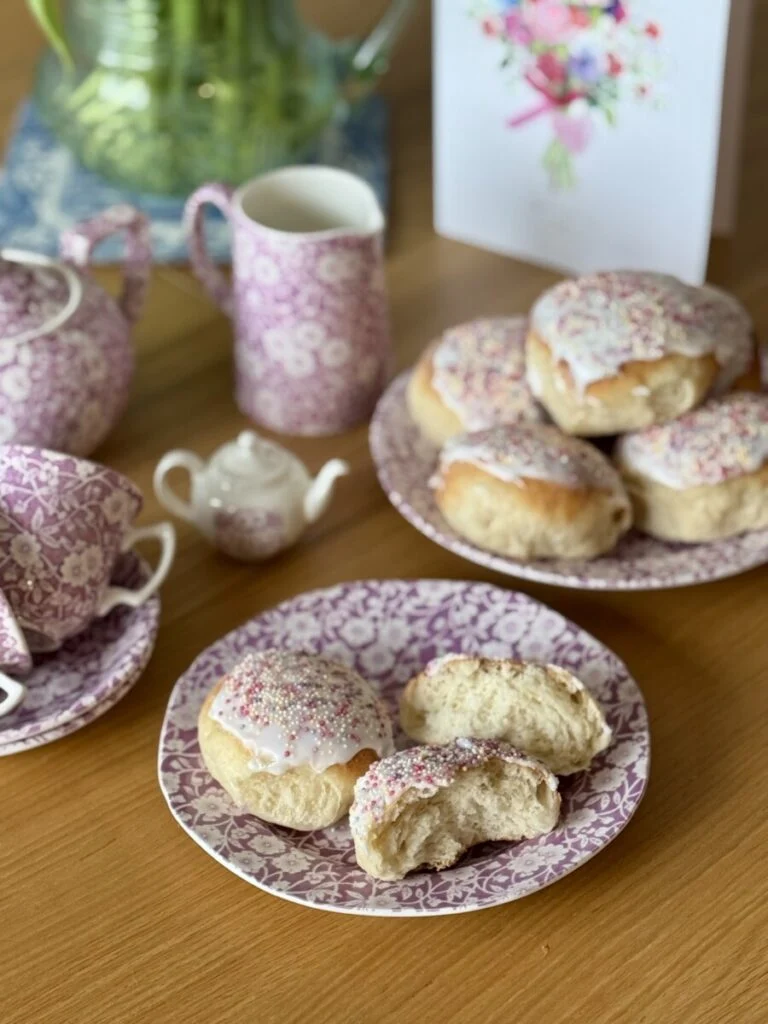
The arrival of spring in England often brings with it a sense of renewal, longer daylight hours, and the anticipation of deeply rooted cultural celebrations. Among these, Mothering Sunday holds a special place, observed annually on the fourth Sunday of Lent. This occasion is marked by various traditions, not least among them the consumption of specific regional delicacies. One such treasured item is the Traditional Mothering Bun, a sweet, yeasted confection hailing specifically from the vibrant city of Bristol in the South West of England. These buns, traditionally adorned with icing and colourful sprinkles, represent a culinary link to centuries of British history and familial observance.

A Glimpse into Bristol’s Culinary Heritage
Mothering Buns are more than just a sweet treat; they are a distinctive regional British recipe, a testament to Bristol’s rich culinary identity. While sweet buns are common across the UK, the Mothering Bun has a particular association with Bristol, where its tradition has been preserved through generations. Local artisan bakeries, such as Joe’s Bakery on Gloucester Road and Herbert’s Bakery, continue to produce these beloved buns annually, particularly in the days leading up to Mothering Sunday. Their enduring presence in these establishments underscores their significance as a local speciality, eagerly anticipated by residents.

Historically, the buns featured toppings of caraway seeds or aniseed, offering a distinct aromatic profile. However, contemporary versions have evolved to favour a sweeter, more visually appealing finish of icing topped with "hundreds and thousands" (known as sprinkles in other parts of the world). This shift likely reflects changing palates and perhaps a desire to appeal to younger generations, though the underlying sweet yeasted dough remains a constant.
The Historical Tapestry of Mothering Sunday

To fully appreciate the Mothering Bun, one must understand the context of Mothering Sunday itself. This observance, which dates back to at least the 16th century, predates and is distinct from the American Mother’s Day. Rooted in ecclesiastical tradition, Mothering Sunday was originally a day when people would return to their "mother church" – the main church or cathedral of their area or the church where they were baptised. This was a significant occasion, particularly for domestic servants and apprentices who often lived away from their families and were granted a rare day off to visit their homes and attend church with their mothers and families.
The date of Mothering Sunday is not fixed but always falls on the fourth Sunday of Lent, a period of fasting and reflection in the Christian calendar. In 2026, it is observed on Sunday, March 15th. Looking ahead, future dates include Sunday, March 7th, 2027; Sunday, March 26th, 2028; Sunday, March 11th, 2029; Sunday, March 31st, 2030; and Sunday, March 23rd, 2031. This movable feast ensures its perennial connection to the Lenten cycle.

"Refreshment Sunday": A Culinary Respite During Lent
Crucially, Mothering Sunday is also known as "Refreshment Sunday." It stands as one of only two days during the austere Lenten period when the traditional fasting rules are relaxed. This meant that ingredients typically forbidden during Lent – such as butter, eggs, and cream – along with more indulgent items like cakes and sweet pastries, were briefly permitted. This historical context provides a direct explanation for the emergence of rich, sweet baked goods like the Mothering Bun and the more widely known Simnel Cake. These treats were not merely celebratory but served as a welcome, sanctioned break from the rigours of fasting, offering both spiritual and physical refreshment. The Mothering Bun, with its enriched dough and sweet toppings, perfectly embodies this spirit of temporary indulgence.

The Evolution of a Sweet Tradition
While the precise origin of the Mothering Bun is estimated to be around the 18th century, its lineage is intertwined with the broader British tradition of "sticky buns," a term affectionately used by many, including the late father of the original article’s author. The United Kingdom boasts a diverse array of regional and seasonal sticky buns, some glazed with sugar, others elaborately iced. The Mothering Bun fits squarely into this category, distinguished by its specific association with Mothering Sunday and its Bristolian roots.

The transition from caraway or aniseed toppings to sprinkles ("hundreds and thousands") highlights a broader trend in culinary history: the adaptation of traditional recipes to modern tastes and ingredient availability. Caraway and aniseed, with their strong, liquorice-like flavours, were once common spices in European baking. However, as global trade introduced a wider variety of sweeter spices and confectionery, and as palates shifted towards less assertive flavours, the colourful and child-friendly sprinkles became the preferred choice, adding a festive visual appeal to the buns. This evolution ensures the Mothering Bun remains relevant and appealing to contemporary consumers while maintaining its traditional form.
Crafting the Traditional Mothering Bun: A Baker’s Perspective

At its heart, the Mothering Bun is a sweet yeasted bun, requiring the careful balance of ingredients and the patient process of dough proofing. The recipe typically involves flour, yeast, sugar, butter, eggs, and milk, creating a rich, soft dough that bakes into light, airy buns. The addition of icing, usually a simple blend of icing sugar and water or milk, provides a sweet glaze, which is then generously decorated with sprinkles.
For those interested in recreating this tradition at home, recipes like the one found in "The Simple Things" magazine, adapted from Paul Hollywood’s "British Baking," provide accessible guidance. These publications play a vital role in preserving and disseminating regional culinary traditions, allowing enthusiasts far beyond Bristol to partake in this historical treat. The process of baking these buns, from the kneading of the dough to the final flourish of sprinkles, is a rewarding experience that connects the baker to a rich cultural past.

Serving and Preservation: Extending the Joy
Traditional Mothering Buns are ideally enjoyed fresh, perhaps as part of an afternoon tea spread, accompanied by a pot of hot tea. The practice of serving such delicacies on fine china, like the Burleigh Pink Calico pottery mentioned in the original source, adds an element of elegance and ceremony to the occasion, elevating the simple act of eating into a cherished ritual.

Beyond immediate consumption, these buns are remarkably versatile. Once baked, they can be frozen, allowing families to prepare them in advance and enjoy them at their leisure. Defrosting them a few hours before serving and then applying the icing and sprinkles ensures they taste as fresh as possible. For buns kept at room temperature in a cake tin, they remain palatable for three to four days. Should they begin to dry out or become slightly stale, they can be revived by being split, lightly toasted, buttered, and perhaps even served with a dollop of jam, transforming them into a delightful accompaniment to breakfast or a simple snack. This adaptability speaks to the practical nature of traditional baking, where resourcefulness and enjoyment are paramount.
Nutritional Profile of a Traditional Treat

As a sweet, enriched baked good, the Traditional Mothering Bun is rightly considered an occasional treat. Based on a yield of 12 servings, each bun provides approximately 220 calories. A single serving typically contains 5g of total fat, of which 2g are saturated and 2g are unsaturated. Cholesterol content is around 9mg, and sodium stands at 390mg. The carbohydrate count is 42g, with 1g of fiber and a significant 23g of sugar, reflecting its nature as a sweet indulgence. Each bun also offers 4g of protein. This nutritional breakdown reinforces its role as a celebratory item, consumed in moderation and savoured for its historical and cultural significance rather than as a dietary staple.
The Enduring Legacy of Mothering Buns

The continued popularity of Traditional Mothering Buns, both in Bristol’s artisan bakeries and in home kitchens across the UK, underscores the profound connection between food, tradition, and cultural identity. These buns are more than just a seasonal pastry; they are edible symbols of family, community, and the rich tapestry of British history. Their annual resurgence reminds us of the importance of pausing, reflecting, and celebrating the maternal figures in our lives, all while enjoying a delicious piece of regional heritage. As Mothering Sunday approaches each year, the sweet aroma of these buns wafting from bakeries and homes serves as a comforting reminder of enduring customs and the simple joys they bring.
