
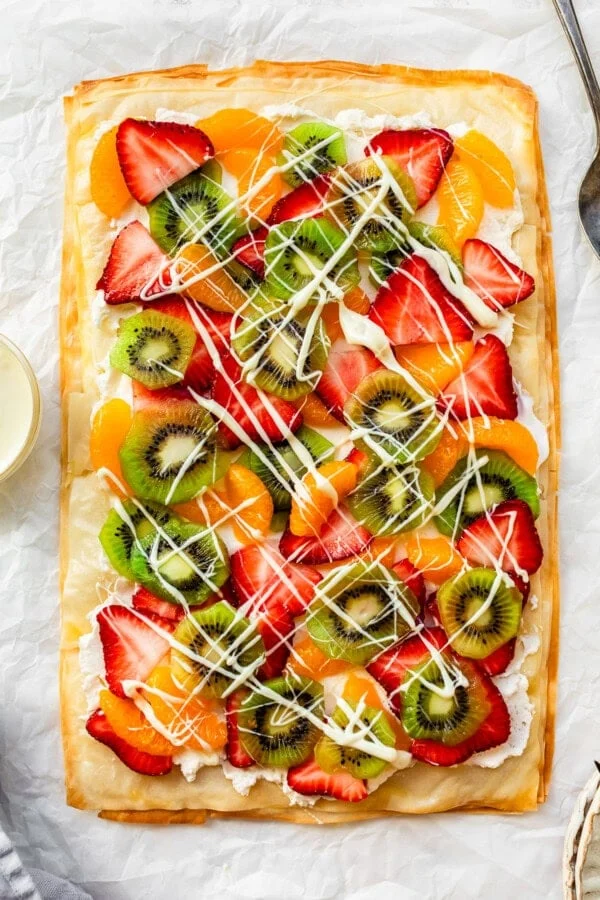
The culinary landscape continually seeks innovative yet accessible recipes that cater to both discerning palates and busy lifestyles. Among these, the phyllo fruit tart stands out as a particularly elegant and versatile dessert, offering a delightful blend of textures and fresh flavors. This easy-to-prepare tart features a delicate, flaky phyllo crust, generously topped with a creamy cheese frosting, a vibrant array of fresh seasonal fruits, and a delicate drizzle of white chocolate. Its inherent lightness and refreshing character make it an ideal choice for spring and summer entertaining, embodying the essence of warmer seasons in a single, visually appealing dish.
A Culinary Canvas: Understanding Phyllo Dough

At the heart of this exquisite tart lies phyllo dough, a staple of Mediterranean and Middle Eastern cuisine renowned for its paper-thin sheets and crisp, ethereal texture when baked. Derived from the Greek word "fýllo," meaning "leaf," phyllo dough is traditionally made from flour, water, and a small amount of oil or vinegar, then stretched to an almost translucent thinness. Its unique properties allow for the creation of incredibly light and flaky crusts, providing a stark contrast to the denser, butter-rich pastry crusts typically found in traditional tarts. This makes phyllo an excellent foundation for desserts that aim for a lighter profile without compromising on textural interest.
The history of phyllo dough stretches back centuries, with variations found across the Ottoman Empire. Its use in iconic dishes like baklava, a sweet pastry made of layers of phyllo filled with chopped nuts and sweetened with syrup or honey, demonstrates its versatility and long-standing culinary significance. For the phyllo fruit tart, layers of this delicate dough are brushed with melted butter, then baked until golden and crisp, forming a structurally sound yet remarkably airy base. This process not only imparts a delightful crunch but also serves as a less caloric alternative to conventional pastry, aligning with contemporary preferences for lighter dessert options.
The Anatomy of a Light Dessert: Ingredients and Composition

The phyllo fruit tart’s appeal extends beyond its unique crust, integrating a thoughtful selection of components that balance sweetness, tang, and freshness. The core elements include:
- Phyllo Dough: As the foundation, its crispness is paramount. The quality and handling of phyllo are crucial for achieving the desired flaky texture.
- Melted Butter: Essential for crisping the phyllo layers and imparting a rich flavor.
- Cream Cheese Frosting: This provides a creamy, slightly tangy counterpoint to the sweetness of the fruit and chocolate. Typically made with cream cheese, powdered sugar, and a hint of vanilla, it offers a smooth, luscious layer that binds the fruit to the crust.
- Fresh Fruit: The star of the tart, offering a burst of natural sweetness, vibrant colors, and essential nutrients. The choice of fruit is highly flexible, allowing for seasonal adaptation. Common selections include strawberries, blueberries, raspberries, kiwi, mandarins, and grapes, which collectively create a visually stunning "rainbow" effect.
- White Chocolate Drizzle: A final flourish that adds a touch of luxurious sweetness and a visually appealing contrast. White chocolate, with its creamy texture and subtle vanilla notes, complements the fruit and cream cheese without overpowering them.
The harmonious interplay of these ingredients results in a dessert that is both sophisticated in appearance and refreshingly simple in taste. The tart’s composition emphasizes natural fruit flavors, making it a less heavy alternative to traditional baked goods laden with heavy creams or excessive sugar.
Crafting the Perfect Tart: A Step-by-Step Overview

The preparation of this phyllo fruit tart is notably straightforward, making it accessible even for novice bakers. The entire process, from initial preparation to cooling, can be completed in approximately 25 minutes, with a mere 10 minutes of active prep time and 5 minutes of cooking.
The first critical step involves preparing the phyllo crust. Layers of phyllo dough are carefully brushed with melted butter and then baked until golden brown and exquisitely crisp. A crucial instruction, often highlighted by culinary experts, is to allow this crust to cool completely before proceeding. Rushing this step risks the integrity of the tart, as residual warmth can lead to a soggy crust once the cream cheese frosting is applied, undermining the desired flaky texture.
Following the cooling phase, the cream cheese frosting is prepared and spread evenly over the cooled phyllo base. This creates a smooth, sweet, and tangy canvas for the fruit. The assembly then moves to the artful arrangement of fresh fruit. A "rainbow" of seasonal fruits is typically recommended, allowing for both aesthetic appeal and a diverse flavor profile. The vibrant colors of strawberries, blueberries, kiwi, and other fruits create a visually impressive display, transforming the tart into a centerpiece.

The final embellishment involves drizzling melted white chocolate over the arranged fruit. This not only adds an extra layer of sweetness and flavor but also serves as a decorative element, enhancing the tart’s overall presentation. The white chocolate, with its mild sweetness, acts as a perfect binder and accent, completing the dessert with a touch of elegance.
Nutritional Profile: A Healthier Indulgence
In an era where dietary considerations often influence dessert choices, the phyllo fruit tart presents a compelling option. Based on a serving size of 1/8th slice, the nutritional breakdown indicates a relatively moderate calorie count for a dessert:

- Calories: 247 kcal
- Carbohydrates: 31 g
- Protein: 5 g
- Fat: 12.5 g
- Saturated Fat: 6.5 g
- Cholesterol: 22 mg
- Sodium: 207.5 mg
- Fiber: 2.5 g
- Sugar: 17 g
This profile suggests that while it is indeed a dessert, it offers a lighter alternative compared to many traditional tarts or cakes, which often contain significantly higher fat and sugar content. The presence of fresh fruit contributes valuable dietary fiber and essential vitamins, making it a more nutritionally balanced indulgence. The lower saturated fat and cholesterol levels, relative to other desserts, can also appeal to those monitoring their intake. This combination of satisfying taste and more favorable nutritional metrics aligns with the growing consumer demand for "healthier" desserts that do not compromise on flavor or visual appeal.
Customization and Creativity: Seasonal Variations
One of the most appealing aspects of the phyllo fruit tart is its inherent flexibility, particularly concerning fruit selection. The recommendation to use a "rainbow of whatever seasonal fruit you want to use" encourages creativity and adaptability. This allows the tart to evolve throughout the year, reflecting the bounty of each season:

- Spring: Strawberries, raspberries, blueberries, and kiwi are excellent choices, offering bright colors and tangy-sweet flavors.
- Summer: Peaches, nectarines, blackberries, and cherries can be incorporated, bringing juicy sweetness and deeper hues.
- Autumn: Sliced pears, grapes, and even thinly sliced apples could provide a seasonal twist, perhaps with a dusting of cinnamon or nutmeg alongside the white chocolate.
- Winter: Citrus segments (oranges, mandarins) or pomegranate seeds can add a burst of color and flavor when other fresh fruits are less abundant.
Beyond fruit, other variations can elevate the tart:
- Nutty Crust: A sprinkle of finely chopped nuts (almonds, pistachios) between phyllo layers or over the cream cheese for added texture and flavor.
- Different Drizzles: Dark chocolate or milk chocolate can be substituted for white chocolate, offering a different flavor profile. A simple glaze made from apricot jam or honey can also be used for shine and sweetness.
- Flavoring the Cream Cheese: A hint of lemon zest, orange zest, or a dash of almond extract can be added to the cream cheese frosting for an extra layer of complexity.
- Individual Servings: Instead of a large tart, the phyllo can be shaped into smaller individual tartlets, perfect for catering or more elegant presentations.
This adaptability ensures that the phyllo fruit tart remains a dynamic and engaging recipe, never becoming monotonous and always offering something new to discover with each seasonal shift.
Storage and Serving Recommendations

Proper storage is key to maintaining the tart’s quality. For optimal freshness and to preserve the crispness of the phyllo crust, it is advisable to assemble the tart no more than a few hours before serving. If preparing in advance, the phyllo crust can be baked and cooled completely, and the cream cheese frosting can be made and stored separately in the refrigerator. The fruit should ideally be washed, sliced, and kept separate until just before assembly.
Once assembled, the phyllo fruit tart should be stored in an airtight container in the refrigerator. While it can be enjoyed for up to two days, the crust may gradually lose some of its crispness over time due to moisture from the cream cheese and fruit. Serving the tart chilled enhances its refreshing qualities, particularly during warmer months.
The Broader Appeal: Trends in Modern Desserts

The enduring popularity of the phyllo fruit tart reflects several broader trends within contemporary culinary culture:
- The Rise of Home Baking: With increased interest in home cooking and baking, recipes that offer impressive results with minimal effort are highly valued. The phyllo fruit tart perfectly fits this niche, allowing home bakers to create a sophisticated dessert without requiring advanced pastry skills.
- Demand for Lighter Options: Consumers are increasingly health-conscious, seeking desserts that offer indulgence without excessive heaviness. The tart’s flaky phyllo crust and fresh fruit topping align well with this desire for lighter, more refreshing treats.
- Visual Appeal and "Instagrammability": In the age of social media, the visual presentation of food is more important than ever. The vibrant colors of fresh fruit arranged artfully on a tart make it inherently photogenic, contributing to its appeal for sharing and entertaining.
- Seasonal and Local Eating: There is a growing emphasis on utilizing seasonal and locally sourced ingredients. The tart’s flexibility in fruit selection encourages this practice, allowing for a fresh and sustainable approach to dessert creation.
- Versatility for Occasions: Its balanced profile makes it suitable for a wide range of events, from casual family desserts to more formal gatherings, brunches, or picnics. Its relatively quick preparation time also makes it a practical choice for last-minute entertaining.
These factors collectively contribute to the phyllo fruit tart’s status as a contemporary classic, bridging traditional baking techniques with modern dietary and lifestyle preferences.
Conclusion: A Timeless Treat for Every Occasion

The phyllo fruit tart stands as a testament to the power of simple ingredients combined with thoughtful preparation to create a truly exceptional dessert. Its flaky crust, creamy filling, and fresh fruit topping, elegantly finished with a white chocolate drizzle, offer a harmonious blend of textures and flavors. Celebrated for its ease of preparation, adaptability, and relatively lighter nutritional profile, it has earned its place as a cherished recipe among those who appreciate refined yet accessible culinary creations. As seasons change and new fruits become available, this versatile tart promises to remain a delightful and visually stunning option, continuing to captivate palates with its refreshing charm.
