
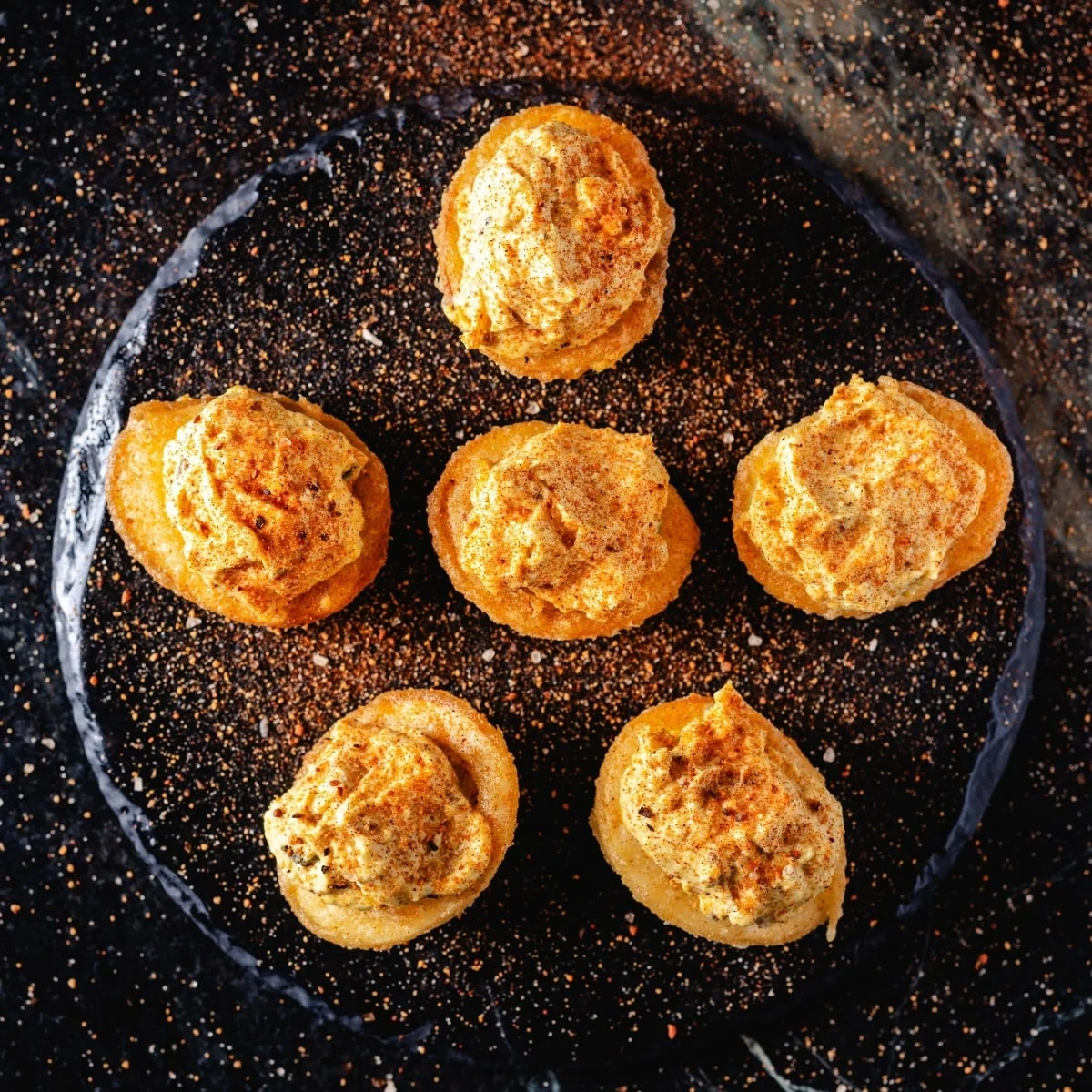
The landscape of American outdoor culinary traditions is undergoing a significant transformation as enthusiasts move beyond traditional grilling toward more complex, multi-stage preparation techniques. At the forefront of this movement is a dish that synthesizes two distinct Southern cooking pillars: the deep-fried appetizer and the low-and-slow wood-smoked staple. Known as Smoke-Fried Deviled Eggs, this dish represents a technical evolution of the classic picnic hors d’oeuvre, utilizing a sophisticated methodology that includes hard-boiling, cold-smoking, batter-dipping, and flash-frying. Developed by Susie Bulloch, the founder of the prominent BBQ resource Hey Grill Hey, the recipe has emerged as a high-concept alternative for seasonal gatherings, particularly during the Easter holiday and summer picnic circuit.
The Gastronomic Mechanics of the Smoke-Fried Egg
The Smoke-Fried Deviled Egg is defined by its structural and flavorful contrasts. While a traditional deviled egg relies on the creaminess of the yolk and the soft snap of the albumin, the smoke-fried variant introduces a third dimension: a tactile, golden-brown crust. The process begins with standard hard-boiled eggs, which are then subjected to a controlled smoke environment. This "smoke bath" infuses the porous whites and the dense yolks with aromatic compounds derived from wood hardwoods, typically fruitwoods or nutwoods, depending on the desired intensity.

Following the smoking phase, the eggs are halved, and the yolks are extracted to create a zesty filling. This filling incorporates modern BBQ elements, such as Zesty Gold BBQ Sauce and Sweet Rub seasonings, alongside traditional binders like mayonnaise and apple cider vinegar. The innovation reaches its zenith during the frying stage, where the smoked egg whites are dredged in a specialized chicken wing batter and submerged in hot oil. This creates a thermal and textural juxtaposition—a hot, crispy exterior housing a cool, zippy cream filling.
Historical Context and the Evolution of the Deviled Egg
To understand the significance of the smoke-fried iteration, one must examine the long history of the deviled egg itself. Culinary historians trace the roots of stuffed eggs back to Ancient Rome, where boiled eggs were often seasoned with spicy sauces and served as a first course. However, the term "deviled" did not enter the English lexicon until the late 18th century, specifically appearing in print in 1786. In the culinary vernacular of the time, "to devil" referred to the process of preparing food with potent seasonings, mustard, or pepper, creating a "hot" or "spicy" profile.
By the 19th century, deviled eggs became a mainstay of American cookbooks. The post-World War II era saw the dish solidify its status as the quintessential "potluck" food, aided by the rise of commercial mayonnaise and the mass production of specialized egg carriers. The introduction of smoke and deep-frying techniques in the 21st century represents the most significant structural change to the recipe in over a hundred years. This shift reflects a broader "elevated comfort food" trend, where chefs and home cooks apply professional pitmaster techniques to humble household snacks.

Technical Chronology: From Boiling to Plating
The production of Smoke-Fried Deviled Eggs follows a precise five-step technical chronology that ensures food safety and optimal flavor delivery.
- Preparation and Hard-Boiling: The foundation of the dish requires perfectly cooked hard-boiled eggs. Precision in boiling is critical; overcooking results in a sulfurous green ring around the yolk, while undercooking prevents the egg white from maintaining the structural integrity needed for frying.
- The Cold-Smoking Phase: Once peeled, the eggs are placed on a grill or smoker. Unlike meat, which requires high heat to break down connective tissue, eggs are smoked primarily for flavor absorption. This phase is typically conducted at lower temperatures to prevent the egg whites from becoming rubbery or overly tough.
- Filling Formulation: The yolks are combined with an acidic component (vinegar), a fat (mayonnaise), and a heat source (diced jalapeños). The inclusion of "Zesty Gold" sauce—a mustard-based BBQ sauce—adds a tangential flavor profile common in South Carolina-style barbecue, providing a tangy counterbalance to the richness of the yolk.
- The Frying Methodology: The smoked egg whites are coated in a dry batter mix. Professional-grade chicken wing batter is often preferred for its ability to adhere to the smooth surface of the egg white. The whites are fried until the exterior achieves a GBD (Golden, Brown, Delicious) status, typically requiring only a short duration in the oil to avoid overcooking the already-solidified protein.
- Assembly and Garnish: The final stage involves piping the chilled yolk mixture into the warm, fried shells. A final dusting of sweet rub seasoning provides a visual and flavor-based "finish" that ties the smoky and fried elements together.
Supporting Data: The BBQ and Egg Markets
The rise of recipes like Smoke-Fried Deviled Eggs is supported by significant economic data within the outdoor cooking and poultry industries. According to reports from the Hearth, Patio & Barbecue Association (HPBA), approximately 70% of all U.S. households own a grill or smoker. Furthermore, the "specialty" BBQ segment—which includes wood pellet grills and offset smokers—has seen a 20% increase in market share over the last five years.
Egg consumption also peaks significantly during the spring. Data from the American Egg Board indicates that U.S. consumers purchase approximately 180 million dozen eggs in the weeks leading up to Easter. The intersection of these two market forces—increased egg availability and the proliferation of smoking technology—has created a fertile environment for innovative recipes.

Nutritionally, a single Smoke-Fried Deviled Egg contains approximately 131 calories. While the frying process adds fat content (7g total fat), the dish remains a high-protein appetizer, offering roughly 5g of protein per serving. This balance of indulgence and protein density contributes to its popularity in "cheat meal" culture and at social gatherings.
Industry Leadership: The Role of Hey Grill Hey
The development of this recipe is credited to Susie Bulloch, a recognized authority in the barbecue industry. As the founder of Hey Grill Hey, Bulloch has transitioned from a hobbyist to a "BBQ Boss Lady," a title that reflects her influence on modern grilling techniques. Her background includes collaborations with major television networks and multiple appearances on the Food Network.
Bulloch’s approach to BBQ is characterized by a "Backyard BBQ Hero" philosophy, which aims to demystify complex smoking processes for the average consumer. Her work has earned her international recognition, including a role in achieving Guinness World Records related to mass-scale grilling. The Smoke-Fried Deviled Egg is a microcosm of her broader culinary mission: taking a familiar, approachable ingredient and applying professional-grade smoke and fire techniques to create something entirely new.

Market Trends and Consumer Implications
The popularity of Smoke-Fried Deviled Eggs highlights several emerging consumer trends. First is the "texture-first" movement, where the mouthfeel of a dish—specifically the contrast between crunchy and creamy—is prioritized as much as the flavor profile. Second is the "social media aesthetic" of modern cooking. The visual appeal of a fried, golden egg shell topped with vibrant yellow cream and red spices is tailor-made for platforms like Instagram and Facebook, where food photography drives recipe adoption.
Furthermore, the dish reflects a shift in gender dynamics within the BBQ community. Historically a male-dominated space, the rise of figures like Susie Bulloch and the focus on "picnic-style" BBQ indicates a more inclusive and diverse approach to outdoor cooking. This has expanded the "BBQ repertoire" to include more than just ribs and brisket, incorporating appetizers, side dishes, and even desserts into the smoked food category.
Conclusion: The Future of the Backyard Appetizer
The Smoke-Fried Deviled Egg is more than a seasonal novelty; it is a testament to the ongoing innovation within American regional cuisine. By combining the ancient technique of boiling eggs with the traditional Southern art of deep-frying and the modern obsession with wood-fired smoking, the dish represents a holistic approach to flavor.

As outdoor cooking technology continues to become more accessible, and as the boundaries between professional pitmasters and home cooks continue to blur, the industry can expect to see more "fusion" appetizers of this nature. For now, the Smoke-Fried Deviled Egg stands as a benchmark for what is possible when a classic recipe is reimagined through the lens of modern BBQ methodology. It challenges the palate, honors culinary history, and provides a clear blueprint for the next generation of backyard BBQ heroes.
