
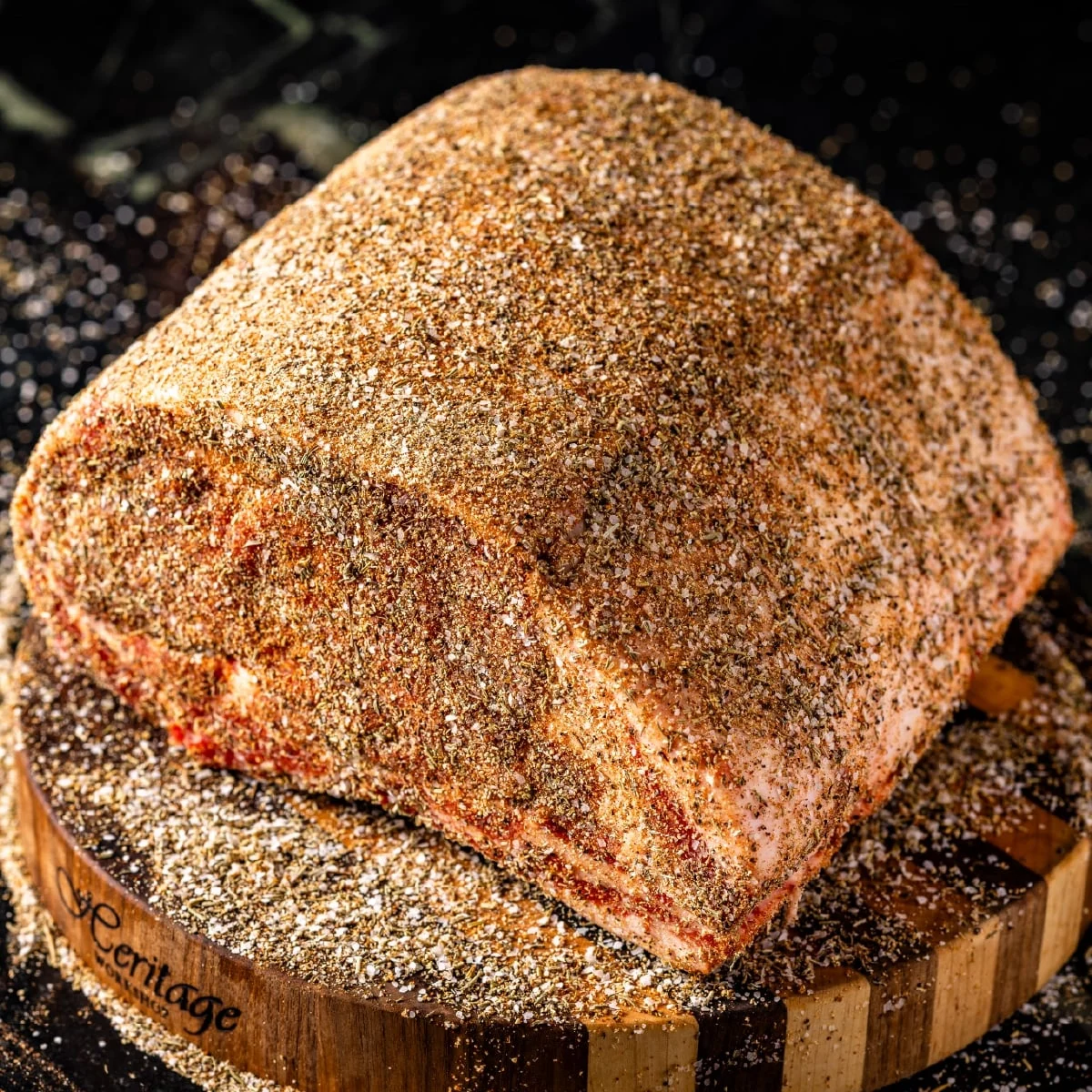
The preparation of prime rib has long been considered the pinnacle of festive culinary endeavors, representing a significant financial and time investment for the domestic cook. As meat prices fluctuate and the demand for restaurant-quality home dining increases, the focus on artisanal seasoning methods has intensified, leading to a resurgence in homemade spice formulations. Among the emerging standards in this field is a specialized herb-based rub developed by culinary expert Susie Bulloch of Hey Grill Hey, which emphasizes a savory, herbaceous profile designed to accentuate rather than mask the natural qualities of high-grade beef. This shift toward DIY seasoning reflects a broader movement in the gastronomic world toward "premiumization" and the control of ingredient transparency, particularly when dealing with expensive cuts like the standing rib roast.
The Composition and Chemistry of the Modern Prime Rib Rub
The efficacy of a dry rub on a large cut of beef is rooted in food science, specifically the interaction between sodium, moisture, and heat. The Hey Grill Hey formulation utilizes a foundational "SPG" (salt, pepper, garlic) base, augmented by onion powder and a curated selection of steakhouse-staple herbs, including rosemary and thyme. This seven-ingredient blend is engineered to facilitate several chemical processes during the cooking cycle.
Salt, the primary component, serves as more than a flavor enhancer. Through the process of osmosis, salt draws moisture out of the meat; this moisture then dissolves the salt into a brine, which is eventually reabsorbed into the muscle fibers. This breaks down tight protein structures, resulting in a more tender end product and ensuring that the seasoning penetrates beyond the surface level.

The inclusion of rosemary and thyme introduces volatile oils that are released during the roasting or smoking process. Rosemary, containing rosmarinic acid, and thyme, rich in thymol, provide an earthy, woodsy counterpoint to the rich, fatty profile of the prime rib. Furthermore, garlic and onion powders provide umami depth, which complements the Maillard reaction—the chemical reaction between amino acids and reducing sugars that gives browned food its distinctive flavor.
Chronology of Application: From Preparation to Crust Development
The timing of seasoning application is a critical variable in the success of a prime rib roast. Culinary professionals often advocate for a "dry brine" period, where the rub is applied 12 to 24 hours before cooking. This duration allows the salt to perform its tenderizing functions and ensures the surface of the meat is dry, which is essential for achieving a crisp, flavorful crust, or "bark."
According to the methodology established by Hey Grill Hey, the rub application should be calibrated based on the intended cooking method. For a traditional dry-rubbed roast, a more generous coating is recommended to develop a robust exterior. Conversely, if the cook intends to use a compound butter—such as a garlic butter finish—the initial rub application is typically lighter to prevent an over-saturation of sodium. For an average roast weighing between 8 and 10 pounds, a volume of 1/4 to 1/2 cup of the spice blend is considered the industry standard for optimal coverage.
Supporting Data: Market Trends in Premium Beef and Spices
The economic context of the prime rib industry underscores why home cooks are increasingly turning to specialized rubs to protect their investments. According to United States Department of Agriculture (USDA) reports, the price of "Prime" and "Choice" graded beef has seen significant volatility over the last three fiscal years due to supply chain fluctuations and changes in cattle inventory. As of late 2024, retail prices for standing rib roasts often range from $15 to $25 per pound, depending on the grade and region.

Simultaneously, the global seasonings and spices market is projected to grow at a compound annual growth rate (CAGR) of approximately 5.5% through 2030. A significant driver of this growth is the "home chef" demographic, which seeks to replicate complex flavor profiles without the additives often found in pre-packaged, commercial "steak seasonings." Homemade rubs allow for the elimination of anti-caking agents like silicon dioxide and the reduction of excessive sugar fillers, which are common in low-cost retail blends.
Analysis of Storage and Sustainability
The longevity of spice blends is a matter of chemical stability. The Hey Grill Hey rub is noted for a shelf life of approximately three months when stored in an airtight container in a cool, dark environment. From a journalistic perspective, the shift toward making rubs at home also aligns with modern sustainability goals. By utilizing bulk spices and reusable glass containers, consumers reduce the "plastic footprint" associated with single-use seasoning packets.
Furthermore, the potency of dried herbs like rosemary and thyme diminishes over time due to oxidation. After the 90-day mark, while the rub remains safe for consumption, the aromatic compounds—the terpenes and phenols—begin to dissipate, leading to a flatter flavor profile. This reinforces the "small-batch" philosophy prevalent in modern pitmaster culture, where freshness is prioritized over convenience.
Official Perspectives and Culinary Implications
Susie Bulloch, a prominent figure in the barbecue community and founder of Hey Grill Hey, emphasizes that the role of a rub is to act as a "supporting actor." In statements regarding her development of the Prime Rib Rub, Bulloch indicates that the goal was to provide a "savory, herbaceous" profile that highlights the beef’s natural flavor "without stealing the show." This philosophy is echoed by many high-end steakhouse chefs who argue that over-seasoning a Prime-grade cut is a disservice to the quality of the meat.

The broader implication of this culinary trend is the democratization of specialized cooking knowledge. Through platforms like the Hey Grill Hey app and social media channels, complex techniques once reserved for professional kitchens are being disseminated to "backyard BBQ heroes." This educational shift has transformed the holiday meal from a stressful chore into a craft-based hobby.
Impact on Domestic Traditions and the "Pitmaster" Phenomenon
The rise of the "backyard pitmaster" has fundamentally changed the American holiday landscape. Prime rib, once strictly a product of the indoor oven, is now frequently prepared in pellet grills, offset smokers, and ceramic kamado-style cookers. This transition requires rubs that can withstand different heat sources. For instance, in a smoker, the rub must interact with wood smoke (such as hickory, oak, or cherry) to form a smoke ring—a pink discoloration of the meat caused by nitrogen dioxide in the smoke reacting with the myoglobin.
The Hey Grill Hey Prime Rib Rub is designed to be versatile enough for these varied environments. Whether subjected to the high-heat sear of a traditional oven or the low-and-slow environment of a smoker, the balance of coarse black pepper and dried herbs provides the necessary texture to hold the smoke and create a tactile "crust" that is highly prized in competitive barbecue circles.
Conclusion: The Future of Home Seasoning
As culinary technology continues to evolve, the reliance on foundational, high-quality ingredients remains a constant. The transition from store-bought, generic seasonings to intentional, homemade formulations like the one presented by Hey Grill Hey represents a maturation of the domestic palate. By understanding the science of salt, the aromatics of herbs, and the economics of the beef market, home cooks are better equipped to handle the high-stakes preparation of a prime rib.

In an era where transparency and quality control are paramount, the ability to mix a custom rub using seven basic pantry staples provides a sense of agency to the cook. It ensures that the centerpiece of the meal is treated with the same level of care as the selection of the meat itself. As holiday seasons approach, the focus remains on creating "BBQ glory"—a goal achieved through the precise application of heat, smoke, and a well-balanced, herbaceous rub. This movement signifies a return to the basics of flavor, proving that even for the most expensive cuts of meat, the simplest ingredients, when combined correctly, yield the most sophisticated results.
