
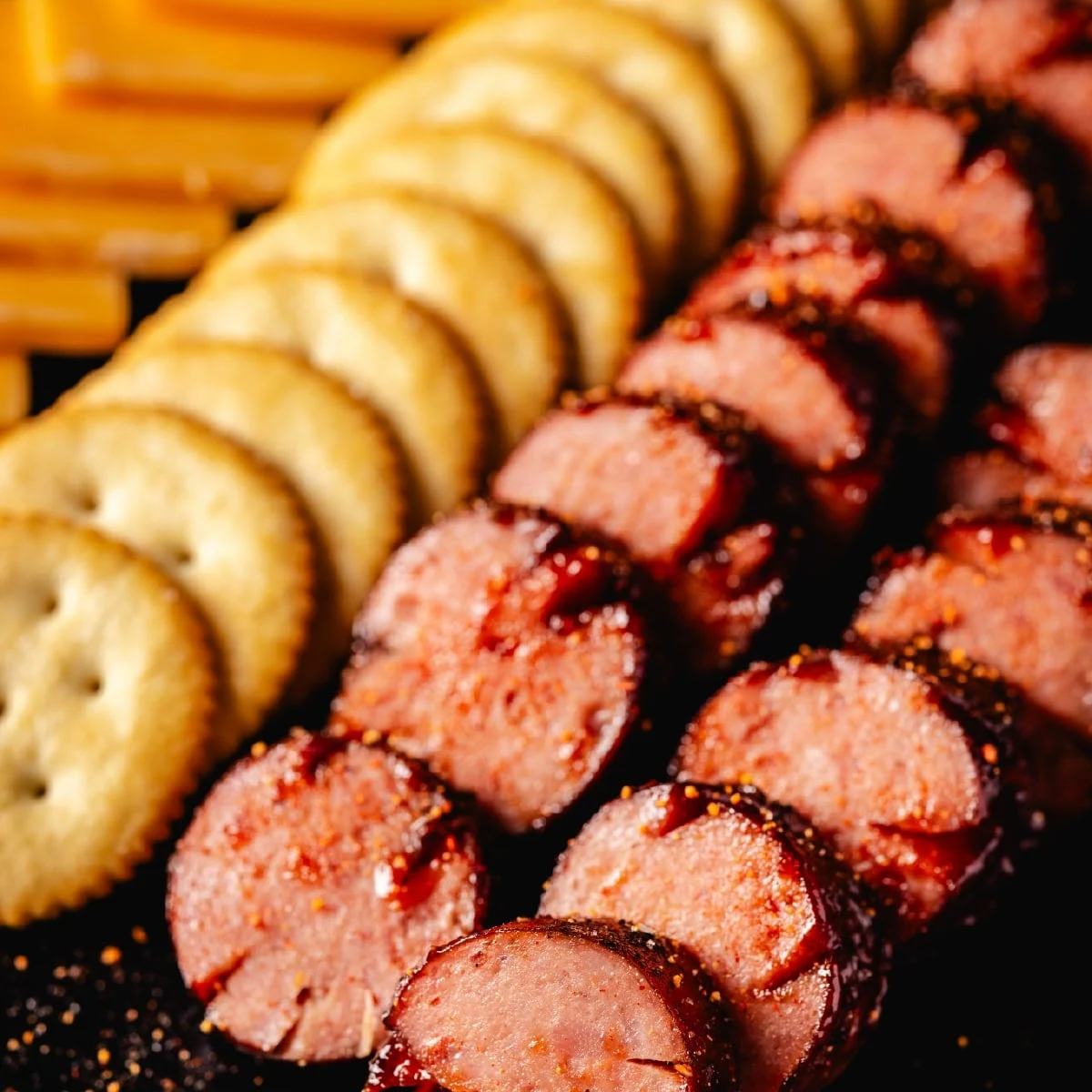
The culinary landscape of backyard barbecue has undergone a significant transformation over the last decade, shifting from labor-intensive, multi-day briskets to high-efficiency, flavor-dense preparations that cater to the modern home cook. At the forefront of this movement is the emergence of the "swicy" flavor profile—a sophisticated blend of heat and sweetness—epitomized by the recent surge in popularity of hot honey applications. A prime example of this trend is the Smoked Kielbasa with Hot Honey Glaze, a four-ingredient preparation that leverages low-and-slow wood smoke to elevate a traditional European staple into a contemporary staple of North American social dining. This dish represents a broader shift toward accessible gourmet cooking, requiring only 90 minutes of thermal processing to achieve a result that rivals traditional charcuterie.
The Historical and Cultural Evolution of Kielbasa
To understand the significance of smoked kielbasa in modern barbecue, one must examine its roots in Central and Eastern Europe. The term "kielbasa" is a generic Polish word for sausage, but in the North American context, it specifically refers to the "Polska Kielbasa Wędzona," or smoked Polish sausage. Historically, these sausages were developed as a method of meat preservation, utilizing salt-curing and cold-smoking techniques to ensure longevity during winter months.

As Polish immigrants integrated into the American Midwest and Texas, kielbasa was adopted into the local barbecue tradition. In Central Texas, for instance, German and Polish butcher shops laid the foundation for what is now known as "Texas-style BBQ," where sausage is considered one of the "holy trinity" meats alongside brisket and ribs. The Smoked Kielbasa with Hot Honey Glaze honors this lineage while introducing a modern twist through the use of high-viscosity glazes and complex dry rubs, bridging the gap between old-world preservation and new-world gastronomy.
The Chronology of Preparation: A 90-Minute Technical Breakdown
The production of this dish follows a precise chronological sequence designed to maximize smoke penetration and surface caramelization without compromising the integrity of the sausage casing.
- Pre-Processing and Scoring: The process begins with the mechanical scoring of the kielbasa. By making shallow, cross-hatched incisions along the length of the sausage, the cook increases the surface area exposed to both the seasoning and the smoke. This prevents the casing from bursting under internal pressure and creates "pockets" that trap the glaze during the final stages of cooking.
- The Binding Phase: A thin layer of Zesty Gold BBQ sauce—a mustard-based condiment—is applied as a binder. In professional barbecue circles, binders are essential for ensuring that dry rubs adhere to the meat surface throughout the duration of the smoke. The acidity of the mustard also serves to cut through the fatty richness inherent in pork and beef sausages.
- Seasoning Application: A "Sweet Rub," typically composed of brown sugar, paprika, and garlic powder, is applied over the binder. This layer provides the foundation for the "bark" or crust that characterizes high-quality smoked meats.
- The Smoking Interval: The smoker is stabilized at 225 degrees Fahrenheit (approx. 107 degrees Celsius). The kielbasa is subjected to indirect heat for roughly 75 to 80 minutes. During this period, the low temperature allows the pre-cooked meat to absorb volatile organic compounds from the wood smoke—preferably mild woods like apple, cherry, or maple—without drying out the interior.
- The Glazing Finale: In the final 10 to 15 minutes, the heat is used to set a Hot Honey BBQ glaze. This stage requires careful monitoring, as the high sugar content in the honey can transition from caramelization to carbonization (burning) rapidly. The result is a glossy, tacky exterior that provides an immediate hit of capsaicin-linked heat followed by a soothing honey finish.
Supporting Data: The Rise of "Swicy" and Outdoor Cooking Trends
The popularity of dishes like Smoked Kielbasa with Hot Honey Glaze is supported by significant market data. According to industry reports from 2023 and 2024, the "hot honey" category has seen a 40% year-over-year increase in menu mentions across North American casual dining. Consumer preference surveys indicate that 65% of millennials and Gen Z consumers seek out "complex heat" over simple spiciness, driving the demand for sauces that balance chili peppers with natural sweeteners.

Furthermore, the Hearth, Patio & Barbecue Association (HPBA) reports that nearly 70% of American households own a grill or smoker, with a notable increase in the purchase of pellet grills, which allow for the precise temperature control required for the 225-degree smoking process. The accessibility of this specific recipe—requiring only four ingredients—aligns with the "minimalist gourmet" trend, where high-quality results are achieved through technique rather than an exhaustive list of components.
Technical Analysis: The Science of Smoke and Fat
From a food science perspective, the success of the smoked kielbasa lies in the interaction between smoke and the sausage’s fat content. Most commercial kielbasa has a fat-to-lean ratio of approximately 30:70. When smoked at 225 degrees Fahrenheit, the fat begins to render slowly, basting the meat from the inside out.
The scoring technique mentioned earlier plays a dual role here. It allows for the "Maillard reaction"—the chemical reaction between amino acids and reducing sugars—to occur across a larger surface area. Simultaneously, the smoke particles (phenols and carbonyls) bind to the moisture on the surface of the meat. Because the kielbasa used in this preparation is often pre-smoked or cured, the secondary smoking process acts as a flavor intensifier rather than a primary cooking method, ensuring the meat remains succulent.

Official Context and Expert Insights
Susie Bulloch, a prominent figure in the barbecue industry and the founder of Hey Grill Hey, has emphasized the "reward-to-effort ratio" of this particular dish. Bulloch, who has collaborated with major culinary brands and appeared on the Food Network, notes that the democratization of barbecue is dependent on recipes that provide "quick wins" for novices while satisfying the palates of experienced pitmasters.
Industry experts suggest that the integration of such dishes into "BBQ Charcuterie" boards is a strategic move for home entertainers. Unlike traditional cold cuts, smoked kielbasa provides a warm, savory element that anchors a board. "The goal is to create a multi-sensory experience," says one culinary analyst. "The visual appeal of the scored, glazed sausage, the aroma of the wood smoke, and the tactile ‘snap’ of the casing all contribute to its status as a premium appetizer."
Food Safety and Post-Processing Storage
While the preparation is straightforward, food safety remains a paramount concern in the processing of cured meats. Most store-bought kielbasa is vacuum-sealed and pre-cooked, offering a shelf life of several weeks in a refrigerated state. However, once the seal is broken and the meat is subjected to a secondary smoking process, the biological clock resets.

According to USDA guidelines, cooked sausages should be consumed within three to four days when stored in an airtight container at or below 40 degrees Fahrenheit. The high salt and sugar content in the rub and glaze act as mild inhibitors to bacterial growth, but they do not replace the need for proper refrigeration. For those looking to incorporate this into a large-scale event, the kielbasa can be smoked in advance and gently reheated in a covered foil pan to maintain moisture.
Broader Implications for the BBQ Industry
The Smoked Kielbasa with Hot Honey Glaze is more than just a recipe; it is a microcosm of the current state of the outdoor cooking industry. It highlights the shift toward high-quality, branded ingredients—such as specialized rubs and sauces—which have become a multi-billion dollar sector. Brands like Hey Grill Hey have successfully transitioned from content providers to product manufacturers, reflecting a consumer base that is willing to invest in premium binders and glazes to achieve "restaurant-quality" results at home.
Moreover, the dish reflects the globalization of flavor. By taking a Polish classic and applying American Southern barbecue techniques and a flavor profile (hot honey) that has roots in both African American and Brazilian culinary traditions, the dish becomes a testament to culinary fusion.

As the trend of backyard hosting continues to grow, the demand for "sharable snacks" that can be prepared in under two hours will likely drive further innovation in the smoked sausage category. The Smoked Kielbasa with Hot Honey Glaze stands as a benchmark for this evolution: efficient, technically sound, and tuned to the modern palate’s desire for the perfect balance of smoke, salt, heat, and sweet.
